Beyond the Fog of War: A Chinese Critique of Empire and Everyday Survival in 'Once Upon a Time in the Middle East'
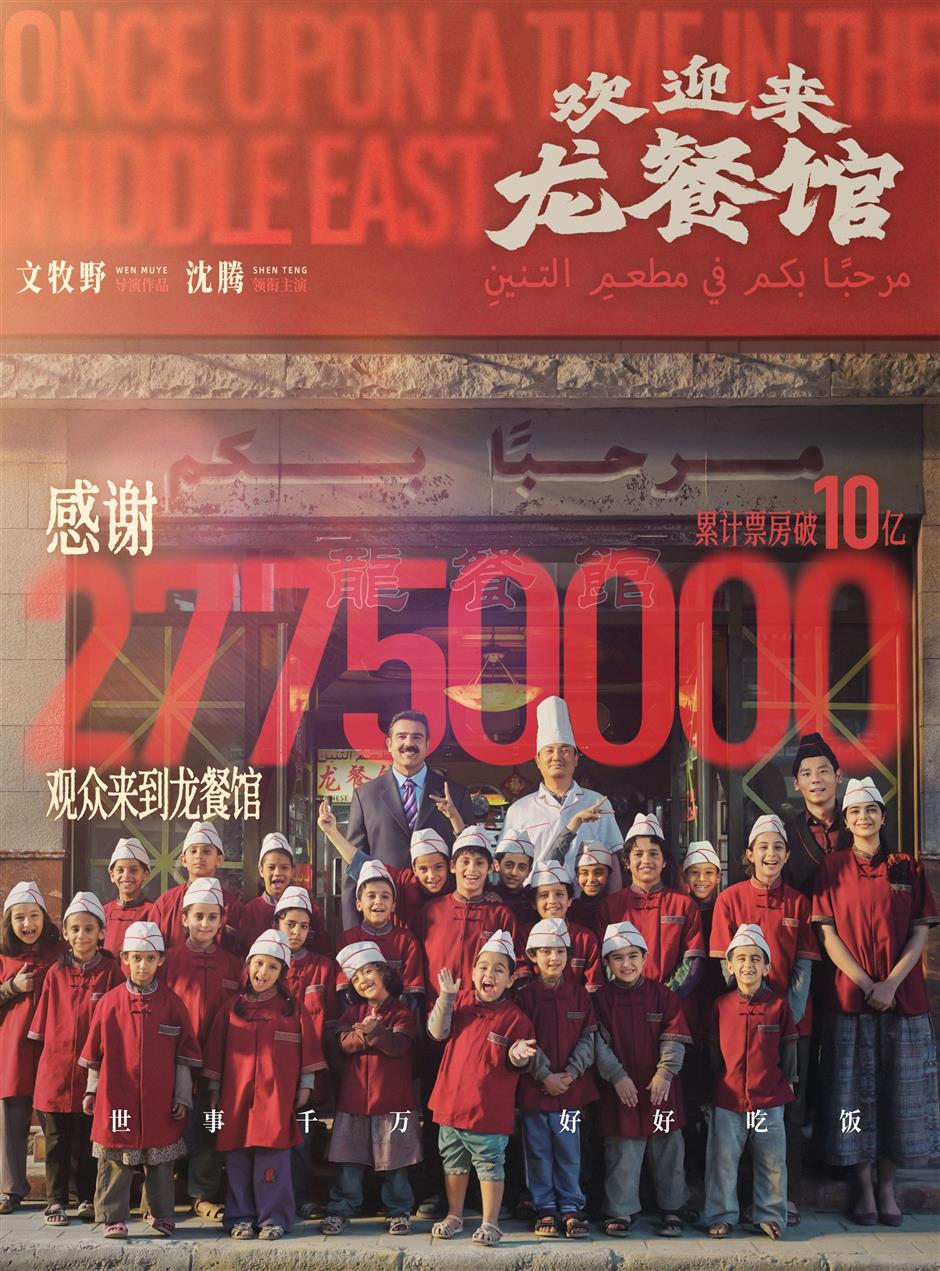
In the late summer of 2023, when Chinese cinema was dominated by muscular blockbusters, director Wen Muye was quietly laying the groundwork for a far more nuanced cinematic endeavor.
Known for his 2018 landmark social drama "Dying to Survive" and 2022 feature "Nice View," Wen built his critical reputation on dissecting how ordinary citizens navigate overwhelming social machinery and systemic hardship.
With "Once Upon a Time in the Middle East" – released domestically across the Chinese mainland under the Chinese title "Huan Ying Lai Long Can Guan" (欢迎来龙餐馆), literally meaning "Welcome to the Dragon Restaurant" – he expands his creative canvas onto the global stage. Using the 2003 US invasion of Iraq as an unfiltered backdrop, the film examines international conflict through an unprecedented lens.
Starring comedy titan Shen Teng in a remarkably grounded, restrained dramatic lead alongside actor Jiang Qiming, the film eschews the familiar tropes of geopolitical cinema. Where contemporary war epics rely on tactical militarism or official state intervention, Wen offers a quiet, human-centered story of displacement, labor, and basic survival.
The narrative shifts artistic attention away from battlefield triumphs toward a more fundamental, everyday concern: How ordinary people preserve personal decency and community when state institutions completely collapse under foreign occupation.
Sanctuary in the ruins
The narrative opens far from the front lines in northeastern China, focusing on the financial plight of Xu Fu (Shen Teng), a small-town restaurant owner who falls deep into debt after a disastrous workplace accident.
Seeking a way out to repay what he owes, he accepts a contract as head chef at the Dragon Restaurant, an eatery located in a bustling Middle Eastern capital.
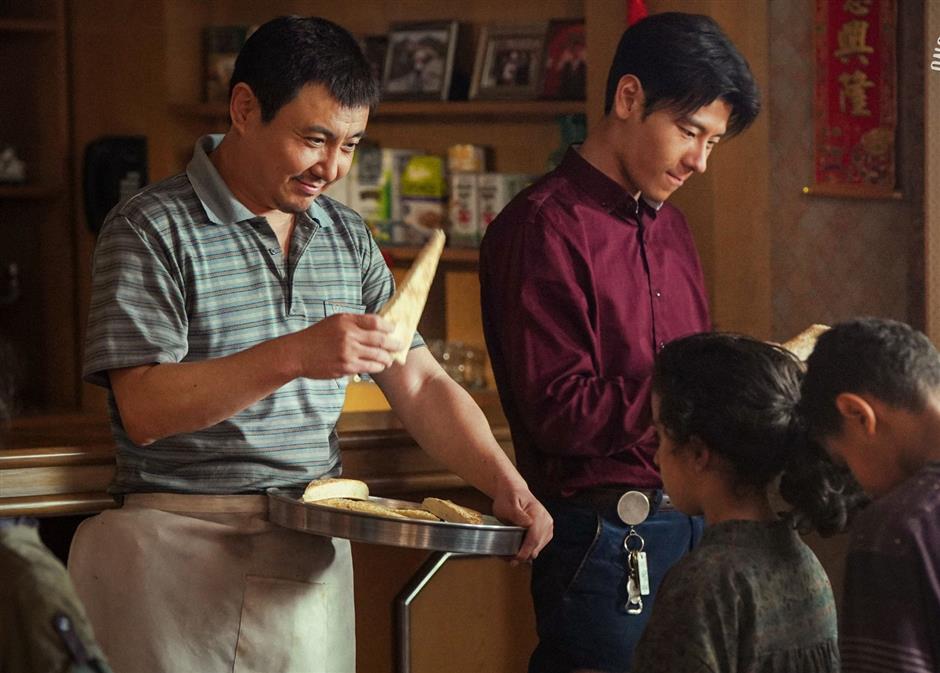
Managed by Ma Junsheng (Jiang Qiming), a street-smart, Arabic-speaking orphan who has spent four years working in the region, and owned by Zayd (Sharif Sabi), a pragmatic local hydro-bureaucrat, the venue initially serves as a comforting haven where foreign correspondents, local laborers, and weary expats gather for familiar meals.
That fragile peace shatters when coalition air strikes destroy the city's civil infrastructure and overthrow the governing regime. As violence engulfs the surrounding streets, a neighboring orphanage is bombed.
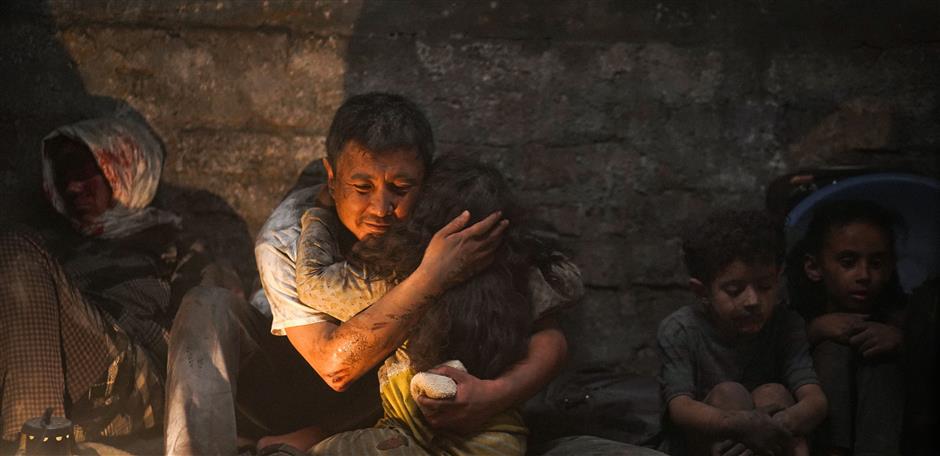
Xu and Ma immediately open the restaurant's doors, offering shelter to the surviving children and their teacher, Lina. To keep the kitchen supplied amid hyperinflation, curfews, and crippling shortages, Xu bootlegs liquor to Western journalists and American soldiers during late-night hours, eventually becoming a full partner in the restaurant.
Yet neutrality proves impossible in an active combat zone. Swept up in a sudden military raid alongside Ma and their local apprentice Seif, Xu is detained by American security forces under suspicion of smuggling weapons.
Transported to a military detention center, he is put to work in the facility's kitchen while facing intense interrogation by Morgan, an officer consumed by grief over his family's death in a terrorist attack.
The crisis deepens when extremist insurgents launch a bloody assault on the prison, overrunning the guards. Xu, Ma and Seif are abducted by The Principal, a radical militant leader operating an insurgent compound for orphaned boys.
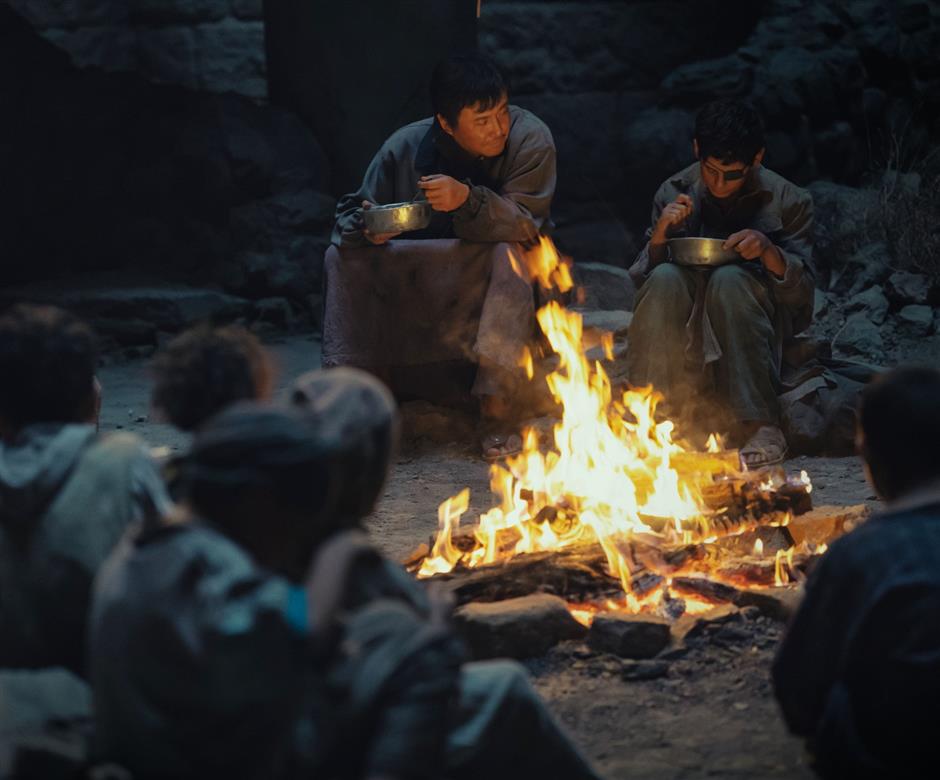
Put back to work in yet another kitchen, Xu discovers that the young boys under his care, including his apprentice Seif, are being systematically brainwashed and prepared for suicide bombing missions.
Refusing to watch children turn into military casualties, the chef abandons all personal caution. Working alongside Ma, he orchestrates a risky escape, incapacitating the garrison's food supply and guiding over 20 orphans on a grueling journey toward the border.
Though Ma is killed during the escape, Xu succeeds in bringing the children to safety before returning to China, where he remains with his family for the next two decades.
A radical departure from Hollywood's saviors
By prioritizing survival over combat, "Once Upon a Time in the Middle East" offers a direct counter-narrative to traditional Western conflict films. For decades, international thrillers have relied on elite operatives, foreign correspondents, or armed soldiers who arrive in foreign territories to restore order through force.
These stories often carry an unspoken assumption of institutional authority and civilizational dominance, presenting intervention as the primary path to salvation.
Director Wen dismantles this paradigm completely. Xu has no military background, no geopolitical agenda, and no state backing. He is neither a trained combatant nor a diplomat. His motivation begins with the most worldly and personal of desires: working abroad to clear a debt. His eventual heroism stems not from an abstract doctrine but from immediate human empathy and a protective instinct toward the vulnerable.
When confronted by military interrogators who view local youth purely as security threats, Xu openly challenges the cycle of violence. Later, when his young apprentice attempts to join an insurgent squad, Xu physically restrains him – not with an ideological speech, but with the raw, protective impulse of an elder keeping a child out of harm's way.
This dynamic illustrates the film's broader thematic foundation, contrasting rigid ideological conflict with a quiet, everyday humanism. In a landscape dominated by military power and radicalization, Xu embodies an approach rooted in care and sustenance. Rather than offering grand solutions to complex political crises, the film focuses on immediate, practical protection: providing food, shelter and safety.
Classical allegory in a modern wasteland
Underneath its realistic portrayal of modern warfare, the film quietly embeds a subtle, classic historical resonance through the naming of its protagonist. In Chinese history, Xu was the ancient court alchemist of the Qin Dynasty tasked with leading a fleet of youth across the sea in search of renewal and sanctuary.
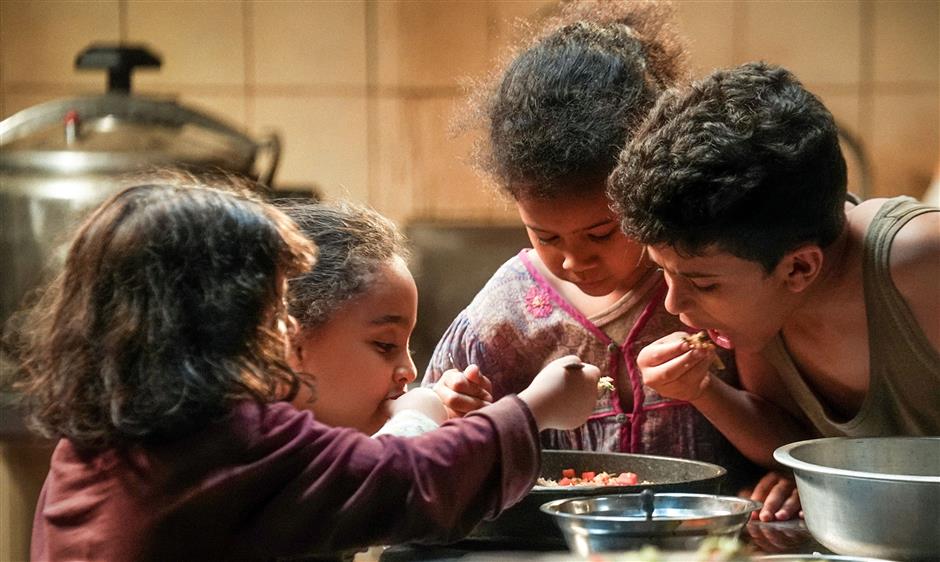
Wen's film reimagines this historical echo for the 21st century. Rather than seeking mythical immortality, this modern Xu finds himself responsible for guiding a vehicle full of displaced orphans through a war-torn wasteland. His journey becomes a narrative of preservation – using ingenuity and everyday labor to shepherd young lives away from destruction toward safety across international borders.
The legacy of the ladle
The film's emotional resonance culminates in its closing sequence. Two decades after escaping the war zone, an older Xu travels back to the region and visits the site of his former restaurant. He discovers that the Dragon Restaurant has been fully rebuilt and reopened. Cooking behind the counter is Seif, now an adult running the kitchen and passing on the trade to others.
This reunion delivers the film's ultimate statement. Seif did not end up on the battlefield, nor did he fall victim to the cycle of retaliation that claimed so many around him. Instead, he inherited a trade that builds community rather than destroying it. The kitchen ladle remains in his hand, representing a conscious choice of livelihood over violence.
"Once Upon a Time in the Middle East" demonstrates a growing maturity in Chinese cinema's engagement with international themes. By replacing military spectacle with the quiet resilience of ordinary people, director Wen delivers a story that transcends regional boundaries.
The film ultimately suggests that true protection in times of crisis is found not in victory or dominance, but in the simple, persistent determination to keep humanity alive through shared warmth, daily meals, and everyday kindness.
(The author, who earned a PhD in linguistics at the University of Illinois Urbana-Champaign, is a professor of English at Sanda University, Shanghai.)
Editor: Liu Qi
In Case You Missed It...
![[SH Transit] Shanghai Metro Riders Face Fare Increase of About 1 Yuan On Average](https://obj.shine.cn/files/2026/08/19/28ca0687-06f0-4a86-a065-4a6ab9586fa9_0.jpg)
 Aug 19, 2026



![[Quick News] China Adds Kyrgyzstan, Vietnam to Visa-Free Travel Programs](https://obj.shine.cn/files/2026/08/20/1099ff75-f8ac-46c1-a05b-d28dd8bc7217_0.jpg)