
Synergy of Finance, Technology a Keystone in China Vision of the Future
Editor's note:
China recently released the blueprint for the 15th Five-Year Plan (2026-2030), outlining how the nation will move up the value chain in industry and spur innovation, become more self-reliant in technology, and improve living standards. The new plan, which comes amid a more disquieting global environment, will go to the National People's Congress in March for adoption. This series provides insights into China's vision of its path forward.

China's multi-trillion-dollar financial industry and the nation's leading role in global technology development are bedfellows in the 15th Five-Year Plan (2026-2030), and Shanghai is poised to play a pivotal role in advancing their synergy.
The Chinese government in September reported that bank assets at the end of June totaled about 470 trillion yuan (US$66 trillion), ranking first in the world, and trusts, wealth management and insurance asset management funds were overseeing portfolios totaling 100 trillion yuan. Six of the world's top 10 banks by assets are in China.
The new five-year plan aims to more closely harness the nation's financial clout to the needs of innovation in science and technology, the achievement of national self-reliance and the uplifting of living standards.
"These priorities are the most important missions for the financial sector because they define the future," said Liu Liang, deputy director of the Institute of Applied Economics at the Shanghai Academy of Social Sciences. "Investment and funds should serve the real economy and support high-quality growth as well as improvement in people's livelihoods."
The new plan envisions a centerpiece role for Shanghai.
The city this year surpassed London to rank second globally, behind only New York, in terms of strength in combining finance and technology, according to an index compiled by the Shanghai Fintech Industry Alliance. In 2024, Shanghai's financial sector contributed 807 billion yuan to the city's economy.
Shanghai's financial market has undergone profound changes in terms of function, structure and investment orientation, accompanied by increased funds flow into technology, said Tu Guangshao, chairman of the Executive Council at the Shanghai Finance Institute.
"This trend will accelerate in the next five years," said Tu, who has turned to financial education after retiring as a vice mayor of Shanghai and vice chairman of the China Securities Regulatory Commission.
Agricultural Bank of China is but one example of how finance is the bloodline of new technologies. The world's second-largest bank by assets might at first glance seem the most unlikely of the nation's "big four" state-owned banks to be promoting technology. Yet the bank has implemented a model program catering to tech startups in areas of the Yangtze River Delta region that now host clusters of innovation hubs. The bank has extended loans of more than 1.5 trillion yuan (US$212 billion) for tech companies in the region – 250 billion yuan this year alone.
Overall, Agricultural Bank lending to technology companies increased 20 percent in the first half of this year compared with the start of the year – a pace on par with the other three big banks: Industrial and Commercial Bank of China, China Construction Bank and Bank of China.
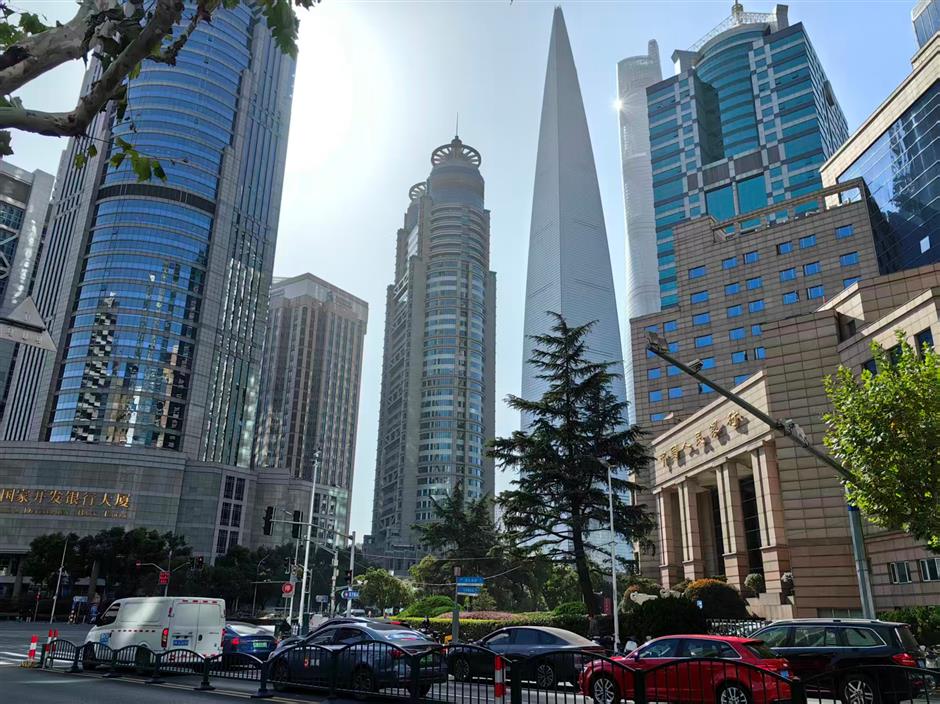
The financial sector in China is not only assisting the advancement of new technologies, but also embracing use of artificial technology to transform its internal operations. Every "big four" banks have invested over 20 billion yuan in each of the past three years in financial technology to enhance competitiveness and management efficiency.
"People can expect the fintech sector to go through rapid changes in the next five years," Liu said. "The whole financial ecosystem is expected to become more targeted, more efficient and safer. So finance serves the technology sector and technology is returning the favor."
This interwoven relationship puts Shanghai in a unique position as it continues its long-held ambition to become a major global financial center.
In June, China released a document guiding Shanghai's development as a global financial center. In the next five to 10 years, it envisions leap-frogging progress in the adaptability, competitiveness and inclusiveness, aided by government commitments to open its financial sector wider to foreign investors and companies.
"Talented professionals are the cornerstone of the financial industry," Tu said. "To achieve new goals, we are in urgent need of professionals with overlapping talents: people who are proficient in finance but at the same time have expertise in specific industries, or corporate management, or markets."
Banks now have programs to hire new recruits that offer experience in areas such as artificial intelligence, semiconductors and biomedicine to better serve clients in selective industries. The new staff should also understand how technology-oriented stock exchanges in Shanghai, Shenzhen and Beijing operate as fundraising sources.
"Shanghai has the advantage of a highly talented pool of professionals," Tu said. "But even there, the ratio of tech-related staff in the financial sector is still low, at about 12-15 percent, compared with up to 25 percent in New York and 22 percent in London."
Aware of the gap, Shanghai has beefed up efforts to nurture professionals with skills beyond just finance. For that, it taps into its advantage as the biggest hub of foreign-invested financial institutions on the Chinese mainland.
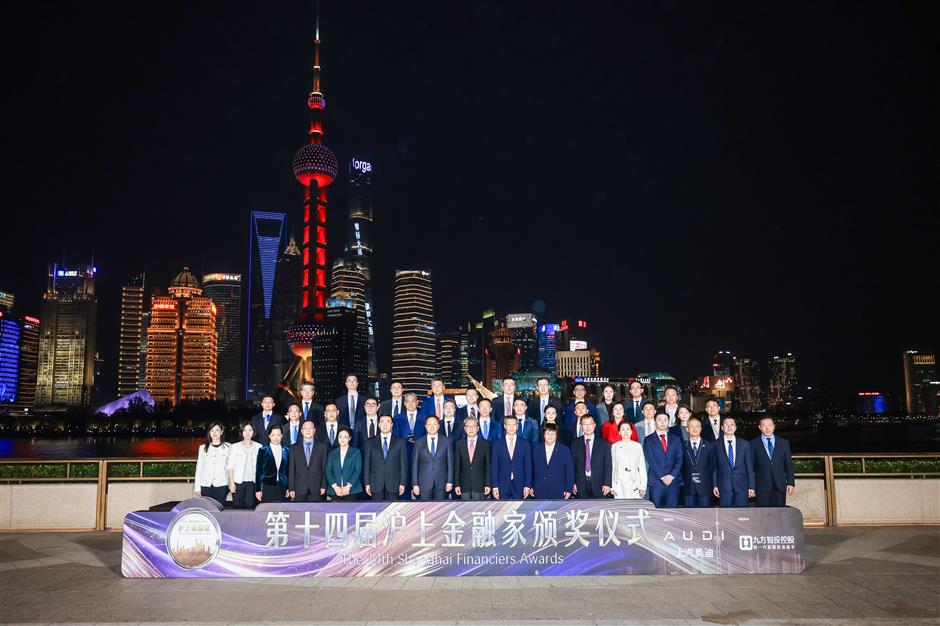
Each year since 2011, Shanghai awards the most talented financiers in the city, including foreign professionals. This year, Ginger Cheng, chief executive of Singapore-based DBS Bank's China arm, and Zou Jianglei, chief executive of First Abu Dhabi Bank China and president of its Shanghai branch, joined 21 winners. In their remarks at the awards ceremony, both said their banks are committed to helping China advance its goals.
"Technologies are advancing and transforming the Chinese society in fundamental and critical ways at an accelerated pace," Cheng said, adding her bank is sharpening its focus in technology and innovation, manufacturing upgrading and energy transition.
Shanghai remains a preferred destination for foreign financial institutions. It is home to nearly 1,800 licensed financial institutions, a third of them foreign-funded. The city's stock exchange ranks among the world's Top 5 in terms of trading volume and includes exchanges for shipping, insurance, futures, bonds and gold.
"Shanghai can develop into a global price-setter for commodities," Liu predicted.
In Case You Missed It...

 Dec 4, 2025


Popular Reads

China Recovers Billions in Taxes from Celebrities, Gas Stations
Ticket Sales for 2026 Formula 1 Chinese GP to Open on Thursday

Police Seek Owner of 1.9M USDT Seized in Criminal Case