AI Bioscience Advances in Connecting Brain Signals to Medical Devices
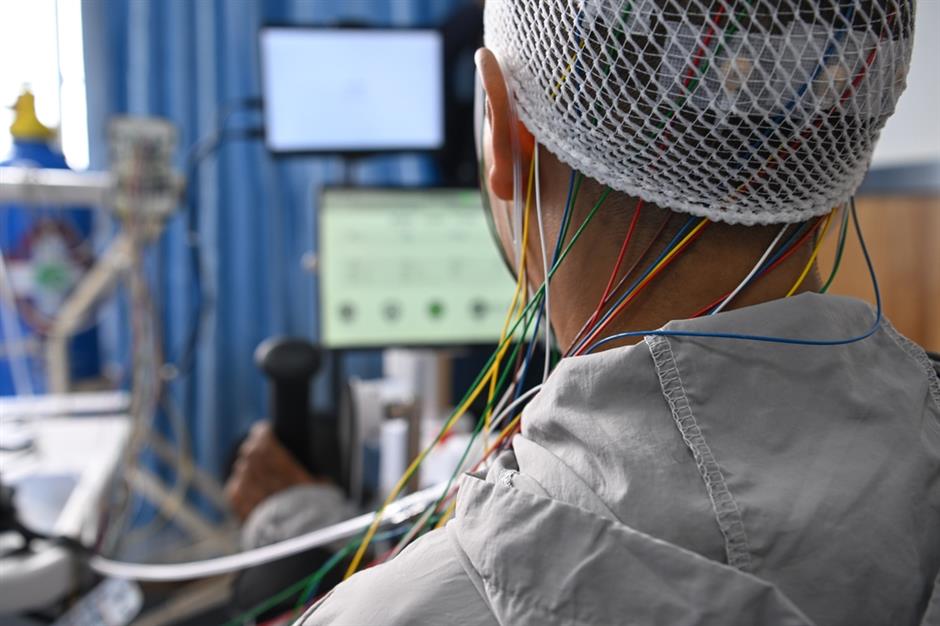
More than a decade ago, Dr Wu Zehan was asking patients to raise their hands 20 times, recording their brain signals and copying the data into a computer for calculation.
The machine was learning slowly. Today, the response can happen within hundreds of milliseconds.
"What really triggered the boom, in my view, is artificial intelligence," said Wu, a neurosurgeon at Huashan Hospital.
Faster decoding now allows brain signals to be translated almost in real time, enabling a robotic arm, a pneumatic glove or a cursor to respond to a patient's intention. That speed is pushing China's brain-computer interface industry into a tougher phase.
After years of futuristic promises, the next test is no longer only whether machines can read or write brain signals. Rather, it is whether the technologies can be approved, tested in hospitals, priced, reimbursed in medical plans and made accessible to patients.
Shanghai is trying to build that missing bridge.
At the Shanghai Brain-Computer Interface Future Industry Cluster, the point is not the exhibition hall itself. It is the attempt to bring start-ups closer to hospitals, testing agencies, incubators, investors and regulators they will need long before a device can reach patients.
The cluster has more than 50 registered companies doing research and development in flexible electrodes, brain-interface chips, visual reconstruction, ultrasound-based interfaces and rehabilitation devices. It also brings together the Sinan BCI Super Incubator, Huashan Hospital's clinical translation platform, Fudan University's technology transfer center and a neural data platform.
For early-stage companies in the industry, the interconnections matter more than the office space. A neural interface cannot be commercialized like an app. It has to survive animal studies, product testing, clinical trials, regulatory review, hospital procurement systems and, eventually, payment channels.
"All our projects ultimately come from clinical needs," said Gao Zhijun, executive general manager of the Sinan BCI Super Incubator.
The incubator, he said, is not just looking for projects, but also helping them move through prototype design, validation, medical-device registration and commercialization.
For companies, the question is whether Shanghai's cluster can shorten the hardest stretch: turning a promising neural interface into something doctors will trust, regulators will approve, hospitals will buy and patients can afford.
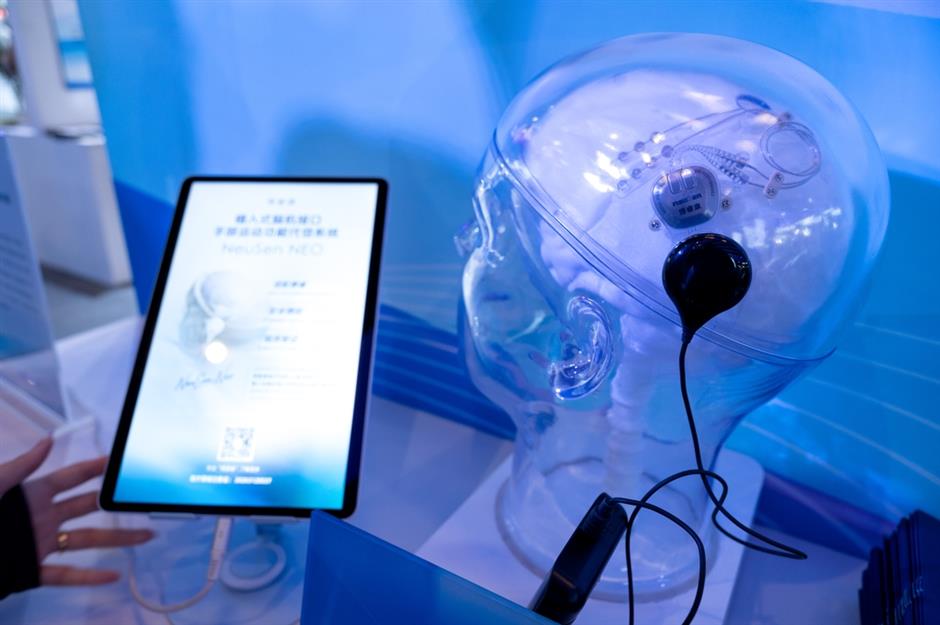
Neuracle offers an early test case. The Shanghai-based company in March has received approval for the world's first marketed Class III invasive brain-computer interface medical device. Its system is designed for quadriplegic patients with cervical spinal cord injuries, using decoded brain signals to help them regain hand-grasp function through a pneumatic glove.
But approval is only the first gate.
"Commercialization means monetization, right?" said Wang Yujing, Neuracle's product and marketing director. "After receiving approval this year, we are now pushing toward that with full effort."
For Neuracle, that means turning a regulated implant into something hospitals can actually offer. The company is working with medical insurance authorities, disability federations and foundations to improve patient access, Wang said. It has also secured a billing code, allowing hospitals to charge for the service, though broader reimbursement channels still need to be negotiated.
"Now we are in a position where it can be charged," Wang said. "The next step is to work with local medical insurance authorities so accessibility can be higher."
The product has not yet been widely rolled out. Wang said the first hospital deployment has not started, partly because production still takes time. The device's price is also expected to become clearer only after it appears on Shanghai's hospital procurement platform.
That makes Neuracle's milestone both symbolic and practical. It shows that invasive brain-computer interface technology can cross the regulatory line. It also shows what comes next: manufacturing, hospital listing, service pricing, reimbursement and the slow work of making an implantable technology affordable enough for real patients.
If Neuracle can boast a regulatory breakthrough, Shaonao Tech demonstrates a more immediate path into hospitals.
The company focuses on non-invasive applications for rehabilitation, using motor-imagery decoding and functional electrical stimulation to help stroke patients recover upper-limb functions. Its core product, a non-implant brain-signal device, received a Class II medical device registration certificate in Shanghai in late 2024.
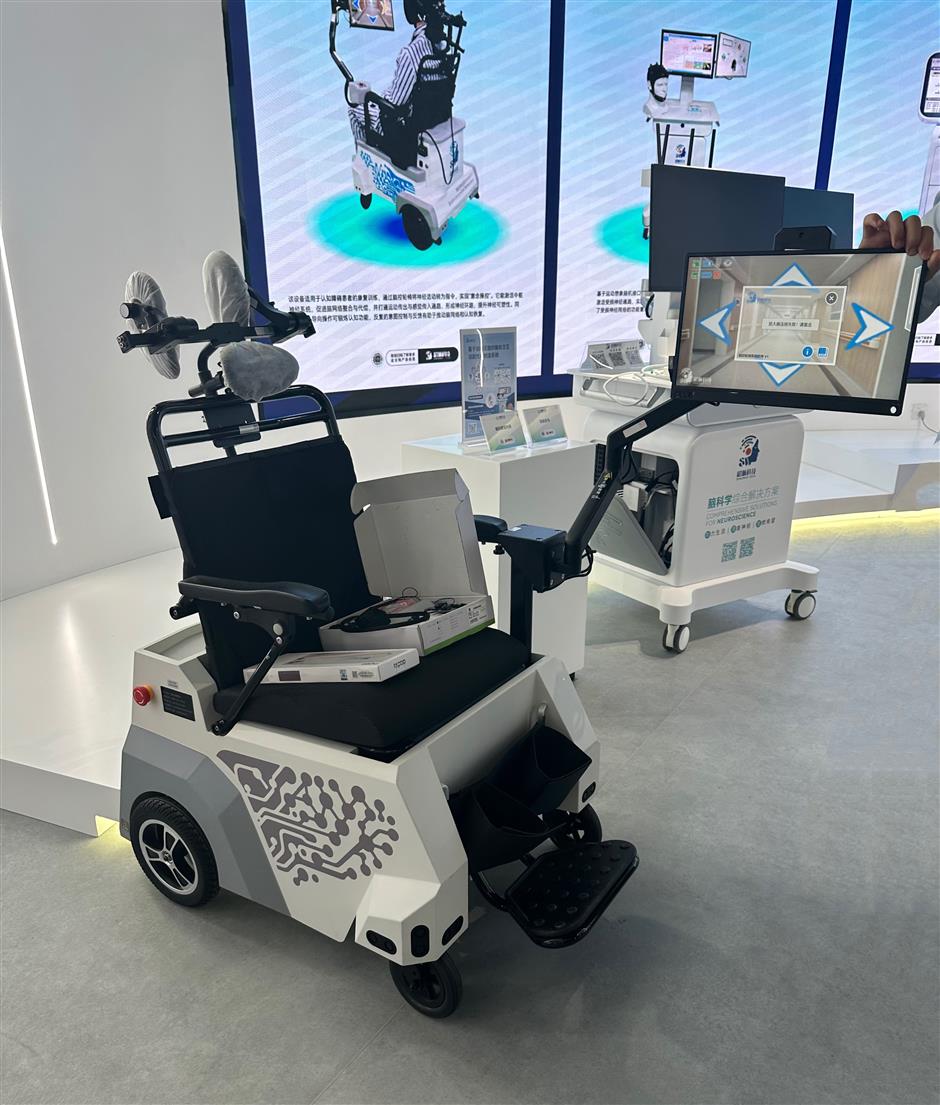
Unlike systems that require surgical implants, Shaonao's product already has visible hospital pricing.
Marketing director Chen Xuanbo said Beijing Tiantan Hospital was its first "customer," with a tender price of 1.32 million yuan (US$194,000). Another recent winning bid was from Wuhan Union Hospital, at 1.04 million yuan.
"For an industrial product, the larger the volume, the thinner the cost," he said. "What we hope most is that clinics can start using these new technologies."
The patient-side pricing is also taking shape. Hospitals in Beijing and the provinces of Hubei, Zhejiang and Jiangsu charge between 960-990 yuan for non-invasive brain-interface services. Shanghai is still under independent pricing, with different hospitals charging from several hundred yuan to more than 900 yuan.
That puts non-invasive brain-computer interface closer to routine clinical use over more costly implant systems. It also exposes a different commercial test: whether hospitals will buy the equipment, whether therapists can integrate it into rehabilitation work and whether enough patients will use it frequently enough to support the business model.
Mindtrix, another company in the industry, is advancing visual restoration, one of the most closely watched frontiers in the sector. Rather than reading neural activity, the system writes information directly into the brain. A camera captures the outside world, converts images into stimulation signals, and transmits them to electrodes implanted in the visual cortex, bypassing damaged eyes or optic nerves.
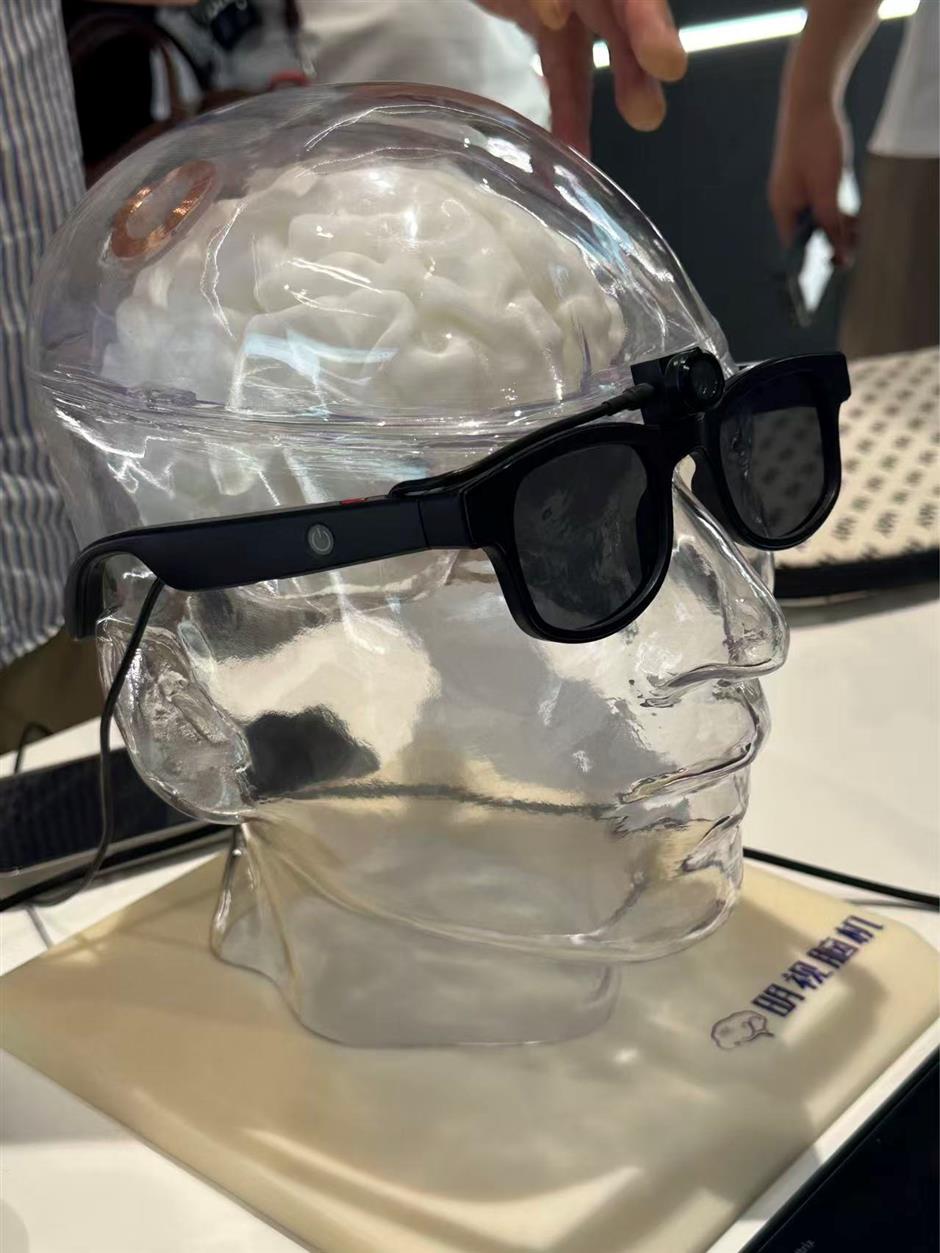
"It is not coding. It is writing," said Kevin Chen, the company's chief marketing officer. "Visual reconstruction is only the first milestone."
The immediate objective is not to replicate natural sight. Chen described it as "functional vision" – enough visual information for patients to discern rough shapes, avoid obstacles, navigate daily spaces and regain a basic level of social interaction.
He cautioned against overestimating the technology. Reconstructed images are closer to low-resolution black, white and gray patterns than natural vision. While a healthy human retina contains roughly 100 million photoreceptors, Mindtrix's system targets approximately 1,000 stimulation channels.
Mindtrix is already testing the system with Huashan Hospital in Shanghai and other major health facilities in Beijing and Wuhan, Chen said. But a commercial product remains years away. The company expects to begin clinical trials around 2028 and hopes to obtain approval by 2031. A future procedure, including surgery and rehabilitation, could cost about 300,000 yuan, he estimated.
For all its futuristic appeal, visual reconstruction remains a medical-device story. Clinical evidence, safety, durability, reimbursement and patient selection will determine whether it moves beyond the demonstration phase.
For Huashan Hosital's Dr Wu, the physician's role is not to sell the promise of brain-computer interface, but to narrow the gap between what companies can build and what patients can realistically gain.
Patients need to know what risks they are taking, what benefits are likely, what may require a year or two of training, and what may never happen, he said.
"We need to convey that information accurately to patients," Wu said. "That is the most meaningful thing we are doing now."
That may be the clearest test for China's brain-computer interface industry as it moves closer to the market. Not whether a signal can move faster, but whether the promise can be translated into evidence, cost and risk that patients can understand – and accept.
Editor: Liu Qi
In Case You Missed It...

 Jul 14, 2026
![[Hai Guide] 3 of the Best Hair Salons for Different Hair Types](https://obj.shine.cn/files/2026/07/14/a0f99b65-754c-4a4e-b464-c811cd5b9af9_0.jpg)
![[Quick News] Heat and Wind Alerts Replace Typhoon Bavi](https://obj.shine.cn/files/2026/07/13/da1d3f25-e63b-4bab-ad27-864c77152148_0.jpg)
![[BIG News] A World FIRST Medical Breakthrough in Shanghai Beats Elon Musk](https://obj.shine.cn/files/2026/07/15/d6043723-2c5f-451a-ae17-30c1f9213cf5_0.jpg)