Daily Buzz: 18 March 2026
Top News
Iranian Officials Killed by Israel, US Counterintelligence Chief Quits
Iran confirmed security chief Ali Larijani, one of Tehran's most powerful decision-makers, is dead, hours after Israel said he was killed in an air strike. Gholamreza Soleimani, commander of the Basij paramilitary group, was also killed. Joe Kent, the top US counterintelligence official, resigned in protest of the war, saying "Iran posed no immediate threat to our nation" and the US was coerced into supporting the war by Israel. The US aircraft carrier Gerald R. Ford left the Gulf region and headed back to port in Crete after a fire broke out in its laundry area that took 30 hours to extinguish, the New York Times reported. The Pentagon declined to explain the cause of the fire.
The United Arab Emirates briefly closed its air space due to incoming drones, Officials there are assessing damage from a fire at a natural gas field caused by a drone hit that forced a suspension of activity. Abu Dhabi suspended operations at a major gas field after a drone attack, and a tanker anchored near a key UAE oil port was struck. The US embassy in Baghdad was hit for a third time, and a drone landed atop the luxury al-Rasheed Hotel in the city's heavily fortified "green zone." A separate strike hit a house reportedly hosting Iranian advisors to Iranian-backed militias in the country.
Israel said its troops have begun limited ground operations against Hezbollah strongholds in southern Lebanon. Beirut said Israeli strikes on Lebanon have killed 912 people, including at least 111 children, and left more than a million displaced. The UN said Israeli attacks on residential buildings and civilian infrastructure may amount to war crimes.
Investors doubted US plans to unblock the Strait of Hormuz to allow tanker shipping to resume, sending oil prices higher. Benchmark Brent was up 3.3 percent at US$103.50 in late New York trading.
Afghanistan Accuses Pakistan Air Strikes of Hitting Hospital
Afghanistan accused Pakistan of targeting an addiction rehab hospital in Kabul, killing an estimated 400 people. Pakistan said air strikes didn't hit any civilian sites. A long-simmering dispute between Pakistan and the Taliban-led government has erupted into cross-border attacks in the past month. Karachi claims Afghanistan is supporting and sheltering militants conducting attacks in Pakistan, a claim the Taliban deny.
Top Business
Baidu Unveils 'Lobsters' to Capture Hot China Market
Chinese tech giant Baidu dashed into the domestic frenzy over OpenClaw by unveiling a suite of artificial intelligence products on Tuesday. The open-source agents, dubbed "lobsters," can perform complex tasks with less human input than chatbots, and are used in desktop software, cloud services, mobile tools and smart-home devices. Alibaba and Tencent are also rolling out products to capitalize on the popular trend. Speaking at a company event, Baidu Executive Vice-President Shen Dou said the technology signals a "new era" that could reshape how software connects devices and services. However, he cautioned, "This lobster is still not perfect. It makes mistakes, takes detours and sometimes even complicates simple things." Baidu's agent ecosystem includes the DuMate desktop assistant, the RedClaw mobile platform and cloud service DuClaw.
Fuyao Glass Post Higher Profit, Cites Forward Risks
Fuyao Glass Industry Group, a Chinese company that gained notoriety in a documentary produced by former US president Barack Obama, reported 2025 revenue of 45.79 billion yuan (US$6.35 billion), up 16.7 percent from a year earlier, while net profit attributable to shareholders rose 24.2 percent to 9.31 billion yuan. The company said fourth-quarter profit totaled 12.5 billion yuan and profit was 2.25 billion yuan, but gave no comparative figures. The company said growth was supported by rising global automobile production and continued expansion of its overseas operations, which accounted for half of revenue. But it warned about risks from geopolitical conflicts and trade tensions. Fuyao supplies automotive glass to major carmakers including Ford, General Motors, Volkswagen and Tesla.
The company has major operations in the US, where sentiment toward Chinese investments has soured under the Trump administration. In 2014, the company took over a former General Motors factory to establish its first glass plant in the US. The facility later drew attention over violations of workplace safety standards and labor disputes. It was featured in the 2019 documentary "American Factory," produced by Obama, that highlighted some negative effects of globalization. A Fuyao site in the US was raided last year by federal immigration agents investigating allegations of employing undocumented workers.
SK Chairman Sees Chip Shortage Lasting Until 2030
Chey Tae-won, chairman of South Korea's SK Group, whose SK Hynix subsidiary is a chipmaking giant, said the global shortage in wafers is likely to last until 2030. SK Hynix is the main supplier of high-bandwidth memory chips to Nvidia and holds a third of the global market for dynamic random-access memory chips. Chey said hot demand from AI technologies will mean the company needs to increase wafer production, which could take four to five years. "So we expect more than a 20 percent shortage of the wafers," he was quoted by Reuters as saying.
Separately, Samsung Electronics, the world's largest memory chipmaker, faces potential disruption to semiconductor output as union workers prepare to vote on an 18-day strike planned for May. The walkout could halt production at the South Korean company's key Pyeongtaek complex, affecting roughly half of its chip output. The labor dispute revolves around wages, with the union demanding a 7 percent increase and Samsung offering 6.2 percent.
Pharma Giants Race to Embrace AI
Global drugmakers are accelerating investment in AI infrastructure, with Roche and Eli Lilly deploying large-scale computing power to speed up research and development. Roche said it has installed 2,176 Nvidia graphics processing units across the US and Europe, expanding capabilities in drug discovery, data analysis and clinical trials. Earlier this month, Eli Lilly launched LillyPod, described as the first fully company-operated AI drug discovery facility, equipped with more than 1,000 Nvidia Blackwell Ultra chips. The surge in investment reflects intensifying competition among pharmaceutical firms to shorten development timelines and reduce costs. Companies including AstraZeneca and Pfizer are also pursuing AI partnerships and acquisitions. McKinsey estimates that advanced AI systems could boost clinical development productivity by up to 45 percent over the next five years
Economy & Markets
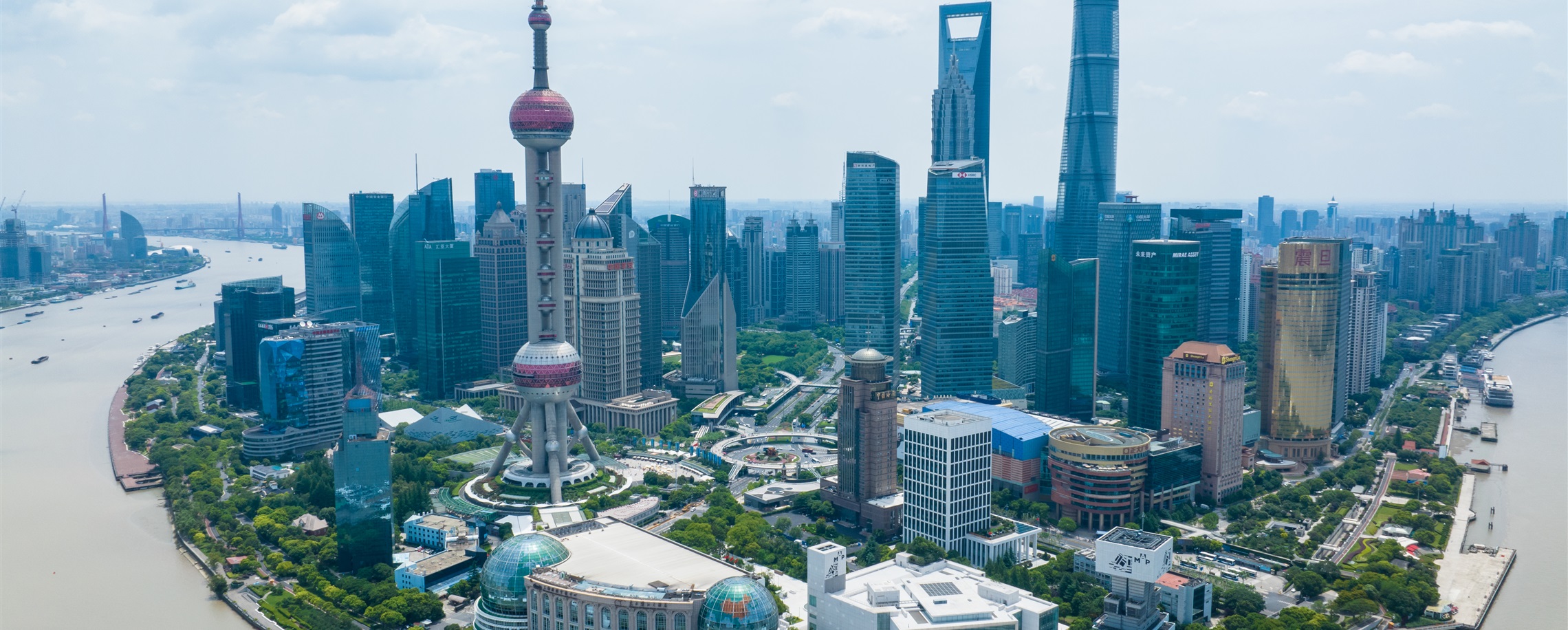
Shanghai Lowers Commercial Mortgage Downpayment
Shanghai lowered the minimum down payment requirement for loans on commercial-use properties – including shops and business flats – from 50 percent to at least 30 percent in a move to reduce excess inventory in the sector, the South China Morning Post reported. China cut minimum down payments for residential mortgages to 15 per cent in 2024 to address the slump in real estate. Shanghai's move marks its first adjustment to commercial property lending rules in more than a decade, and follows similar easing measures in cities including Shenzhen, Guangzhou and Chongqing.
Ant Completes Purchase of Majority Stake in Bright Smart
Ant Group, the financial affiliate of Alibaba, said it completed Chinese mainland regulatory requirements to acquire the Hong Kong-listed brokerage Bright Smart Securities. A year ago, Ant announced it would acquire a 50.55 percent stake in Bright Smart for HK$2.8 billion (US$358 million) through its subsidiary Wealthiness and Prosperity Holding. Completion of the deal will trigger a possible unconditional mandatory cash offer for all outstanding shares in Bright Smart.
Glencore Taps Wuxi Cobalt Supply for Mainland Car Makers
Anglo-Swiss commodity trader Glencore has pulled sizeable cobalt stocks from China's Wuxi exchange to honor commitments to electric-vehicle battery makers in the country, due to limited supply of the material, Reuters reported. Glencore supplies Chinese clients with cobalt mined in the Democratic Republic of Congo, which accounts for about 72 percent of global supplies. After the Congo government suspended cobalt exports for eight months last year to bolster prices, Glencore moved cobalt it stockpiled in Malaysia to China. Cobalt stocks in Wuxi have more than halved since late January to around 3,934 tons.
Hog Prices Drop, Eating Into China Breeders' Revenue
Hog prices in China have hit a seven-year low, putting pressure on breeders. Though 19 listed pig breeders reported about a 10 percent rise in sales, to 30.4 million hogs, in the first two months of this year, a 15 percent plunge in spot prices eroded revenue, Yicai Global reported. Industry leader Muyuan Foodstuff said it sold more than 11.6 million hogs in the two months, but revenue dropped 12 percent-24 percent from a year earlier. Wens Foodstuff said revenue fell 16 percent. Pork is a staple food in China.
Guinea Moves to Curb Bauxite Output
The western Africa country of Guinea, a major supplier of bauxite to Chinese aluminum refiners, said it is considering tighter controls on bauxite production and exports to stabilize prices after a sharp decline in the global market. Bauxite prices have nearly halved since early 2025. Guinea's plans mirror nationalist policies in resource-rich countries like Congo and Zimbabwe, which have imposed export restrictions on materials used in battery making. Guinea said it is not banning exports but intends to regulate volumes to balance market stability and industry development.
Corporate
Nvidia Says It's Restarting Production on China Chips
Nvidia Chief Executive Jensen Huang said the company is restarting manufacture of H200 AI chips for the China market, saying "our supply chain is getting fired up." The US has eased restrictions on sale of the less powerful chips to China, but it remains unclear whether Chinese companies will rush to buy the chips amid the nation's drive for self-sufficiency in technology. Nvidia has yet to include China data in its financial forecasts. Nvidia also said China automakers BYD and Geely are among the companies that will use its Drive Hyperion platform to move to the next higher step in autonomous vehicles, called Level 4.
Separately, Chinese game companies are expected to be major beneficiaries of Nvidia's newly unveiled DLSS 5 graphic upgrade, which moves the industry closer to cinematic reality. China's gaming sector, including Tencent Netease, accounts for about half of titles that use the technology.
VW Turns to Chinese Mainland Chipmakers, Unveils New Model
Volkswagen will largely bypass Nvidia and turn to mainland chipmakers as part of plans to recoup its former dominance in China, CNBC reported. "For us, there is no reason to stick with Nvidia," Thomas Ulbrich, chief technology officer of Volkswagen China, was quoted as saying. For semiconductors, the company has a joint venture with Chinese automotive chip maker Horizon Robotics, and a partnership with electric car company Xpeng.
Separately, the German company and its joint-venture partner Shanghai-based SAIC released their first-ever extended-range electric vehicle model globally in China to compete with domestic rivals. The ID. Era 9X is a six-seat SUV that VW describes as the company's largest-ever passenger car. The car deploys both pure electric and hybrid power. Sales of extended-range electric vehicles totaled 1.2 million units last year, according to the China Passenger Car Association.
Google Reportedly Scouts China for Data Center Cooling Systems
Google is in talks with China's Envicool and other Chinese firms about buying liquid cooling equipment for data centers, Reuters reported. The systems are critical in AI data centers, which generate more heat than traditional air cooling systems can handle. Shenzhen-listed Envicool declined comment. Chinese suppliers are gaining global traction in the growth of data centers. The market for AI liquid cooling systems is projected to surge to more than US$17 billion this year from US$8.9 billion in 2025, according to investment bank JPMorgan.
Tennis anyone?
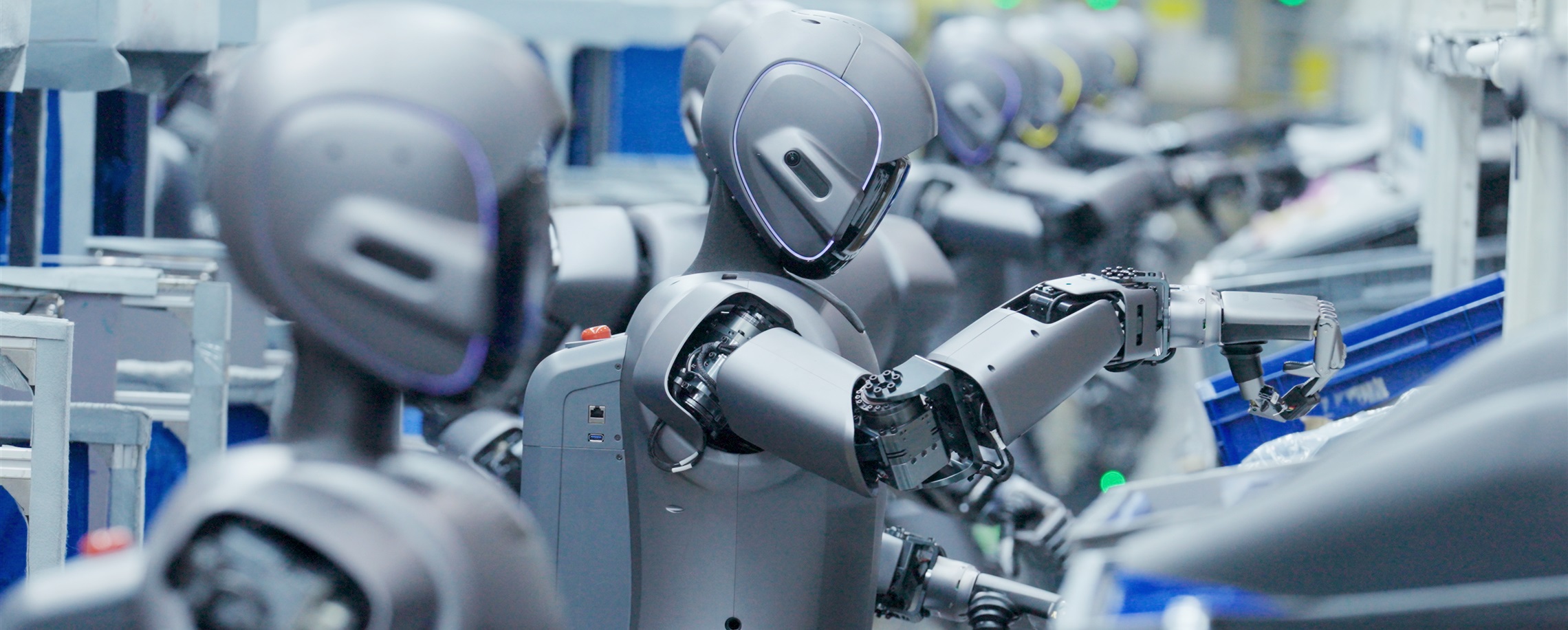
Beijing-based Galbot unveiled the world's first fully autonomous humanoid tennis robot, capable of playing against humans on the court. The robot was developed in collaboration with a Tsinghua University team. The robot uses a latent control algorithm and learns autonomously through deep reinforcement learning.
Editor: Yao Minji
In Case You Missed It...

 Mar 17, 2026