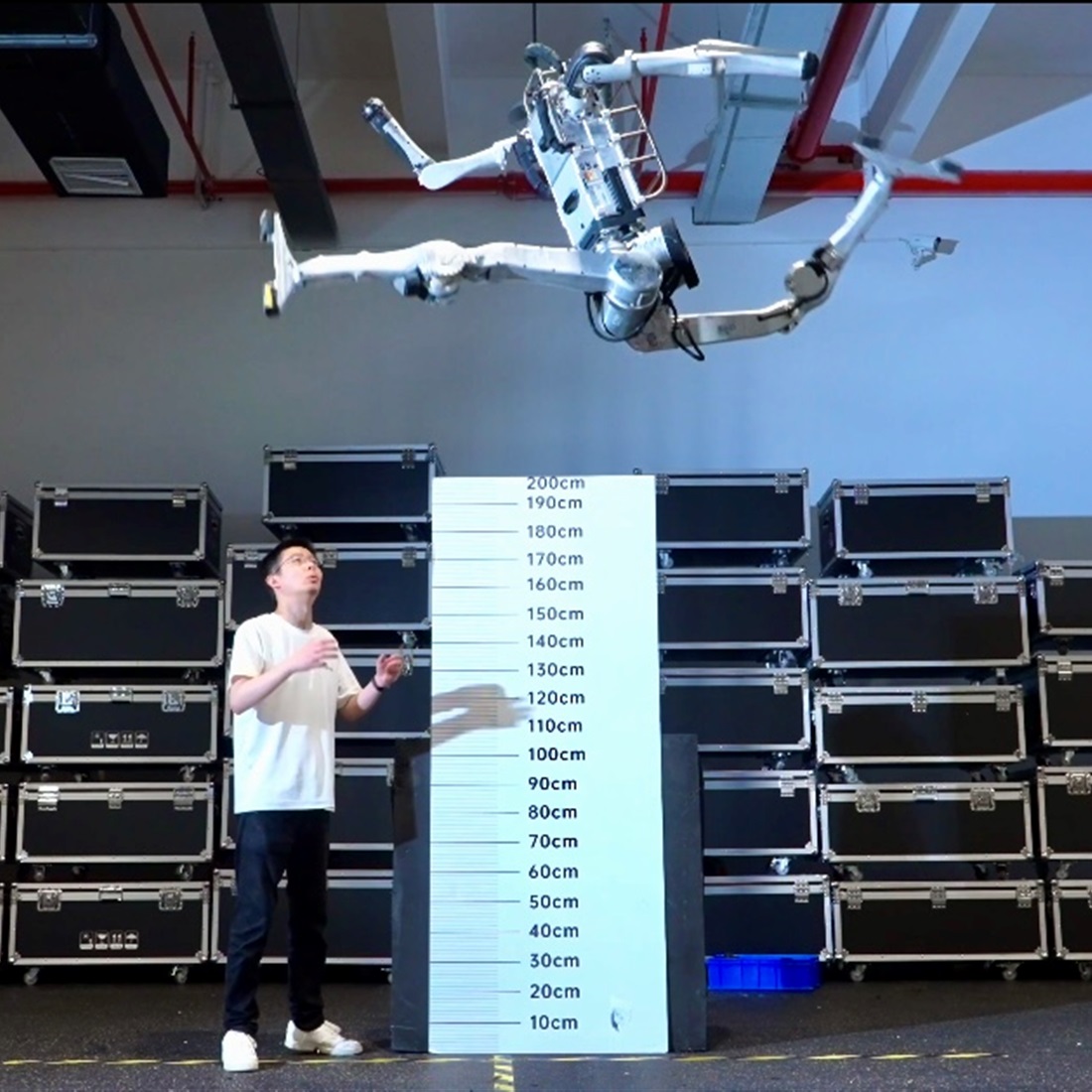
AI Investment Frenzy Turns Technology Shares into Market Stars
Editor's note:
This series explores the "winners" and "losers" of listed Chinese companies in terms of share prices in 2025, the reasons behind and possible winners in 2026.
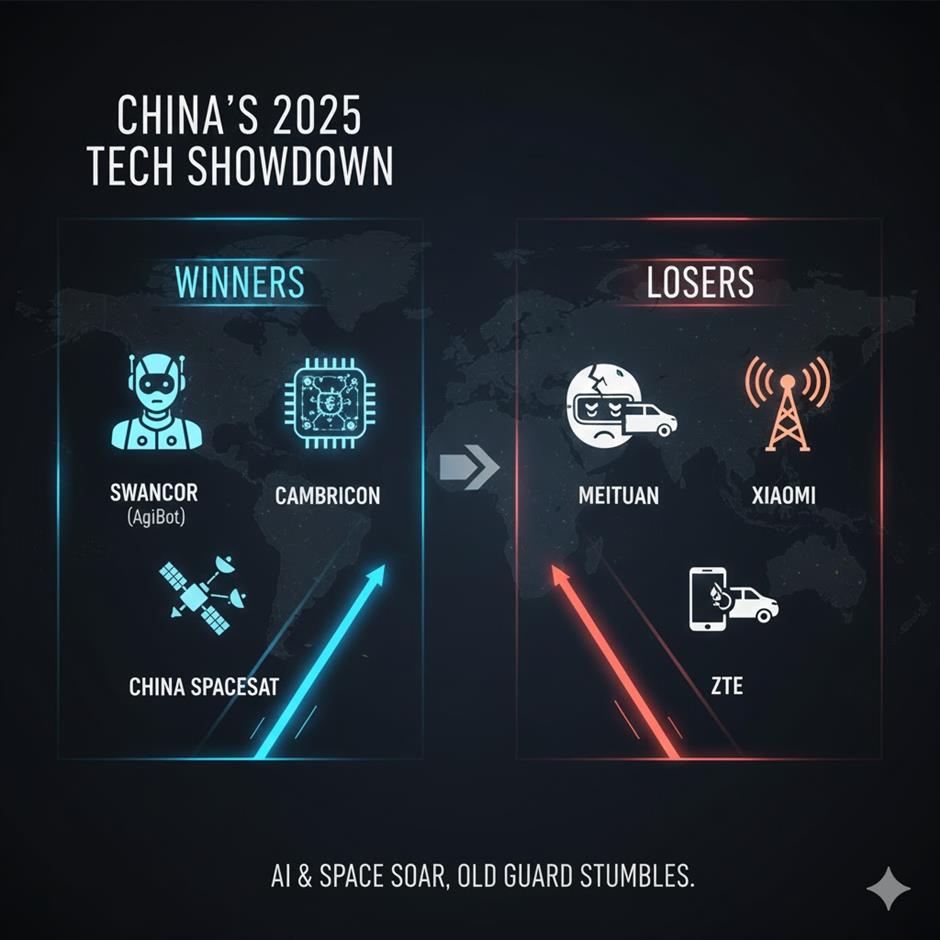
Technology was the big game-changer of 2025 as artificial intelligence began moving out of the laboratory into industry, finance, communications, e-commerce, automobiles, consumer electronics and indeed all facets touching our daily lives.
In Chinese capital markets, this shift created a new generation of "supernova" stocks. The sterling example was Swancor, a Shanghai-listed pioneer in humanoid robotics, which delivered an 18-fold price surge, dwarfing even US chip giant's Nvidia's respectable 39 percent annual growth.
Picking the three biggest winners of 2025 is no easy task because so many high-flyers flooded the market across AI chips, optical communications, brain-computer interface and "China's Starlink" satellite program. The stellar share performances of some companies reflected their status as essential suppliers to big tech names. Shares of Eoptolink Technology, a Nvidia supplier, surged 424 percent in 2025, and UCloud, which provides servers in the DeepSeek ecosystem wave, doubled its share value. Conversely, laggards in 2025 weren't necessarily failing companies, but rather victims of brutal price wars or shifting investor sentiment.
Prominent in any discussion of the 2025 year of technology is the "Elon Musk Effect." Every new Musk investment venture – from Tesla, X and SpaceX to Starlink and Neuralink – sent investors scrambling to find some up-and-coming equivalent in China and identify supply chain links.
Difficult as it is in such a large universe, China Biz Buzz looks at the top winners and laggards that defined the tech landscape in 2025 share trading.
The winners
Swancor Advanced Materials (stock ticker: 688585.SS)
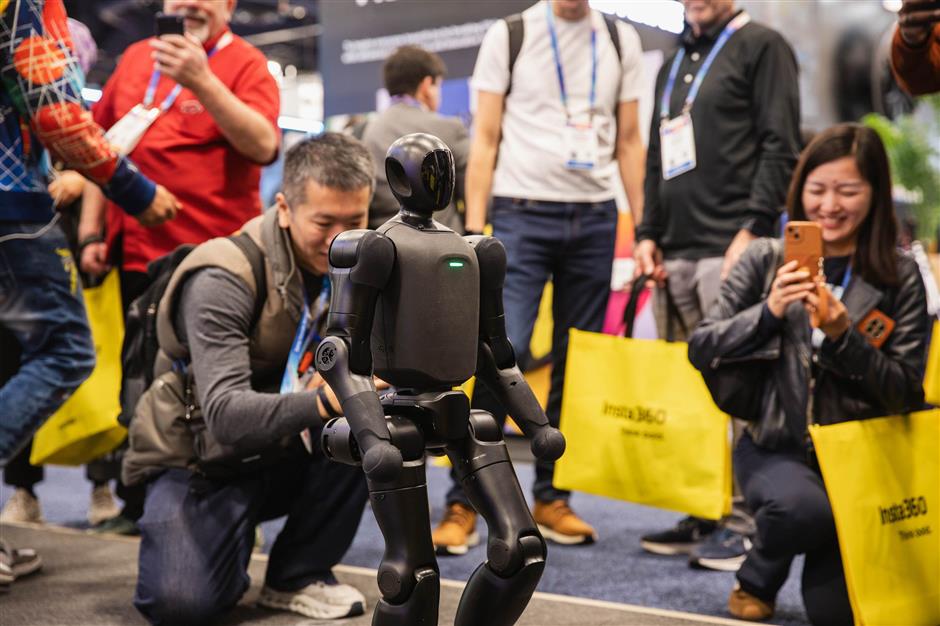
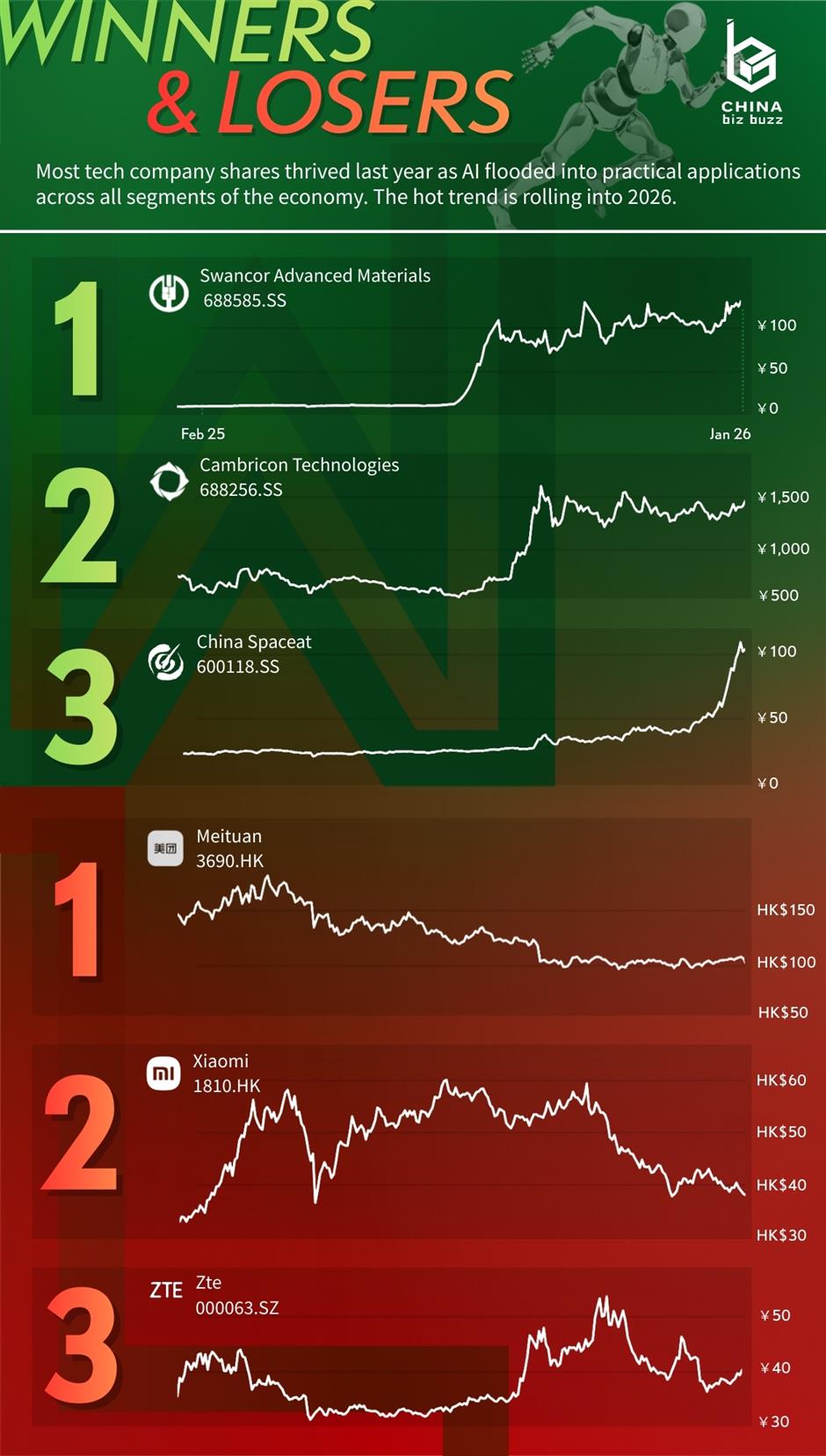
The humanoid robot sector reached a fever pitch in July when Shanghai-based startup AgiBot announced its acquisition of STAR Market-listed Swancor Advanced Materials, effectively becoming the first humanoid developer trading on a Chinese mainland exchange. The acquisition propelled Swancor's share price from about 10 yuan (US$1.43) in July to a peak of 127.37 yuan by December, ending with an 18-fold surge for the year.
AgiBot has pivoted from "showcase" robots to practical applications. By December, it surpassed a production milestone of 5,000 general-purpose intelligent robots at its Shanghai facility, far outstripping domestic competitors. Its robots are now deployed across eight sectors, including smart manufacturing and logistics.
This success also lifted peers like UBTech (9880.HK) and Sanhua Intelligent Controls (002050.SZ), solidifying the sector as a key innovation battleground against Tesla's Optimus.
Cambricon Technologies (688256.SS)
Known as "China's Nvidia," Cambricon briefly became the most expensive stock in China on August 28, when it hit 1,587.91 yuan (US$227.08), unseating the perennial leader, distilled liquor maker Kweichow Moutai. Cambricon shares doubled in value in 2005, ending at 1,355.55 yuan. The stock remains a standard-bearer for China's push for semiconductor self-reliance and a symbol of a new era of investment in the transition of industries into artificial intelligence.
Beijing-based Cambricon, which reported a 43-fold surge in first-half revenue last year, benefited immensely from the domestic vacuum created by US export bans on Nvidia's high-end chips. That advantage also rolled across to fellow AI chip firms such as Moore Threads (688795.SH) and MetaX (688802.SH) ─ two companies with stellar initial public offerings in 2025.
China Spacesat (600118.SS)
As the nation's satellite ambitions under "China's Starlink" program gained traction in the latter half of 2025, Spacesat's share price more than doubled in December alone, closing the year at 94.95 yuan (US$13.58). As a premier satellite manufacturer, the company sits at the heart of China's race to deploy a commercial low-earth orbit constellations involving multi-thousands of satellites.
The system are viewed as critical infrastructure for 6G telecom services and autonomous driving in the next five years. Private rocket launch firms like LandSpace, a pioneer in reusable booster rockets, are poised for initial public offerings this year.
The laggards
Meituan (3690.HK)
E-commerce and food delivery giant Meituan suffered a one-third loss in its share price in 2025, closing at HK$103.30 (US$13.26) as a cutthroat price war with "instant delivery" rivals JD.com (9618.HK) and Alibaba (9988.HK), which eroded profit margins.
Deep discounting and logistical costs led Meituan to swing to a third-quarter loss of 18.6 billion yuan from year-earlier profit. JD.com's share price last year slumped to HK$111.6 from HK$135.6 in 2024. Alibaba's losses on its food-delivery program were largely cushioned by a surge in revenue from its separate AI cloud services.
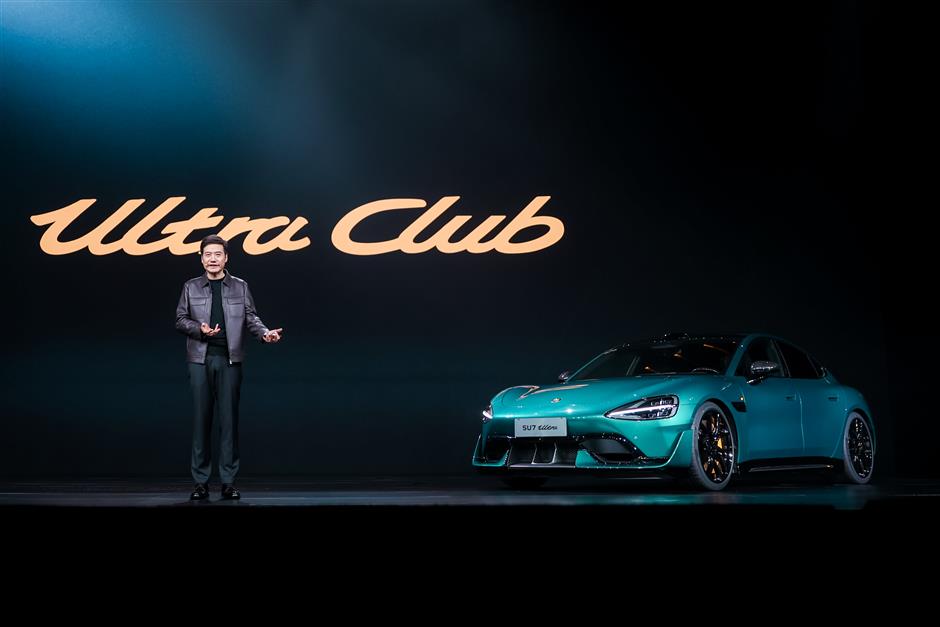
Xiaomi (1810.HK)
The Chinese smartphone maker that expanded into electric vehicles spent a whopping 33 billion yuan (US$4.7 billion) on research in 2025. Its share price trailed those of other industry giants Alibaba, Tencent and Baidu, ending the year with a modest 15 percent gain at a closing price of HK$39 (US$5), far below its June high of HK$61.
The public popularity of its electric vehicles was dented by a series of safety mishaps on roads, forcing company executives into defensive mode. In its core smartphone business, Xiaomi still faces intense competition from Huawei and Apple in the high end of the market. The rising cost of memory chips and other critical components at the end of 2025 could signal a margin squeeze this year.
ZTE Corp (000063.SZ)
Telecom equipment maker ZTE faced a "5G winter" in 2025. Its revenue crossed the 100-billion-yuan (US$14 billion) mark in the first nine months of last year but the company suffered from "growth without profit."
As companies like China Mobile attained maturity in 5G communications and slowed infrastructure spending, ZTE spent billions on AI research and development in an effort to keep pace with rivals like Huawei, resulting in an 88 percent plunge in third-quarter profit. Its share price ended the year at 37.8 yuan, down slightly from its close in 2024.
In Case You Missed It...
 Aug 21, 2026
![[Current Trends] Yes, There ARE More Tourists in China](https://obj.shine.cn/files/2026/08/18/c876e058-fcf3-4a22-b499-65c28f81a72d_0.jpg)
![[Current Trends] Yes, There ARE More Tourists in China](https://obj.shine.cn/files/2026/08/11/061ee7c9-9a21-4c57-a69e-d785f3baf269_0.png)