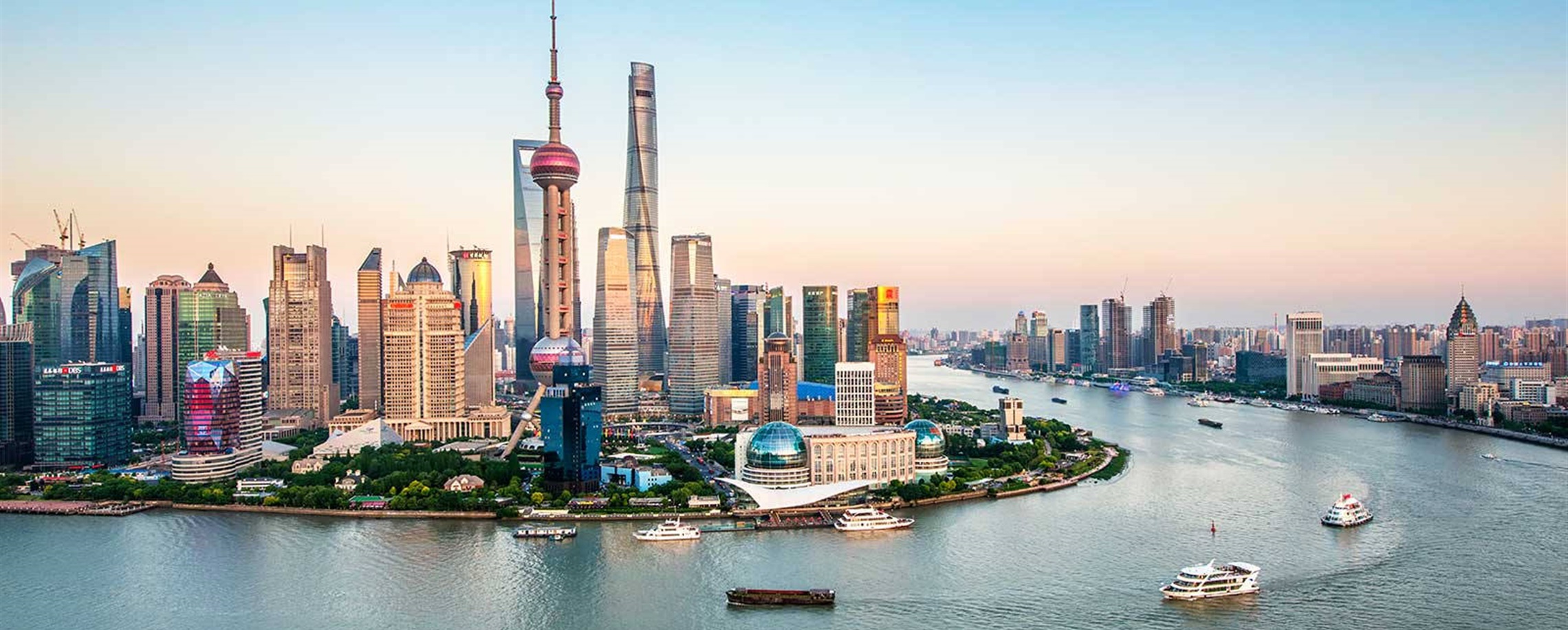
Openness, Innovation and Inclusiveness: Shanghai's Development Strategy Toward 2030
Editor's Note:
The International Business Leaders' Advisory Council for the Mayor (IBLAC) brings together top executives from leading multinationals to share insights on Shanghai's development strategy. Each company brings forward a paper that draws from its global practices as well as local insights. Shanghai Daily has selected and summarized some of the most insightful recommendations for the city.
In recent years, the speed of change across the technological, societal and environmental spheres has been profound. The rapid advancement of technology, especially artificial intelligence, presents both opportunities and challenges – while there are opportunities to create new business models and solutions, AI also presents significant societal and environmental risks.
DBS's paper will assess how AI should be deployed safely and responsibly, and consider how economic growth that leverages technological advancements should be balanced with environmental considerations.
Drawing on the experience of DBS, as well as other nations, including Singapore, the paper will propose ways for Shanghai to accelerate the adoption of green technology and green practices by firms, as well as build deep green capabilities for the long term.

We propose two key points to enable Shanghai to advance toward a greener future: 1) Enabling firms to adopt green practices; 2) Building deep green capabilities.
First, policies can be implemented to facilitate the widespread adoption of green technologies and practices by firms. These include the following practices:
To further provide financial support for enterprises, Shanghai could expand its range of government grants to enable firms to engage in sustainable practices, from implementing existing and new green technologies to reporting on their progress made in sustainability. In addition, sector-specific grants could be provided to encourage the adoption of sustainable practices in key sectors.
To enable firms to build capabilities in sustainability efforts, Shanghai could create a one-stop platform to provide holistic solutions for firms' sustainability needs. The authorities could also broaden access to tools that firms can leverage to improve carbon measurement, tracking, optimization, and sustainability reporting.
To facilitate the transmission of sustainability skills and capabilities along the entire business value chain, Shanghai could explore implementing similar networks as Singapore's SkillsFuture Queen Bee initiative, where larger firms take the lead in providing advice, know-how, and financial assistance to enable smaller firms along their decarbonization journeys.
To further boost its carbon market, Shanghai could offer grants similar to Singapore's Carbon Project Development Grant to support enterprises in developing early-stage high-quality carbon projects and credits. There is also potential for Shanghai to engage in public-private partnerships to explore new forms of carbon credits.
Beyond enabling the widespread adoption of green solutions by enterprises, there are opportunities to build deep system-wide green capabilities through research and development on both green technologies and green AI, building green data centers, developing green talent, as well as engaging in cross-border partnerships to create scalable solutions. We have several recommendations:
To foster greater public-private partnerships to develop novel solutions specific to Shanghai as well as solutions that can be deployed more widely across other regions, the authorities could implement structured programs to link innovators, institutes of higher learning and companies to fast-track the innovation process on key industry challenges.
Shanghai could boost innovations in green hardware and software. For hardware, it could pilot sandbox trials to test new data-center efficiency and sustainability approaches. For software, Shanghai could draw on the learnings from the Singapore's IMDA green software trials that aim to develop green software and reduce energy use and IT costs, and embark on further trials through public-private partnerships.
The city could also encourage the development of R&D centers of excellence on green AI, leveraging its pool of AI research institutes as well as world-class universities. There are opportunities to establish a curated list of publicly available open-source and energy-efficient AI resources that are updated on a regular basis.
To build a strong green talent pool, Shanghai could map out the skills required for the green economy and facilitate collaboration with institutes of higher learning and firms to provide both technical skill training and on-the-job training. Training grants could also be provided to both employers and employees to lower training costs.
Shanghai can further boost the impact of the Shanghai International Neutrality Expo and establish the city as a thought leader in the field. The scope of the expo could be broadened to include advancements in green AI.
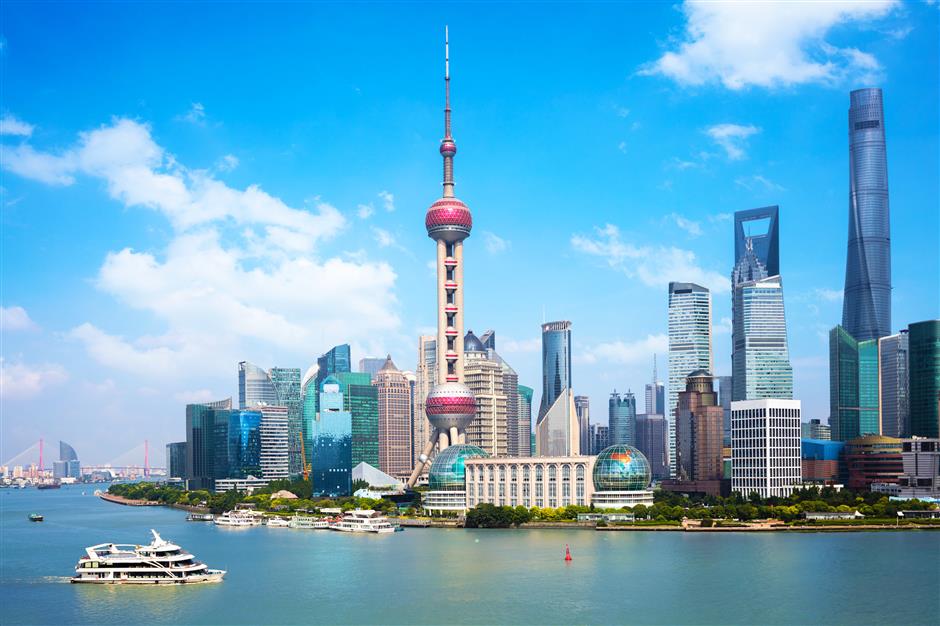
Shanghai is already a leader in AI and green practices in China and the international stage. Continuous progress and increased focus by the city government to incorporate technological advancements and green practices will further cement the city's position as an international metropolis of the future.
Editor: Yao Minji
In Case You Missed It...

 Apr 14, 2026
![[China Tech] Shanghai Doctors Invent New Endoscopic Solutions](https://obj.shine.cn/files/2026/04/13/77d42338-ae02-430d-910e-417329cc7717_0.jpg)
![[Movers & Shakers] Yi-Wen Lee, The 'Plant-Forward Chef Educator'](https://obj.shine.cn/files/2026/04/08/7718e1f7-71d7-4f67-9b9b-1be695346d1d_0.jpg)