Shanghai Promotes Active Management of Chronic Fundus Disease

Standardized and long-term chronic fundus disease management is being promoted by local hospitals.
Leading causes of irreversible blindness in China include fundus disorders. Due to their high recurrence, increasing damage, and lifelong care, they substantially impair visual function and quality of life.
Over half of patients relapse within three years of stopping conventional therapy, causing vision loss. Dr Xu Jian, director of Tongren Hospital's ophthalmology center, gave a public health education lecture on chronic fundus diseases to raise awareness, improve medical adherence, and promote full-cycle eye disease management in the global era of long-acting fundus therapy. One-third of patients develop permanent vision loss after a one-year treatment interruption.
As the regional model of ophthalmic diagnosis and treatment, the hospital has focused on fundus disease management, which requires a paradigm shift from "fire-extinguishing" to "fire-prevention" in clinical care.
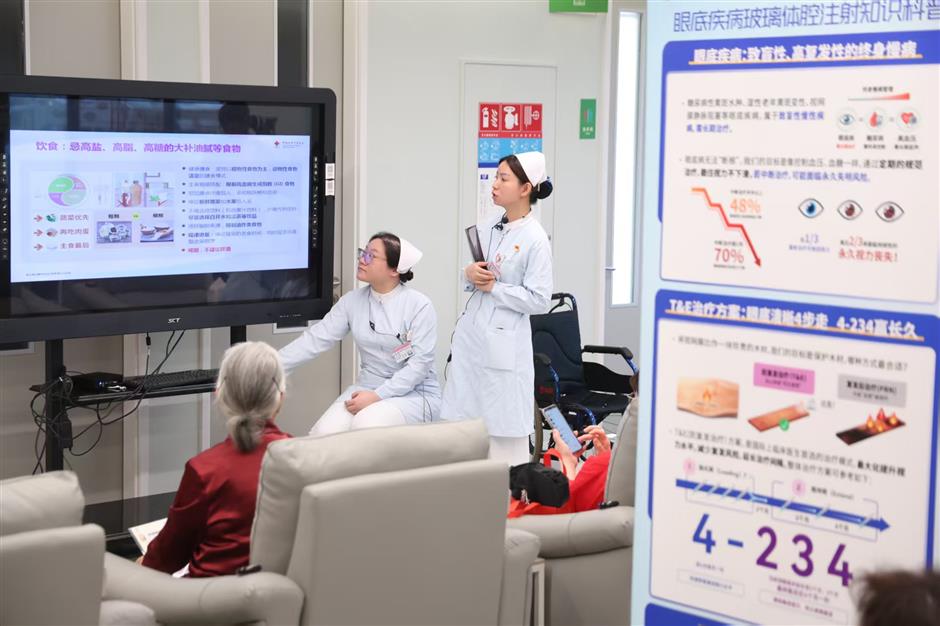
Only until fundus damage causes irreversible vision impairment does the passive method treat lesions. Experts claimed active whole-course therapy minimizes disease flares, stabilizes ocular conditions, and sustainably maintains retinal structure.
The Treat-and-Extend (T&E) strategy, known as the "4-234 pathway," has become the gold standard for chronic fundus disease control thanks to anti-VEGF medicines and long-acting treatment technology. Monthly injections in the first four months speed illness control. Two-month, three-month, and four-month treatment intervals are then added.
This "follow-up-oriented treatment" inhibits retinal fibrosis and preserves eyesight. Experts say it decreases hospital visits, lessens patients' medical burden, and helps them return to regular life.
The event provided home eye care tips. Yi Lan, head nurse of the ophthalmology clinic, taught patients how to preserve medical records and check their eyes at home.
Medical doctors claimed fundus disease therapy takes time. Preventing recurrence and preserving vision requires standardized follow-ups and scientific care. Medical experts said expatriate fundus disease sufferers can attend the facility for standardized and high-quality care.
Editor: Fu Rong
In Case You Missed It...

 Jun 3, 2026