Shanghai Village Gala: a New Year Celebration Rooted in Place, Open to the World
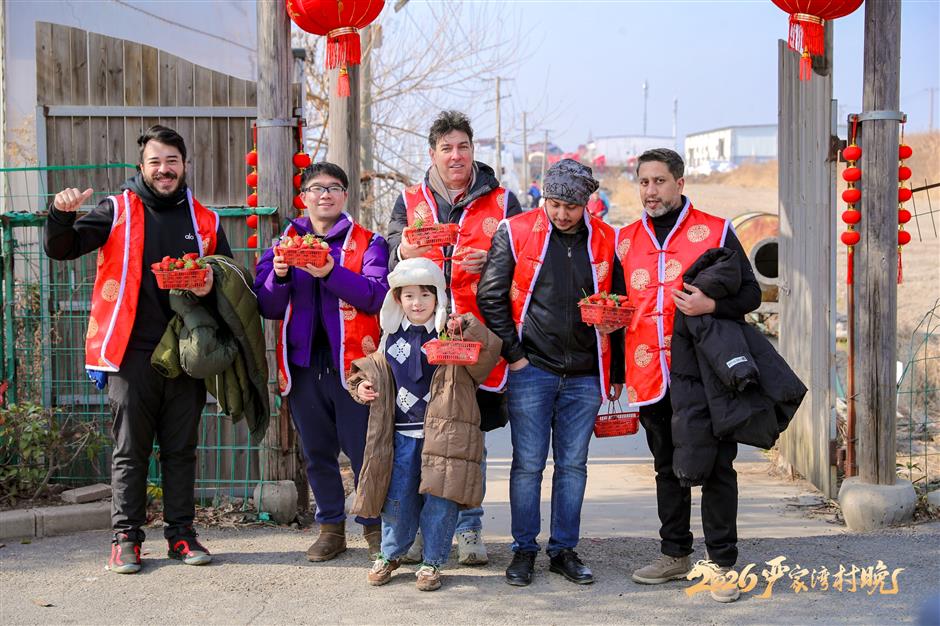
Strawberry picking, paper-cutting, dumpling tasting and folk performances came together in a joyful celebration of Chinese New Year as villagers and international guests from 20 countries gathered along the banks of Suzhou Creek in a small village of Huacao Town in Minhang District.
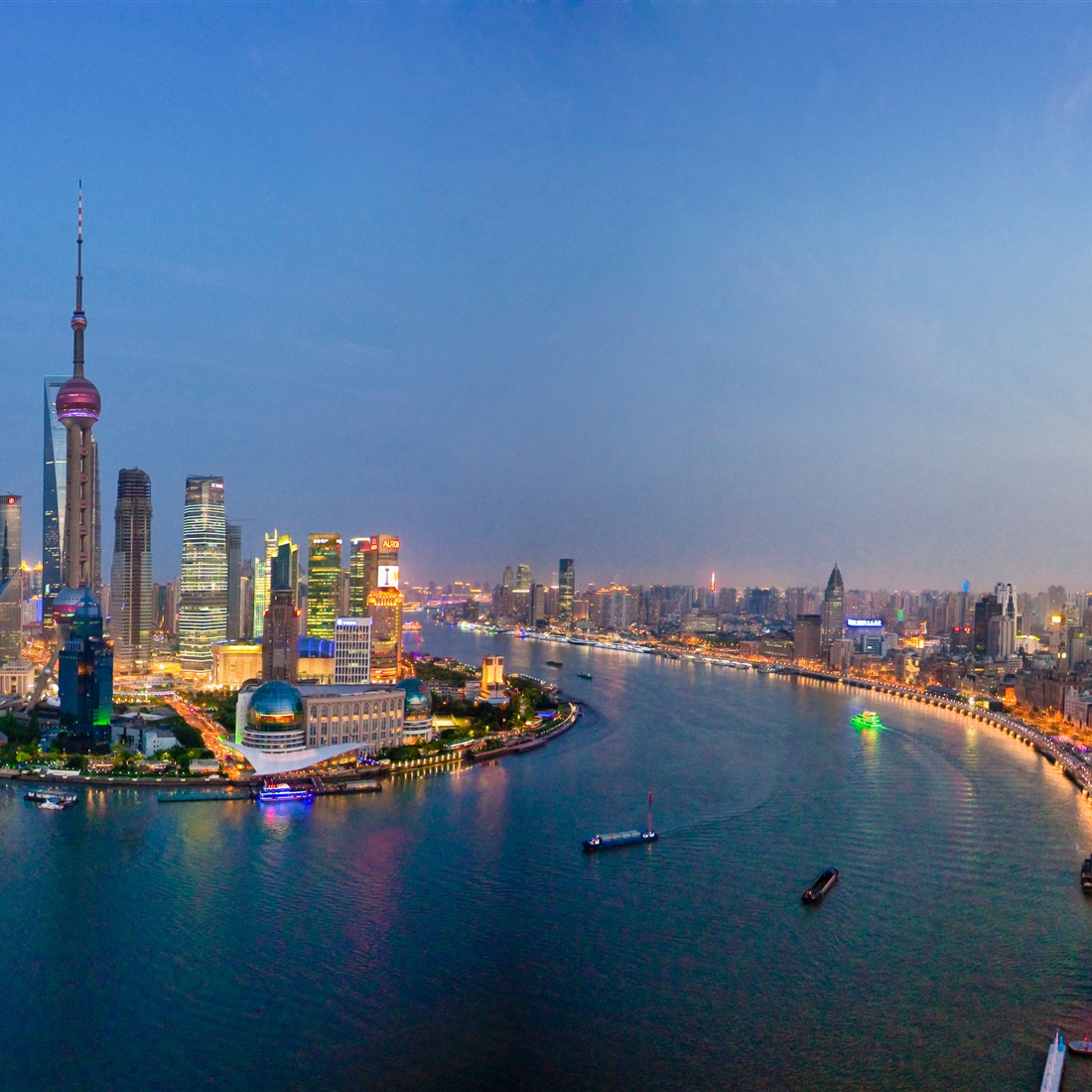
On Thursday, Zhaojiacun, a riverside village on the edge of Shanghai, felt far removed from the city's neon skyline and glass towers. Instead, it welcomed the approaching Year of the Horse with red paper fluttering in winter light, the soft strains of traditional music and the easy warmth of people celebrating side by side.
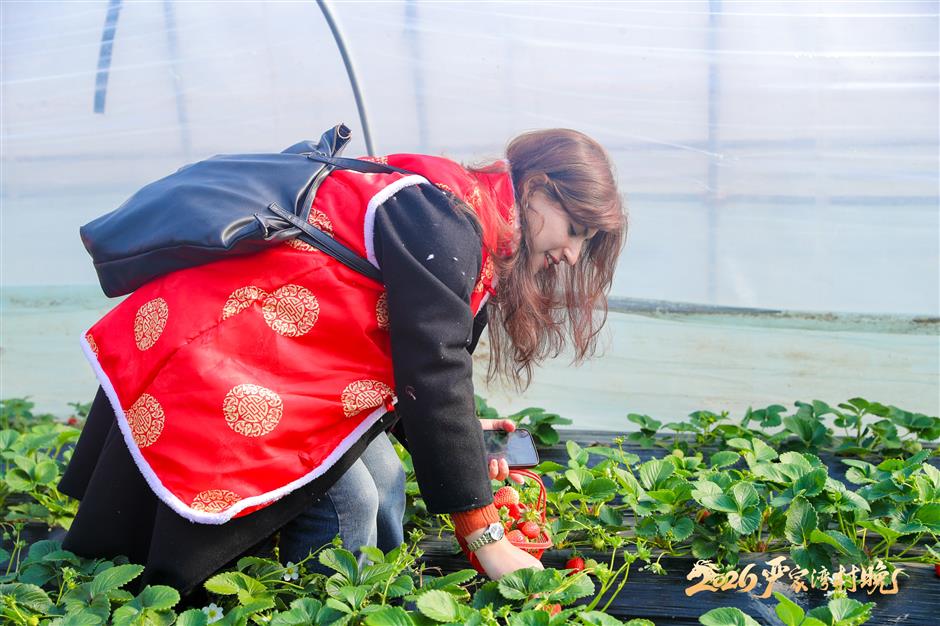
Now in its eighth year, the annual village gala has become something of a local tradition, part family reunion and part cultural open house. For residents, it's a long-awaited highlight of the Spring Festival season. For visitors, it offers a glimpse of a quieter, more intimate Shanghai, where rural life and global perspectives meet naturally.
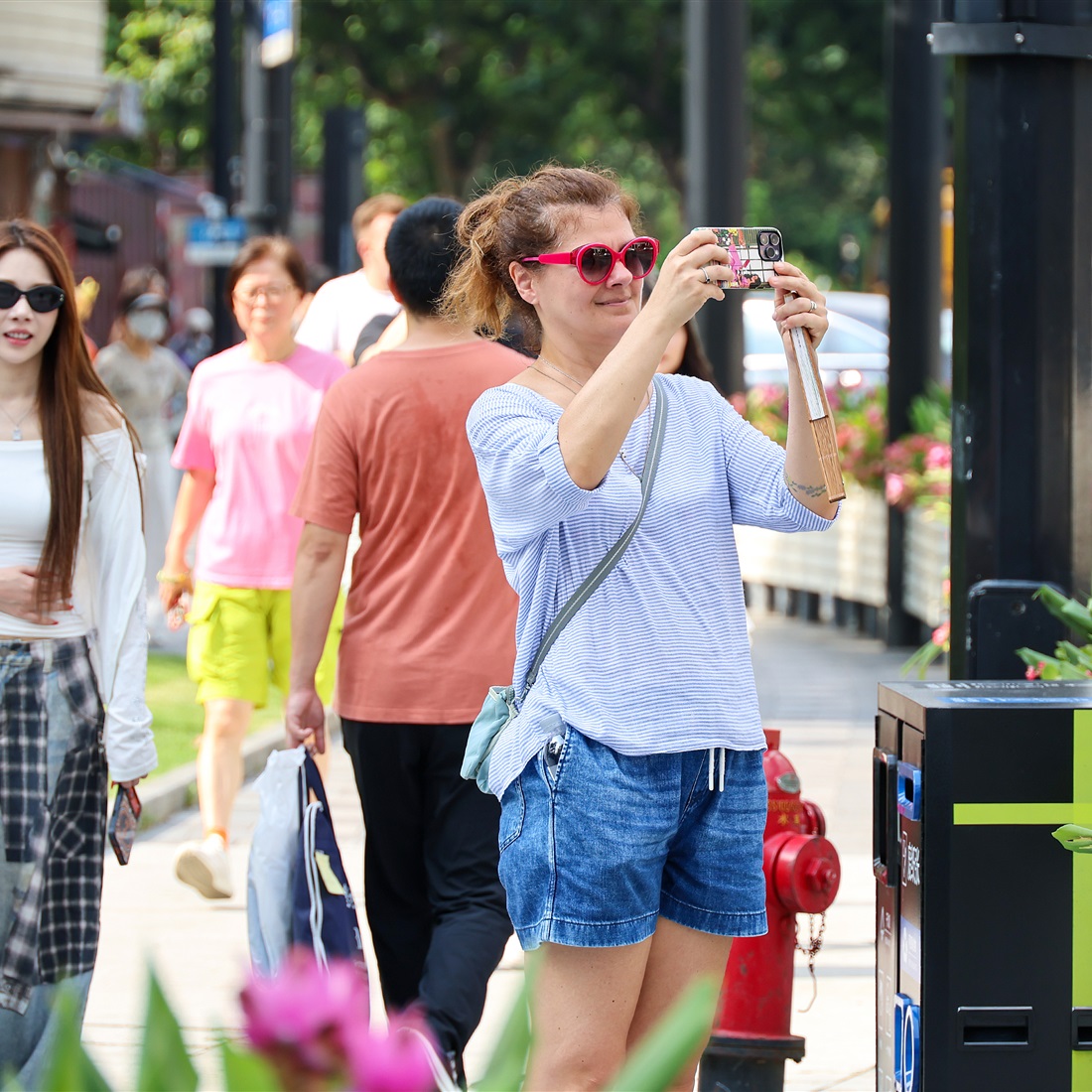
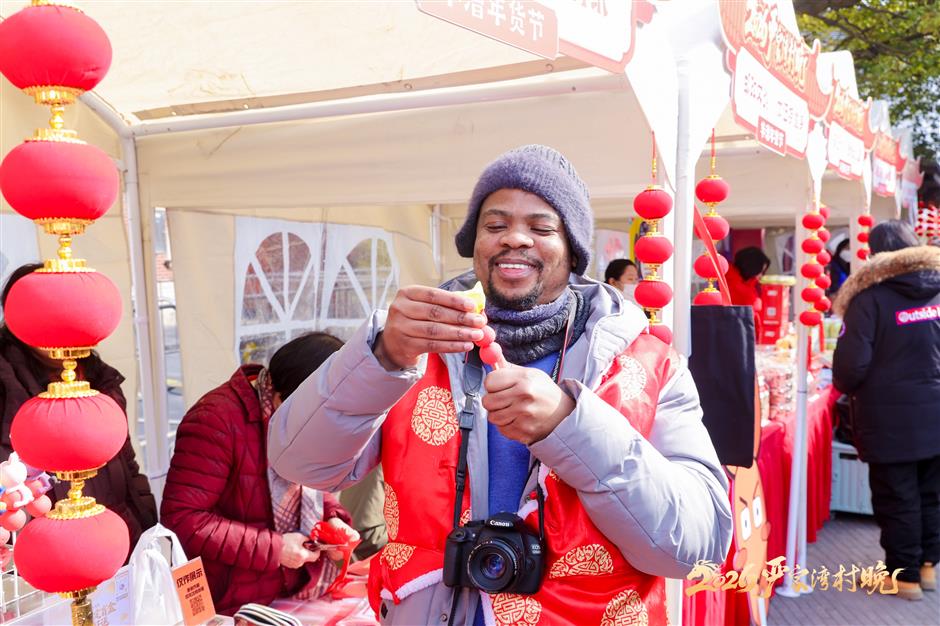
Thai lifestyle vlogger Gina moved through the crowd with her camera, capturing moments between performances. Having lived in Shanghai for a decade, she has shared nearly 100 short videos about life in China, but this celebration held a special meaning. "This is the Chinese New Year I want people in Thailand to see," she said.
That sense of closeness shaped the day. On a modest outdoor stage, traditional performances echoed across the village square. Nearby, children weaved between food stalls while elders paused to admire the calligraphy on Spring Festival couplets and intricate paper-cut designs. International students from Shanghai Jiao Tong University joined villagers in performances and hands-on farming activities, learning through participation rather than observation.
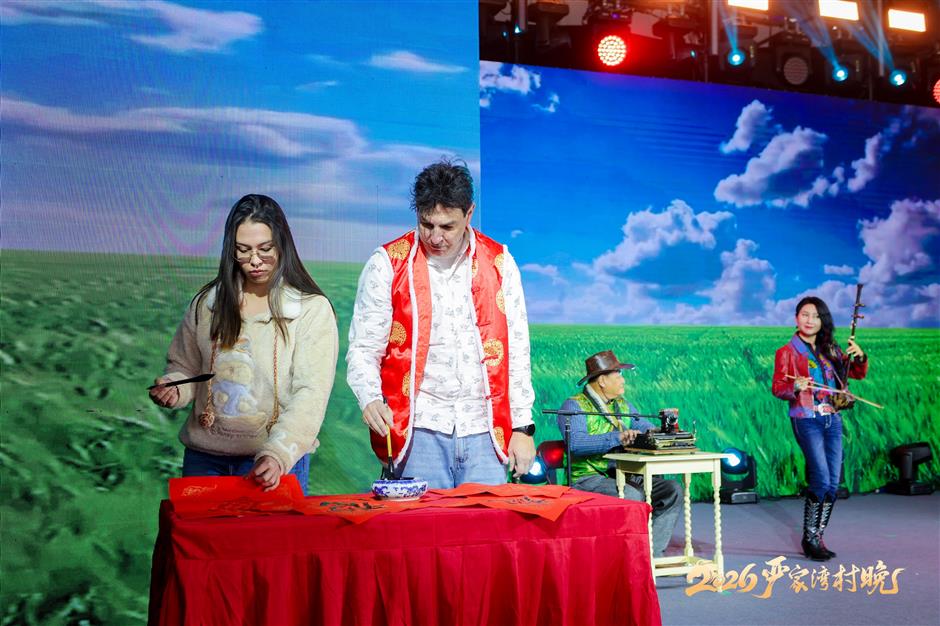
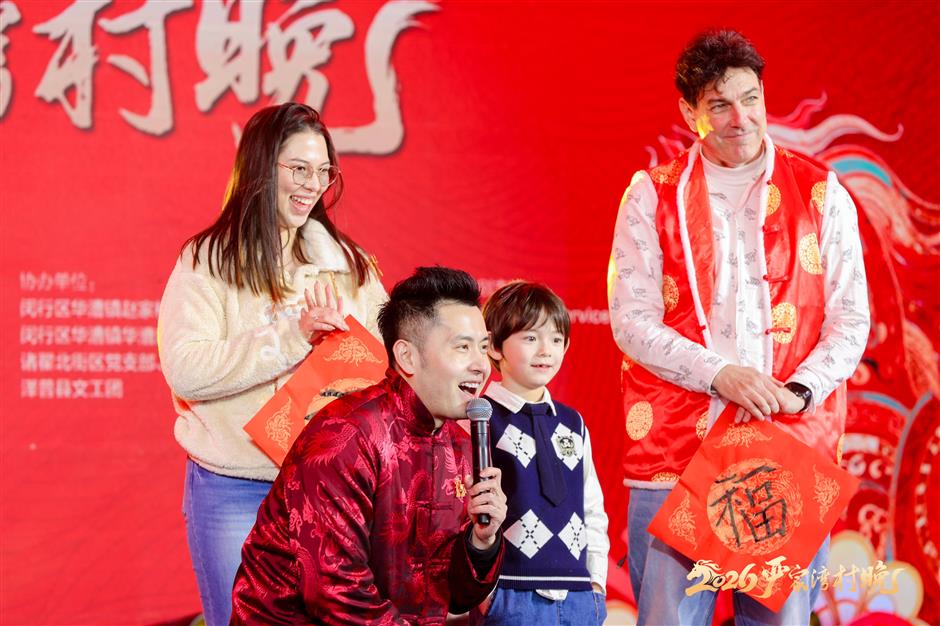
For John Edward Lopez, an American who has lived in Shanghai for more than 10 years, the Spring Festival is no longer just a cultural event but part of family life. He brought his 6-year-old son to the village to experience the festival beyond fireworks and red envelopes. During the village gala, Lopez and his schoolmate practiced calligraphy beside Chinese artists as erhu (a traditional Chinese two-string bowed instrument) music played nearby. "Spring Festival is about family and reunion," he said. "This is part of our family story now."
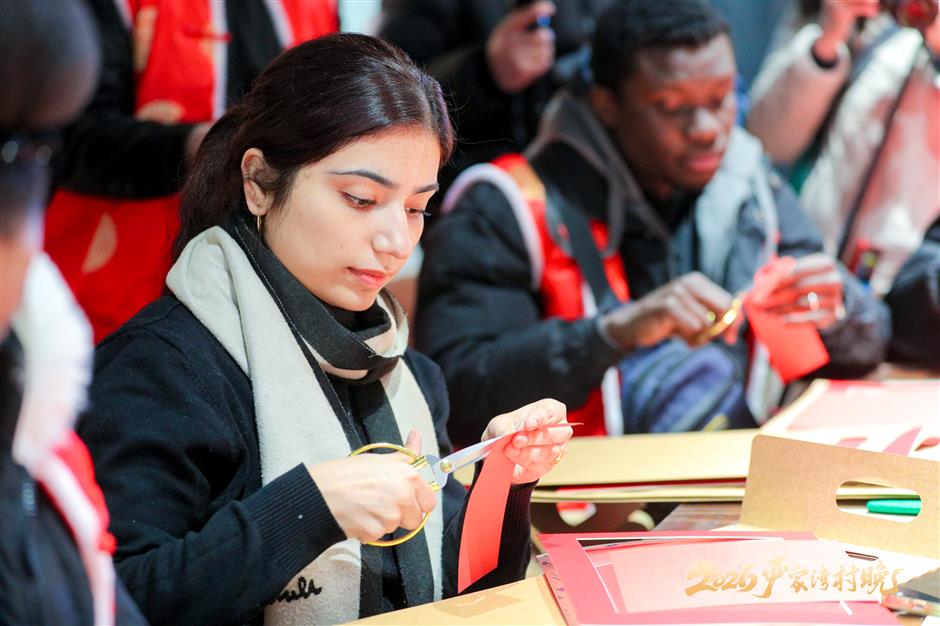
Pakistani student Awais Siddique carefully cut the shape of a red-paper horse, a symbol of vitality and good fortune for the Year of the Horse. Accustomed to Shanghai's fast pace and towering skyline, he found the village's rhythm refreshing.
"It's a very cultural way to enjoy the cultural immersion, especially the strawberry picking, having Chinese tea, having Chinese food and especially the paper cutting practice," he told City News Service. "Before this I've only enjoyed the city life, but now I'm really getting a first-hand experience of how the villagers are in China. They are developed, but at the same time they're very culturally intact with their values and traditions."
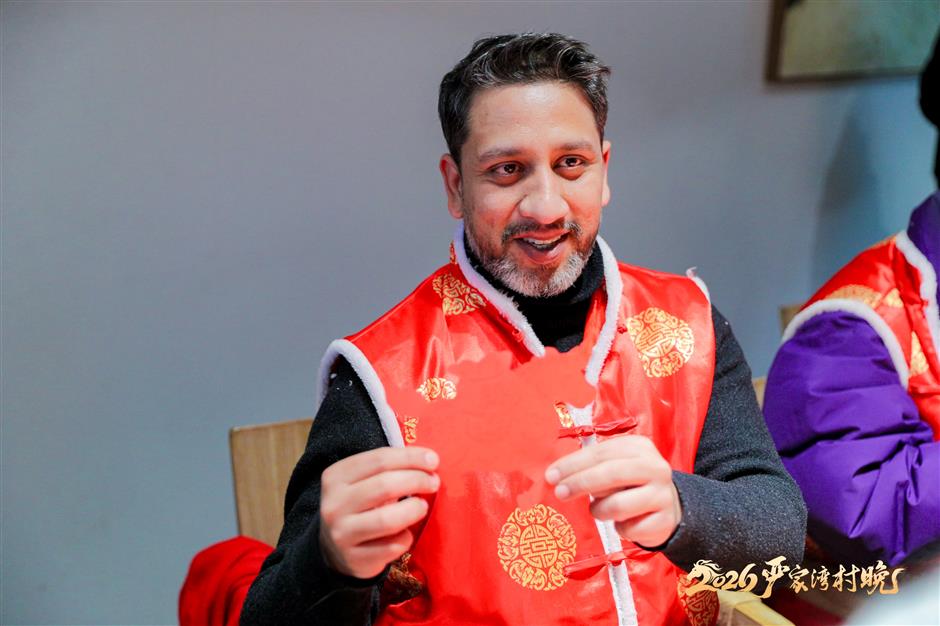
Iranian Farshad Jaberzade, who is studying journalism and new media at the same university, found the setting revealed a different side of Shanghai. "I didn't know that it's a suburb, but then I realized that it was still a part of Shanghai," he said. "It's interesting because Shanghai is such a huge city that sometimes you never know if you are still in Shanghai or outside of Shanghai."
For him, activities like paper-cutting and food tasting offered more than entertainment. "For us as foreigners, we might not be that educated about Chinese culture," he noted, "but activities like this can educate us about the place we are living in."
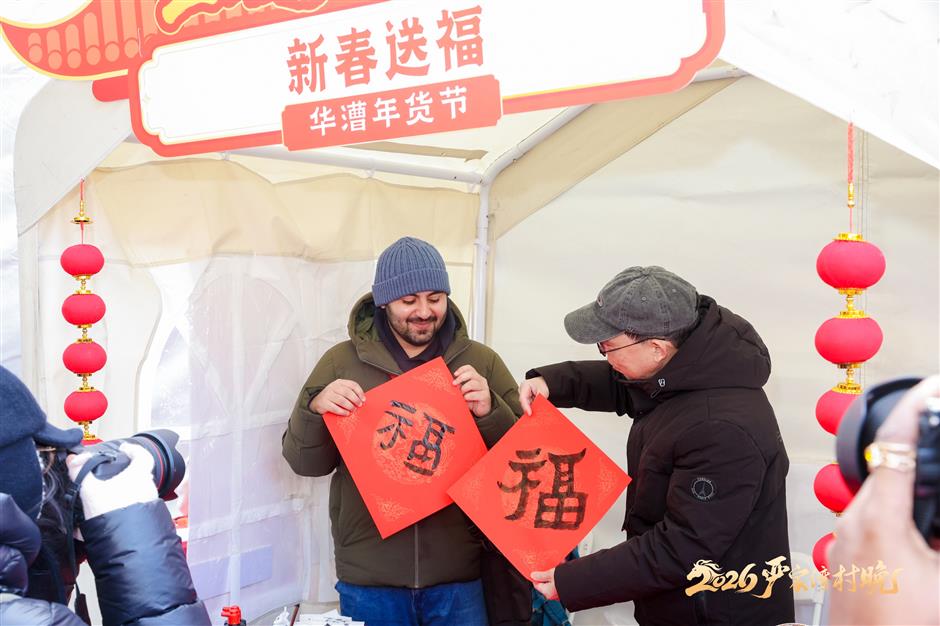
That invitation is intentional. According to local organizers, the gala is designed not as a spectacle, but as a shared experience. Farming activities, shared meals and collaborative performances encourage genuine cultural exchange, the kind that happens naturally, over conversation and everyday rituals.
The feeling of belonging was shared not only by visitors, but also by those who have made Huacao their long-term home. Natashia, a kindergarten teacher from South Africa who has lived in the area for seven years, took part in a performance celebrating the town.
"I think it's a very interesting cultural experience," she observed. "I have seen people from lots of different cultures here today and it feels very inclusive."
For her, the event highlighted a side of China often overlooked. "It is very nice to not just only look at the big cities, but to consider the countryside as well and to collaborate with different cultures."
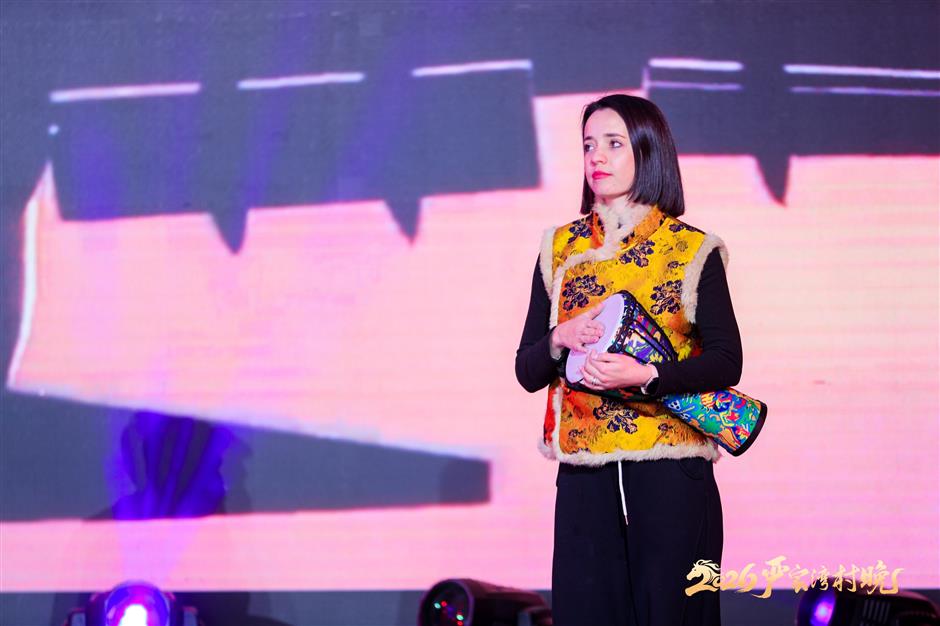
Another participant, Safa Khalid from the United Kingdom, who has worked in China for nearly eight years, six and a half of them in Shanghai, reflected on the broader meaning of the gathering. "I think it's important to understand culture and see where everyone comes from, what is the same and what is different," she said. "Working together to build a strong world, because one world is for everybody."
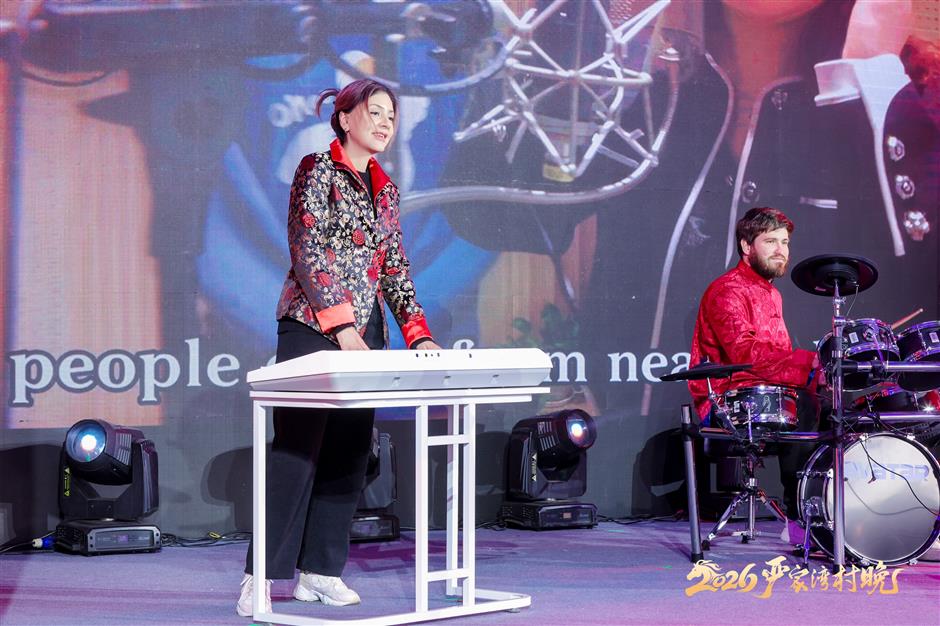
The stage also became a space for cultural exchange across regions. Abidai Alimu, a dancer from Zepu County in northwest China's Xinjiang Uygur Autonomous Region, said, "When we performed the group dance Charm of Zepu at the Shanghai village gala, every synchronized step carried the spirit of our hometown. The audience's warm response made me feel the power of art to cross mountains and seas, and it was an honor to share the beauty of Zepu with Shanghai through dance."
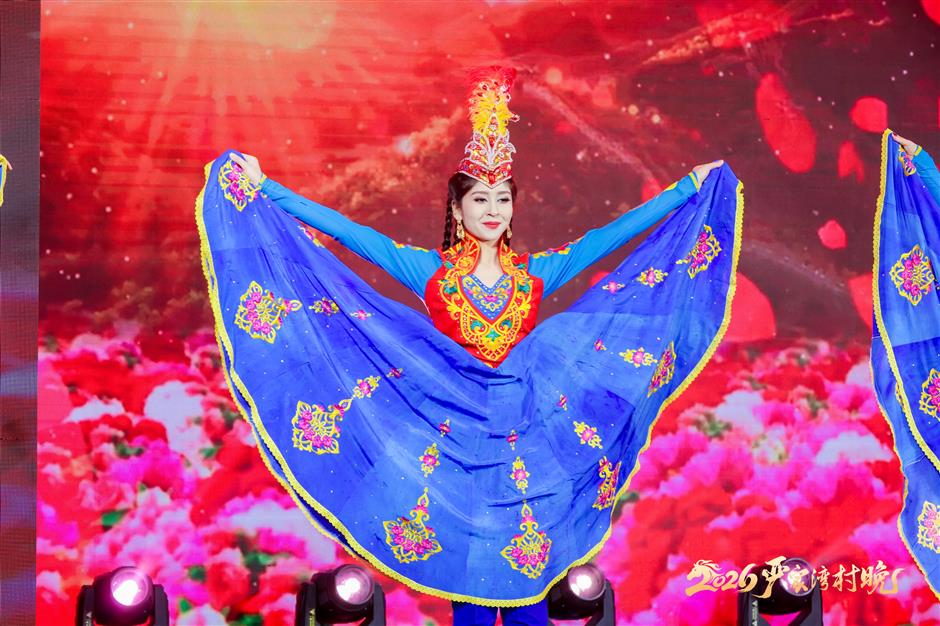
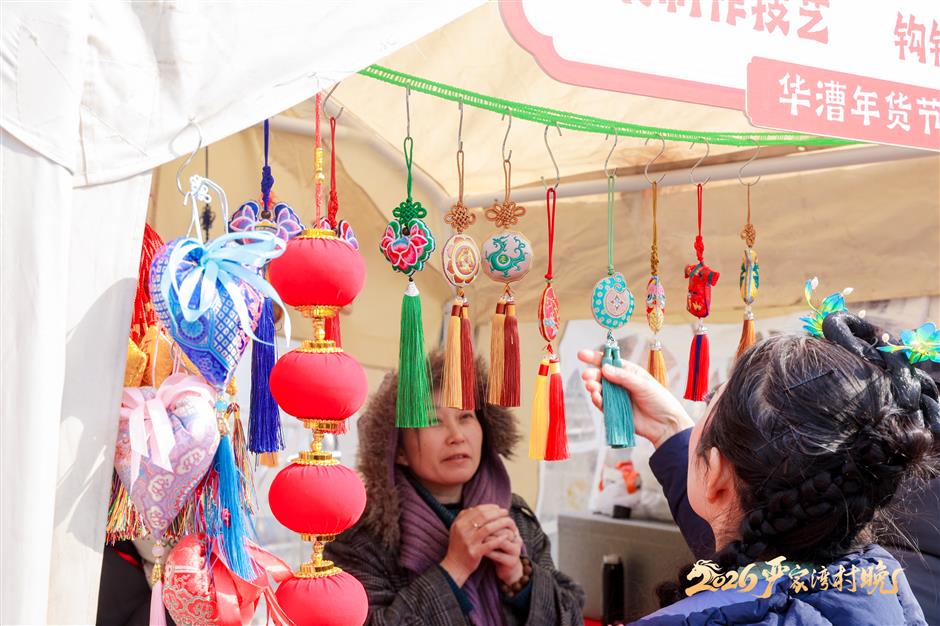
As the celebrations continued, the focus also turned to how culture can support rural development. Held alongside the village gala, the second Huacao New Year Goods Festival featured 42 stalls offering intangible cultural heritage crafts, creative products, traditional festive items and health-related goods.
Organizers plan to expand the festival beyond the village by linking with major commercial destinations such as Qianwan Mega Incity, further integrating culture, tourism and commerce to create sustainable momentum for rural growth.
Known locally as the "First Village of Suzhou Creek," Zhaojiacun has quietly become a model for rural revitalization near Shanghai. Walking paths wind past exhibition spaces, guesthouses and riverside scenery, offering visitors a side of the city rarely seen on postcards.
For Grandma Wang, a 68-year-old villager, watching her granddaughter enjoy a sticky rice cake in the front row, the evolution feels natural. "It gets better every year," she said. "More people, more laughter."
As music faded and conversations continued in multiple languages, the village gala revealed its deeper meaning. In a city defined by constant reinvention, this small corner of Shanghai offered something timeless – a New Year celebration rooted in place, open to the world, and welcoming to anyone willing to join in.
Editor: Xu Qing
In Case You Missed It...

 Jul 25, 2026