[Chef's Table] The Secret Menus & Swiss Chalet Design of Hey Bro
![[Chef's Table] The Secret Menus & Swiss Chalet Design of Hey Bro](https://obj.shine.cn/files/2026/07/15/3b4d2c2e-6b2b-4a89-9388-b382f226b116_0.png)
Not long ago I was on my way to a surprise birthday party at Rambu. They didn't have our table ready (the place is still popping, reliably, every night), so I wandered the neighborhood to keep out of sight of the arriving-soon birthday girl. That's when I spotted it: open-air windows, people moving around a dining area, near the back, a microphone and someone playing the guitar singing melodies, it looked like a New York neighborhood joint, not unlike the late Commune Social, but with a real social element.
![[Chef's Table] The Secret Menus & Swiss Chalet Design of Hey Bro](https://obj.shine.cn/files/2026/07/13/8a262939-f643-4807-9e3d-ee7b49b8e63e_0.jpg)
But where was the entrance? I crossed the street. A plain archway led down a narrow alleyway. It had to belong to the restaurant, right? I sauntered in, through an open-air corridor that opened onto a courtyard. A courtyard! In Jing'an. What lucky bloke got this space I wondered.
That's when I met the owner, Danchao Wang, known to everyone as DC. It was their opening night. I had to get back to the birthday, so I promised to return. A week later, I did.
![[Chef's Table] The Secret Menus & Swiss Chalet Design of Hey Bro](https://obj.shine.cn/files/2026/07/13/ea6adef2-30a4-4a0d-9655-66325cd4c48f_0.jpg)
![[Chef's Table] The Secret Menus & Swiss Chalet Design of Hey Bro](https://obj.shine.cn/files/2026/07/13/6a489543-0186-4094-81c5-a22465bf68ec_0.jpg)
DC had spent six years in France getting a mechanics degree and then a master's, running two schools simultaneously because one wasn't enough, surviving on barely functional French and a conviction that the country that produced Deng Xiaoping and Zhou Enlai probably had something worth learning. Then Stuttgart with Bosch. Then Huawei in telecom. Then back to Shanghai because he could see, from Europe, that China's golden hour was coming (worth pausing on this, for anyone who finds the global-minded haigui perspective interesting, because his read on it is sharper than most).
Thirteen years on, he's running Hey Bro: a month-old bistro on the Wuding Road / Jiaozhou Road corner he'd been haunting with friends since before COVID, a Le Cordon Bleu-trained chef in the kitchen, a hidden menu built around whatever his fishing contacts hauled out of the water that week, and a settled belief that the whole point of food is that it makes strangers talk to each other. The autonomous driving consulting still happens, quietly, in the background. Some people open restaurants because they're done with their careers. DC opened one because he thinks Shanghai is missing a place where strangers become friends. Hence the name.
![[Chef's Table] The Secret Menus & Swiss Chalet Design of Hey Bro](https://obj.shine.cn/files/2026/07/13/9aeeedf9-e47c-4ada-97da-f2a7c2747bec_0.jpg)
A soft opening, by design
Jacob: The restaurant opened recently?
DC: Yeah – just one month. One month.
Jacob: Has it been good so far?
DC: Yeah, I think so – I've gotten great feedback. But I haven't done any promotion. I've just made a lot of friends, and the friends bring their friends, friends, friends. I think this is the way I can control the atmosphere of the Hey Bro culture. Not like – okay, some unknown people take a picture, publish it on Red Note, and it just attracts a bunch of strangers. That's not my style. So I gave Hey Bro this first month kind of like its own little world – it has its own life, its own destiny, like. It's another version of me, but a place to make friends. Yeah – until now, I've just been doing other things too.
Family, roots, and Changchun
Jacob: So, give us a little introduction to yourself – your name, where you're from, how old you are.
DC: Yeah, sure. So, my name is Danchao Wang – Wang is my family name. My mom is local, she's Shanghainese. And my dad is from the northeast of China – Dongbei. The ski area, very cold there.
Jacob: And where's your mom from?
DC: Shanghai. But my grandpa is from Tsinghua University, so my whole family worked in the automotive industry. That's why I ended up working in automotive too. And the city I was born in was the first city in China to have automotive manufacturing.
Jacob: Which city?
DC: Changchun. Audi is there, Volkswagen, Toyota, Mazda. It's the first – also China's first – automotive brand is there. Very big industry, and it gave a lot of people in that city their jobs. Then when my grandpa and my mom retired, they came back to Shanghai.
From mechanic to business school
Jacob: So DC, tell us what did you do in the automotive industry! You're joining a parade of restaurateurs in the city who transitioned from other industries.
DC: I studied mechanics in France, and then went to business school.
Jacob: Mechanical engineer, then a business degree?
DC: Yeah – an MBA. And then I worked in Germany, in Stuttgart, with Bosch. And I also worked at Huawei Europe for a while, in telecom. And after that, I made the choice to come back to Shanghai, because I could see... that China's golden age was coming.
Jacob: You could see a golden age for China, living in Europe?
DC: Yeah, for China. It was something my parents talked about a lot. They were engineers, and academics, so I listened to them.
Seeing China's "golden age" coming
Jacob: How did you see that the golden age for China was coming? The reason I ask is – in Chinese there is a demographic of people called haigui (sea turtles), is that right? You are the famous "returnees." And it used to be that when Chinese people went overseas, they wanted to stay in those countries. But it's not like that anymore now – people go, and then they come back. So tell us the story of how you started to see China's golden age beginning, and what made you decide to come back.
DC: I think it's a sense of things – because different people abroad have different experiences. One factor is how many other Chinese people are around you. Another is how European people see what's happening in China. I had classmates who'd say, "In China there are no cars, only bicycles" – maybe from some video on YouTube. Even two weeks ago, some European friends who are still in Europe were telling me the same kind of thing. But then, as would happen often working in foreign multinational companies, I would have colleagues one day ... they actually came to Shanghai, and then returned to France, or Germany and were shocked, telling me how fast China was developing, or how manufacturing quality was rapidly improving, or even more recently, that there are electric cars everywhere.
Jacob: And what made you decide to go to France specifically?
DC: My grandpa supported it. He said, "Some great people from China – presidents, leaders – they all went there to learn."
Jacob: Like Deng Xiaoping?
DC: Yes, yes, Deng Xiaoping. Zhou Enlai. They all went to learn philosophy, real-world things. And also, French as a second language felt like it could be useful, cool even, because a lot of people speak French worldwide. So – that's why I went.
Jacob: Did you study French in China before you went?
DC: Just half a year.
Jacob: Half a year? So when you arrived, you barely spoke.
DC: Yeah, yeah. And then I went.
Jacob: Was your program in English or in French?
DC: In French... for the bachelor's. For my master's, I actually did one in English and one in French, in parallel. Every day was so busy, because they were two different schools, a normal university and a business school and I was going back and forth.
A word in French
At this point in the interview, food began to arrive, and DC would begin to tell us a bit of the culinary philosophy of the place.
DC: We have an a la carte menu, but every day, we also have a hidden menu, that usually features fresh seafood caught that morning. What you can expect will be classic French cooking styles, or modern Chinese cooking styles.
Jacob: Speaking of French food, DC, if you'd indulge me, speak to us a little in French. Tell us a little about what your life was like when you were living there.
DC (in French): Ça me souvient de… c'était très cool là-bas. Et j'ai fait beaucoup, beaucoup d'amis. Beaucoup de gens qui sont très caractéristiques – très spécial pour moi. Et la vie n'était pas très simple, parce que je devais étudier là-bas, et travailler là-bas, et vivre là-bas, comme tous les gens inconnus. Mais c'était une très bonne pratique, une très bonne expérience pour moi – beaucoup de premières fois. J'ai recommencé, en France. Et ça a construit ma personnalité.
Rough translation: "I remember, it was really cool there. I made a lot of friends, a lot of people who are really distinct characters, really special to me. And life wasn't very simple, because I had to study, work, and live there all at once, like everyone unknown to that place. But it was a great practice, a great experience for me, a lot of firsts. I started over, in France. And it built my personality."
Jacob: So – you lived in France for how long? Ten years?
DC: For studying – six, seven years.
An education in European Food
Jacob: It must have been really different for you, with the food, no Chinese food really, in France back in the early 2000s?
DC: Well, in Paris, in Lyon, the big cities, they have Guangdong-style sweets, because a lot of people from Guangdong and Fujian, coastal provinces, went to Europe.
![[Chef's Table] The Secret Menus & Swiss Chalet Design of Hey Bro](https://obj.shine.cn/files/2026/07/13/97217c4b-2521-4e02-8216-bc54cc0760a3_0.jpg)
Jacob: I guess you developed a pretty broad understanding of food there. You must love European food.
DC: Yeah. I found that different cities, different regions, use their own materials, cheese, milk, even the cows are different, because these things are born there, from that land. Some things come from the Alps, from the mountains; some things come from the Mediterranean. It's a big connection to the natural world, I think. When you visit these cities, you can see how concentrated people are on creating what they eat, and how proud they are of those creations.
Jacob: Did you have any favorite dishes, in France and then Germany?
DC: In France, I liked salmon done the very traditional way – papillote. Just salmon wrapped in paper, put on the grill. It keeps the natural taste of the fish.
Building a "bro" culture
Jacob: You said the restaurant is fusion – so probably you're pulling from your experiences in China (Dongbei, Shanghai), France, Germany. Very cool. So how did you start Hey Bro? Do you have investors, or did you do it all yourself?
DC: It's a cool story, because when I lived in Europe, France, Italy, everyone had this "hey bro" thing. In America too, it's just a culture, a very friendly one. And the word bistro is from France, of course. People share their lifestyle, their experience. I liked that style. But in Shanghai, I found I could really only connect that way with foreign people, the "hey bro" way of connecting. A lot of Chinese people, because they work so hard, never get the chance for work-life balance. So the "life" part is missing for them, no time to read a book, watch a movie, eat fancy food. Their range of experience ends up smaller than people who have that balance. Chinese people are willing to travel to Europe, but often it's just travel, experiencing the food of another city without really understanding it.
But step by step, as China gets richer, people have the money, the good conditions, it's easier to get a visa, and their mindset opens up too. So I saw this as a chance. There are already fancy, well-traveled Chinese people here who've started sharing that with foreigners, introducing them to each other. I think that gap is getting smaller and smaller, because we're sharing the same things now. Ten years ago, hardly any Chinese went snowboarding for example, which I love, the culture came late, and it's tied to the business side too. Now, people are starting to create their own story.
![[Chef's Table] The Secret Menus & Swiss Chalet Design of Hey Bro](https://obj.shine.cn/files/2026/07/13/938e6058-8465-4ccd-8826-e439798ab871_0.jpg)
Finding the space
Jacob: How did you find this place? It was closed for a long time, and it's a beautiful restaurant.
DC: Just a chance, because I love this street so much, Wuding Road and Jiaozhou Road. Before COVID, I always came here with friends, foreign friends, every night, especially on weekends, until 2 or 3am, just sharing, listening to each other's stories. And by chance, one day we were eating at Bites & Brew with friends down the street, and someone said, "I have a friend who might have a nice place." I'd been looking for the right spot for two months, something I could turn into a European wooden house, basically. And then, "yeah, it's here." After that, I met my designer on TikTok, and I met my chef on Red Note. I met a lot of great people through social media. My designer had posted what he'd done with his studio, nothing flashy, but I could feel he was really focused on what he loved. So I messaged him: "I think I have a great project, we should talk." We met, talked for half an hour, then went out drinking. That's the Hey Bro spirit, I think. And my best bro, who's from Taiwan and works at Apple, gave me a lot of support – spiritual support, to keep believing in my life philosophy. It was really tough on the decoration side, because this was my first time doing a restaurant. But I think the result, so far, is good – I've met great people from Italy, Portugal, Austria, Germany, people from Volkswagen and Audi, a lot of former colleagues who come here and say, "Wow, you've built our second home." It really feels like somewhere in Europe. It's like moving a piece of Europe to Shanghai – because honestly, my feeling is that a lot of European restaurants here, the food is good, but it's not quite the real European style.
![[Chef's Table] The Secret Menus & Swiss Chalet Design of Hey Bro](https://obj.shine.cn/files/2026/07/13/2b667dbc-c961-4f1b-80c5-ab9a8b5c2bb9_0.jpg)
Jacob: So you had a really positive experience living in Europe, and then you came back because you saw China's golden age, but you kept a special part of your heart in Europe – and you wanted Hey Bro to bring a little piece of that back with you to China.
DC: Exactly. Normally, Chinese people are a little bit shy, if I don't talk to you, you don't talk to me. On the metro, everyone's just on their phone. I think that's not good, because the next generation needs more sharing. AI can help us improve our creative skills, but if you only stay with AI, nothing really happens. Without sharing, AI is kind of meaningless – in the end you're just lying in bed with your phone while a robot brings you food. That's not humanity. Real humanity, I think, is art, food, music, everything, technique. People need that alongside AI – that's the value of humanity. It's personal for me too, because in my day job I do automotive AI projects. AI is really helpful, but let it help humanity – not replace it.
A Second Career: Automotive to Autonomous Driving
Jacob: Did you start the restaurant all by yourself, or do you have investors?
DC: I did it with another bro of mine, we've known each other for more than fifteen years. He's like my big brother, but we used to be colleagues.
Jacob: At Bosch?
DC: At another company, in Germany – Continental. Before that, Siemens, the automotive technology division.
![[Chef's Table] The Secret Menus & Swiss Chalet Design of Hey Bro](https://obj.shine.cn/files/2026/07/13/8048666d-2f53-4456-825a-50bf0f373b7a_0.jpg)
Jacob: You've worked at some huge companies – Bosch, Continental, Siemens. Going from that to running your own restaurant must be a big change. But maybe you like being your own boss now.
DC: I think back to when I felt I'd found the golden phase, the golden hour, I'd say. After graduation, when my career started, I always kept my eyes open, because it was like climbing a mountain, France, America, they were all at the top at the time. I learned so much in that period, things I could never have imagined; I never thought Chinese people could create things like that, like looking up at the sky. Especially cars. At the time, I wondered, how can Audi, Volkswagen, BMW, even Cadillac and Ford make such great cars, when China had none? The wheels would come off, the airbags wouldn't even deploy in a crash. But Chinese people are genuinely hard-working, really excellent copiers, I'd say. And I don't think there's any shame in that, in copying something well, it's still a great skill. Germany copied a lot from England, from Britain, back in the last century. It's the same pattern. A lot of technique, a lot of manufacturing came into China because labor costs were low and that was an exchange too. The people standing at the summit teach you about the view, the panorama, the sunset, the sunrise – and you follow, and you get closer and closer. So I thought: some of what I know, I can bring back to China based on my own experience. First I worked for Bosch, Continental – big automotive firms. And then I shifted to a Chinese startup doing autonomous driving. Helping the Chinese talent, the CEO, and working alongside smart people from the top universities in China and worldwide on autonomous driving. I think the results have been good. Now China is really the only country that can compete with Tesla, with Google, in that space. Though not quite as good yet, because of policy – data restrictions, you can't just use data freely in China. And the traffic situation is genuinely strange and difficult for R&D. But we've still made good progress, I think, as Chinese teams.
Helping Chinese Automakers Go Global
DC: After that, I also started doing consulting for OEMs – manufacturers. Brands like Geely, Chery, and a lot of Chinese OEMs – I helped them go abroad.
Jacob: Oh, okay – so you help them go abroad.
DC: Right, because the cars are made in China, but if a brand like BYD wants to sell in Europe, they need to pass a lot of tests – different scenarios, mountain roads, humid highways, lane changes, braking, acceleration, all these test cases. So I'd help them with the first stage – getting the cars through customs in Europe – and then I'd design the route, the roadmap. Say BYD wants to sell across Europe – Northern Europe is totally different from Southern Europe: mountains, rivers, coastlines. So I'd help plan around that, and then after approval, they'd get the right to sell the car there.
Jacob: So you didn't want to keep doing automotive business in China? It's a huge industry.
DC: I think that story is a bit like AI now – it's already been told. The economy's cooling off, and the competition between companies isn't always healthy, especially on price. One restaurant sells a steak for 200, so another drops to 100 – that race to the bottom. That's part of why I didn't want Hey Bro to get pulled into that kind of competition. I use good ingredients, but I want to offer the best price I can – because I love eating, so I know what that's worth.
In the Kitchen
At this point the interview moved to the open kitchen, where DC walked through several dishes with chef.
Jacob: Do you have a menu we can look at?
DC: Yeah, sure.
DC: This one's a black grouper, done the Guangdong Shunde way.
Jacob: Oh, like the tossed style?
DC: Yeah, yeah, yeah.
DC: This one's really a back-and-forth between the chef and me. He trained at Le Cordon Bleu.
![[Chef's Table] The Secret Menus & Swiss Chalet Design of Hey Bro](https://obj.shine.cn/files/2026/07/13/d861dca9-5095-4f99-839d-bc5df2d3314f_0.jpg)
Jacob: Cordon Bleu – where, in Europe?
DC: In Shanghai. Then he went to Stuttgart for more experience. For French dishes, they make incredible sauces – the sauce is the artist, really. So I focus on sourcing the best, sometimes unusual ingredients, and he brings the fusion sauces. I love sauces, and so we decided, if we were going to have French flavors, then we should do really good sauces. This fish for example, is accompanied by a classic French veloute:
![[Chef's Table] The Secret Menus & Swiss Chalet Design of Hey Bro](https://obj.shine.cn/files/2026/07/13/1788184f-4f13-4c30-af4a-7de456911a34_0.jpg)
DC: We also do skewers – that's from my hometown, a special food there. Skewers are great for the "hey bro" culture, if people are drinking, and want something to accompany, but not ready for a full dinner yet. So we have a number of Chinese yakitori, very cheap under 20 yuan.
![[Chef's Table] The Secret Menus & Swiss Chalet Design of Hey Bro](https://obj.shine.cn/files/2026/07/13/08fb57a3-fcf9-4164-a6f5-4317cb19b702_0.jpg)
At the Table
Jacob: So this fish is from that big grouper?
DC: I'm not sure the translation is quite right – I'll look it up and send it to you.
Jacob: Parrotfish from Nansha?
![[Chef's Table] The Secret Menus & Swiss Chalet Design of Hey Bro](https://obj.shine.cn/files/2026/07/13/973f67df-ca1a-4a14-bdb5-dbae29e058f5_0.jpg)
DC: Yeah – you mix everything together. Everyone has their own bowl, so you can pick the meat with whatever ingredients you want, since some people eat certain things and some don't. And then the peanuts. First you put everything in your bowl, add some onion, and mix. Only two provinces really eat fish this way, and normally it's lake fish, river fish, but I use ocean fish instead. So it's a bit of a mix – this parrotfish, the peanut oil we make ourselves, and you can add extra peanuts too. So this is Guangdong Shunde style. Shunde, yeah is about 30 kilometers west of Guangzhou, the capital of Guangdong. There are really two schools of Guangdong cooking – Shunde cai, and Chaozhou/Shantou cai. Guangdong people are known for finding special ingredients and knowing how to cook them – yue cai.
Even in Shanghai, very few restaurants serve this.
![[Chef's Table] The Secret Menus & Swiss Chalet Design of Hey Bro](https://obj.shine.cn/files/2026/07/13/ea3e9d51-c2ef-4215-a2e4-9bc4727e6bc0_0.jpg)
Jacob: So why Shunde specifically? You're not from Shunde – you're Dongbei and Shanghainese?
DC: I just love these dishes, and I had this special ingredient, so I put them together. This fish only came in yesterday, and I was figuring out how to cook it.
The Hidden Menu
Jacob: So this is new on the menu – a hidden menu?
DC: Yeah, a hidden menu. What I'm doing is – first, build a great customer base in this neighborhood; second, make friends with them; third, let my friends tell me what they want to eat, and we create it together. Sometimes friends even bring their own ingredients, they just tell me a day ahead, and we figure it out.
Jacob: That's really interesting – I don't know of any other restaurant where you can bring your own ingredients and say, cook me something.
DC: One day a French girl came to the restaurant, and we were just chatting about things we missed in France. She told me she was really missing a dish to eat, something from Paris, so we looked up the recipe together and we made it. She nearly cried. We became really good friends after that.
Jacob: So it's not just a restaurant – you really want a community. Almost like a home kitchen.
DC: Yeah, exactly, a hangout place.
Jacob: You have a pretty wide price range. The skewers are affordable... 15 to 20 yuan, and even the most expensive dish, the steak, is only around 200 to 230. Appetizers and smaller dishes are 40 to 80.
DC: And it's the best material we can find. Some friends of our chef – other restaurant owners – have asked me, "Why use such good ingredients and sell it for that price?" I just want people to enjoy the best material, honestly, because people who really know food will come back.
Jacob: Is that always on the hidden menu, or only sometimes?
DC: Sometimes, depending on what my friend has – he goes fishing every day, but a fish that big is rare. Maybe we'll have a smaller one next time.
Jacob: So people should come in and ask, "What's on the secret menu today?"
DC: Exactly – if I don't have that particular fish, we'll have another one. People who like this way of eating want to taste different fish, different textures. For example with this dish, the fish might change, but our sauce stays the same. This one's a triple-cooked black grouper, with our house made Chinese sauce.
![[Chef's Table] The Secret Menus & Swiss Chalet Design of Hey Bro](https://obj.shine.cn/files/2026/07/13/1065c5e2-77d1-4b29-a695-9a6a9275c372_0.jpg)
Jacob: And this fish actually came from your friend – not a farm?
DC: No, no, not a farm, my friend fishes in the ocean. Though I do pay him for it, he's a good friend, but I still pay. I think this material is really special and rare. He has five million followers on TikTok – that's literally his whole thing, going out and catching the biggest fish he can find. He got me this one. After he finishes filming, he'll invite me to his studio, cut off a big piece, and give it to me for free – and I cook it and offer it to customers for free too. People just want to try something unusual and fresh. Oh... and this dish too. It's a traditional recipe from Sichuan. These are large ocean clams, but sometimes we use razor clams, or fresh water clams, different kinds, depends on we decide to order, but the flavor remains the same.
![[Chef's Table] The Secret Menus & Swiss Chalet Design of Hey Bro](https://obj.shine.cn/files/2026/07/13/a577dbd2-542d-493a-963e-1307783085e3_0.jpg)
Jacob: Damn these are so good. What would you say are some of the popular items on the menu so far?
DC: Usually, when a customer comes to Hey Bro for the second time, they ask me to just put together an omakase for them, at the best price. I love traveling to Japan – for snowboarding, skiing, the powder snow – and I really respect the Japanese way of cooking, keeping the natural flavor of the ingredient. Usually, when people find out we have a secret menu, or that we do bespoke menu's, they just ask us to put a special menu together.
Jacob: Show us around a bit, would you?
DC: Yes of course. Here, we keep our cuts of meat and fish that we dry age in house:
![[Chef's Table] The Secret Menus & Swiss Chalet Design of Hey Bro](https://obj.shine.cn/files/2026/07/13/fef4b42e-3184-4a74-b8b2-6d865cf33889_0.jpg)
DC: This is our front dining area, with an open kitchen. People can see the chef's cooking.
![[Chef's Table] The Secret Menus & Swiss Chalet Design of Hey Bro](https://obj.shine.cn/files/2026/07/13/676d57e2-832f-4df8-a748-4f38bf290114_0.jpg)
![[Chef's Table] The Secret Menus & Swiss Chalet Design of Hey Bro](https://obj.shine.cn/files/2026/07/13/34ff5a9e-f3e8-4a14-b6e3-1c52d4ce107c_0.jpg)
DC: And here, you can see, we have a huge wrap around screen. We didn't think about it at first, but here we played the world cup games.
![[Chef's Table] The Secret Menus & Swiss Chalet Design of Hey Bro](https://obj.shine.cn/files/2026/07/13/30a5926c-fdfd-4a76-b56b-31001d365d62_0.jpg)
DC: Then we have our enclosed dining space. This is usually for overflow, but this section can also be booked for private events. It's a complete glass-enclosure, it has a really nice atmosphered when it's raining.
![[Chef's Table] The Secret Menus & Swiss Chalet Design of Hey Bro](https://obj.shine.cn/files/2026/07/13/1a9bb1e8-76f5-4853-b2bd-b6aaf0a17586_0.jpg)
![[Chef's Table] The Secret Menus & Swiss Chalet Design of Hey Bro](https://obj.shine.cn/files/2026/07/13/445c63b8-f1e4-423b-a48d-45176dd070a5_0.jpg)
![[Chef's Table] The Secret Menus & Swiss Chalet Design of Hey Bro](https://obj.shine.cn/files/2026/07/13/e792482f-1c63-4686-914a-4ab56828a30d_0.jpg)
DC: We have a small high-table area here. In this space, we usually also host live musicians who play every week.
![[Chef's Table] The Secret Menus & Swiss Chalet Design of Hey Bro](https://obj.shine.cn/files/2026/07/13/1459fc6f-b4f7-442e-94ae-76fcd4ad9d6d_0.jpg)
DC: And here, upstairs, we have a whiskey bar. I wanted this place to feel like a cozy chalet in the alps, the sort of place I used to enjoy after snowboarding. This has been getting booked for events, but usually, people come up here to hang out, and drink after dinner. Sometimes before dinner too.
![[Chef's Table] The Secret Menus & Swiss Chalet Design of Hey Bro](https://obj.shine.cn/files/2026/07/13/b34ebcf1-c56e-4bf4-996c-aefa77f3e466_0.jpg)
![[Chef's Table] The Secret Menus & Swiss Chalet Design of Hey Bro](https://obj.shine.cn/files/2026/07/13/f16f7664-b959-48aa-b6c2-44435be75863_0.jpg)
DC: And here, we have a small balcony, terrace area. People usually stay here and hang out for awhile. Lots of different spaces, lots of different conversations. Oh, also. Come on Saturday nights. We give out free skewers.
![[Chef's Table] The Secret Menus & Swiss Chalet Design of Hey Bro](https://obj.shine.cn/files/2026/07/13/00a866f7-d447-4ecd-8c9c-f240a2d629fa_0.jpg)
Impressions:
Hey Bro and DC fit well into the old adage: facts tell, stories sell. Peel back the layers and what you have is a man who took the long way round, France, Germany, Bosch, Continental, autonomous driving, BYD road tests through the Alps, and landed here, on Jiaozhou Road, with a courtyard, a whiskey bar designed like a ski chalet, and free skewers on Saturday nights. Spend enough time here and the full arc of it becomes visible. You come in for a beer. You end up staying for dinner. You finish the night upstairs. DC, somewhere in all of this, has become your friend.
He is unassuming in person, and his smile is tireless and never retreats. He personifies a kind of warmth that expats who've spent real time in China will recognize immediately, and miss acutely when they leave. Everyone is welcome at Hey Bro. Your background, your outfit, your CV: none of it matters. The name, which is almost too casual to take seriously, turns out to be a precise description of the whole operation. Walk in a stranger. Walk out a regular. That's the idea, a fascinating one, conjured up by one of China's own sea turtles.
If you go...
Add DC directly on WeChat : DCheybro
Hey Bro Vital Gallery:
893 Wuding Road 武定路893号
Editor: Xu Qing
In Case You Missed It...
![[Chef's Table] Lee Jia Wei of La Bourriche 133 on Joining the Asia's 50 Best List](https://obj.shine.cn/files/2026/05/15/c4bbccdf-bef0-4815-875e-3960dccc6249_0.jpg)
 May 22, 2026
![[Chef's Table] Logan Brouse of Tacolicious](https://obj.shine.cn/files/2026/04/13/251e5c60-d9b2-4720-85b3-3380a702f91a_0.jpeg)
![[Chef's Table] An Audience with Shanghai's Malt Minister](https://obj.shine.cn/files/2026/04/07/68094a69-2813-4dc7-9362-c2d3dff910b1_0.jpg)
![[Chef's Table] How Linc Li's 'La Pomme de Terre' Went Viral](https://obj.shine.cn/files/2026/03/19/841ff446-bb15-47f9-813b-391985cb8d10_0.jpg)
Popular Reads

China's Micro-Short Dramas Go Global: The US$18b Engine Driving Cultural Exports at ChinaJoy 2026
Italian Airport Staffer Stuns Chinese Travelers with Perfect Beijing Accent
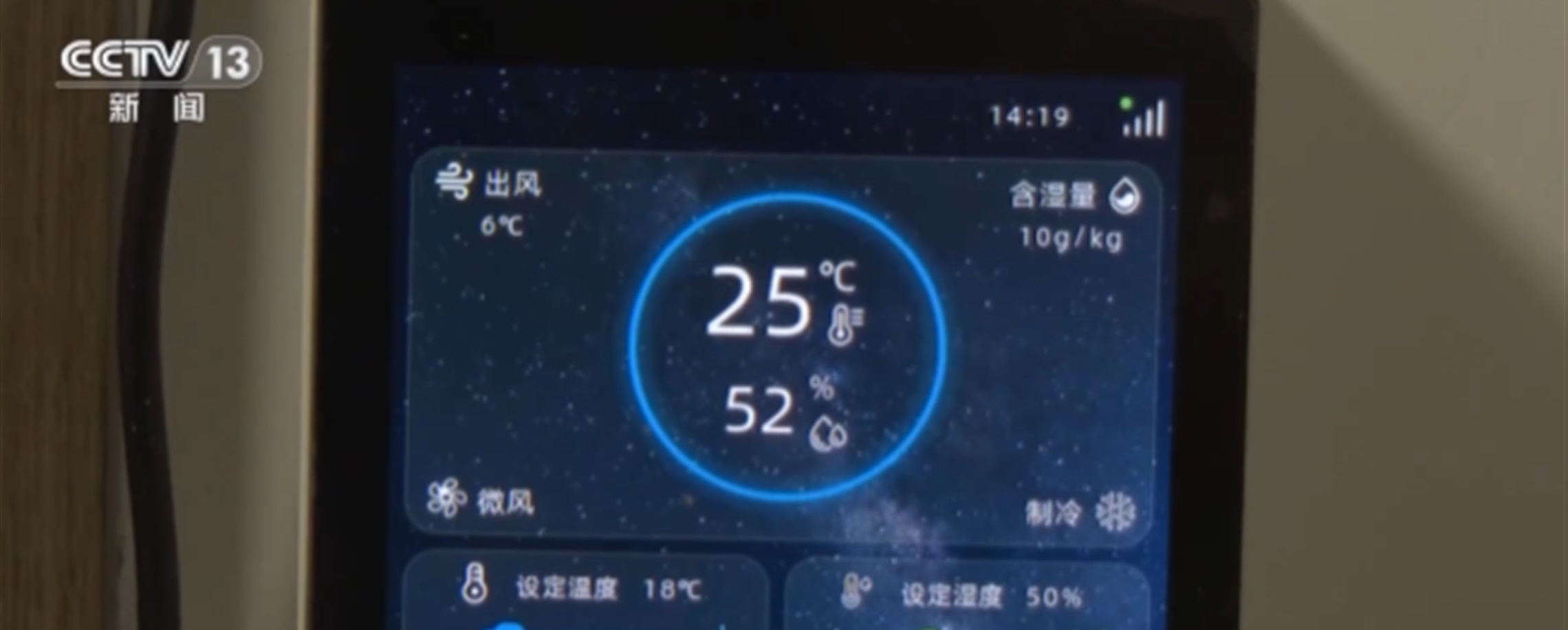
Xuzhou Cools Homes with Abandoned Coal Mine Water, Skip AC Amid Heatwave