Shanghai in 2025: Forging Progress, Enriching Life in a Dynamic Metropolis
As 2025 draws to a close, Shanghai stands at a new milestone of development – where heritage meets innovation, convenience blends with ambition, and people's well-being takes center stage.
This year, the city has relentlessly pursued progress across every dimension of urban life: from upgrading aging neighborhoods to refining its global business appeal, from revolutionizing transportation to leading technological breakthroughs, and from booming cultural scenes to nurturing new consumption trends. Every stride reflects Shanghai's unwavering commitment to becoming a more livable, open, and dynamic international metropolis. Here is a comprehensive look at the city's defining moments and achievements in 2025.
Old-Home Renewed: End of the Chamber-Pot Era
Shanghai has prioritized improving residents' livelihoods, with living conditions a top priority. Its 2025 housing initiative tackled one of the city's most longstanding urban issues: eradicating "chamber-pot households" in old lane communities.
Over the past two years, culminating in 2025, the final 6,493 households lacking private toilets have been renovated or rebuilt. Many resided in aging shikumen (stone-gate) residences with no historical indoor plumbing, while others lived in tiny dwellings, often under 20 square meters, too small to accommodate even a 1-square-meter bathroom. The campaign required tailored solutions balancing heritage preservation, engineering constraints, and community needs.
Districts employed diverse approaches: full-block reconstructions, modular bathroom installations, or repurposing unused public spaces into shared facilities. These efforts brought clean water, privacy, and a new sense of dignity to residents for the first time.
Final pushes in Huangpu, Hongkou, and Yangpu capped a decades-long initiative dating back to major old-housing renewal in the 1990s. For a modern global metropolis, outdated sanitation standards are unsustainable – and ending the chamber-pot era aligns Shanghai's last remaining aging neighborhoods with its broader urban benchmarks.
For many families, the change means more than convenience. It signals equal access to basic urban services. For the city, it underscores its commitment to people-centered development and long-term liveability.
This milestone also allows urban planners to shift focus to the next phase: developing age-friendly communities, enhancing public spaces, and retrofitting older buildings for energy efficiency and climate resilience.

Business Environment: Open, Digital, Streamlined
Built on institutional innovation, digital governance, and global connectivity, Shanghai further refined its business environment in 2025 – creating a system that offers greater predictability for enterprises and enhanced convenience for investors and travelers alike.
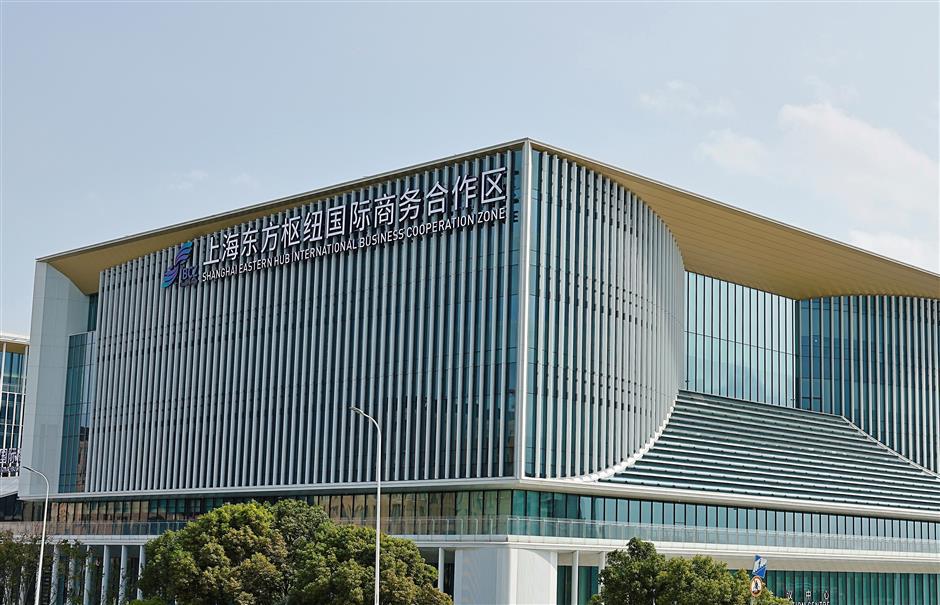
A key milestone came with the advancement of the Eastern Hub International Business Cooperation Zone, China's first visa-free business zone. Foreign visitors invited by registered enterprises can now enter without prior visa applications and stay for up to 30 days. On-site immigration services, airport-adjacent facilities, and seamless links to Pudong International Airport slash time costs and streamline cross-border travel – embodying Shanghai's ambition to become a high-level gateway for trade and investment.
Within the city, practical reforms elevated the business landscape. The Business Environment 8.0 initiative expanded one-stop services and cut red tape, while digital platforms enable companies to verify compliance, submit applications, and claim policy incentives with minimal in-person interactions. "One license, multiple locations" rules eliminate redundant paperwork for businesses operating across districts.
Market supervision evolved into an "unseen but present" model: tools like inspection QR codes consolidated multi-agency inspections into a single visit, minimizing disruption to businesses while boosting transparency. Tailored compliance guidelines were rolled out for fast-growing sectors – from e-commerce and logistics to catering and ACG merchandise – helping firms mitigate disputes and raise service standards.
Support for innovation also ramped up. Districts launched targeted initiatives for brain-inspired AI, quality-driven manufacturing, logistics, and small retail businesses. Old brands gained better protection through new trade secrets insurance and citywide guidelines.
Shanghai's focus on stable, fair, and international rules helped maintain business confidence. In the first three quarters, the city added more than 1,400 new companies per day. Global surveys placed 22 of its business-environment indicators at world-leading levels.
Today, Shanghai is forging not just a competitive market system, but an open, digital, and responsive business ecosystem – solidifying its standing as a global hub for opportunity.
Transportation Convenience: Global Access and Metro Expansion
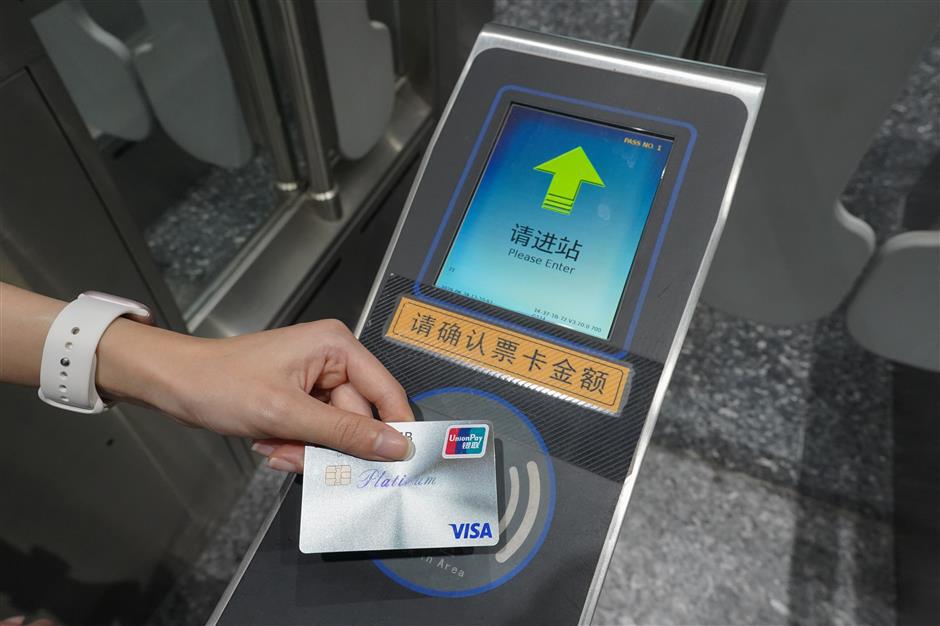
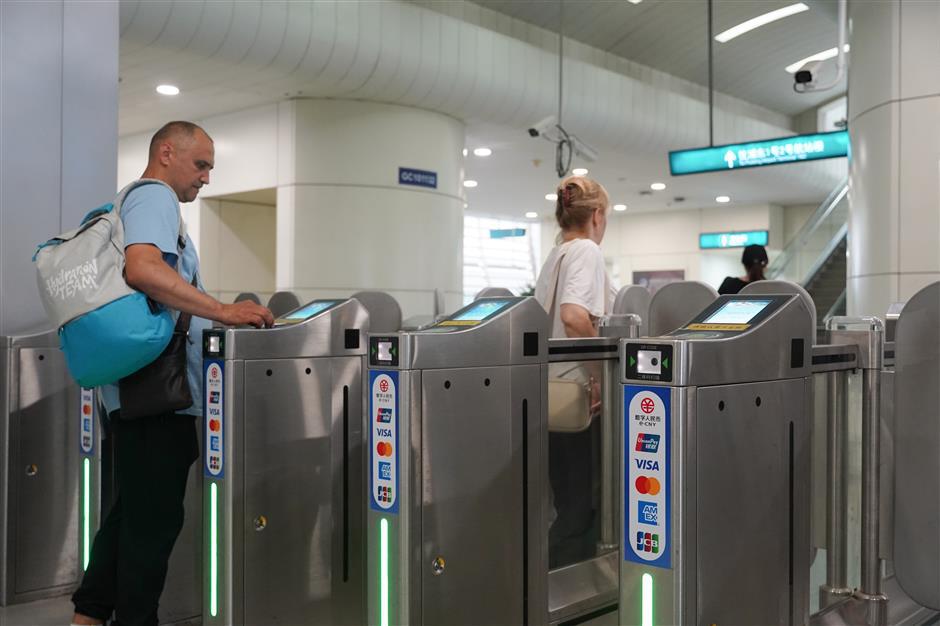
In 2025, Shanghai boosted public transport accessibility for international visitors by enabling bank card and digital yuan payments for Metro entry.
The rollout kicked off in mid-June with a trial on the Maglev Line, allowing passengers to tap bank cards or digital yuan wallets for entry and exit. Nearly two weeks later, the service expanded citywide across the entire Shanghai Metro network.
Passengers can tap UnionPay, Visa, Mastercard, American Express, and JCB cards directly at fare gates, no need to buy a local transit card or set up Alipay or WeChat Pay. Contactless cards are also compatible with mobile wallets.
Official data shows bank card-enabled transactions across the Metro network have surpassed 1 million to date.
The launch coincided with a broader rebound in inbound travel following China's expanded 240-hour visa-free transit policy, which allows eligible foreign travelers to stay for up to 10 days without a visa. Official data shows Shanghai received more than 983,000 foreign visitors between January and November, a 41 percent year-on-year increase.
Shanghai's rail network also continued to expand. Panxiang Road · Shanghai National Accounting Institute Station on Metro Line 2 opened during the year, improving connectivity between the West Hongqiao area in suburban Qingpu District and the city's urban core. An extension of Line 18 added five more stations on December 27, further improving transit access for residents in the northern parts of the city.
As of 2025, the city's metro system spans about 906 kilometers, 523 stations, and more than 7,500 train cars, placing it among the world's largest urban rail networks.
Autonomous Driving: Driverless Commercialization
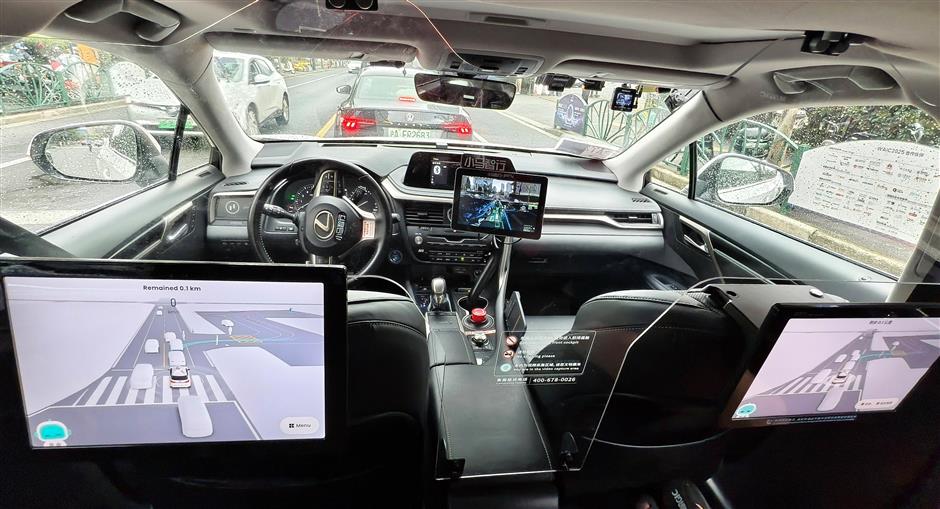
In 2025, Shanghai took autonomous driving beyond its initial pilot phases, expanding test road coverage and launching the first phase of fully driverless commercial passenger services within the city.
At the World Artificial Intelligence Conference (WAIC) in July, the city unveiled its 2027 targets for advanced autonomous driving: over 6 million passenger trips via Level-4 autonomous vehicles, more than 5,000 kilometers of open test roads, and over 90 percent penetration of Level-2 and Level-3 functions in new vehicles.
On-the-ground progress followed quickly. In late July, the city issued a new batch of autonomous vehicle pilot licenses, enabling broader, more regular commercial operations – building on previous years' demonstration-mode driverless taxis.
The shift to real-world operations took hold on August 1, when Pony.ai, in partnership with Jinjiang Taxi, launched fully driverless robotaxi services in parts of Pudong's Jinqiao and Huamu areas. Operating on fixed routes and schedules on weekdays, the service marked the first regular deployment of fully driverless robotaxis in Shanghai's urban core.
Test road access expanded further later in the year. On December 7, transport authorities announced the extension of autonomous driving test zones to cover most of Pudong New Area, with additional expansions into Minhang District and the Hongqiao Transport Hub. With these additions, Shanghai has opened 3,173 roads for autonomous vehicle testing – totaling over 5,200 kilometers, or roughly one-third of the city's entire road network.
Regional coordination also advanced. Test roads in Shanghai's Jiading District were linked with those in neighboring Taicang and Kunshan in Jiangsu Province, allowing autonomous vehicles to operate across administrative boundaries and supporting cross-city applications in the Yangtze River Delta region.
Live Performances: Cultural-Tourism Synergy and Boom
Building on its upward trajectory, China's live performance market continued to thrive in 2025, with Shanghai solidifying its position as the nation's leading hub.
According to data released by the China Association of Performing Arts and Beacon Research, the first half of 2025 saw 160,500 theater performances nationwide, grossing 5.402 billion yuan (US$77.09 million) at the box office. Among the top 200 highest-grossing productions, performances, total revenue, and audience turnout numbers all posted significant year-on-year growth.
Shanghai accounted for 21.4 percent of national theater box office revenue, ranking first in the country, followed closely by Beijing at 21.1 percent.
Shanghai also remains the preferred launchpad for international productions entering the Chinese market. This year, the "Spirited Away" stage play, adapted from Hayao Miyazaki's acclaimed animation, chose Shanghai as its first-ever tour stop in the country.
Shanghai's strength is further underscored by the rise of "show tourism." The musical "SIX," which has its only residency in the city, drew 30.8 percent of its audience from outside Shanghai.
For "Les Misérables," out-of-town visitors accounted for as much as 50 percent, with theatergoers traveling from cities such as Beijing, Hangzhou, Guangzhou, and Chengdu, as well as from overseas.
Their trips added to the city's broader cultural tourism spending. On opening day, merchandise sales for "Les Misérables" surpassed 100,000 yuan, and co-branded baguettes and tote bags quickly became popular items for visitors to take home.
Cross-city and cross-border mobility is equally evident in the electronic music scene. In November, Tomorrowland, one of the world's most iconic electronic music festival brands, made its China debut at Shanghai's Huangpu Riverside. The event, titled "The Magic of Tomorrowland" was also the brand's first official indoor show. It raked in more than 700 million online views.
The audience was notably diverse. About 16.6 percent came from overseas, and 83 percent of domestic attendees traveled from outside Shanghai, indicating strong nationwide pull. Viewers aged between 25 and 39 years made up 74 percent of the crowd, highlighting the genre's strong appeal among young adults.
Shanghai also made new strides in large-scale outdoor events this year. Qiantan Sports Park was transformed into the city's first outdoor venue capable of regularly accommodating 30,000 to 50,000 people. In December, it staged its inaugural music festival. The venue is expected to host another 20 major outdoor events in 2026.

Sports City: A Galaxy of Events and Vitality
A wide array of sports events held in the city is substantiating Shanghai's stated claim to becoming a world-famous sports city by 2025.
In 2025, the city hosted about 180 international and domestic sports events which, in addition to the usual list, also included such new entrants as the 2025 World Rowing Championships held at the Shanghai Water Sports Center in Qingpu on September 21-28, and the 2025 FAI World Drone Soccer Championships, at the Shanghai Gymnasium in Xujiahui Sports Park, a highly entertaining event that has been catching on fast in recent years.
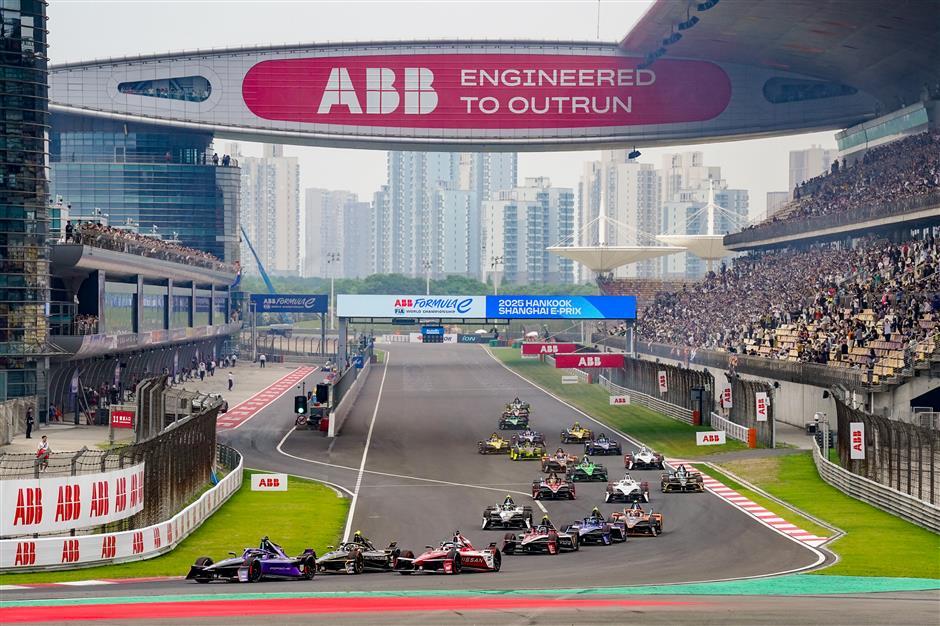
This year's Formula 1 Heineken Chinese Grand Prix was moved up to March 21-23. The Grand Prix was new in another sense: the event organizer, Shanghai Juss Sports Group, completed renovations of part of the Stand B, and the race track.
With the Rolex Shanghai Masters extended to two weeks since 2023, its first half now covers the week-long National Day holiday. This year event was held from September 29 to October 12, attracting over 250,000 on-site spectators, nearly 10 percent of whom from outside China. The 100 million yuan in ticket sales confirmed the event's status as a top tennis event in Asia, though sales figure did not take into account its spillover into tourism in general, particularly in view of the "ticket + culture and tourism" mantra.
Similar synergy is also being forged with regards to games with relatively low perception, as evidenced in the number of activities surrounding the 2025 Longines Global Champions Tour Shanghai held May 2-4 at the Shanghai Juss International Equestrian Center.
The influence of other top-tier brand events, including the World Snooker Shanghai Masters, are also being felt outside their immediate venues, thanks to spillover to sectors of culture, sports, business, tourism and exhibitions.
In addition to introducing internationally renowned events, Shanghai has also been playing an active role in nurturing distinct local events with a view to branding of the city's sports scene. Among these home-grown events were the 2025 Head of Shanghai River Regatta (October 2-3, on Suzhou Creek), the Shanghai Sailing Open (March 25-30, on Huangpu River), and the Tour of Shanghai New Cities cycling race held September 5-7 in the five "new cities" in five of the city's suburban districts.
The 2025 Shanghai Marathon was held on November 30 at the Bund. As China's only World Marathon Majors (WMM) candidate event and a World Athletics Platinum Label race, the event attracted about 23,000 runners from home and abroad.
The spate of high-level events help consolidate the city's stature as venue of sports events, while also burnishing its image as a tourist destination.
Emotional Consumption: Youth-Driven Value Pursuit
In 2025, emotional consumption became a measurable and growing part of youth spending in Shanghai, influencing everything from retail design to entertainment and tech products.
A report jointly released by social platform Soul and the Shanghai Youth Research Center found that young Chinese spend an average of 949 yuan per month on purchases made primarily for "emotional value," rather than functional use.
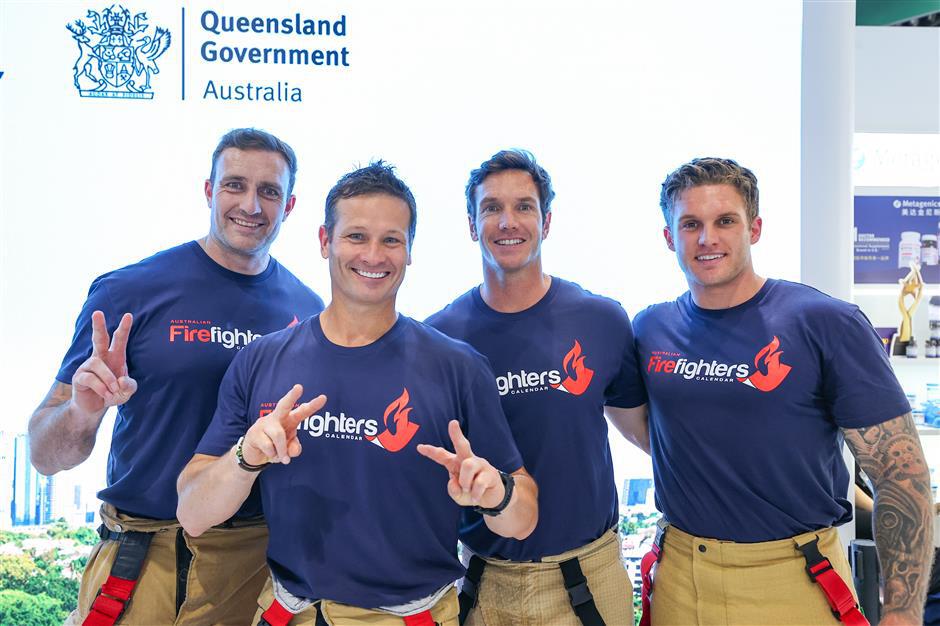
Brands and organizers increasingly designed for that demand. At the 8th China International Import Expo in November, six Australian firefighters selling charity calendars drew crowds not through product features, but through fan-style interaction, including autographs, heart gestures, and playful "princess carries" that turned a booth into a live "emotional service" experience.
In the same "feel-good" lane, Pop Mart's Crybaby line, built around a teary-eyed character that represents young people exploring who they are and acknowledging their feelings, pulled dense crowds, while brands like Jump From Paper leaned into self-expression with comic-style bags marketed as something you buy "to please yourself."
The trend also blurred into tech. At the WAIC, AI companionship showed up not as a futuristic gimmick but as a consumer product pitched around being "understood."
Among the products that drew the most attention was Fuzozo, a palm-sized AI companion plush developed by Robopoet. The device draws on the concept of China's five elements – metal, wood, water, fire, and earth – to shape different personality traits, and adjusts its responses over time based on user interaction.
Other AI companionship offerings took a different approach, including ZTE's companion pet Mochi, which responds with tactile, comforting gestures, as well as educational companion toys positioned as habit-building alternatives to purely functional devices, such as those developed by Folotoy AI.
Industry research cited in the same reporting projected the global AI companion market could reach US$140.75 billion by 2030, underscoring how quickly "emotional value" is becoming a business category of its own.
Across lifestyle and retail, the pattern looked consistent: young consumers weren't only buying things; they were buying relief, recognition, and connection, whether through collectibles, pop-ups, concerts, or even AI "friends."

Micro-Dramas: Industry Boom and Global Expansion
Micro-dramas continued their rapid rise in 2025, with Shanghai stepping up its investment in the booming industry.
China is now home to 662 million micro-drama users, and the market has exceeded 50 billion yuan, surpassing national box office revenue for the first time and becoming a major new force in content consumption.
Since last year, Shanghai has rolled out targeted policies to accelerate micro-drama development, setting a three-year goal of producing 300 high-quality titles.
According to a report released in March, total industry output in the city has steadily climbed to around 7 billion yuan.
This year, Shanghai once again allocated about 50 million yuan in dedicated funding, offering up to 3 million yuan for top-rated projects, alongside creative mentorship, awards programs, and promotional assistance.
As both user numbers and market size surge, the sector is shifting from tacky, sensational entertainment toward more premium and diversified productions.
According to the 2025 Micro-Drama Industry Ecosystem Insight Report released earlier this month by the China Netcasting Services Association (CNSA), more than 70 percent of traditional film and television professionals are now involved in micro-drama creation, driving improvements in standardization, industrialization, and editorial quality across the board.
Beyond explosive domestic growth, micro-dramas are rapidly expanding overseas.
The 2025 White Paper on China's Micro-Drama Industry, released in November, shows that from January to August, the global micro-drama market generated US$1.525 billion in revenue, up 194.9 percent year-on-year, with 730 million total app downloads, surging 370.4 percent.
Chinese companies dominate this market: 90 percent of the top 20 revenue-generating apps have Chinese origins, contributing 91 percent of total revenue. Platforms like DramaBox and ReelShort saw downloads rise 70-105 percent, outperforming the 20-35 percent declines seen by global streaming giants such as Netflix and YouTube.
Against this backdrop, Shanghai's Pudong New Area and CNSA have jointly launched the nation's first industrial hub dedicated to the global expansion of micro-dramas.
The hub offers streamlined work permit services, business settlement support, and additional incentives aimed at lowering barriers for cross-border content distribution.
With facilities covering translation, production, distribution, copyright brokerage, and surrounding services, it aims to build a new center for cross-sector innovation and international communication, supporting Chinese micro-drama producers in accessing and developing overseas markets.
Several leading companies, including Crazy Maple Studio, have already established their overseas headquarters in the hub. With its platform ReelShort targeting the North American market, Crazy Maple Studio was named one of TIME's 100 Most Influential Companies of 2024.

ACG Culture: Youth Hub and Creative Empowerment
Shanghai's anime, comics, and gaming sector scaled new heights in 2025, marking the city's rise as a national center for youth culture and creative consumption.
The shift reflects both market energy and deliberate urban planning that links digital imagination with physical public space.
The year's big conventions – BilibiliWorld, ChinaJoy, and several fan festivals – drew strong attendance and expanded international participation. They positioned Shanghai as a gateway for global IP, gaming studios, and cross-border creative cooperation.
Xiaohongshu's Red Land event on Fuxing Island in Yangpu showed how former industrial areas can be transformed into open-world experiences. The project merged popular IPs, outdoor play, and internet culture into a landmark destination for young people.
Districts also used ACG culture to stimulate consumption and upgrade commercial areas. Yangpu promoted a "2.5-dimension" cultural zone linking universities, waterfront spaces, and start-ups. The Nanjing Road Pedestrian Mall became a model for how anime-themed retail and dining can revitalize traditional malls.
To support this growth, regulators issued China's first compliance guide for ACG merchandise and services, addressing issues such as after-sales disputes and copyright boundaries.
Shanghai's young consumers are shaping new business models – from VTuber studios to cosplay brands and offline pop-ups. The industry attracts both domestic and overseas creators, who value the city's lifestyle, infrastructure, and cross-cultural openness.
It is part of Shanghai's wider strategy to build a creative economy that connects talent, technology, and public space. ACG culture is helping the city refresh older shopping districts, diversify entertainment options, and strengthen its role as a trend-setting capital for China's youth.

Content Creation: Policy-Supported Ecosystem
Shanghai's digital-content sector expanded rapidly in 2025, driven by new policies, district-level infrastructure, and international talent. The city sees storytelling, livestreaming, and digital production as strategic industries that can shape global cultural influence.
The Shanghai Nine Rules formed this year's policy foundation. The package improves funding channels, protects IP, accelerates company registration, and supports talent mobility. It encourages creators to produce high-quality content that reflects the city's culture while reaching global platforms.
Two new hubs gave the ecosystem physical anchors.
The Bund FTC in Huangpu opened in a restored historic building near the Bund. With livestream studios, shared offices, and "one-stop" administrative services, it offers creators a full cycle – from production to financing to policy support. The center has already attracted international influencers, comedians, and vloggers, many of whom say Shanghai's visa and residency support makes long-term creative work easier.
In Yangpu, the VHub platform nurtures young digital talent by connecting creators with universities, technology firms, and cultural institutions. It emphasizes workshops, training, and cross-industry collaboration, positioning the district as a pipeline for emerging creators and digital entrepreneurs.
ACG culture boosts traffic. Retail districts provide filming space. Policy incentives help creators formalize operations. District governments coordinate events such as night-market livestream campaigns, which gained millions of views and strengthened the link between content and local consumption.
Shanghai's strategy aims to attract global talent, retain young local creators, and build an export-ready creative industry. Digital content in Shanghai is no longer an informal hobby sector. It is becoming a structured industry – supported by policies, infrastructure, and international openness – that reflects how the city defines modern cultural competitiveness.

Long Summer: Extreme Heat and Record-Breaking Temperatures
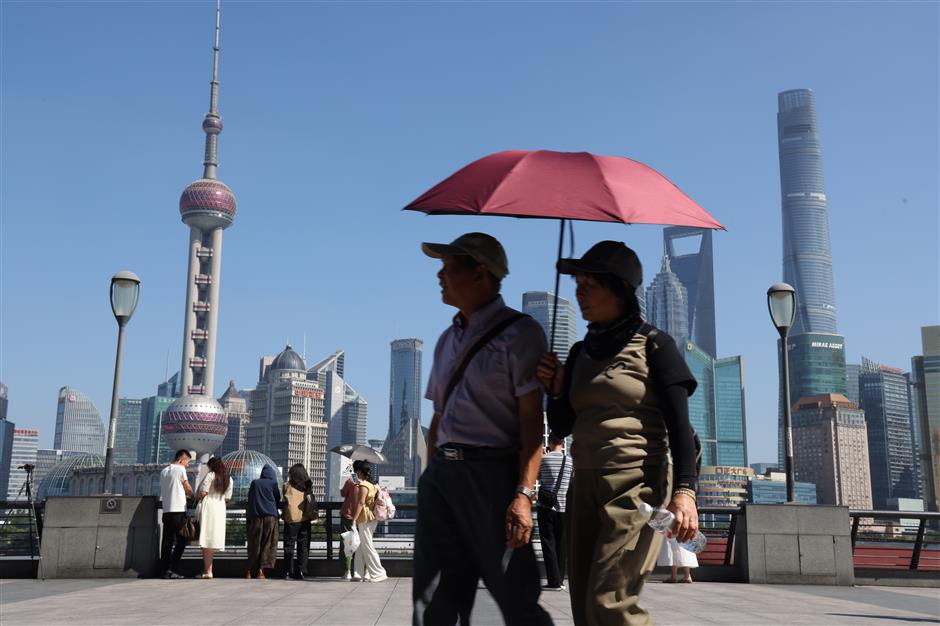
Shanghai recorded its second-longest summer on record in 2025, as the season stretched well into autumn and became a defining feature of the city's weather this year.
The city entered meteorological summer on May 12, around 12 days earlier than average, after five consecutive days with daily mean temperatures at or above 22 degrees Celsius were recorded at the Xujiahui station.
Summer conditions persisted until October 18, with Shanghai officially entering autumn the following day.
From May 12 to October 18, Shanghai experienced about 160 days of meteorological summer, ranking as the second-longest since local records began in 1873. The city's meteorological summer typically lasts about 134 days, compared with an all-time high of 162 days in 2021.
The transition also set a new record for the latest autumn onset since 2007. The latest autumn arrival on record remains October 23, 2006, when an unusually strong subtropical high suppressed cold-air activity and delayed seasonal cooling.
The prolonged duration was matched by intensity. Official figures show Shanghai recorded 54 high-temperature days in 2025, defined as days with maximum temperatures of 35 degrees Celsius or above, the second-highest count on record.
While the city did not experience extreme highs above 40 degrees Celsius, the overall heat load remained elevated. Shanghai's mean summer temperature reached 28.4 degrees Celsius in 2025, about 2.4 degrees Celsius higher than the long-term average, marking the highest summer average temperature since records began.
The sense of an unusual season was reinforced in late July, when Shanghai briefly issued a yellow tsunami alert following a powerful offshore earthquake in the northwest Pacific. Such warnings are rare for the city and drew wide public attention before being lifted without local impact.
Shanghai's experience reflected a broader national pattern. Across China, the summer of 2025 was the hottest on record, with an average temperature of 22.31 degrees Celsius between June and August, according to the National Climate Center. Many regions experienced prolonged and overlapping heat episodes, underscoring the nationwide nature of the extreme warmth.
2025 has been a year of tangible transformation and remarkable milestones for Shanghai. What makes this year's achievements truly significant is not just the breadth of progress, spanning livelihood, economy, technology, culture, and sports, but the depth of its impact: A family bidding farewell to chamber pots gains dignity, a foreign investor finds seamless access to opportunities, a young creator turns passion into a career, and a visitor experiences the city's warmth through culture and convenience.
This year, Shanghai proved that a modern international metropolis can honor its roots while racing toward the future. The city's success lies in its ability to listen to its residents, embrace global trends, and turn ambitious visions into daily realities.
As we bid adieu to 2025, Shanghai carries forward a legacy of progress and a spirit of exploration. The foundations laid this year will fuel the city's next chapter. With its eyes on sustainability, inclusivity, and global leadership, the best of Shanghai is still to come.
Editor: Su Yanxian