Small Ball Still Moving the World: Ping Pong Diplomats Return to Shanghai
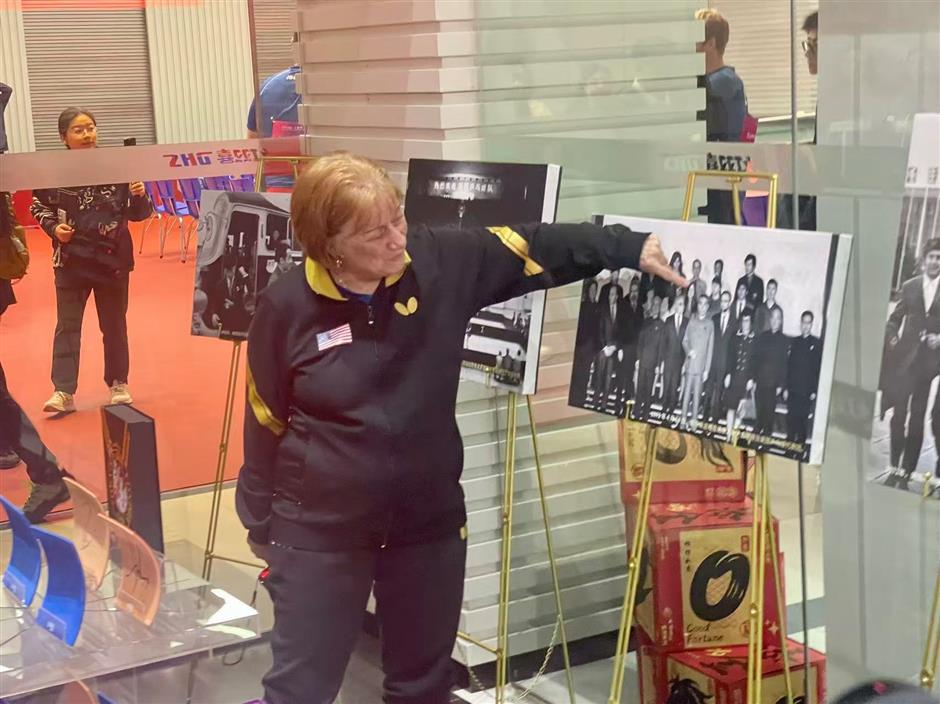
Olga Soltesz stood in front of a black-and-white photograph on a factory wall in Shanghai on Monday. In the grainy image, a 17-year-old girl with a ponytail smiles next to then Chinese Premier Zhou Enlai.
"That is me," Soltesz said, pointing to her younger self. "How lucky was I to see 1971, when everyone dressed the same, and now see this modern world. It has changed 200 percent."
Soltesz and her teammates from the historic 1971 "Ping Pong Diplomacy" returned to Shanghai this week.
They joined more than 100 American guests to celebrate the 55th anniversary of the exchange that thawed relations between China and the United States.
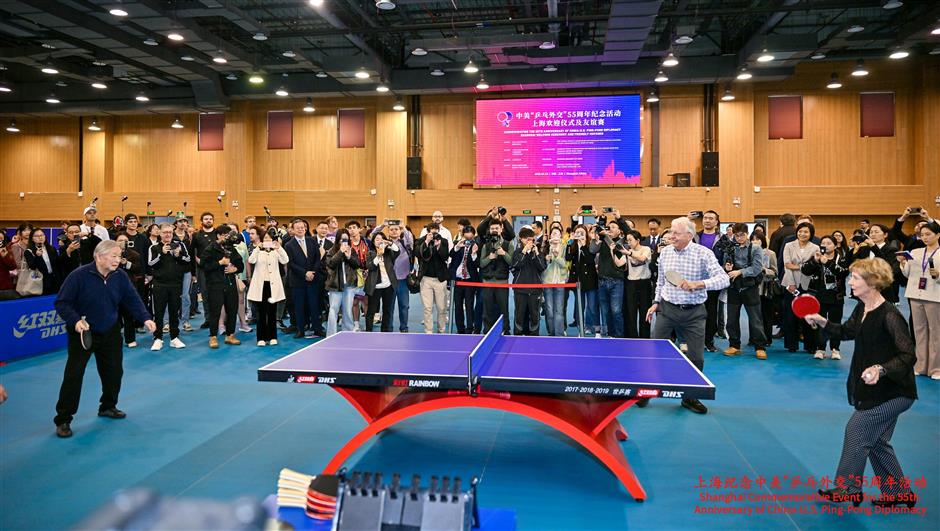
The group visited the Double Happiness (DHS) sports equipment factory and played friendly matches at the Shanghai University of Sport.
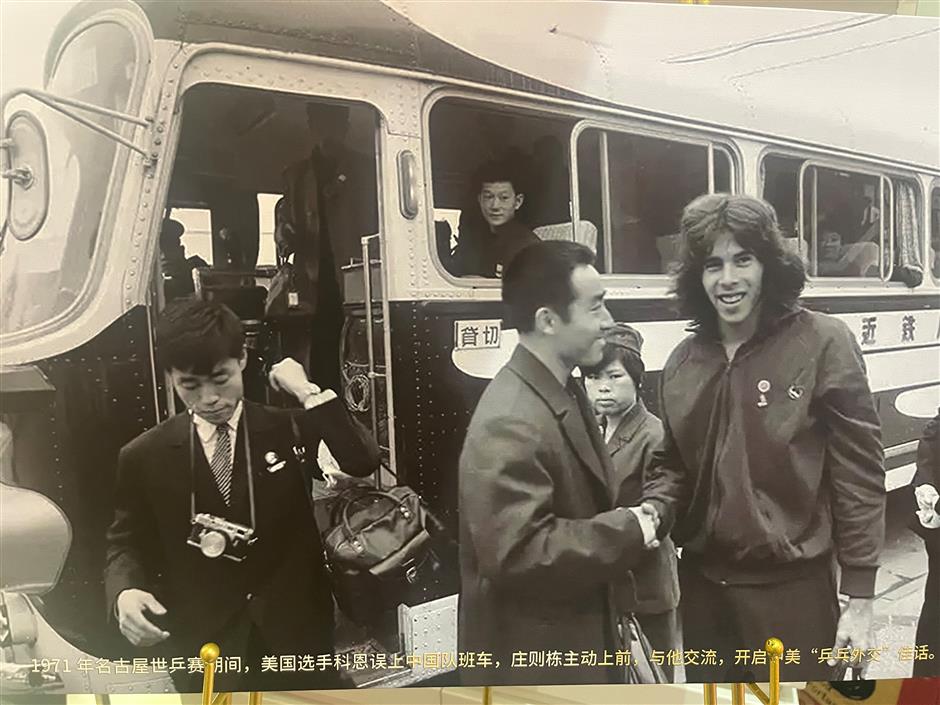
The 1971 visit followed a chance encounter at the World Championships in Nagoya, Japan.
American player Glenn Cowan missed his bus and boarded the Chinese team's shuttle. Chinese star Zhuang Zedong greeted him and gifted him a silk brocade.
That "small ball" eventually moved the "big ball" of global politics, ending 22 years of silence between the two nations.
Judy Louise Hoarfrost was the youngest member of that 1971 team at age 15. On Monday, she shared a touching memory of the matches that defined the era's motto: "Friendship first, competition second."
"The Chinese players were the best in the world," Hoarfrost said. "They kindly allowed me to win three out of four matches. I was fully aware they wanted the match to look good to the audience. This was a gift to me."
"I remember shaking hands with Premier Zhou. He looked directly into my eyes and said we were opening a new page," she recalled.
Now 70, Hoarfrost stood before the historic Green Tile Building at the Shanghai University of Sport and sang a few lines of the Chinese song "The East is Red." She learned the melody during her first visit.
"I struggle to remember names from five minutes ago, but I still remember these lyrics," Hoarfrost noted. "Sports provide a common language. It does not matter how much money you make or what your politics are. You meet at the table and develop warm feelings."
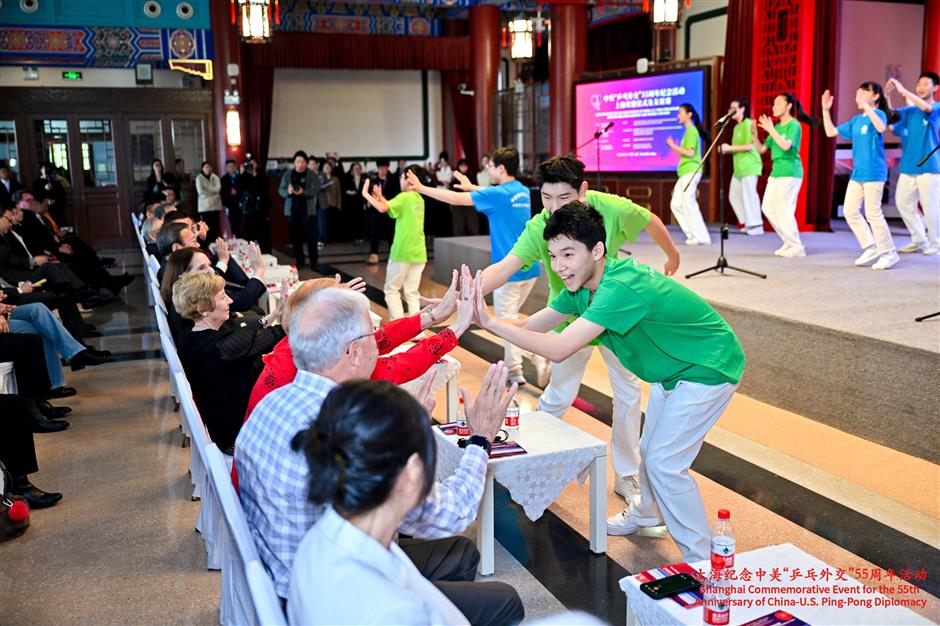
The anniversary event combined nostalgia with modern technology. At the university entrance, greeting robots high-fived American teenagers.
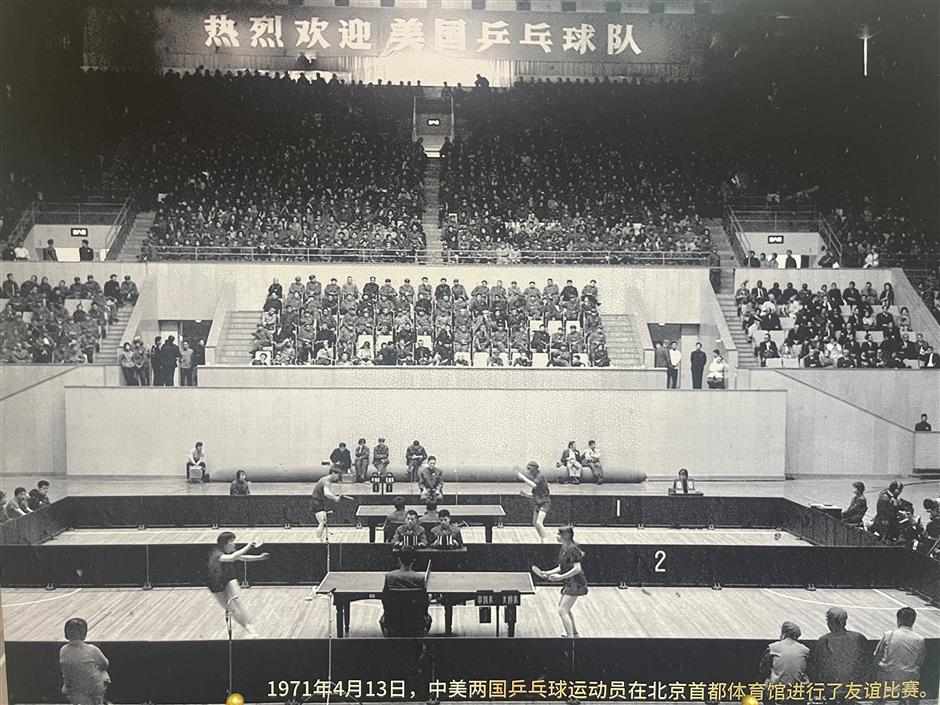
The American team in 1971 consisted of 15 players and eight journalists. During their two-day stop in Shanghai, they played before 4,000 spectators at the Jiangwan Gymnasium. Today, the exchange involves hundreds of Chinese and US university students.
"It is a way of passing the torch," said Richard Jay Char, a director of USA Table Tennis. "Ping pong is unique because we come here with the understanding that we will learn from our friends in China."
The competitive spirit remains, but the focus has shifted toward cooperation. New York native Timothy Cudjoe and North Carolinian Cameron Smith took second place in the professional group matches.
"I feel something inside when they give the speeches," Smith said. "My dad got me started with this sport, and now I am here. We all need togetherness to make the world better."
Chinese students Yin Tianyue and Liu Fangjia won the professional group championship. They embraced the American players after the final point.
"We are competitors on the court, but we can be good friends off the court," Liu said. Yin added that while international matches are often about winning, this event was about learning from each other.
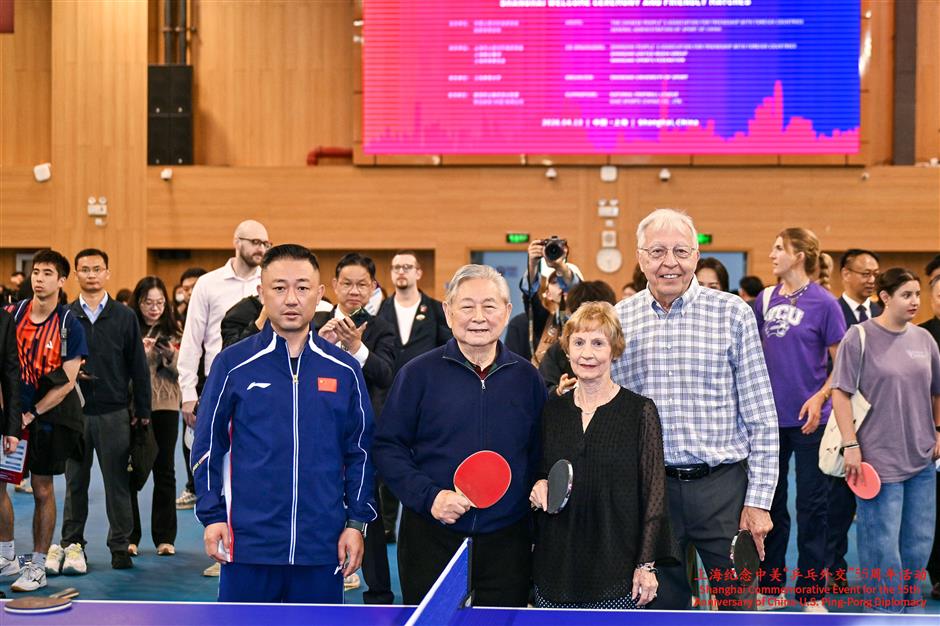
Jeffrey S. Lehman, vice chancellor of NYU Shanghai, who witnessed the Chinese ping pong team's historic visit to the US in 1972, also joined the competition on Monday. He finished in third place with his teammate in the amateur group.
"It is very important that everyone continues to cross borders, even when it seems more challenging," Lehman said. "Sports, music and art enable people to see the world through different eyes without feeling tension."
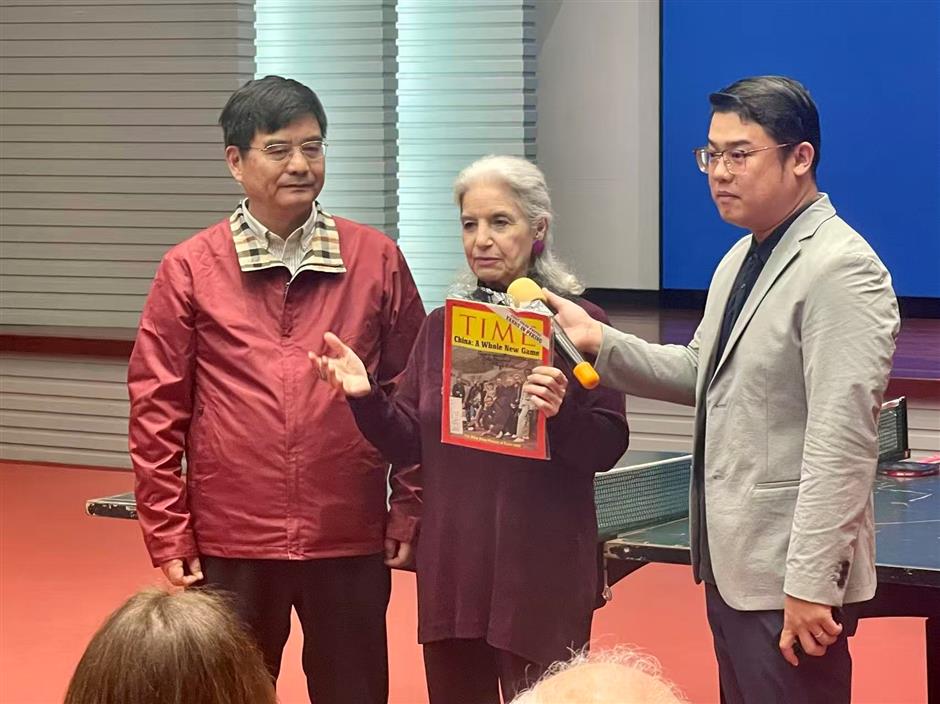
Across the city at the DHS factory, Jan Carol Berris presented a vintage Time magazine from the 1970s.
Berris, vice president of the National Committee on US-China Relations, helped organize the 1972 return visit of the Chinese team to the US. She showed workers the original coverage of the factory's role in the diplomacy.
"Ping pong is a simple way of bringing people together to learn that while we may have many political differences, we are all human beings and we have a lot in common if we just learn how to talk."
She also recalled the 1972 visit when the Chinese team arrived in Michigan.
"While the Chinese ping pong team impressed Americans enormously with how wonderfully they played, there was another impression," Berris pointed out.
"Li Furong was so handsome that all the women of America fell in love with him."
Li, a legendary Shanghai athlete who won four world team titles, was a central figure in that 1972 delegation. He met with the veteran US players and played with them again after more than half a century.
"The non-official sports exchange served as a golden key to opening the cold relationship between China and the United States," Li observed.
Chinese veterans also shared their memories. Xu Yinsheng, a former world champion who witnessed the 1971 Nagoya moment, said the friendship must continue through younger generations.
"I once lost to an American player in the World Championships," Xu said. "But we learned from each other. This friendship was not easy to build. The youth must remember this history."
As the event concluded, Hoarfrost reminded the young athletes of their new roles.
"We are all ping pong diplomats now," she insisted. "The world needs this spirit more than ever. We must continue to work together to overcome global challenges."
Editor: Yang Meiping
In Case You Missed It...
 Sep 22, 2026