Dean Burns, Script Doctor Who Found China on a Whiteboard, Dies at 64
"In the ten years I have taught in Shanghai, my phone has saved thousands of photos of whiteboards. No scenery, no portraits, only whiteboards."
Dean William Burns, vice president of education at the Shanghai Vancouver Film School of Shanghai University, wrote those words to describe his life in China.
The veteran script doctor died in Shanghai on January 20, after a sudden illness. He was 64.
The Canadian had lived and taught in Shanghai for more than a decade. In a personal reflection, he wrote that his phone had "thousands of photos of whiteboards...No scenery, no portraits, only whiteboards."
He described the whiteboards not simply as teaching tools, but as records of students' evolving ideas – often tentative, conflicted, and unfinished – which together formed what he saw as a map of the country he came to call home.
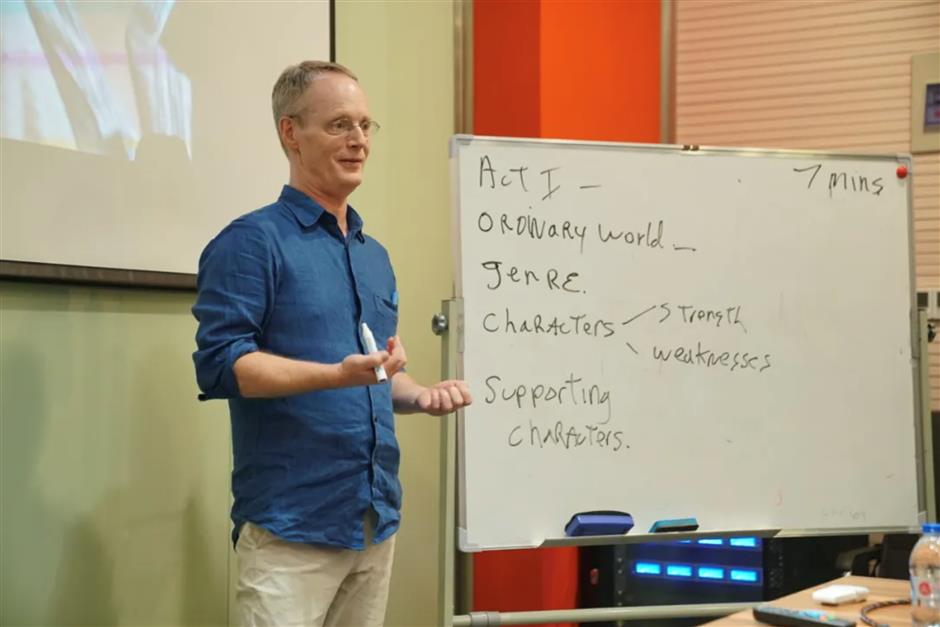
Born in Ottawa, Canada, on January 6, 1962, Burns had established himself as a script reviser and film educator in North America before coming to China, teaching for years at the Vancouver Film School in Canada and mentoring screen projects that later reached production.
In 2014, he arrived in Shanghai on what was meant to be a short-term assignment to help launch a new film school. The classrooms were still unfinished; to reach his first students, he had to step over construction debris and navigate improvised corridors.
He never left.
"I am so used to China and the personality of Shanghai that it feels more like home than Canada," he once said. "There is no normal day here. Every day is different."
For Burns, that unpredictability was not an obstacle. It was the starting point of storytelling.
At the Shanghai Vancouver Film School, he taught students aged 18 to 55, from first-year undergraduates to media workers, film enthusiasts, and retirees. Their scripts drew on hospital corridors, gaokao -fueled family tensions, workplace rivalries, the hidden world of Beijing Opera, wuxia (kongfu) fantasies, and reality television culture.
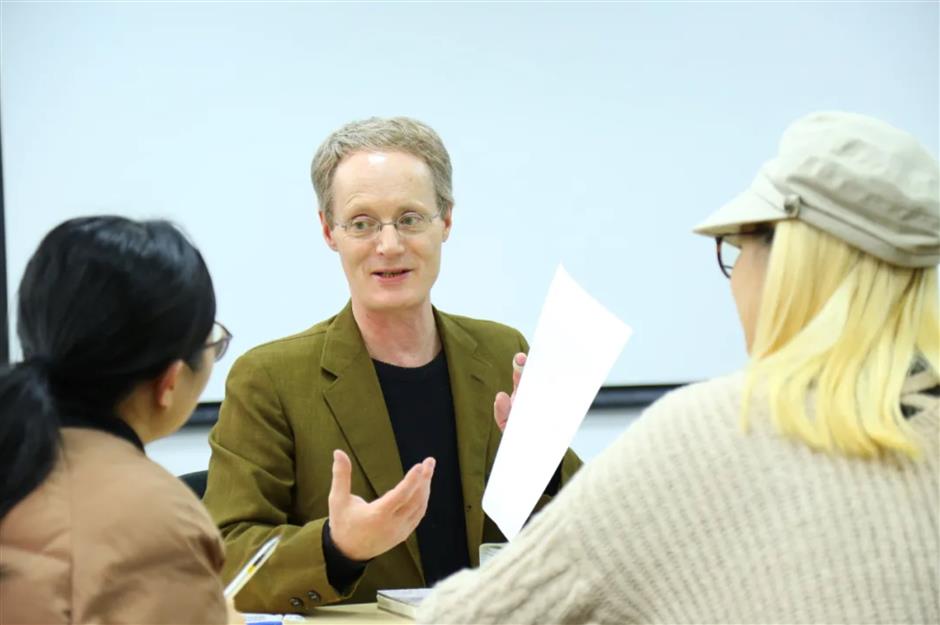
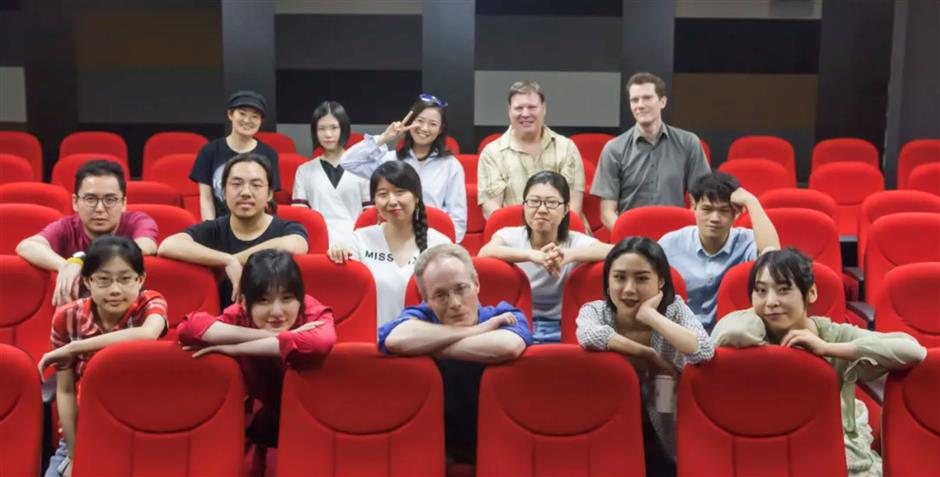
Burns believed that no story was too small. If it was lived, it was worth attention.
"It has been my privilege to experience China through the stories my students have created," he wrote. "Their fears, frustrations, joys, and triumphs reflect the country they live in, and a place I now consider home."
Burns did not just teach in Shanghai; he studied it. His personal notebooks were filled with breakdowns of Chinese hit series such as Blossoms Shanghai and The Bad Kids. In his spare time, he cycled through the city's alleyways, drafting a fantasy crime novel starring Shanghai's street cats.
Jia Zhangke, president of the Shanghai Vancouver Film School and a leading Chinese filmmaker, described Burns as "a consistently reliable partner and a committed practitioner of cultural dialogue," praising his patience and his ability to listen in an industry often eager to speak.
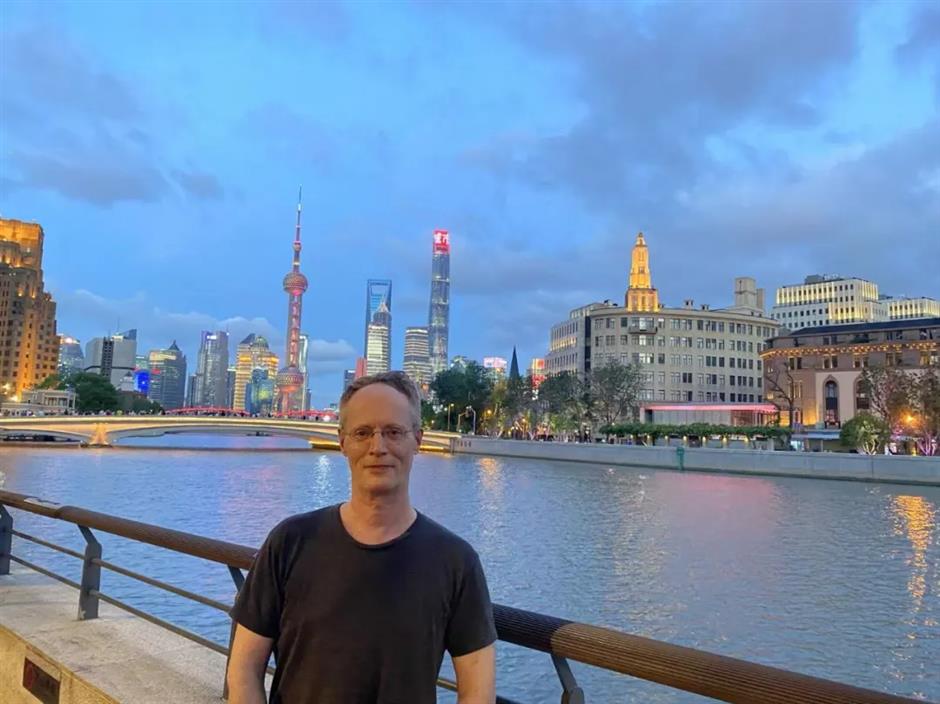
In a final letter addressed to family and friends last year, Burns was precise about how he wished to be remembered. He asked that his farewell be simple, free of ceremony.
He wrote of quiet landscapes that had always brought him peace, frozen lakes and open plains, then undercut the solemnity with a familiar note of humor. "If you don't follow my instructions," he warned, "I'll be back every morning, haunting the breakfast table."
"If there is one thing I have learned," he wrote, "do not let friendship slowly fade with time. Pride, and all thoughts that circle only around yourself, will narrow your world."
To his students, the lesson took a different form.
"Be afraid," he told them. "Not of the future, or of succeeding or failing, but creatively recognize fear as a good thing, because it means you are taking a chance."
In Case You Missed It...

 Oct 7, 2026
![[ChinaMaxxing] The Weather We're Having Now Is Called Hanlu](https://obj.shine.cn/files/2026/10/06/b7375dbf-9c63-45c4-9bb8-6e7642996189_0.jpg)
![[Cultural Mosaic] Theater as a Bridge: Cross-Cultural Co-Creation is About Building Equal Dialogue](https://obj.shine.cn/files/2026/09/30/f397224f-18e9-4135-adf9-0eead315b847_0.jpg)