How Technology Is Reshaping Archeology, Experts Tell Forum
The 6h Shanghai Archaeology Forum opened yesterday at Shanghai University, where a slate of major archeological discoveries and research achievements were announced.
Experts also discussed how digital tools are being applied in archeological research.
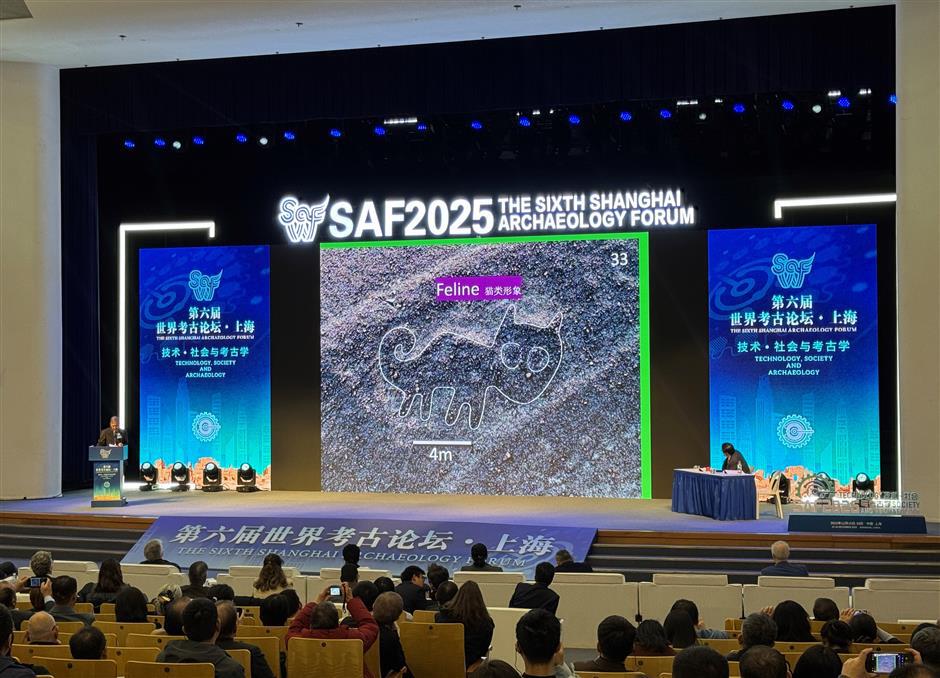
Masato Sakai from Yamagata University in Japan presented his team's research on Peru's Nazca Lines.
He said researchers used artificial intelligence to analyze aerial imagery across a test area of about 27 square kilometers. Although the model was trained with only 32 samples, it identified a large number of previously unknown geoglyphs, which were later confirmed through fieldwork.
Sakai said the approach enables archeologists to examine human activity at a landscape scale, rather than relying solely on site-by-site surveys, which significantly improves research efficiency.
Michael Frachetti from Washington University in St Louis, Missouri, presented research on ancient settlements in the high mountains of Inner Asia, where rugged terrain has long limited archeological visibility.
He said LiDAR (light detection and ranging) mapping made it possible to identify walls, roads, and building layouts across large areas of mountainous landscape.
"It is with the use of LiDAR that we've begun to really peel the layers back and understand how complex some of these high mountain environments can be," Frachetti said.
Gao Xiang, president of the Chinese Academy of Social Sciences, noted that advances in technologies such as AI are reshaping archaeological research by enabling more systematic analysis of material remains.
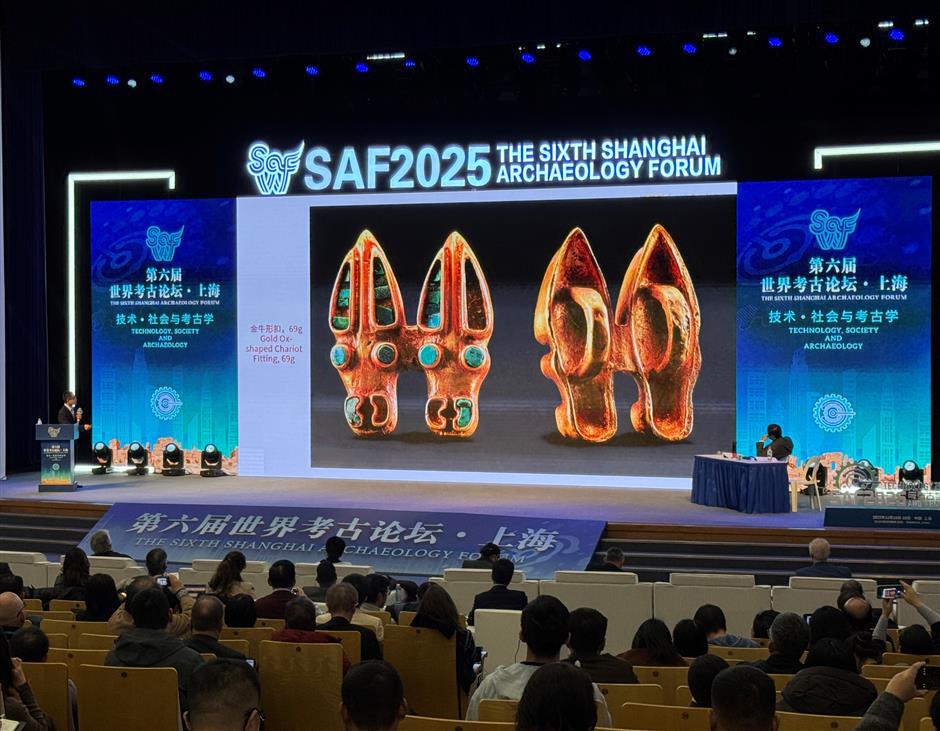
Chinese archeological research was also highlighted. Yu Youguang from the Shaanxi Provincial Institute of Archeology presented findings from the Zhaigou relic site in Qingjian County on the Loess Plateau, where excavations revealed large rammed-earth structures, noble tombs, and a significant number of chariot remains.
Yu said the findings indicate that the region was home to well-organized communities some 3,000 years ago, with robust regional connections during the late Shang Dynasty (c. 1600-1046 BC).
Discussions would continue through tomorrow. Founded in 2013, the Shanghai Archeology Forum is held every two years as an international platform for presenting archaeological research and academic exchanges.
In Case You Missed It...

 Dec 18, 2025