In China, AI brings the dead 'back,' raises questions for the living
When an elderly woman was helped to switch on a tablet, the screen lit up with the face of her son.
"Dongzi, do remember to call me, okay? Otherwise, I'll miss you so much," she said, her voice trembling.
On the screen, the young man nodded and smiled faintly. "Okay."
What the woman did not know was that her son had died in a car accident a year earlier. The figure responding to her was not him, but an artificial reconstruction built from his photos, videos and voice recordings, brought to life by AI.
Across China, a growing number of companies are offering similar services, moving beyond static images and audio to build interactive digital versions of the deceased.
A search for "AI resurrection" on Chinese e-commerce platforms shows a wide range of options. Some listings start at around 10 yuan (US$1.40), with shops offering to animate still images for about 20 yuan and add voice cloning for roughly 100 yuan.
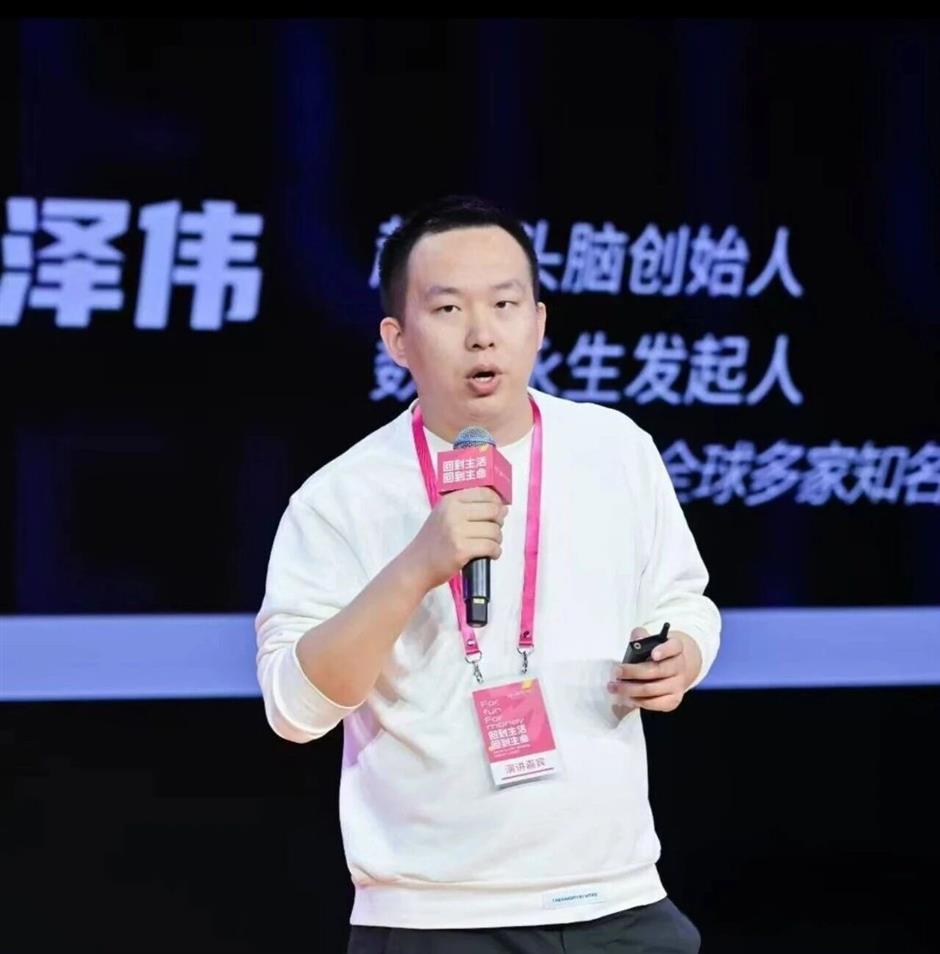
Zhang Zewei, a post-90s entrepreneur and founder of Nanjing Super Brain Information Technology Co, has spent three years building more advanced systems.
Since 2023, Super Brain has created digital avatars for bereavement support for more than 1,000 families, using tools involving AI and machine learning.
Zhang focuses on what he calls "digital immortality," which emphasizes real-time interaction. Unlike pre-scripted deepfakes, these systems generate dynamic responses that mimic how a person might have spoken.
"Essentially, you're training a personalized model on top of a large AI system," Zhang said. "The more data you have – from voice to life experiences – the more lifelike it becomes."
Such models typically take about a month to build. Depending on data and customization, prices range from 1,000 to 10,000 yuan, with higher-end packages sometimes including a tablet for real-time interaction, similar to a video call.
Zhang traces the origin of his business to a friend whose father died suddenly. To comfort the man's elderly mother, the family used AI to simulate video calls from the deceased. The experiment worked: The grandmother regained the will to carry on.
Since then, requests have multiplied.
Families have asked Zhang's company to recreate lost siblings to reassure aging parents, to generate messages from deceased relatives for weddings, or to rebuild children who died young.
Each case, Zhang said, is driven by what is left unsaid – final meetings missed, last words never spoken, farewells unfinished.
Zhang has come to see his work less as a technology product and more as a service shaped by grief.
"The core is not the technology. It's people," he said.
In one case, the parents of a girl who died at age nine asked Zhang to recreate her. On screen, a smiling child appears in a pink outfit, greeting users: "Hello, I'm Duoduo."
In the digital world, her life continues. Her parents can input data – imagined schooling, hobbies, milestones – and the system generates a future that never happened. As more information is added, a fuller "life" takes shape.
But the process raises a question that neither engineers nor families can easily answer: Who, exactly, is being recreated?
Is it the deceased – or a projection shaped by the living?
Academic discussions of "digital mourning" suggest people do not always aim to move on from loss entirely, but instead seek controlled ways to revisit relationships and preserve a sense of continuity.
In practice, most families use the AI only occasionally – on holidays, birthdays, anniversaries, or moments of sudden longing. The tablet becomes a preserved way of "meeting," making absence feel less final.
For some, the impact can be profound. Zhang said he has seen children recover from depression after interacting with recreated parents, elderly people take comfort in believing a lost child is still "out there," and couples draw strength from digital messages from deceased relatives.
More recently, he has begun offering free reconstructions of fallen soldiers, aiming to preserve memory and pass on what he calls "spiritual and cultural inheritance."
Still, ethical questions linger.
The technology does not reverse death, Zhang acknowledged, nor truly bring a person back.
"It is more like a preserved way of meeting," Zhang said. "It allows goodbye to be delayed."
Editor: Wang Xiang
In Case You Missed It...
 Sep 14, 2026
![[SH Health Guide] Shanghai SinoUnited Hospital](https://obj.shine.cn/files/2026/08/25/0d7738b1-812e-48b3-b007-9e3264e6f530_0.jpg)