Shanghai Breaks Ground on North-South Passageway, Easing Rush-hour Gridlock
Rush-hour congestion on Shanghai's North-South Elevated Road has long been part of daily life for many drivers. That pressure may soon ease.
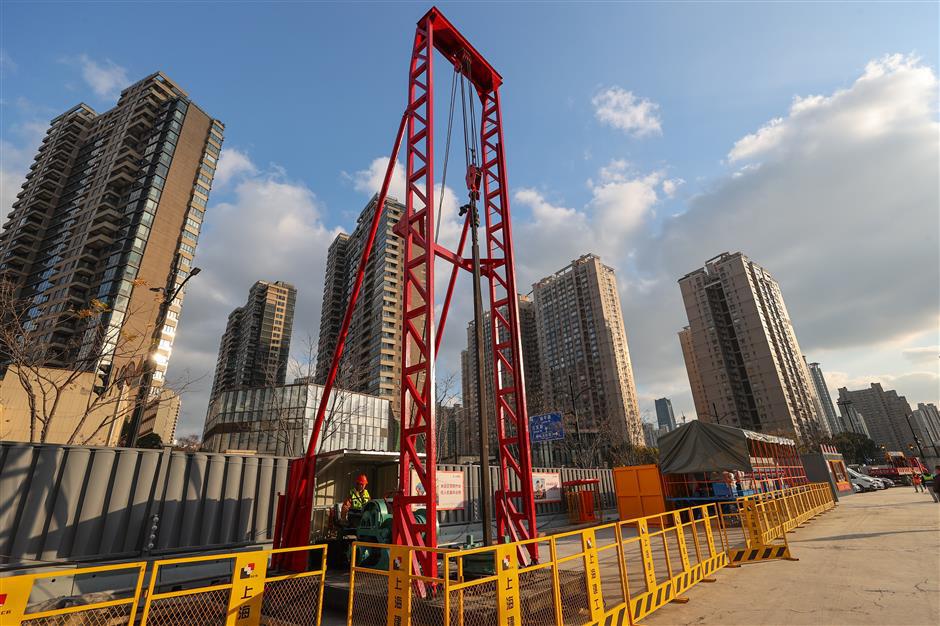
Construction began on Friday on the Puxi and river-crossing sections of the North-South Passageway, a major underground road project aimed at diverting traffic from the elevated road running through the city's core.
The passageway runs beneath the city, roughly parallel to the N-S Elevated Road. It begins at the Dabaishu interchange on the Middle Ring Road in northern Shanghai, crosses the Huangpu River, and extends south to the South Yanggao Road-Chengshan Road junction area, with a total planned length of approximately 14.55 kilometers.
The sections launched on Friday cover around 6.35 kilometers. They will be built entirely underground and designed with two lanes in each direction.
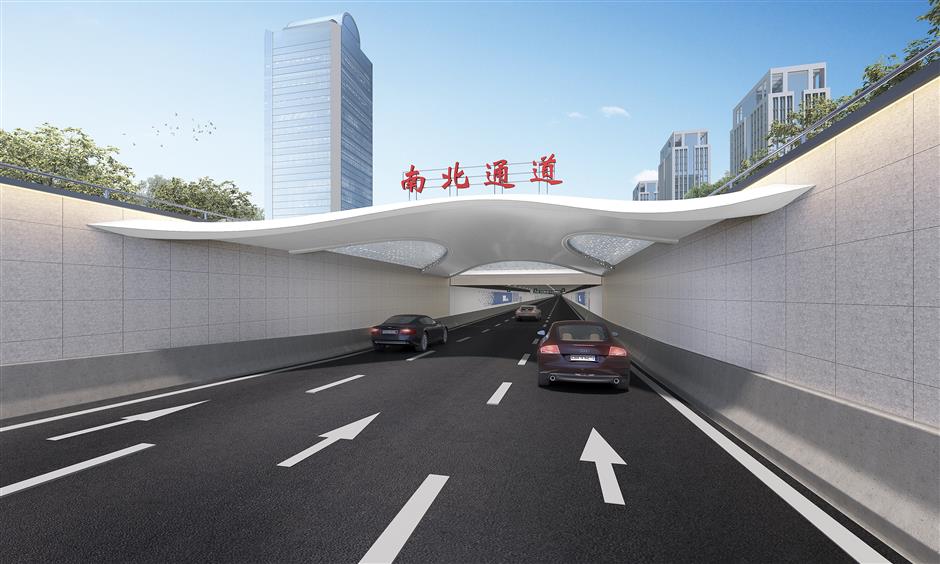
One of the passageway's key functions is to relieve pressure on the North-South Elevated Road, said Cai Yunfei, deputy general manager of the third division at Shanghai Chengtou Highway Investment Group.
"The passageway will link major areas such as Yangpu's Jiangwan-Wujiaochang, Hongkou's the North Bund, Pudong's Lujiazui and Qiantan, strengthening traffic connections between the two sides of the Huangpu River," Cai said.
Shi Liusheng, a project manager with Shanghai Construction Group who previously worked on the city's Beiheng Passageway, said the new passageway is similar in scale but more challenging to build.
"The Beiheng Passageway had an average underground excavation depth of just over 30 meters," Shi said. "For the North-South Passageway, that depth will increase by about another 10 meters."
He said the project passes through fully built-up urban areas, with residential neighborhoods, commercial complexes, and schools along the route.
"Building at this depth in the city places much higher demands on foundation support and construction safety," Shi added. "Throughout the process, we'll try to minimize the impact on surrounding areas."
The passageway was first proposed in planning studies in 2004 and later incorporated into Shanghai's Master Plan (2017–2035). The start of work on the Puxi and river-crossing sections marks the project's transition into the construction phase.
Once completed, including future sections on the Pudong side, the passageway will link with other major underground routes – the Beiheng Passageway, the Bund Tunnel, and the Pudong Avenue Tunnel – forming a core north-south and east-west network in central Shanghai.