China's Ailing Property Market Is Showing Some Green Shoots This Springtime
China's property market, which has been in a slump since 2021, triggered by a liquidity crunch that led to debt defaults by some big developers, is showing some signs of recovery, albeit slow.
"From developers, brokerages and investors to individual buyers, are all waiting for signs of a bottom of the market," said Lu Wenxi, chief analyst at Shanghai Centaline Property. "And there is a good chance that people will see more signals of a reversal in market sentiment, which is key to rebuilding confidence."
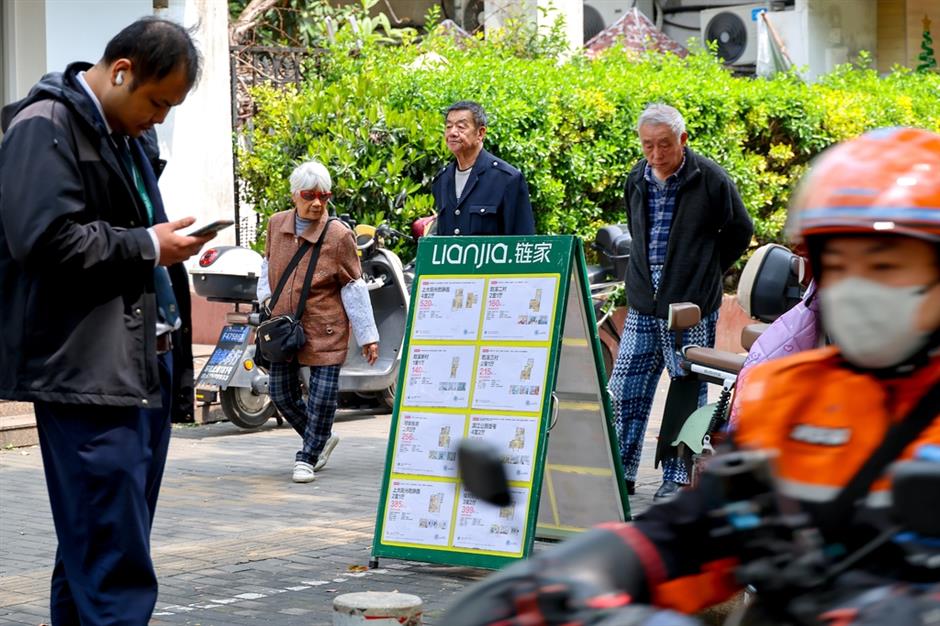
Wang Yusen, a salesperson at real estate broker Lianjia, said the office is already seeing new shoots of a turnaround. He has been very busy this month, with phone enquiries doubling in recent weekends.
"There are signs of renewed interest because more people are asking us about prices and wanting to visit properties on the market," Wang said, after taking six families a day to show them properties for sale during the recent Qingming Festival holiday.
That's a welcome change from last year. Wang had the highest sales at Lianjia's Yangpu District branch in 2025 but said the numbers weren't anything to shout about. He declined to reveal figures.
Sales of commercial properties have halved since their peak in 2021, while prices of new homes have decreased by roughly 10 percent in China's largest cities and up to 40 percent in lower-tier cities. Prices in the existing home market have also dropped amid poor demand and owners unwilling to sell at low prices.
The real estate market was once a major contributor to economic growth, and its crisis has galvanized officials to try remedies. Cities around the country have stepped in to lift restrictions that span residency requirements, property taxes and geographic availability, with conditions attached to home purchases mostly eased except for those remaining in Beijing, Shanghai, Guangzhou, Shenzhen and some areas of Hainan Province.
At the National People's Congress in March, Premier Li Qiang urged stepped-up "efforts to stabilize the real estate market," a tone shift from the previous calls to "stop declines" in the sector.
"China's property market remains the backbone of the economy, and the country can't afford a continuously sluggish market," said Quan Heng, Party secretary of the Shanghai Academy of Social Sciences and a delegate at the congress.
Still, despite all the calls for something to be done, newly released 2025 reports of major real estate companies in China show they are still suffering losses.
China Vanke, once the Chinese mainland's biggest property market developer, which is now flying close to default, reported that its 2025 loss widened to 88.6 billion yuan (US$12.9 billion) from 49.5 billion yuan a year earlier, nearly 6 billion yuan more than forecast. The company has an estimated US$11 billion in onshore and foreign liabilities and has been trying to convince creditors to defer full payment on maturing debt.
Shui On Land, a Hong Kong property developer which focuses heavily on the luxury residential market on the Chinese mainland, reported its first loss in nearly five years, largely on write-downs of property values and unsold inventory. Its revenue plummeted 50 percent to 4.1 billion yuan.
Also Hong Kong-based Kerry Properties said 2025 revenue from its Chinese mainland division saw a decline, with combined revenue dropping 21 percent, despite strong contract sales largely driven the premium Jinling Residences project in Shanghai's Huangpu District.
There are silver linings in the industry cloud. Country Garden Holdings, China's largest property developer by sales between 2017 and 2022, reported a "book profit" after three years of record-breaking losses. The profit was largely the result of a massive offshore debt restructuring that reduced nearly 100 billion yuan of negative assets just before the end of last year. Still, the company reported that its core business of large-scale residential projects across lower-tier cities in China continued to shrink.
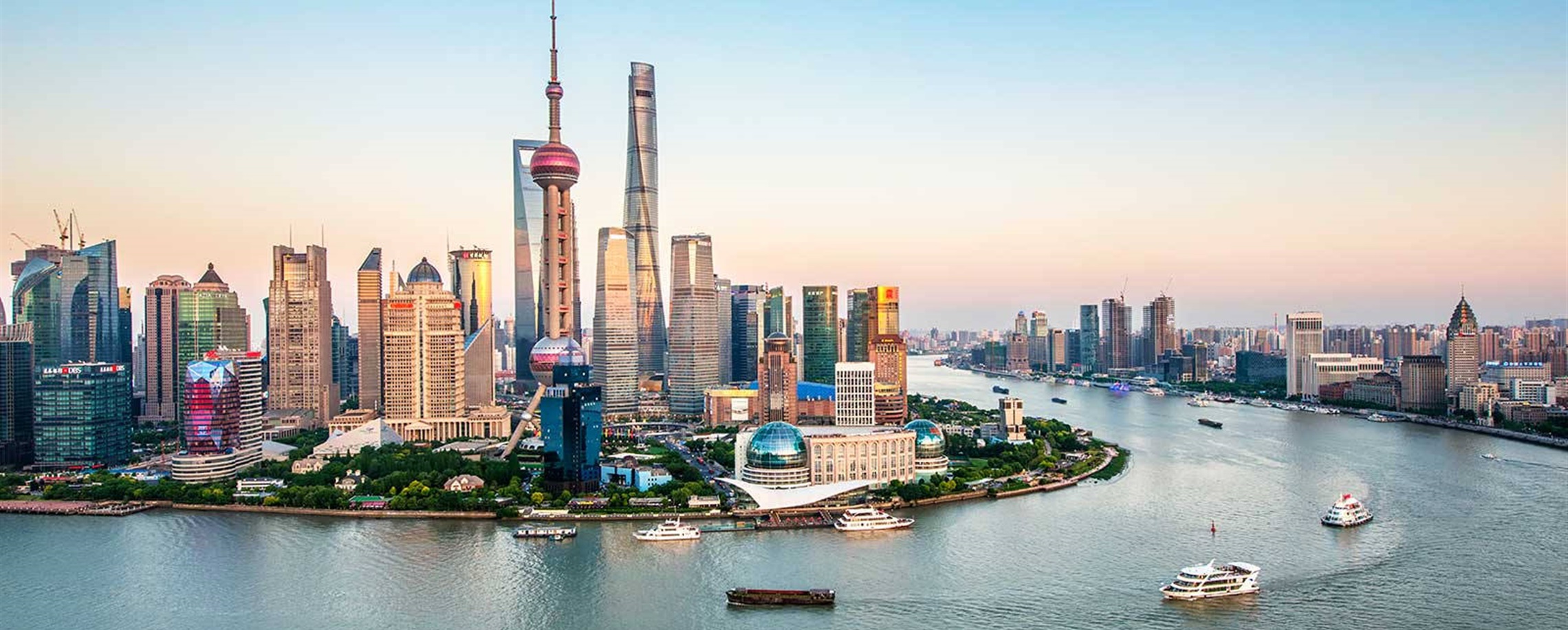
The Shanghai property market has weathered the storm better than most cities. Existing home sales rose to nearly a five-year high in March after the city relaxed purchase restrictions for non-local residents. In February, the city announced that people holding a residence permit for more than five years or paying taxes in Shanghai for over one year could buy a home in designated areas of the city. The new rules also increased the maximum housing provident fund loan limit and expanded the scope of property tax exemptions.
Some 31,215 existing houses changed hands in Shanghai last month, up 176 percent from February and 6 percent from a year earlier, according to local government data.
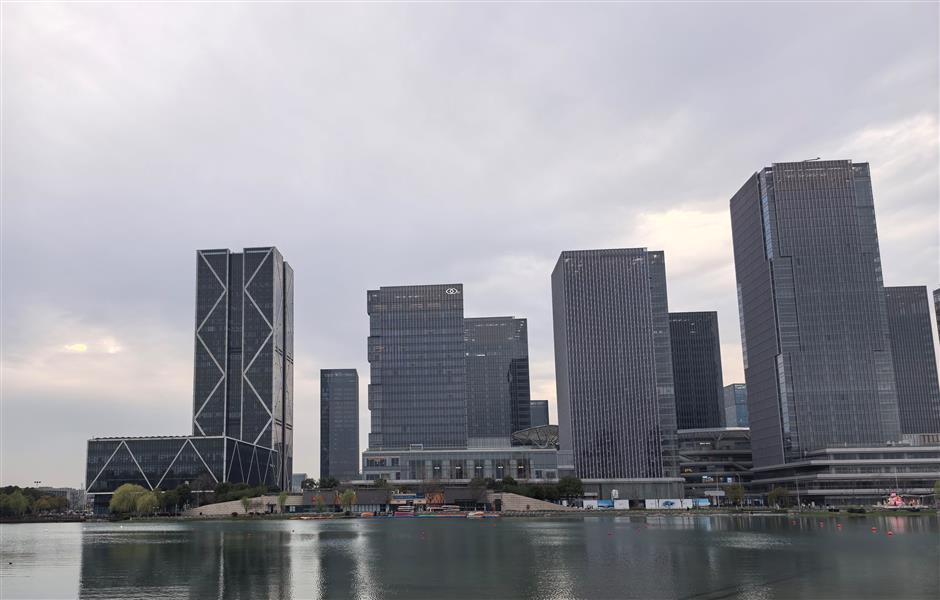
From a broader perspective, things are looking up in peripheral property businesses.
WiredScore, a global leader in digital connectivity and smart building certification for properties, announced in March that it was entering the Chinese mainland market as part of an Asian-Pacific expansion.
"The Chinese mainland is a dynamic and strategic real estate market," said William Newton, WiredScore's chief executive, at a launch ceremony in Shanghai. "Our expansion here shows our dedication to providing performance-driven digital infrastructure standards to global landlords and occupiers."
Kent Zhu, chief executive of French hospitality giant Accor, said the group will pick up the pace of expansion on the Chinese mainland by doubling the number of its hotels in the next 10 years, after opening its 800th hotel in the Jiangsu Province city of Changzhou in March.
The group has just signed new agreements in January to extend its premium the Swissotel brand in six locations, including Shanghai, Chongqing, Xi'an and Changsha.
Also, Shanghai announced last week that it will open 130 commercial buildings in the city to global investors, aiming for the rehabilitation of older office towers.
"Businesses and investors are expecting a return of demand, but the demand has never really disappeared," Centaline's Lu said. "People are just waiting for the right timing,"
Is now the right timing?
According to the National Bureau of Statistics, the prices of new home sales in China's 70 largest cities continued to drop in February from a year earlier, but 10 cities, including Shanghai, Nanjing, Hangzhou and Wuhan, had price rises from January. March data, due to be released on Thursday, are expected to build on that momentum.
In its latest analysis released last week, global consultancy firm Goldman Sachs emphasized a new phase for China's property market. Instead of a a broad-based recovery or continued decline, there is a clear divergence between first-tier cities and lower-tier markets.
The key shift is not that the market has "recovered," but that it has stopped moving uniformly: First-tier cities such as Shanghai, Shenzhen and Beijing are showing early signs of stabilization, supported by stronger income resilience, better liquidity, and faster policy transmission. Meanwhile, lower-tier cities continue to face structural pressure from excess inventory, weaker demand, and slower absorption cycles, according to Goldman Sachs.
Kerry Properties said in its 2025 fiscal report that the Chinese mainland market is now on a "much better footing" after an oversupply of housing in 2021 has diminished, but the developer said it remains uncertain when the market will fully stabilize and improve.
For Lianjia's Wang, confidence is rising that enquiries from prospective buyers will turn into sales.
"You can feel more energy in the market, and that should lead to good deals," Wang said.
Editor: Liu Qi
In Case You Missed It...

 Apr 14, 2026
![[China Tech] Shanghai Doctors Invent New Endoscopic Solutions](https://obj.shine.cn/files/2026/04/13/77d42338-ae02-430d-910e-417329cc7717_0.jpg)
![[Movers & Shakers] Yi-Wen Lee, The 'Plant-Forward Chef Educator'](https://obj.shine.cn/files/2026/04/08/7718e1f7-71d7-4f67-9b9b-1be695346d1d_0.jpg)