Abramovic's classic 'Transitory Objects' featured in Shanghai show
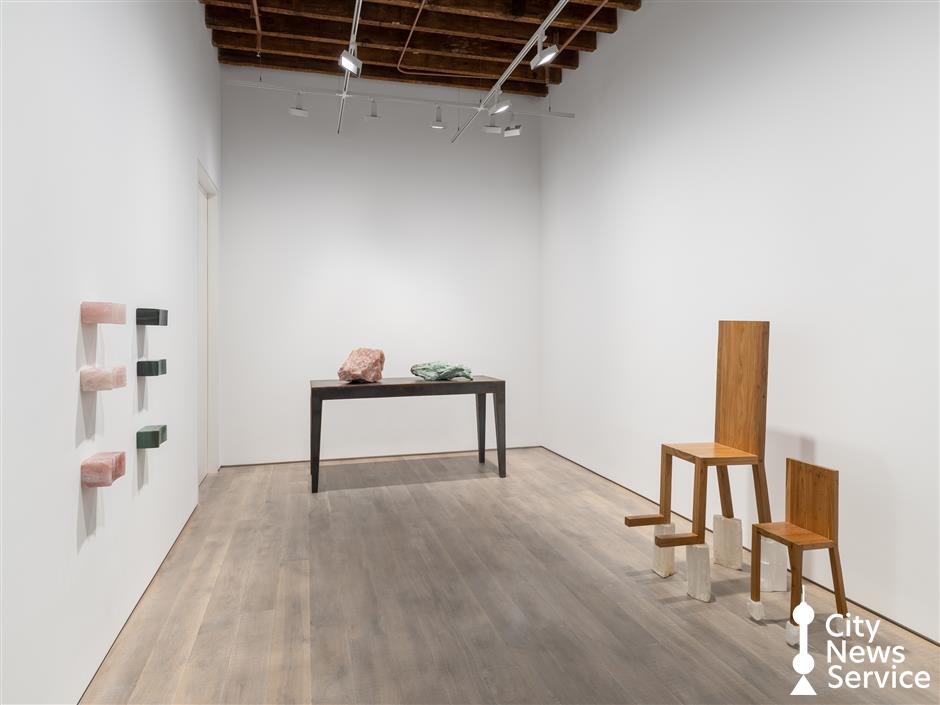
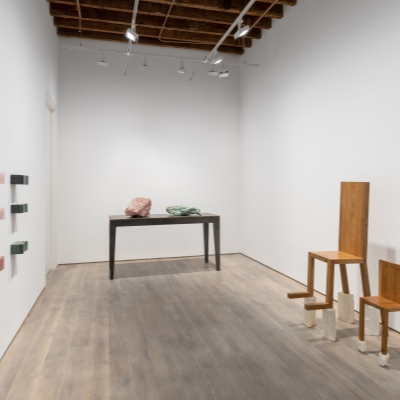
Marina Abramovi?'s first exhibition at Lisson Gallery China features a selection of works from her "Transitory Objects" series, 1970s performance photography and a video installation.
Abramovi?, a pioneer of performance art, has garnered international acclaim for 50 years.
Since the early 1970s during her career in Belgrade, Abramovi? innovated performance art by marrying concept with physicality, endurance with empathy, complicity with loss of control, and passivity with danger. Her performances pushed the boundaries of self-discovery for both herself and her audience, using the body as both subject and medium.
From 1975 to 1988, Abramovi? collaborated with German artist Ulay on works that explored the relations of duality, before returning to solo performances in 1989. Notably, her 2010 work "The Artist Is Present" involved sitting motionless for at least eight hours per day over three months, engaging in silent eye contact with hundreds of strangers one by one, in a quest for emotional and spiritual transformation.
The Shanghai exhibition marks the artist's return to China since 1988, when she and Ulay walked across the Great Wall.
The walk motivated Abramovi? to create the "Transitory Objects" series, which she began on her return from China and proceeded to expand over the next decades.
The series is especially significant because it's the artist's first series of works that featured audience participation. Using materials like quartz, crystals, copper, iron and wood, Abramovi? enables the audience to physically connect with her works and receive their energy, which she uses to transport herself to a meditative level of consciousness.
According to Abramovi?, "the artist's function is to present the work and deliver it to the public, so the public can bring it to completion."
The exhibition also includes "Stromboli 1" (2002), a single-screen artwork named after the island north of Sicily that is the site of Europe's only permanently active volcano.
The installation consists of static black-and-white close-up pictures of Abramovi? lying on the seashore, her eyes closed, and facing the sky. The artist remains immobile and silent for about 20 minutes until the last wave drowns her for a brief moment. She shifts her head position in response to the rising ebb and flow of the tides.
"Art Must Be Beautiful, Artist Must Be Beautiful" (1975/2010) is a 20-frame photography sequence in which Abramovi? parts her hair with both hands, with a metal brush in one hand and a metal comb in the other, while continuously repeating "Art must be beautiful, artist must be beautiful" until she repeatedly hurts both her own face and hair.
The performance exemplifies how, in the early years of performance art, female artists utilized their own bodies to challenge the art institution and the concept of beauty.
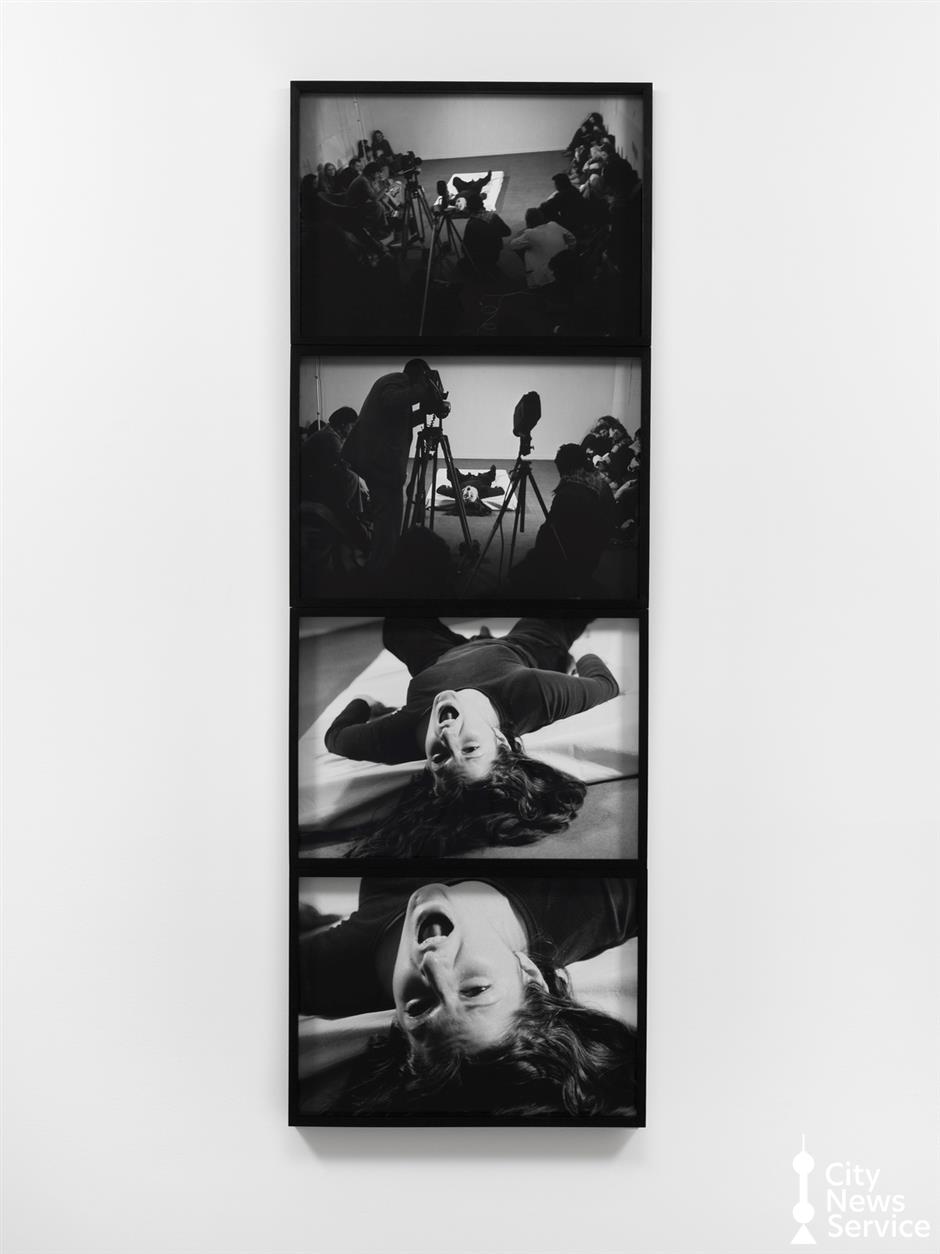
Alongside this is a series of photographs titled "Freeing the Voice" (1975/2014), which were captured during a three-hour performance in 1975 at the Student Cultural Center in Belgrade.
The artist is depicted reclining on a white mattress with her head tilted back and screaming until she loses her voice.
In an effort to accomplish mental cleansing by pushing the limits of the three primary faculties of expression – voice, language and body – her scream eventually transforms into a sound object, separating from the body and filling the space independently.
Exhibition info:
Date: Through July 22, Tuesdays-Saturdays, 11am-6pm
Venue: Lisson Gallery
Address: 2/F, 27 Huqiu Rd
虎丘路27号2楼
