An Exhibition Inspired by the Horse and Its Spirit
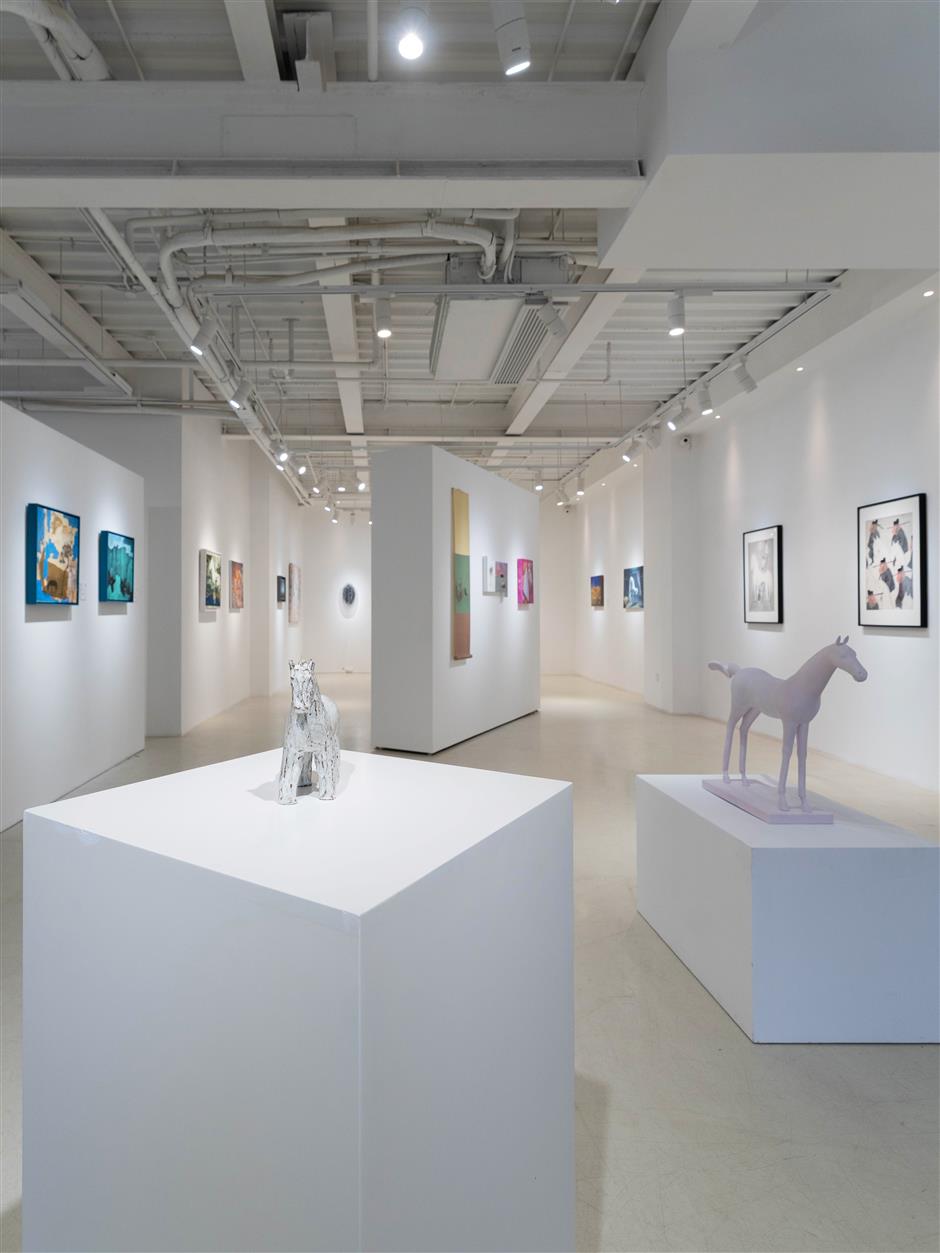
For the Chinese Year of the Horse in 2026, Bluerider ART's global themed exhibition Pegasus will explore a Chinese zodiac symbol.
The simultaneous exhibition in Shanghai, Taipei, London, and Los Angeles features 73 new paintings, ink, sculptures, and installations by 32 Asian, European, and American artists. Rather than treating the horse as a festive emblem, Pegasus approaches it as a shared visual language through which contemporary artists reflect on temperament, beliefs, and materials.
The exhibition in Shanghai unfolds through contrast rather than narrative. Different works interpret the same subject, showing how open-ended the image of a horse is today.
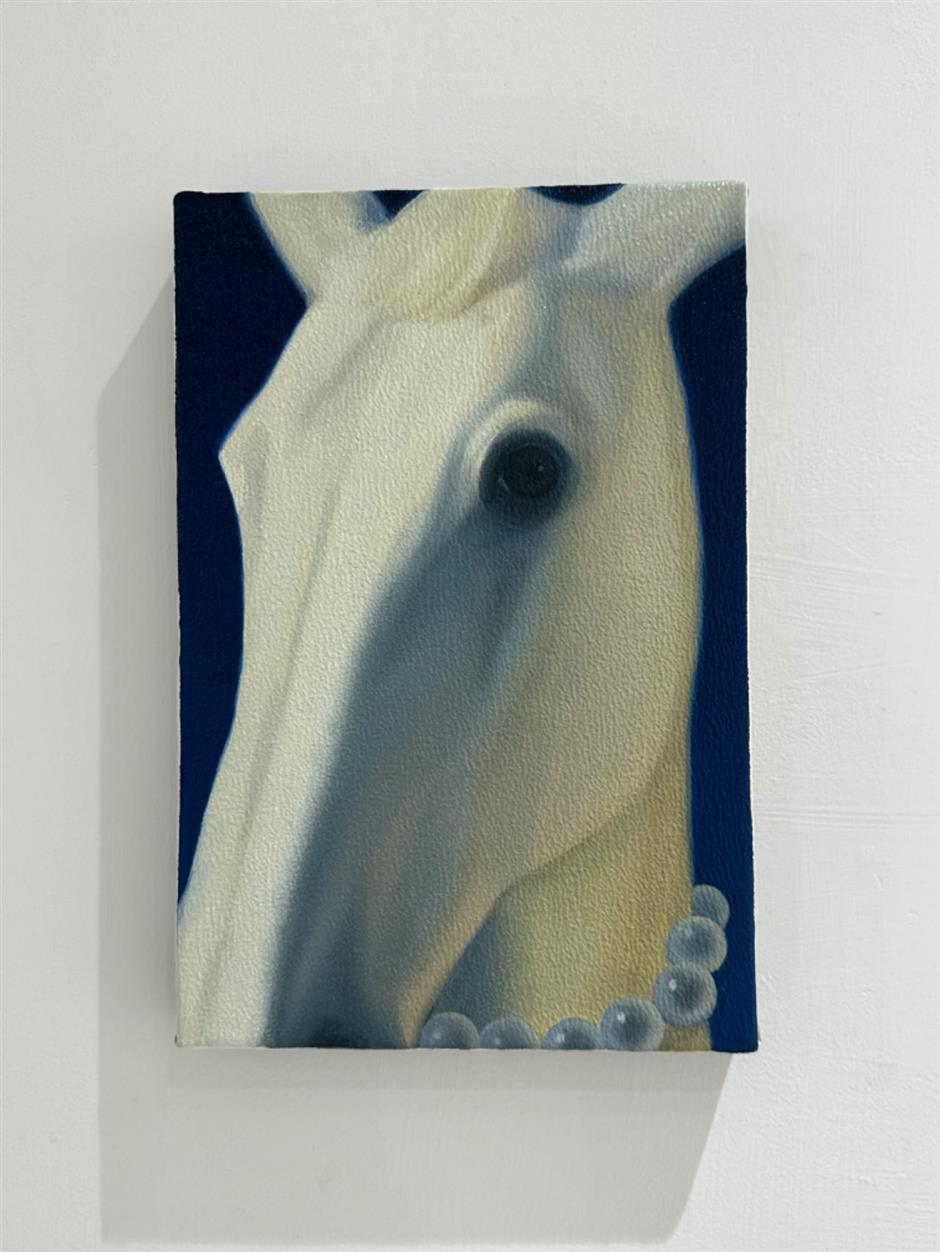
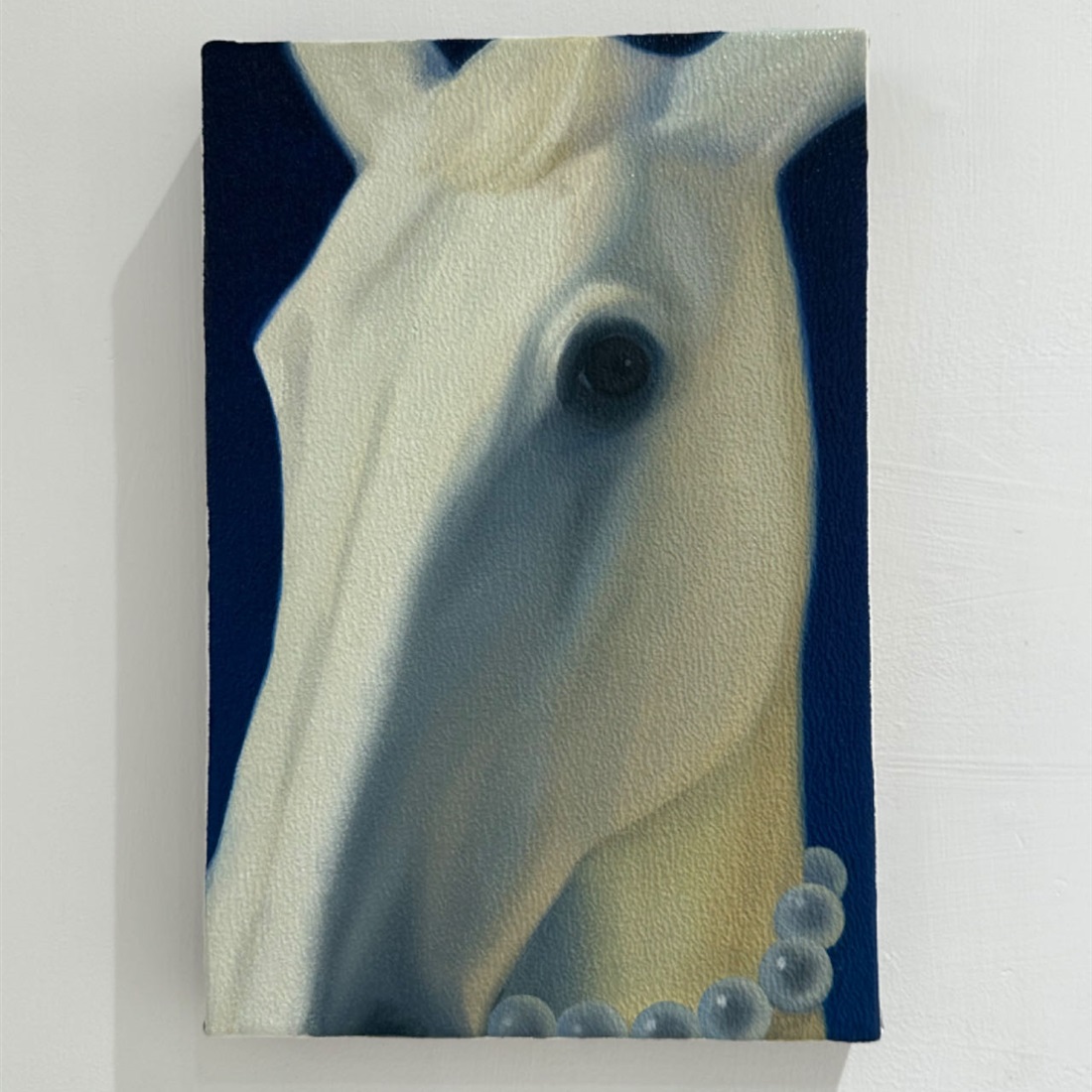
In Cui Wenshu's Daydream, the horse is stripped of heroic posture. Adorned with pearls, it takes on a deliberately softened presence, one that leans toward fantasy and inward reflection. The gesture shifts the animal away from physical strength toward mood and sensibility, setting a quiet counterpoint to more forceful interpretations elsewhere in the exhibition.
A different balance emerges in Tom Yang's A White Horse in the Morning Mist. Painted after the artist's time in Daocheng Yading, Sichuan Province, the work, featuring a white horse, carries a symbolic weight associated with spiritual purity, yet Yang's restrained realism keeps the scene grounded. The mist does not dramatize the image so much as hold it in suspension, allowing the sacred and the ordinary to coexist.
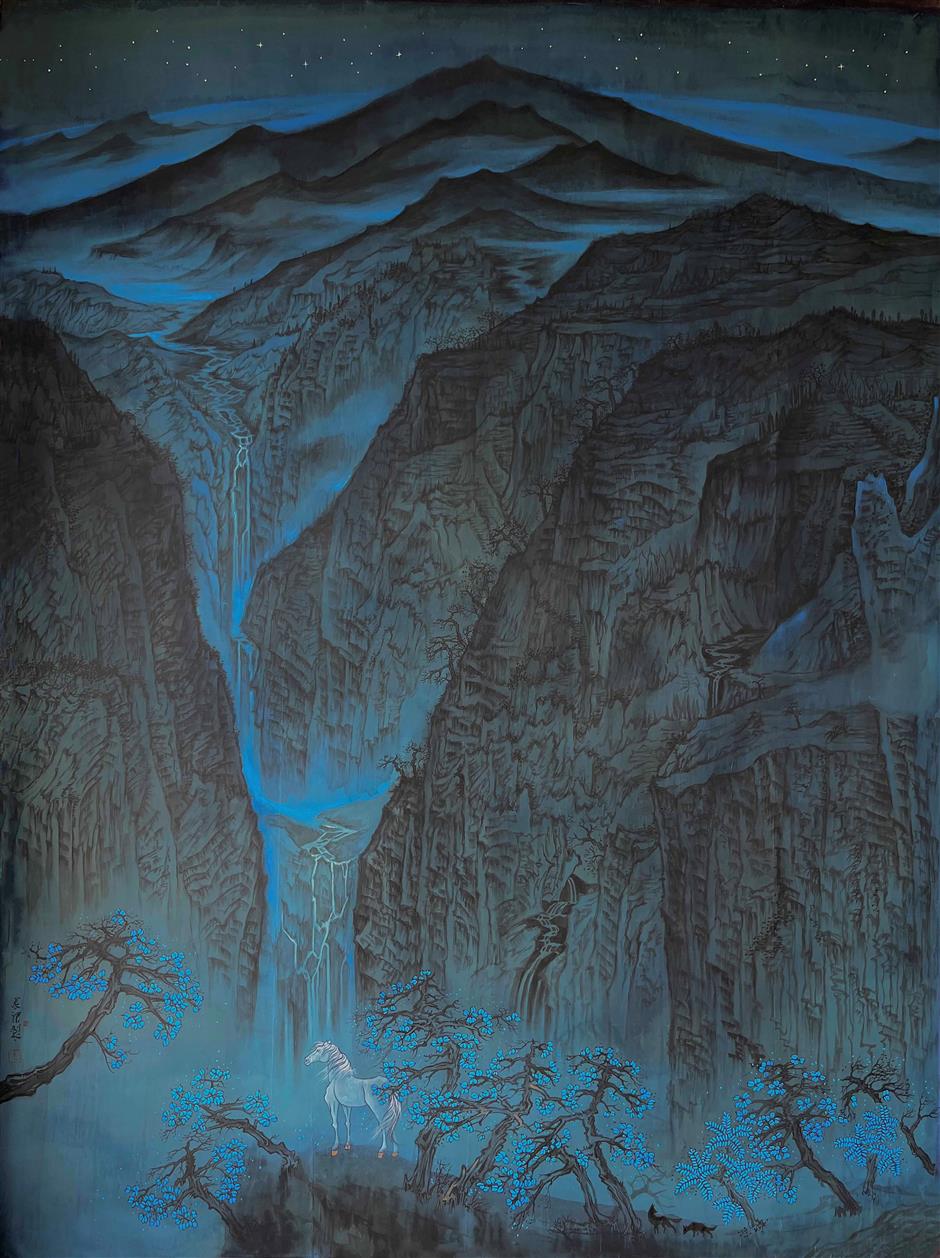
In Space-Time Valley, Li Liangchen extends the horse into a broader spatial and temporal framework. His blue-green ink landscape draws from traditional Chinese painting while introducing elements, such as star-filled skies and curved mountain forms, that feel distinctly contemporary. The solitary white horse functions less as a subject than as a point of scale, situating human perception within a landscape that feels both distant and meditative.
Placed nearby, Chingltu's Sacred Radiance offers a sharper contrast. Using mineral pigments mixed by hand, the artist from Inner Mongolia presents the horse as an energetic and symbolic force rooted in nomadic culture. Here, the horse is associated with strength, myth, and collective memory. The materiality of the pigments reinforces this sense of origin, emphasizing texture and intensity over refinement.
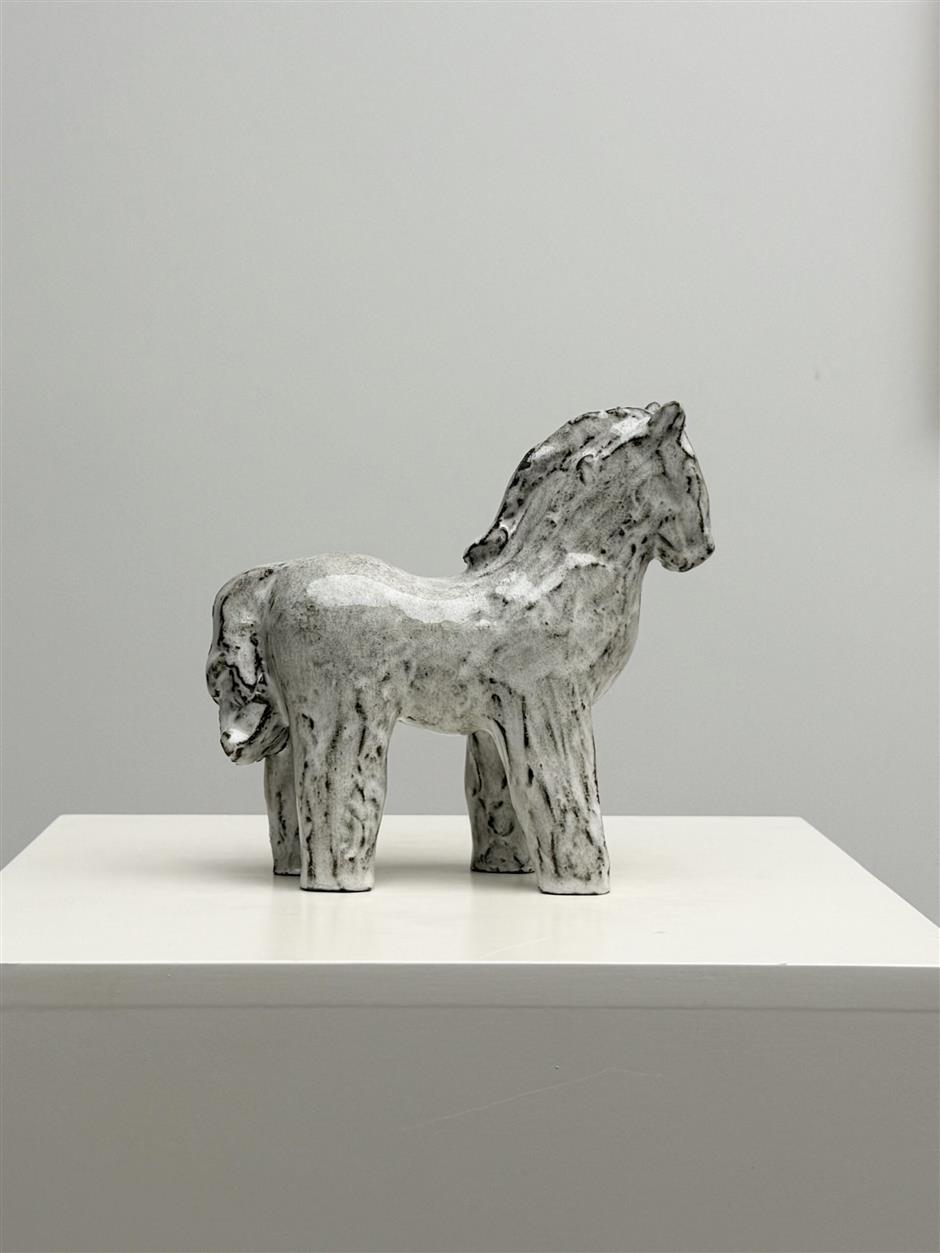
Yang Yang's The Monolith sculpture emphasizes structure and material. Instead of motion, the ceramic horse emphasizes weight and structure, using coarse Yixing clay from Jiangsu Province and a smooth white Italian glaze. The contrast between the rough clay and a polished surface highlights the transformation of time, process, and material, while its thick legs and compact form suggest stability.
Date: through February 28
Address: 133 Sichuan Road M. 四川中路133号
Admission: free