Artist blends Chinese and Western elements in a unique and expressive style
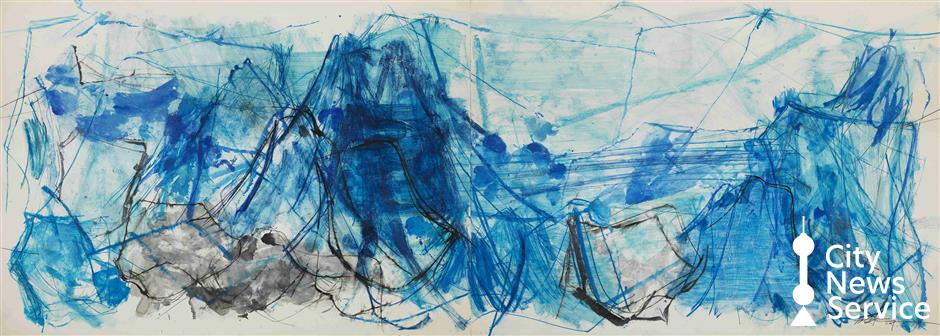
Realistic symbols under the brushstrokes make it relatively easy to depict Chinese tradition and culture. However, as the language of art becomes abstract, it demands a thorough understanding and interpretation on the part of the artist.
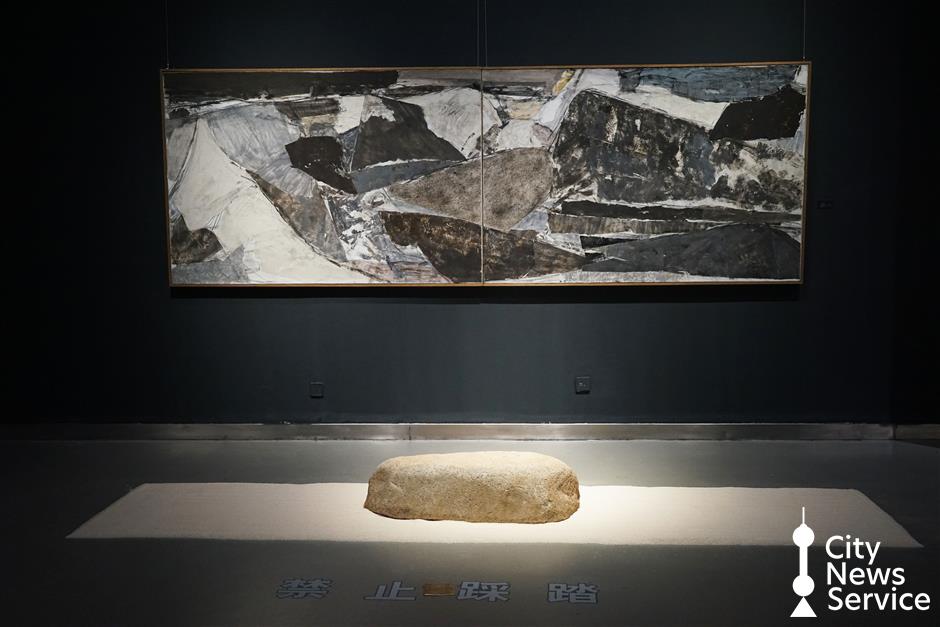
"From Mawangdui to Shanshui Fu: Gu Liming's Artistic Language Transformation," an exhibition at Bund 18 Jiushi Art Gallery, displays a collection of representative works of the artist dating back to the 1980s.
The exhibition is divided into four sections, with approximately 80 pieces of artwork embracing diverse forms of expression such as canvas, watercolor, printmaking, ceramics, mixed media, and installation.
Gu, who was born in Weifang, Shandong Province, in 1963, is a professor at Tsinghua University's Academy of Arts and Design. He was honored in 2021 with the "Vienna International Art Medal – Outstanding Artist Medal."
An enthusiastic promoter and representative of abstract art in China throughout the 1980s, Gu "dives" into and absorbs Chinese traditional culture.
He integrates elements of both Chinese and Western art through unique and various media materials and strong forms of expression, establishing a distinct style that reveals the reconstructive and integrative components of his artistic creativity.
While studying the dress images as depicted in the Han Dynasty (206 BC-AD 220) Mawangdui pictures in 1988, he discovered new possibilities for abstract language.
During the Han Dynasty, the Chinese people glorified a unified cosmic picture of Heaven, Earth, and humanity.
According to traditional Chinese yin-yang philosophy, humans, as the chief among all living beings, are a blend of soul and body, spirit and form. He was drawn to the visual sensations preserved on historical items sealed in the Han Dynasty Mangwangdui tombs.
The composition and imagery defined by ancient cosmic and life viewpoints, the Eastern notion of colors, and the rich space generated by scattered perspectives all captivated his full imagination with a strange fascination.
Rather than an archeological find, the artist discovered a means to investigate the possibilities of rebuilding modern art challenges using traditional order and an inner sense of reality.
Mawangdui appeared to be a beacon emanating from the depths of history, directing the artist to the neglected world of folk art.
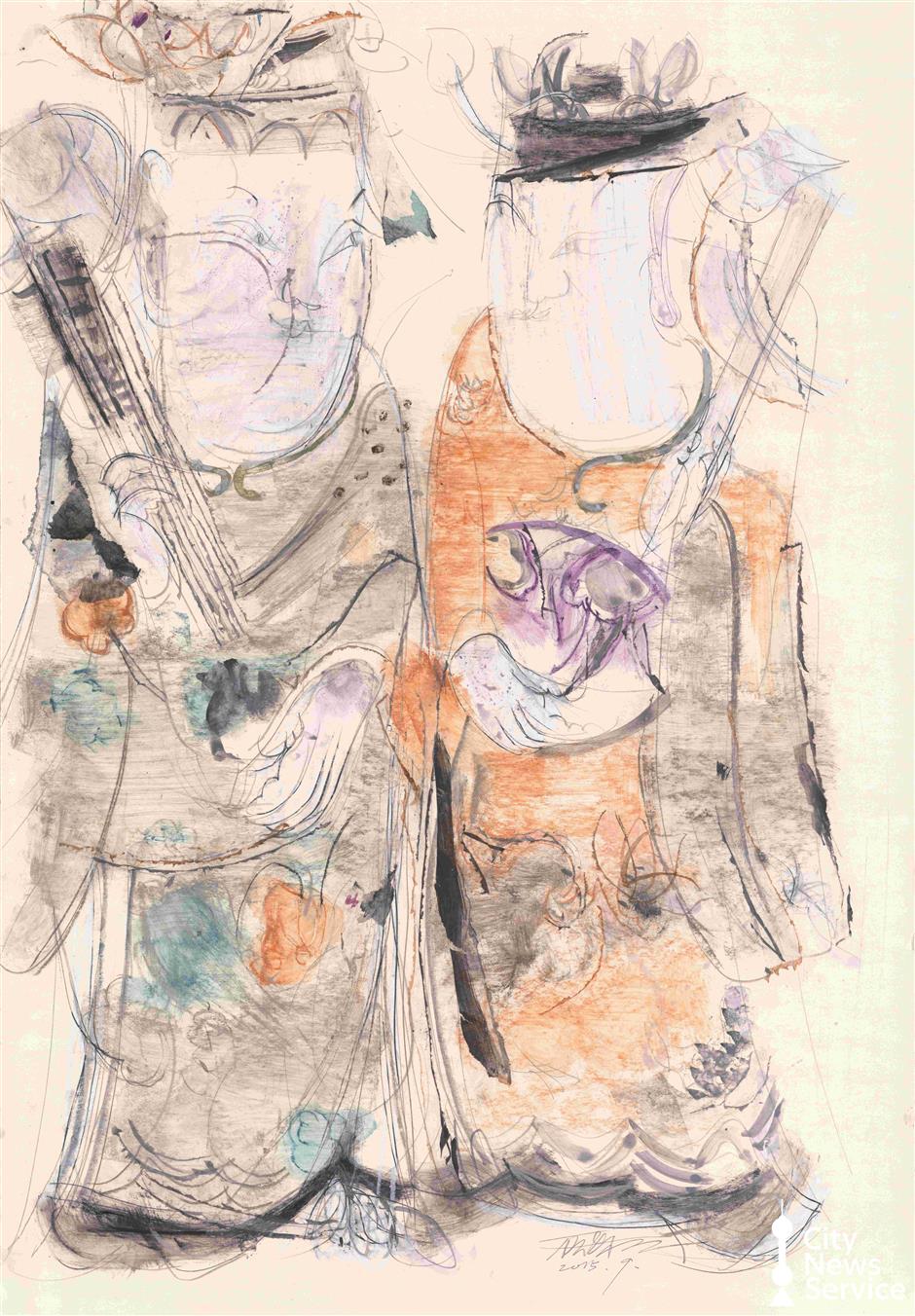
His series entitled "Door Gods" is a highlight of the exhibition.
Gu drew inspiration from Lunar New Year's prints depicting door gods to create a Chinese aesthetic on canvas, resulting in an original and vibrant depiction of door gods.
He interprets the forms of the door god with audacity, juxtaposing and concealing them with thin and intense hues as well as sharp, intricate lines.
Gu deconstructs and reconstructs the door gods, thereby establishing a one-of-a-kind representation of contemporary symbolic expression.
Exhibition info:
Date: Through October 16 (closed on Mondays), 10am-6pm
Admission: Free
Venue: Bund 18 Jiushi Art Gallery
Address: 18 Zhongshan Rd E1
中山东一路18号