Finding Art in the Ordinary: The World of Roger Caillois
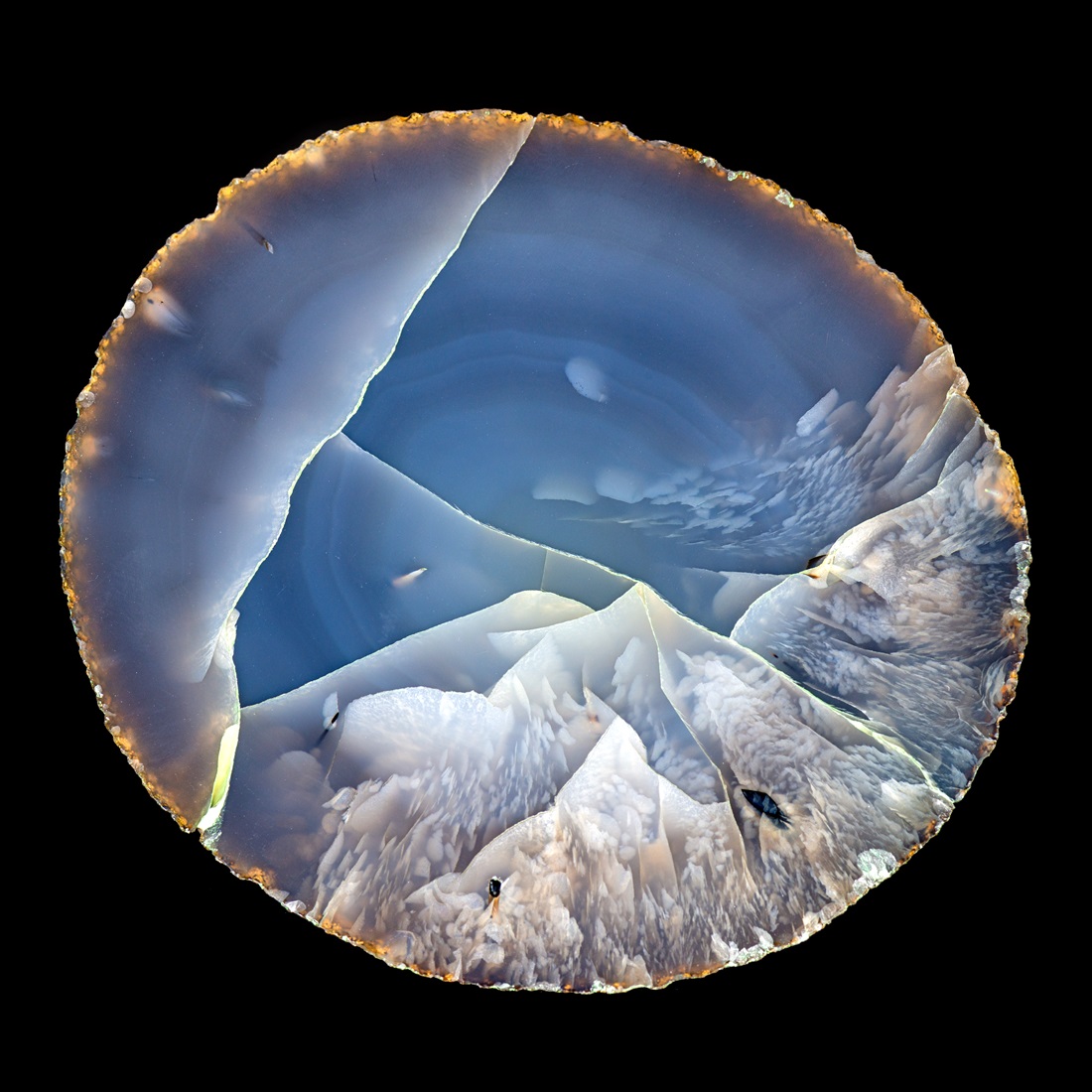
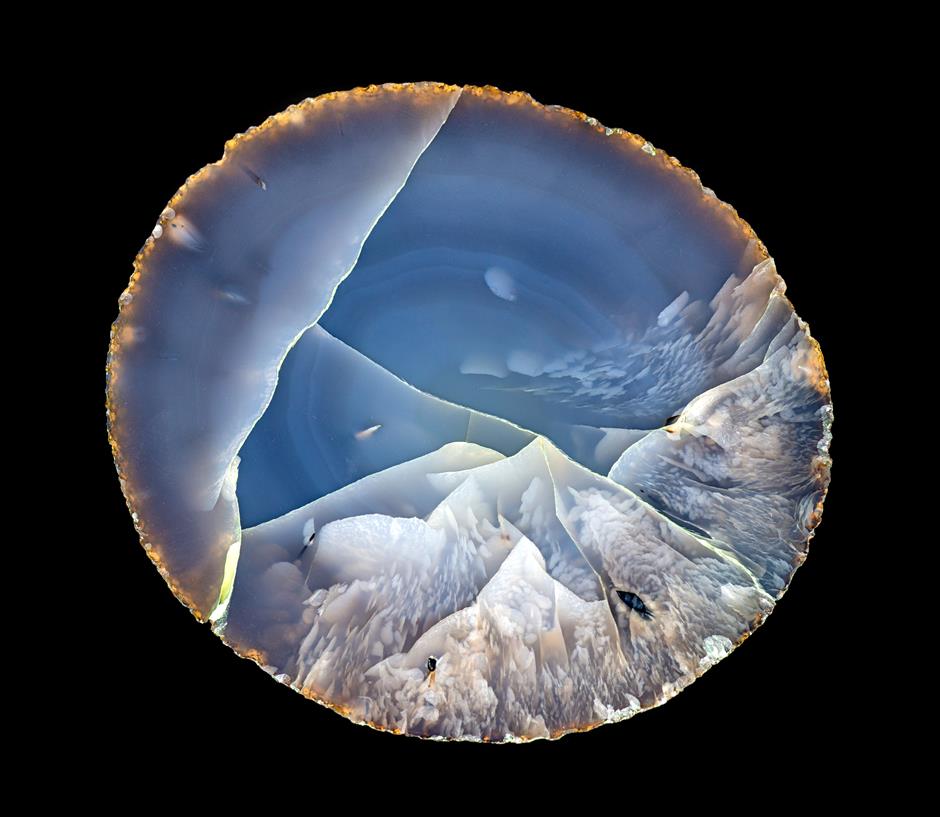
In a slice of agate, mountains rise beneath a misty blue sky. Another stone bears two markings that resemble a pair of spectacles. Elsewhere, black branches spread across pale rock like trees in a winter landscape.
None of them was painted. Nature did all the work.
These curious creations are among nearly 200 minerals on display at "Stones and Reveries: The Poetry and Minerals of Roger Caillois," an exhibition at L'ÉCOLE, School of Jewelry Arts, in Shanghai.
But this is not really an exhibition about geology. It is about the extraordinary things the human mind can discover in something as ordinary and lifeless as a stone.
At its heart is Roger Caillois (1913-1978), a French writer, philosopher and sociologist who spent more than 25 years collecting stones, not for their monetary value or scientific importance, but for the worlds he saw inside them.
"His only criterion for buying a stone was whether it struck a deep chord in him," said Professor François Farges, curator of the exhibition and scientist in charge of the collections of gems and objets d'art at the French Muséum national d'histoire naturelle. "He cared little about what the stone was worth in other people's eyes, or how rare it was."
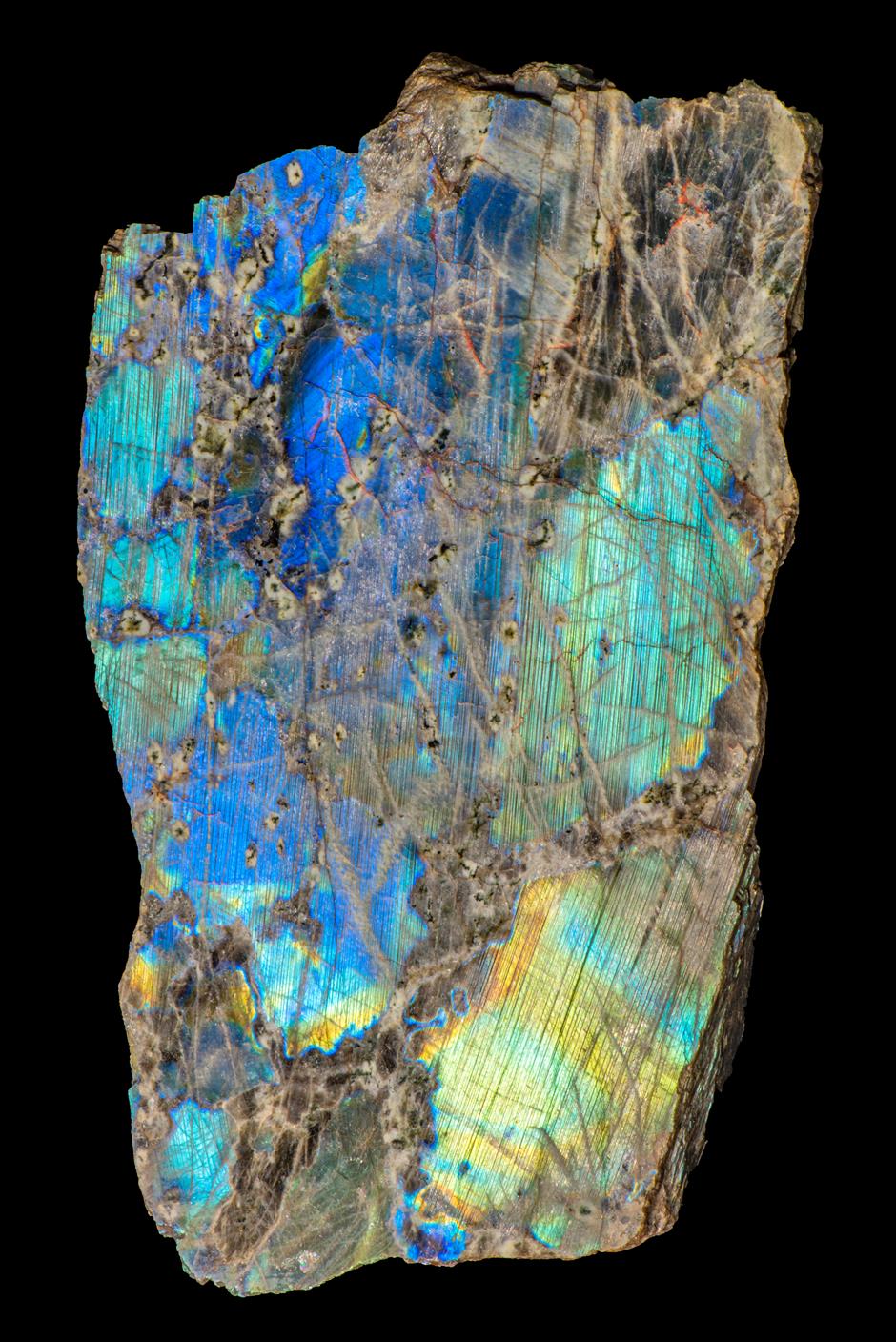
His fascination began in 1952, when he wandered into a shop looking for insects and came across a piece of labradorite. Its surface shimmered in shades of blue and green, reminding him of the iridescent wings of a butterfly.
It was the beginning of a lifelong love affair.
Initially, Caillois fell for the showstoppers: dazzling crystals, brilliant colors and unusual shapes. But over time, his taste grew more subtle. He found himself drawn to gray, brown and moss-green stones, whose quiet surfaces concealed strange patterns and unexpected images.
He treated them less like precious possessions than old friends, keeping them close, turning them over in his hands, sometimes even breaking them by accident.

Some of these friends had wonderfully eccentric personalities.
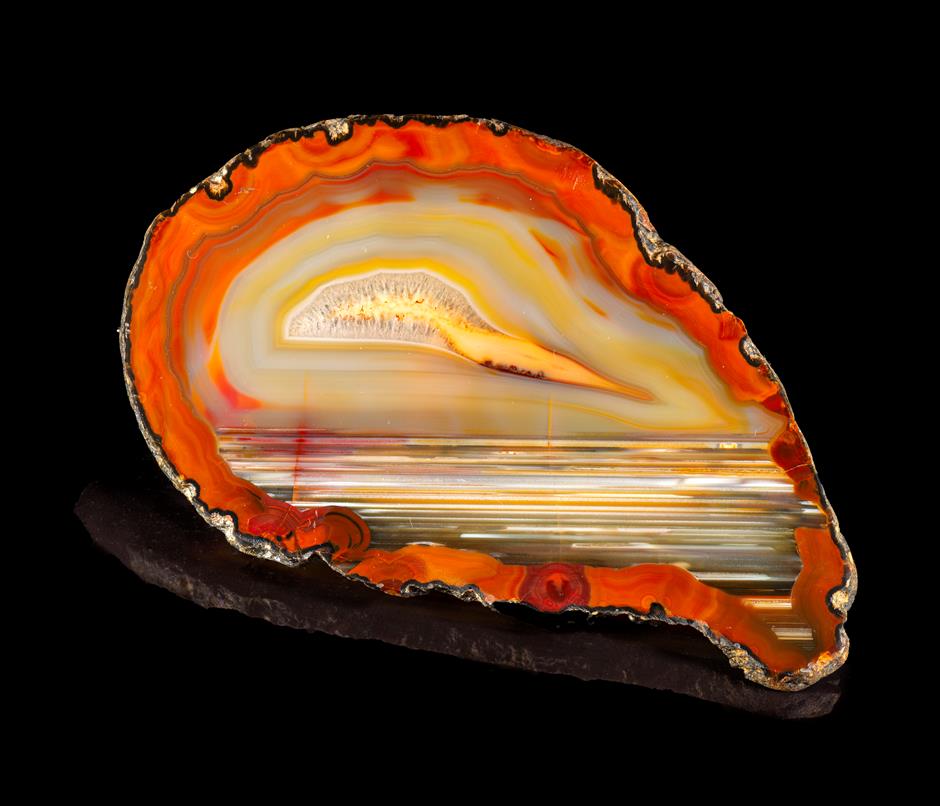
In "Eye and Spectacles," an onyx and quartz specimen from Uruguay, two circular markings seem to stare back at the viewer. Another agate, dramatically named "Nuclear Explosion Over the Ocean," appears to capture a fiery blast suspended above the water.
And then there are the landscape stones.
In Italian limestone known as "Ruin Marble," brown and gray mineral deposits form what look like ancient cities, crumbling walls and distant mountains. The resemblance can be so convincing that it is tempting to imagine a painter carefully arranging every line.
Yet these scenes emerged through natural processes, without purpose or design.
Caillois was fascinated by this paradox. Nature could produce something resembling a masterpiece without ever intending to make art.
The idea had intrigued European artists since the Renaissance, including Leonardo da Vinci. Caillois took it further, finding in stones what he called the "unintentional paintings of sleepwalking nature."
Naturally formed rocks resemble sculptures, including one with the graceful contours of a woman's torso. The shapes recall ancient figurines, although no sculptor ever touched them.
Caillois eventually decided to try his own hand at sculpture, but with an unusual rule: he would not carve, polish or reshape the stones. Instead, he simply joined them together, allowing their natural forms to speak for themselves.
The experiment went badly.
His contemporaries failed to appreciate the creations, and a disappointed Caillois withdrew them from public view, giving them the melancholy name "secret sculptures."
After his death, the works were dismantled. Now, several have been reconstructed for the exhibition, offering them a second chance to find an audience.
Perhaps Caillois was ahead of his time. Or perhaps his sculptures ask something we still struggle to answer: Does creating art always mean making something new, or can it mean discovering beauty that already exists?
And therein lies much of the pleasure of this exhibition. The stone remains unchanged, but every viewer may discover something different.
As Caillois grew older, however, the worlds he found inside stones became more personal, sometimes even unsettling.
Cracks reminded him of scars. Mineral inclusions looked like wounds that had healed, leaving traces of an ancient injury. To him, stones seemed to carry their histories of damage and recovery.
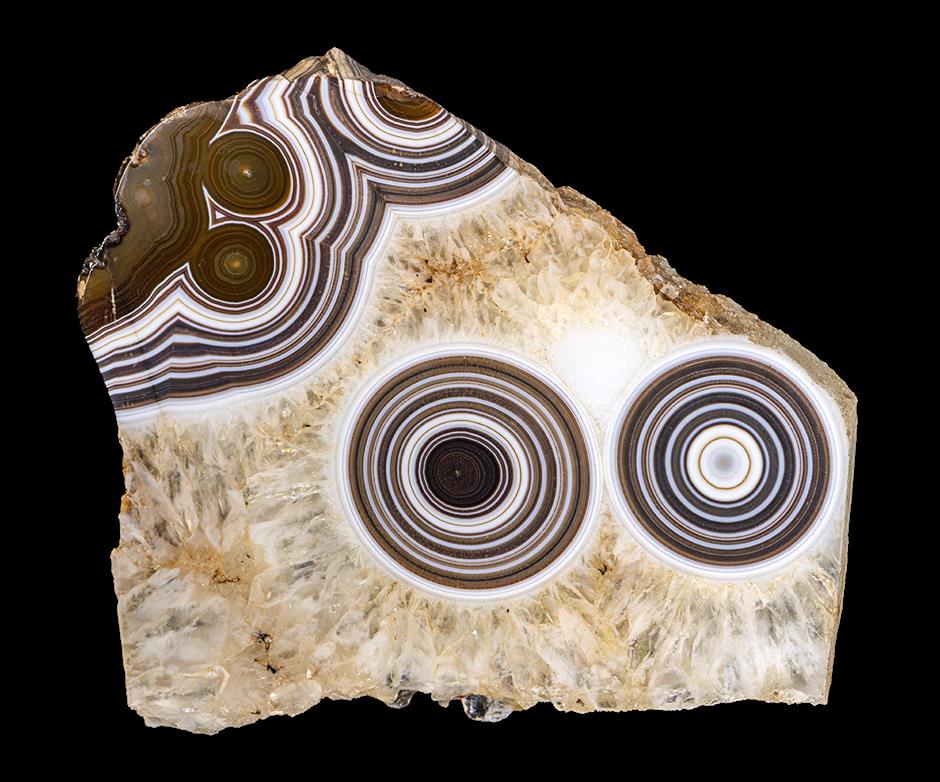
Others suggested masks, ghosts and strange creatures. Some resembled miniature planets, their concentric layers evoking the structure of the Earth, while swirling patterns brought to mind distant galaxies.
In his later years, when illness brought physical suffering, Caillois found particular comfort in agates marked by calm, parallel bands. Their orderly lines seemed to offer something his restless mind could not always find: stillness.
For a man who had spent decades finding landscapes, creatures and entire universes inside stones, perhaps their greatest gift was teaching him to find peace in the world within.
If you go:
Date: November 14, 2026 - March 14, 2027
Admission: Free
Venue: L'ÉCOLE, School of Jewelry Arts (China)
Address: 796 Huaihai Road M.
淮海中路796号