From Weight to Weightlessness: Where Form Begins to Dissolve
What is left empty in a work of art is not always an absence. It can be mist around a mountain, air between two bodies, light held inside a surface, or a silence that allows everything else to be seen.
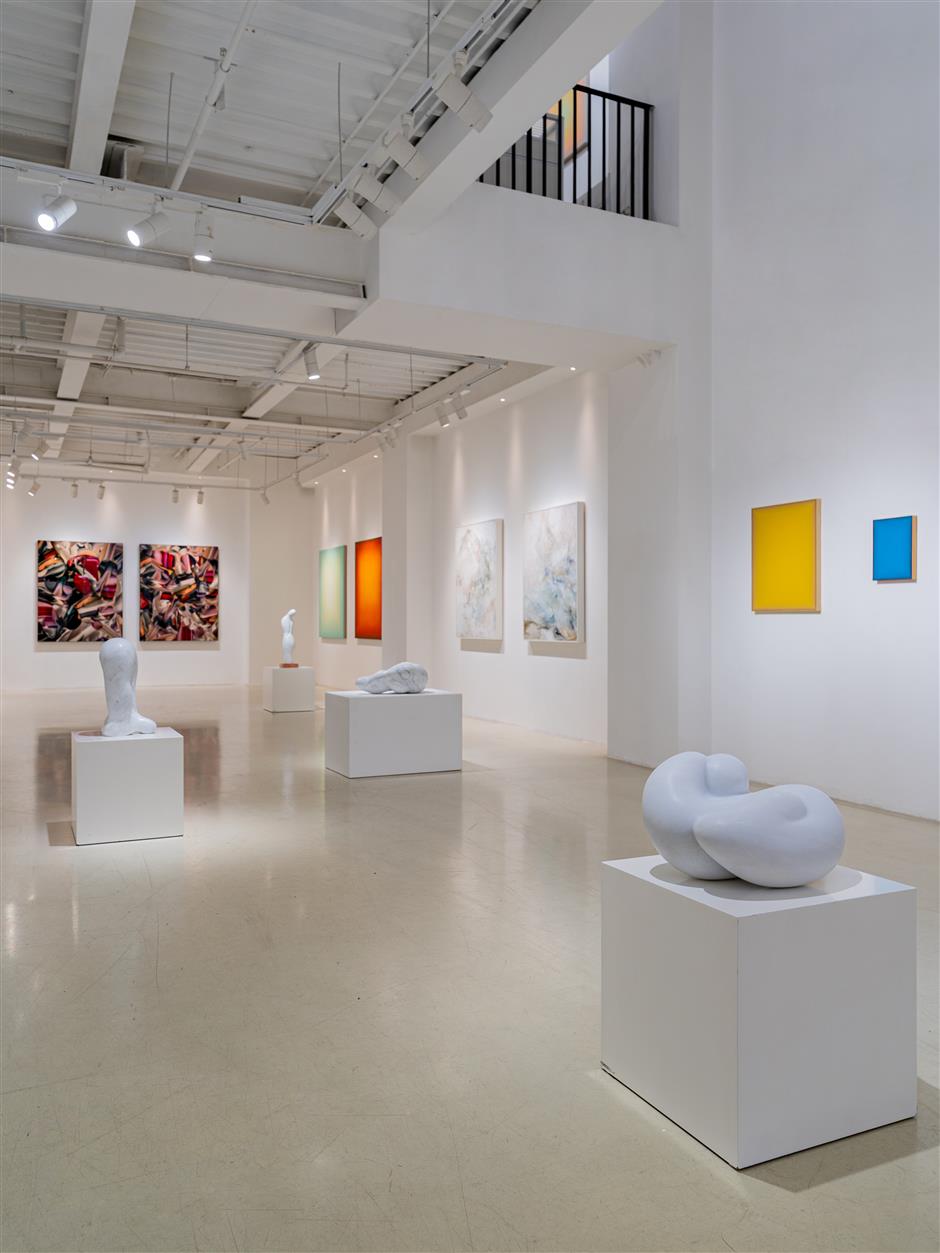
This theme runs through "Void & Volume," a Bluerider ART Shanghai exhibition featuring six young Chinese and six established European artists. The exhibition on the Bund, which opened on August 15, shows a gradual shift from weight to weightlessness, from objects in space to images that dissolve in it.
The exhibition draws loosely on two artistic traditions. Paintings were windows into a measurable world because perspective, light, and shadow gave objects volume in Western art. Chinese painting valued unpainted areas equally. Space can be clouds, water, distance, or imagination.
But "Void & Volume" is less interested in preserving this divide than in showing how thoroughly it has blurred. The artists are not separated by geography. Instead, their works meet along a spectrum where matter becomes atmosphere and emptiness acquires presence.
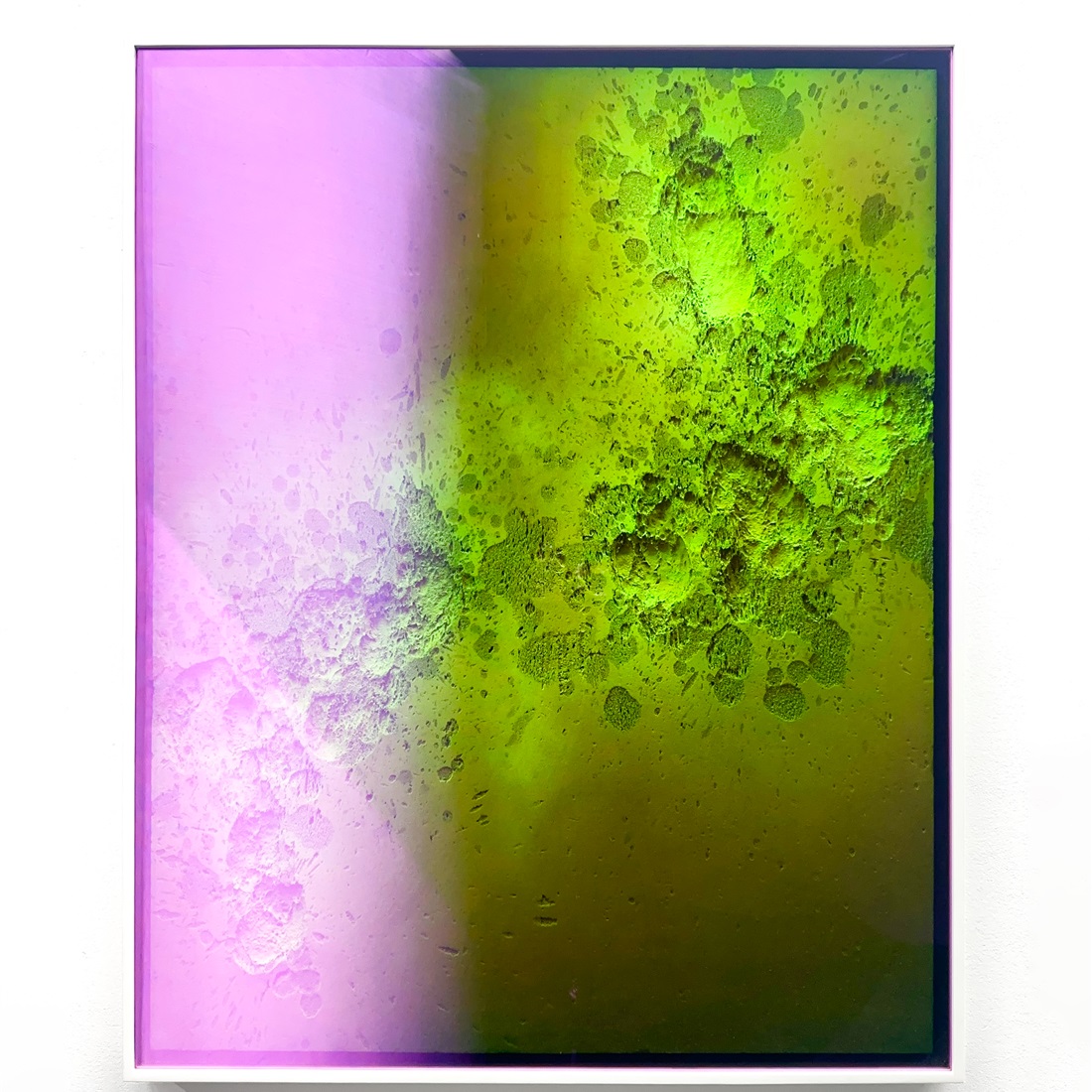
German artist Wolfgang Flad uses used and discarded materials. Scrap wood and old magazines become pale, cratered wall sculptures. They look like moon fragments, but colored filters and reflective layers change them with each passing body.
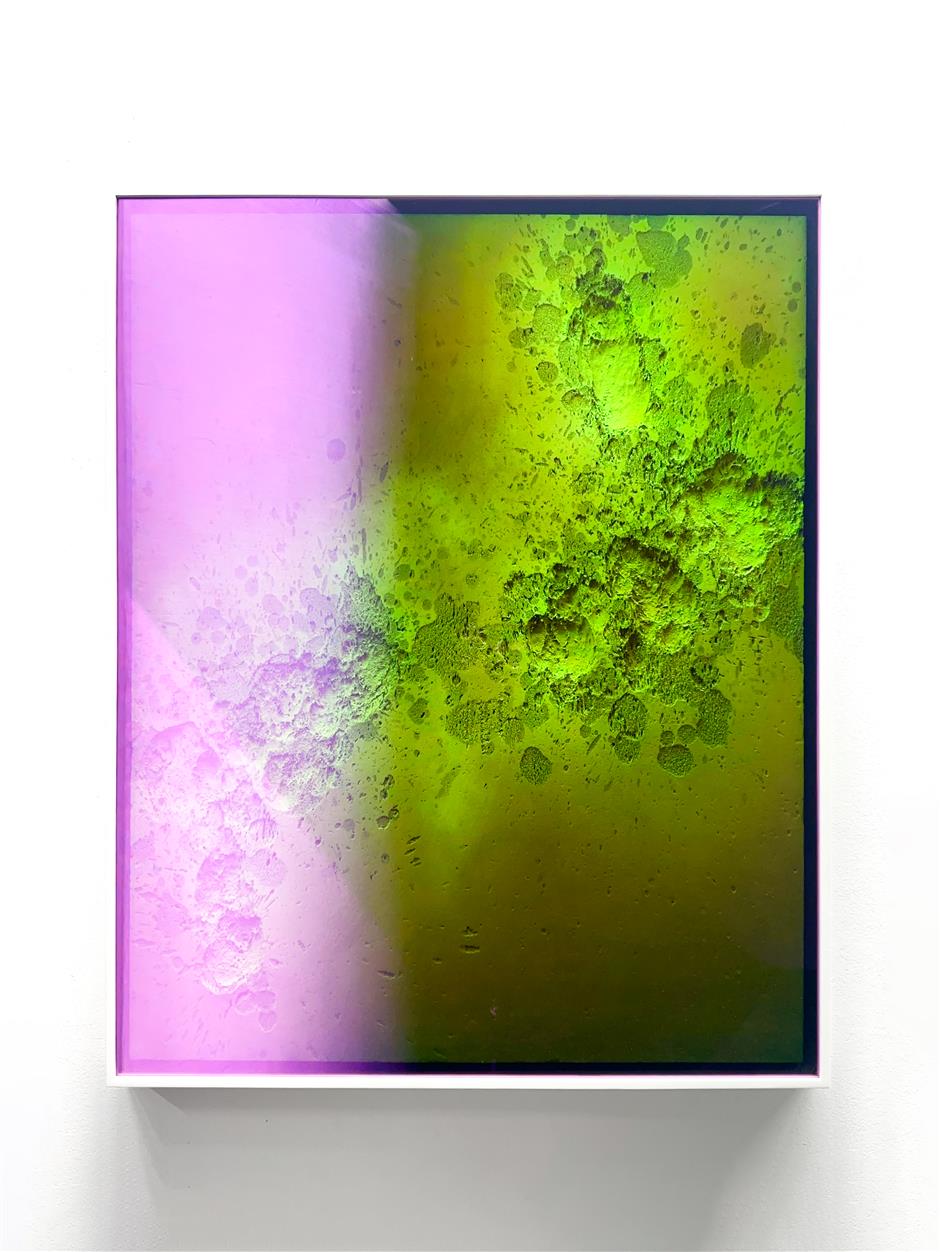
The material has been given another life, but the work never appears fixed in its new form. Color slips across its surface. Viewers catch their reflections and briefly enter the landscape. A sculpture made from waste becomes a place where matter, light and human presence overlap.
Chinese artist Yang Yang uses a less forgiving material. His white marble sculptures depict bodies embracing, leaning, supporting, or entangled. The stone retains weight but not hardness. Under Yang's touch, marble begins to resemble warm skin.
"I want to express the bodily condition and spiritual circumstances shared by people in modern society," he said.
The figures do not suggest whether they are supporting or impeding each other. The same gesture shows tenderness and restraint. Their proximity provides no comfort other than the realization that bodies are always under pressure.
Inner Mongolia-born artist Chingltu crosses the space between visible and invisible through memory. In "The World of Returning and Departing," horses, antlers, armor and fragments of traditional clothing emerge from a deep reddish-brown field. The painting moves between the grasslands and the city, between lived reality and inherited myth.
Antlers rise from the head like branches reaching into another realm. "Everyone has this kind of antenna for perception," Chingltu said.
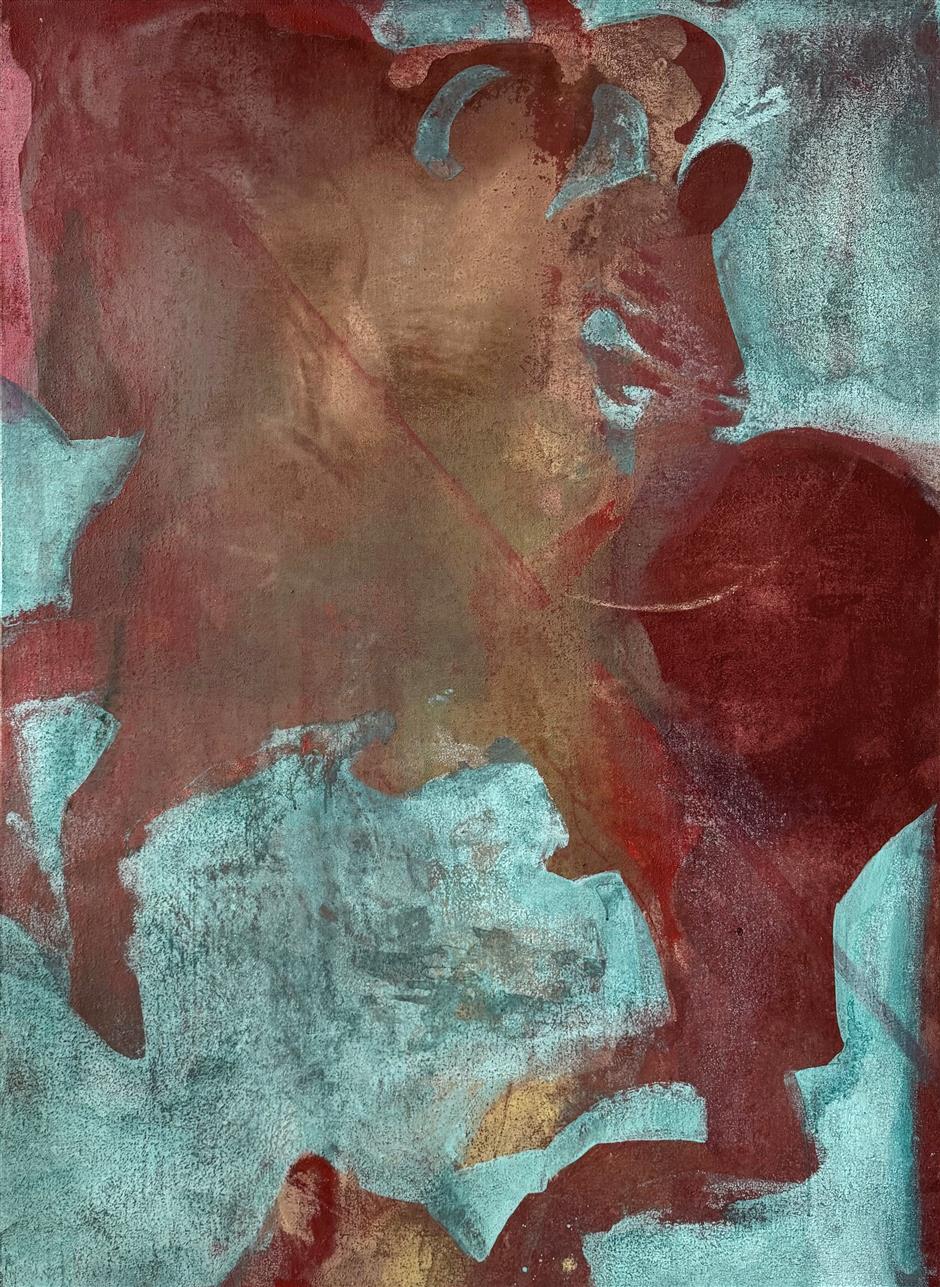
His images are rooted in nomadic and shamanic culture, but they do not remain safely in the past. They have been broken apart and drawn into the present, where ancient symbols meet the speed, density and unease of urban life.
Sun Yihan's "Rain in the Mountain, Macaques" depicts nature as more restless. Though monkeys live in mountains and rain, rigid geometric forms appear like city walls. The landscape remains. No longer untouched.
"This turbulent balance is a more truthful explanation of how technology transforms nature," Sun said.
He does not offer the reassuring language of harmony. Technology brings disruption, desire and control, followed by attempts to rebuild what has been disturbed. Nature and the city now coexist within the same unstable system, no longer opposing forces.
From there, the exhibition begins to shed its physical weight. Michael Craik repeatedly layers and sands translucent paint until color resembles the changing surface of the sea.
Zhang Meng uses oil to summon the mist and breathing space of Chinese ink landscapes. Mountains appear, recede and lose their edges before the eye can hold them.
In Christiane Grimm's geometric works, color seems to float inside transparent layers. The pieces use no electricity, yet they appear to glow. Their light changes with the hour and with the viewer's position, making each act of looking temporary.
Date: August 15 - October 18
Venue: Bluerider Art Shanghai
Address: 133 Sichuan Rd M.
Admission: free
四川中路133号