Ink Unbound Explores New Possibilities in Chinese Ink
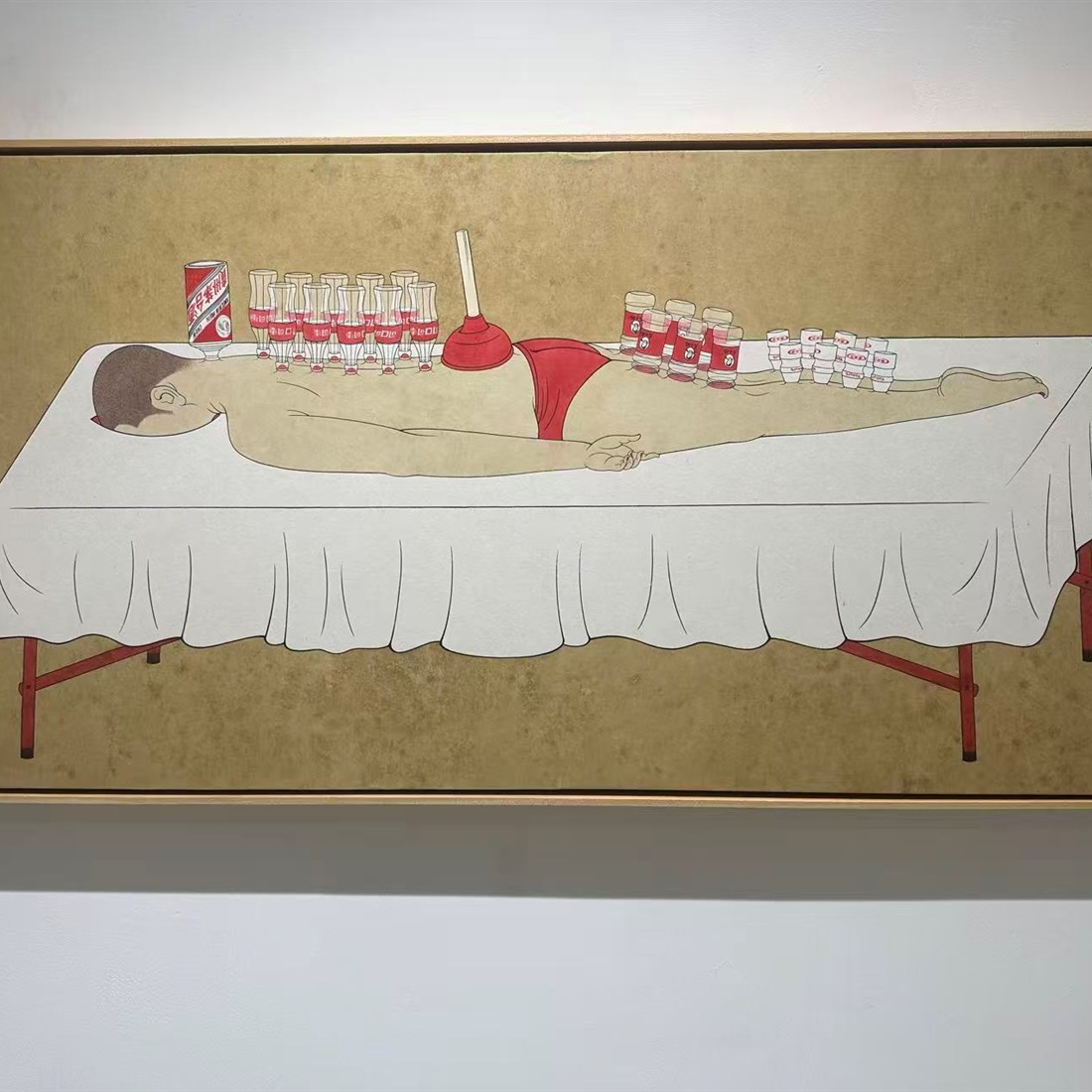
Ancient Chinese robes meet modern fashion. A smartphone interrupts a tranquil seascape. Even traditional cupping therapy gets an unlikely makeover with liquor bottles, Coca-Cola, and chili sauce containers.
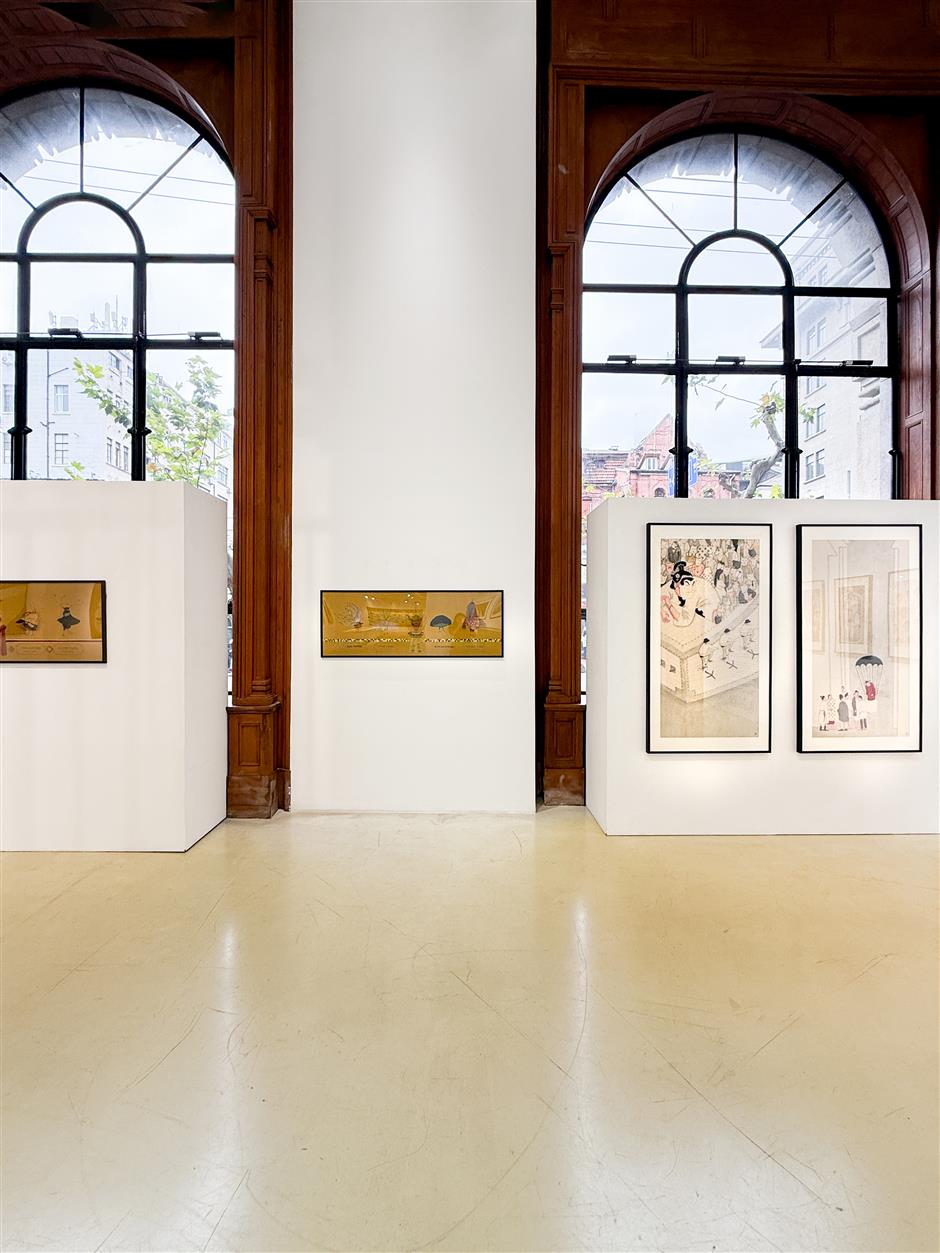
These unexpected encounters fill Ink Unbound, a new exhibition at Bluerider ART's Shanghai gallery on the Bund, where seven artists bring humor, fantasy and contemporary life into the centuries-old tradition of Chinese ink painting.
The exhibition is the final chapter of the gallery's New Ink series, following shows in London and Los Angeles. Its Chinese title, Mo Po, suggests breaking boundaries, as artists experiment with familiar techniques, materials and subjects.
Human behavior provides plenty of inspiration.
Dai Yinglun populates his paintings with small figures dressed in everything from ancient robes to modern clothing. Scattered across crowded compositions, they go about their lives, each carrying an imagined story and emotional world.
The playful scenes offer glimpses of contemporary society through an intriguing mixture of past and present.
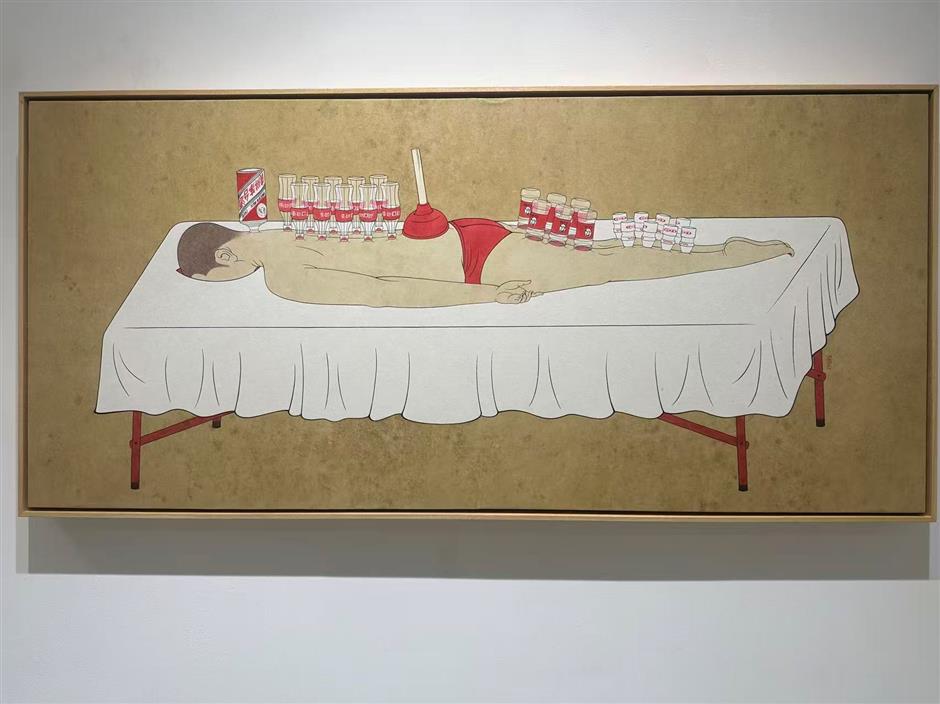
That observation of modern life takes a more satirical turn in the works of Ying Yefu, who combines traditional fine-line drawing with unconventional materials such as tea and coffee.
In Cupping Therapy, vessels used in traditional Chinese medicine are replaced by containers of Moutai liquor, Coca-Cola, and Lao Gan Ma chili sauce. Everyday indulgences become unlikely remedies for stress, with a touch of irony.
His Public Bath offers a quieter reflection on human relationships. Faceless figures squeeze into a bathtub, their bodies close together but each seemingly absorbed in a separate world. The intimacy of the setting only makes their isolation more apparent.
The theatrical quality extends into the animal kingdom in the paintings of Hong Kong artist Eunice Cheung Wai Man.
Using gongbi, a meticulous traditional painting technique, Cheung depicts birds and animals in elaborate, almost human-like interactions.
In her Bird Dance Cup series, creatures display their feathers and perform courtship dances around a golden egg. Their lively gestures and painstakingly rendered details give classical bird-and-flower painting a whimsical new personality.
While Cheung creates imaginary worlds through animals, Li Liangchen, the exhibition's youngest artist, finds his inspiration in ancient landscapes and mythology.
"I've always wanted to find a breakthrough of my own," Li said.
Born in 1997, Li reworks the blue-green landscapes of classical Chinese painting with geometric grids, fragmented imagery, handmade paper and metallic foil.
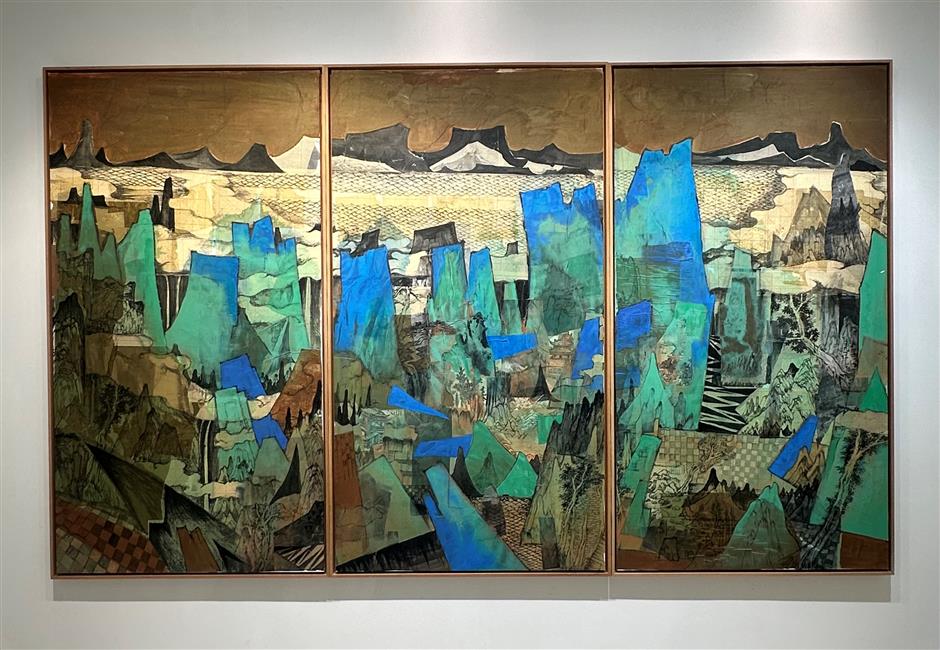
In Infinite Mountain Realm, mythological scenes unfold through overlapping layers, where ancient visual references meet a contemporary, almost map-like composition. The landscape becomes something to explore rather than simply admire.
That changing relationship between people and scenery is also central to Taiwan-born artist Tseng Ting Yu. His work, Seascape: Contemporary Perspective, incorporates vivid colors, shimmering metallic foil, and a smartphone into a traditional landscape composition.
The phone offers a familiar reminder of how selfies, livestreaming and social media have transformed our experience of nature. People no longer simply look at landscapes; they increasingly insert themselves into the picture.
While some artists fill their paintings with contemporary objects and elaborate narratives, others discover new possibilities in the simplest elements of ink painting.
Wu Huaheng explores the dramatic contrast between dense black ink and untouched white paper. His recurring image of a Buddhist bowl, associated with spiritual inheritance, takes on an abstract quality through variations in texture and form.
The interplay between what is painted and what is left blank becomes even more delicate in Dai Junpeng's Empty Forest.
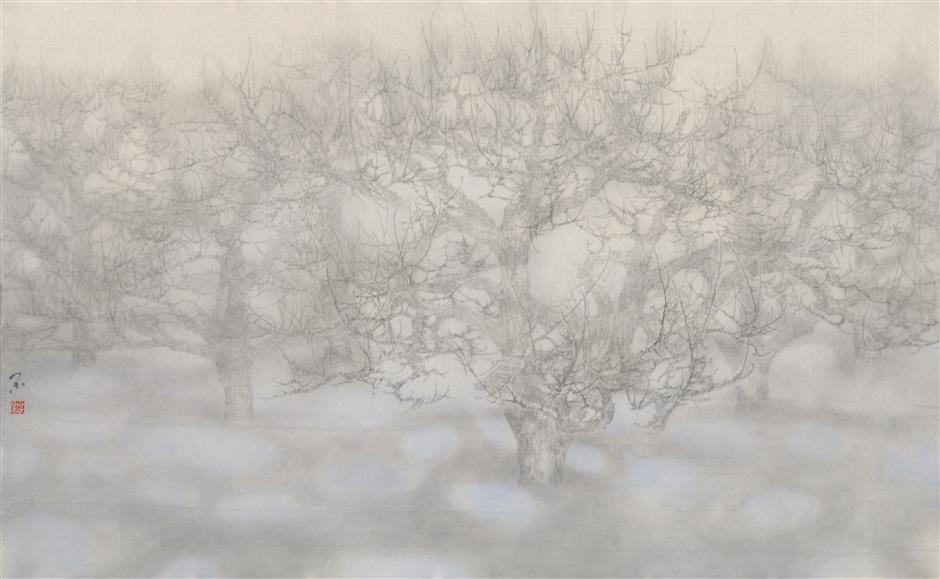
Working with pale washes of ink on silk, Dai creates a landscape where trees emerge through layers of mist, their branches gradually dissolving into the background.
The darkest marks belong to the nearest branches. Beyond them, the ink grows lighter until it disappears into untouched space. The pale emptiness could be drifting fog, falling snow, or a clearing sky, depending on how the viewer chooses to see it.
Date: through December 31
Hours: 9:30am - 6:30pm. Tuesday - Sunday
Venue: Bluerider Art Shanghai
Address: 133 Sichuan Rd M. 四川中路133号
Admission: free