'Recreates Gestures' for Creating Iron Age Gold Necklace
A piece of gold does not reveal its history at first glance. Its surface may shine unchanged for centuries, but the hands, tools and techniques behind it often disappear with time.
A new exhibition in Shanghai explores how those lost gestures can be recovered. "Recreating Gesture: The Replica of a Gold Necklace from the Iron Age," presented by L'ÉCOLE, School of Jewelry Arts, brings together archeology, craftsmanship and experimental research to revisit a Celtic gold torque dating back more than 2,000 years.
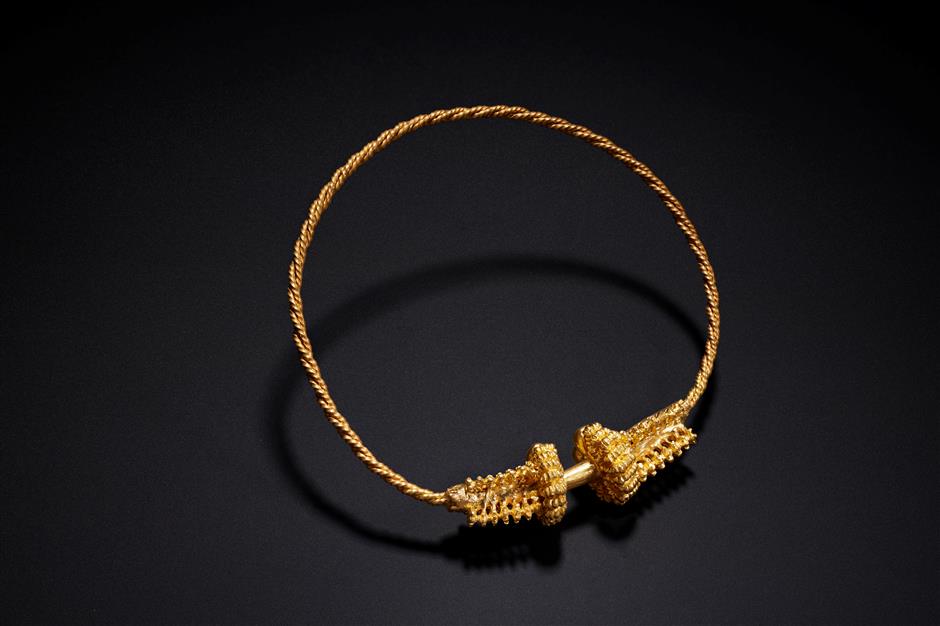
Held at L'ÉCOLE's China campus in Shanghai's Twin Villas on Huaihai Road, the exhibition focuses on the recreation of the Torque of Montans, an Iron Age gold necklace discovered in southern France. The original piece, dating from the Late Iron Age (450-25 BC), reflects the sophistication of Celtic goldworking, with twisted gold elements, floral terminals and intricate craftsmanship.
But the exhibition is not simply about displaying an ancient object. Instead, it follows the journey of rebuilding one.
The project was developed through an experimental archeology collaboration involving researchers from the French National Centre for Scientific Research (CNRS), the Centre Archéologique de Montans, the Musée d'Archéologie Nationale in Saint-Germain-en-Laye, Van Cleef & Arpels and L'ÉCOLE.
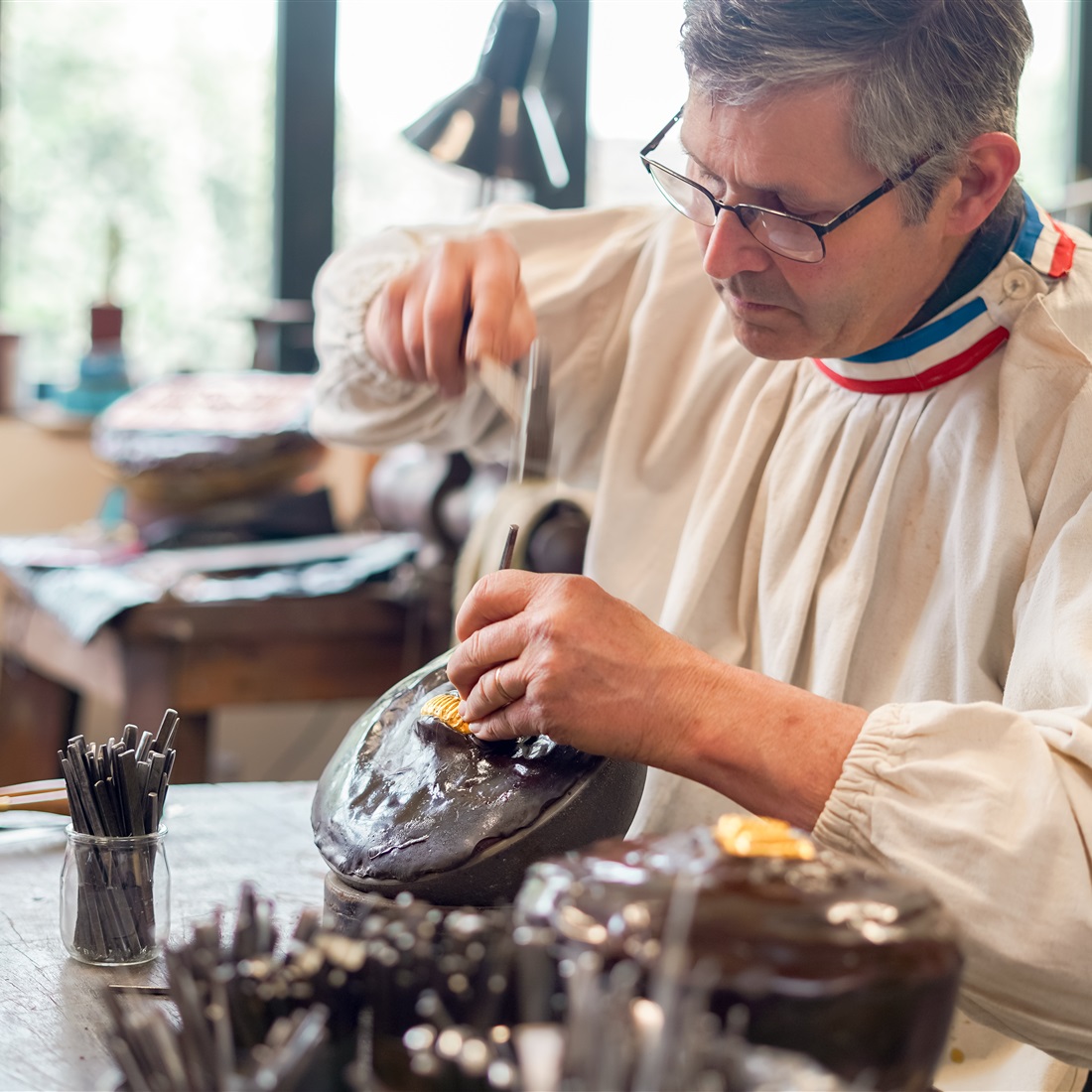
Goldsmith and chaser Antoine Legouy, a recipient of the prestigious Meilleur Ouvrier de France distinction, worked alongside archeologists and the Van Cleef & Arpels' High Jewelry Métiers team to recreate the necklace using historical techniques.
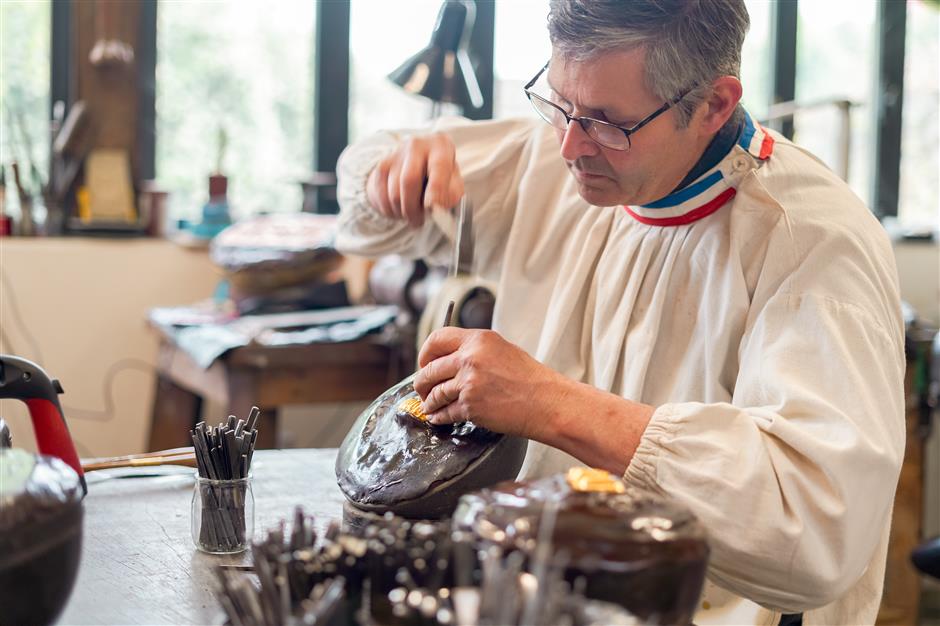
The result is a 24K gold replica that reveals not only the beauty of the finished piece, but also the complexity hidden behind it. Visitors can see the tools, materials and working processes involved in the reconstruction, including hammers, chasing tools and other instruments that transformed raw metal into an object of symbolic power.
For the craftsmen involved, the challenge was not merely technical. It was about understanding how ancient artisans thought through their hands.
"To understand an object, we must first understand its craft," said Emmanuelle Amiot, research project senior manager at L'ÉCOLE. "Research must involve artisans, whose knowledge and skills complement academic expertise." The exchange between artisans and researchers revealed techniques that written records alone could not fully explain.
The exhibition also examines the cultural meaning of Celtic gold torques. More than decorative ornaments, these rigid neck rings were associated with status, power and sacred symbolism. Made from a rare and enduring material, gold represented permanence and connection with the divine in ancient societies.
In Shanghai, the show expands beyond observation. A dedicated workshop area allows visitors to experience traditional metalworking techniques themselves, from handling tools to understanding how metal changes shape under pressure. Upstairs, interactive displays explore the origins of gold, its cultural meanings and the broader history of jewelry craftsmanship.
The exhibition arrives here after presentations in Paris and Seoul, bringing a European archeological story into dialogue with Asian audiences. China itself has a long tradition of gold craftsmanship, from the gold artifacts of the Shang (1675-1646 BC) and Zhou (1045-221 BC) dynasties to the gold and silver works of the Tang Dynasty (AD 618-907), where craftsmanship transformed precious materials into symbols of belief, identity and beauty.
"This exchange between craftsmanship and scholarship not only enriches art history and archeology, but also reveals how art and technology have illuminated each other throughout history," Amiot said.
If you go:
Date: August 4-October 7
Admission: Free
Venue: L'ÉCOLE, School of Jewelry Arts (China)
Address: 796 Huaihai Road M.
淮海中路796号