Wallace Chan Unveils His Most Ambitious Sculptural World Yet in Shanghai
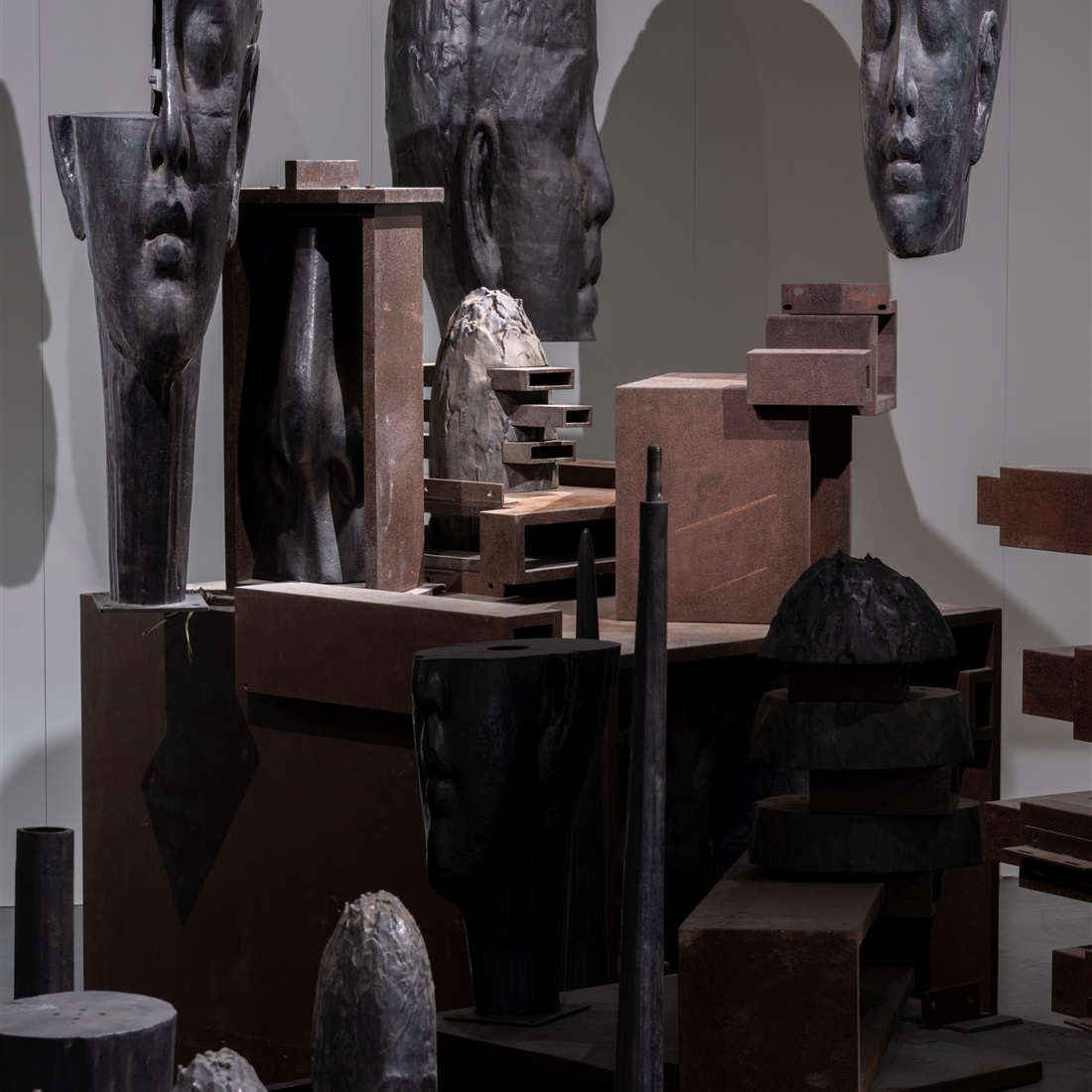
An eye gleams in the dark. A mouth opens into the shadows. A nose, enlarged and cast in titanium, appears both human and otherworldly. Under blue-green light, the metal shifts between silver, violet and deep ocean blue. Its hard surface seems to breathe.
People perceive the world through these organs. They are also their hidden selves.
"We cannot directly see our own eyes," Wallace Chan said as he walked through the galleries of the Long Museum West Bund in Shanghai.
"Our ears hear and our mouths speak, but we seldom become conscious of how we see, how we listen or how we feel. I made these enormous titanium organs because I wanted viewers to stand before their perception."
Chan's most ambitious sculptural display, "Vessels of Other Worlds," centers on that simple, tactile, yet subtly disturbing idea.
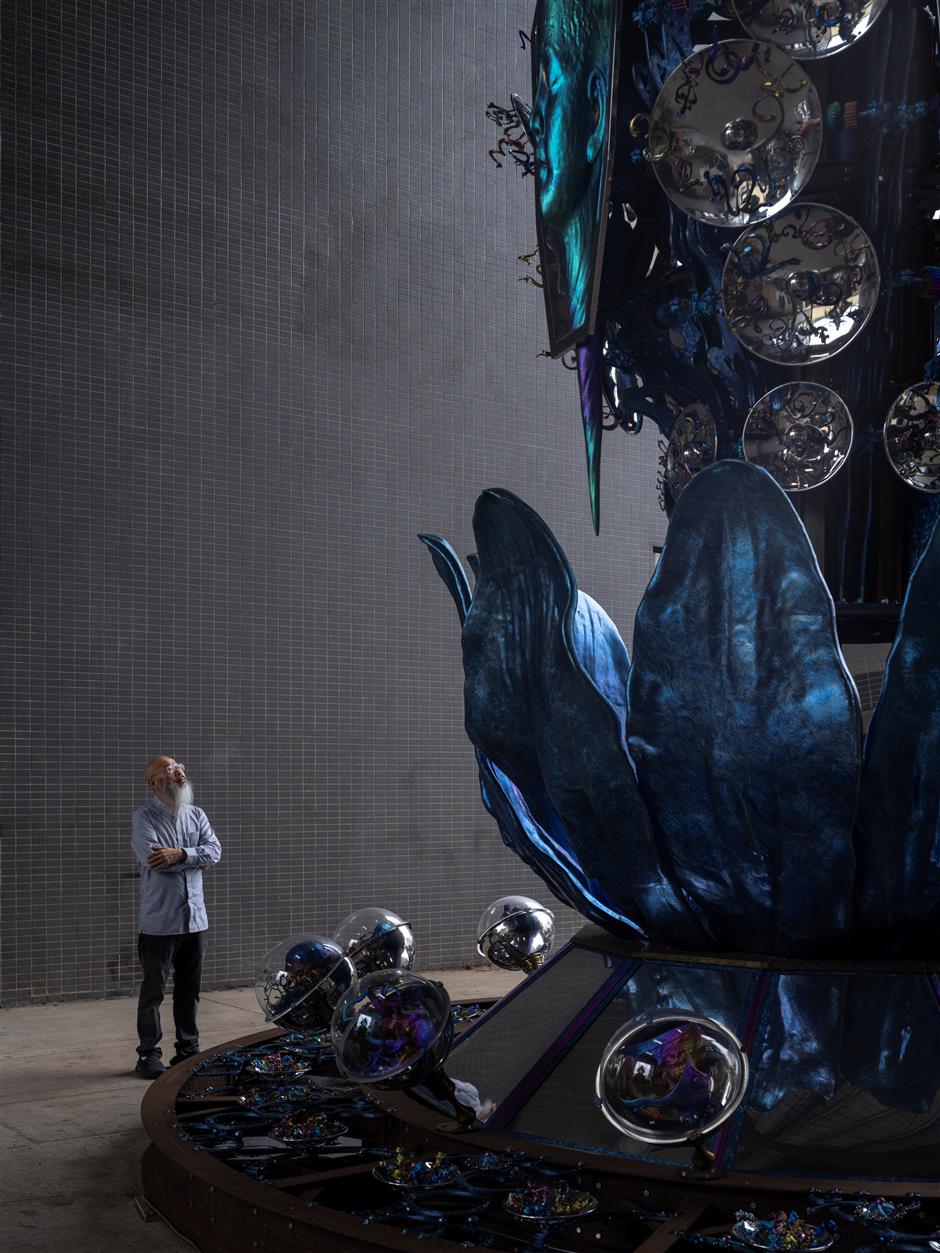
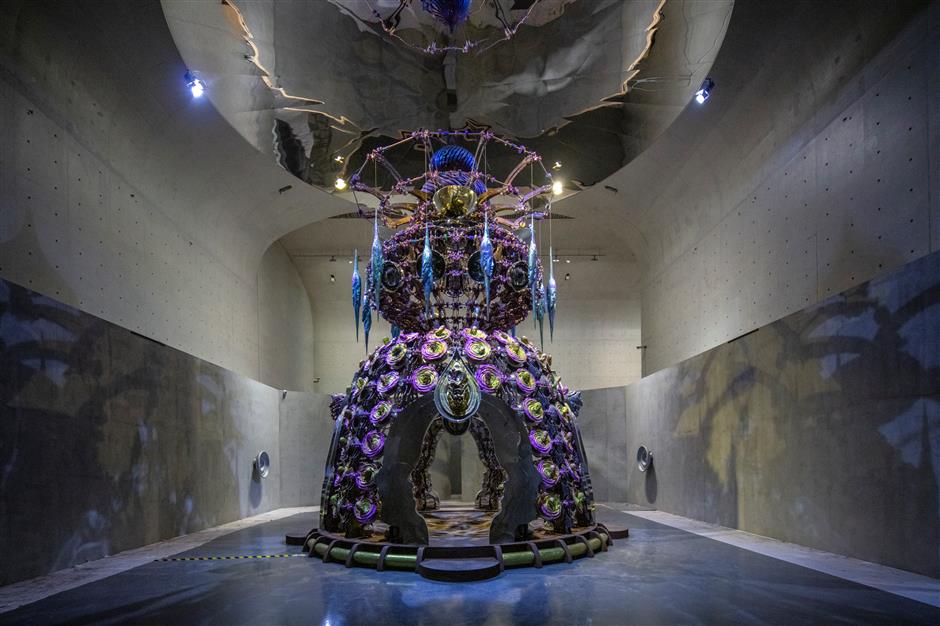
The show shows the artist's progression from delicate jewelry to titanium structures large enough to hold the body. Three new sculptures, seven, eight, and 10 meters tall, are in a cavernous hall after earlier installations and fragments from his Venice projects.
They resemble vessels, organisms, shrines and machines at once. Faces emerge from their surfaces. Infants twist through folds of metal. Mythical creatures appear and disappear depending on where the viewer stands. One sculpture contains a doorway leading into a mirrored interior where images multiply and fracture.
These sculptures investigate "other worlds," according to Chan. He means the beginning and end of life, memory, dreams, the unconscious, and unspoken thoughts, not distant planets.
"I have always had questions I could not answer," he said. "Who am I? Where am I from? I responded materially. I replied with light and space."
Chan said vessels can carry time, emotion, and consciousness as well as water, oil, and fragrance. Space, art, and the body are vessels. A show, in his view, only truly begins when visitors enter carrying their memories and doubts.
Chan, who started carving gemstones in Hong Kong at 16, is best known for the Wallace Cut, an illusion-carving technique that makes a single image appear multiplied inside a transparent stone. In Shanghai, that intimate optical effect has become architecture. What once fitted inside a gemstone now surrounds an entire person.
"Jewellery is sculpture for the body; sculpture belongs to the earth," he said. "From jewelry to sculpture, I have continued to change the scale, but the core has not changed."
Titanium allowed that change. The metal allowed Chan to move from the scale of the body to that of architecture, but for him the material is more than an engineering solution.
Aviation and medical implants use titanium, which is strong, light, and corrosion-resistant. It can travel into space and stay inside humans. Chan transforms industrial metal into a fluid, warm, organic substance.
Its contradictions closely match the questions running through the exhibition: how something solid can appear to move, how the body can hold memory, and how the visible world may contain realities that cannot be directly seen.
Inside a mirrored sculpture, viewers encounter themselves in shifting, multiplied reflections. They are not simply looking at the work; the work seems to return their gaze. A journey towards another world becomes an encounter with the limits of one's own vision.
In another installation, diamond-cut markings spread across titanium panels under green and blue light. The metal remains firm, but its surface seems to ripple.
"Light is not only illumination," Chan said. "When I carve a form, I give the work a body. When I carve its surface, I guide the light."
Elsewhere, sections of a dismantled sculpture hang across the gallery like remains from an archaeological site. Chan first created the work as a whole, then took it apart so its pieces could enter into new relationships with one another and with the surrounding space.
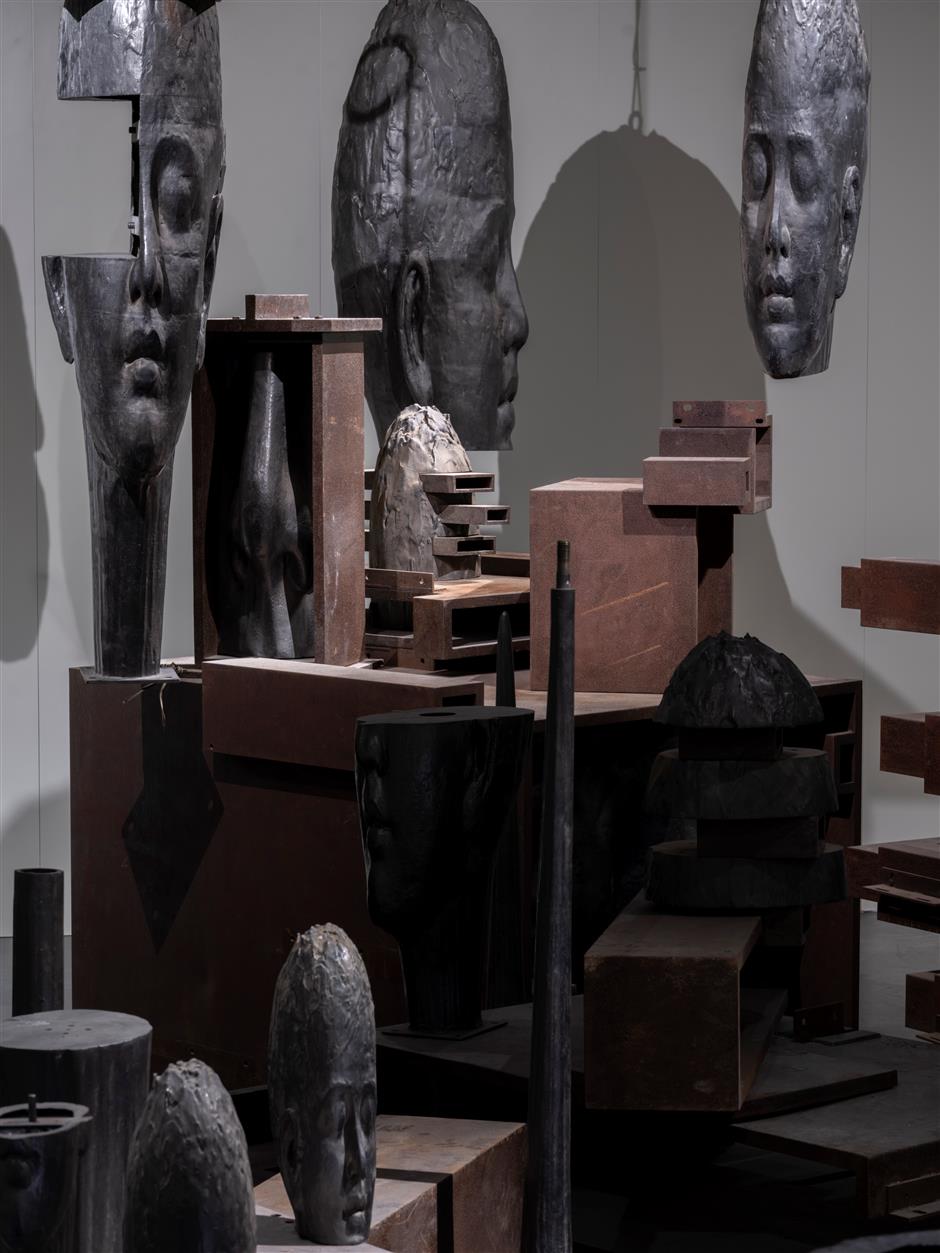
"We go through division, uncertainty, conflict and brokenness," he said. "A new order can appear when we rebuild relationships."
The fragments do not suggest that everything broken can be restored to its original state. Instead, they propose that rupture may reveal possibilities hidden by wholeness. In Chan's art, metamorphosis does not destroy the past; rather, it incorporates the memory of an earlier form into something new.
For all their monumental scale, the sculptures repeatedly return viewers to the body: the eye that sees but cannot see itself, the skin that remembers touch, and the mind that turns matter into meaning.
Chan's "other worlds" may not lie beyond this one. They may begin in the distance between seeing and understanding.
Date: Through October 25
Address: 3398 Longteng Avenue龙腾大道3398号
Venue: Long Museum West Bund
Tickets: 180-220 yuan (US$27-32)