Year of the Horse Exhibition Invites Visitors to Walk Through History
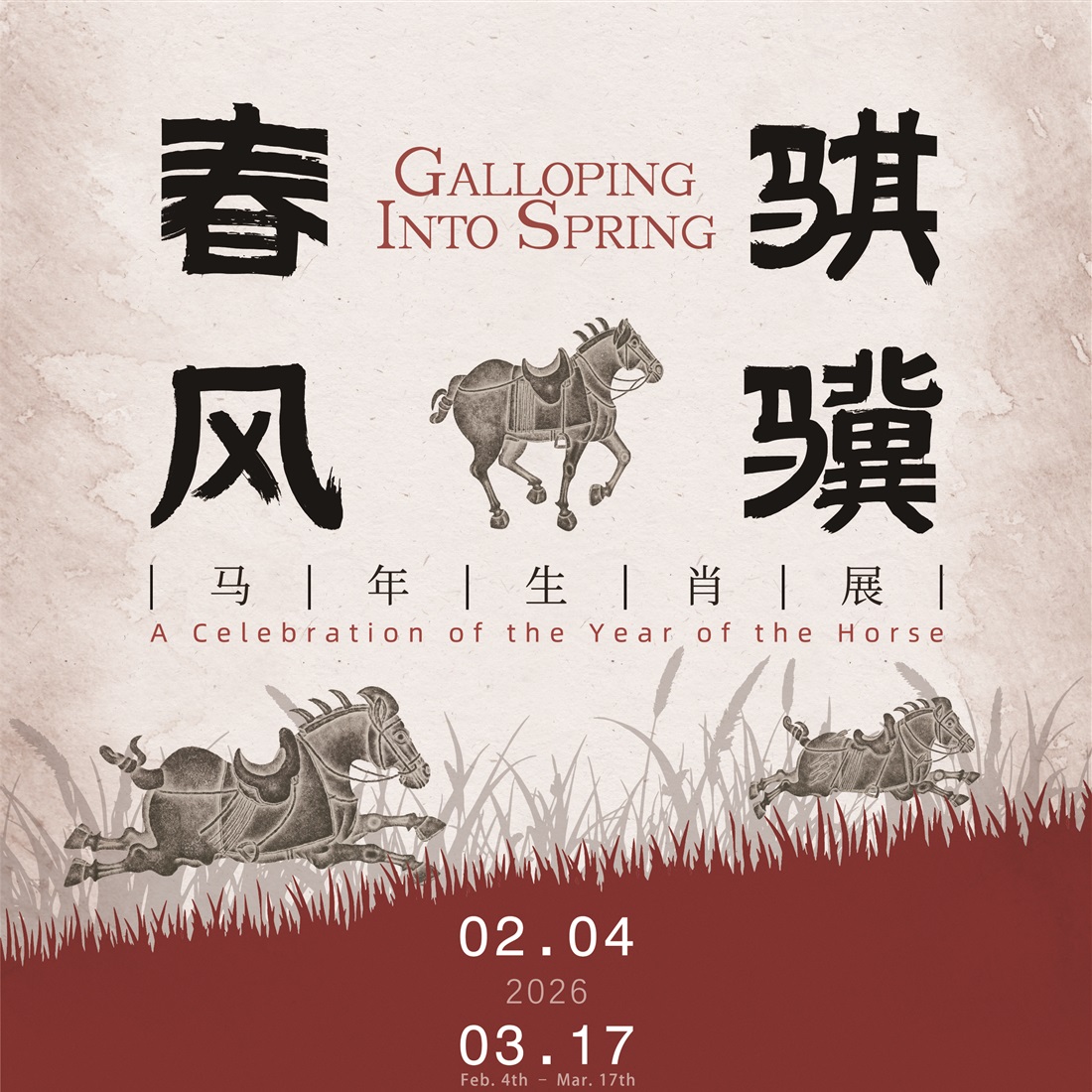
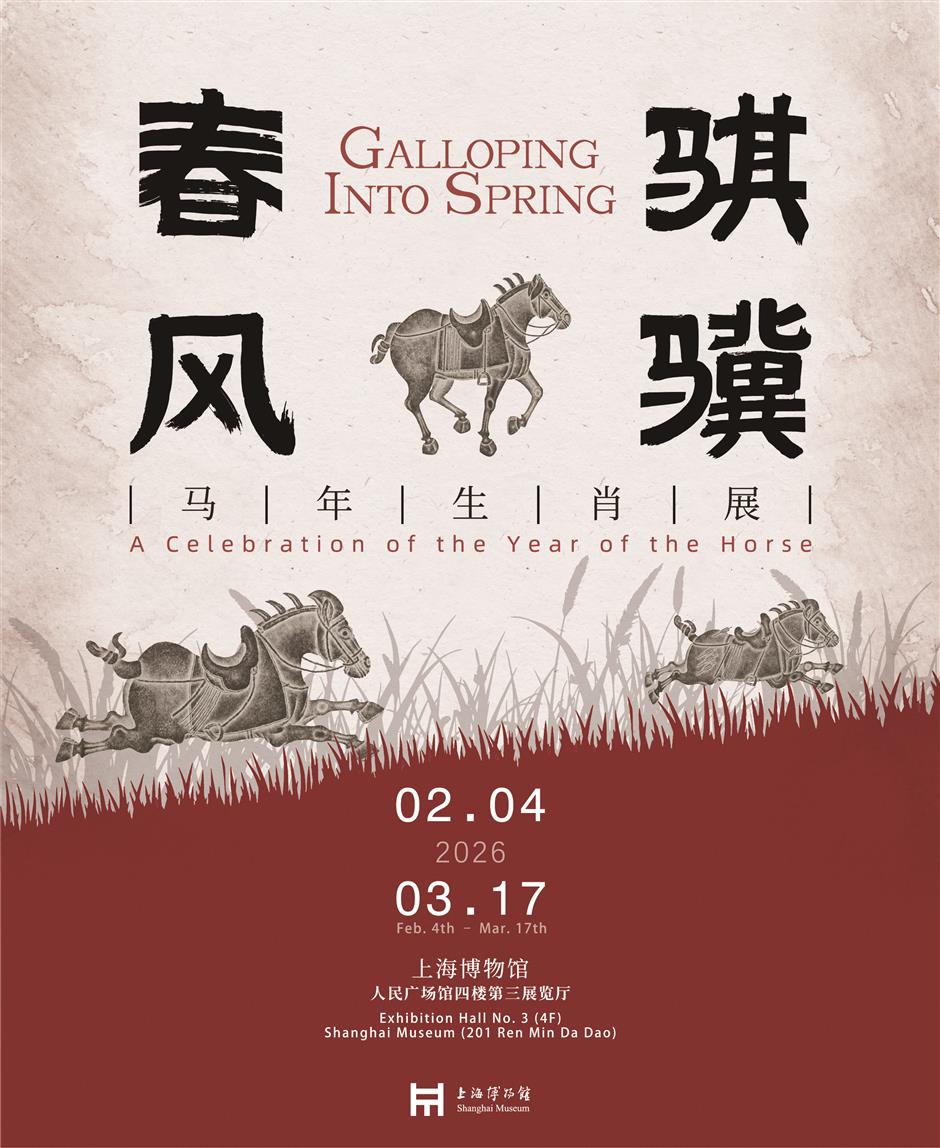
The Shanghai Museum in People's Square opened its annual Chinese New Year zodiac exhibition, "Galloping Into Spring: A Celebration of the Year of the Horse," on February 4.
Carrying wishes of renewal, confidence and momentum, the exhibition offers a festive and reflective way to welcome the Year of the Horse.
The horse has been an integral part of and a spiritual symbol in Chinese civilization.
This exhibition includes 16 horse-themed artifacts from the Gansu Provincial Museum, the Institute of Cultural Relics and Archeology, the Xianyang Museum and the Shanghai Museum.
The exhibition is divided into sections such as "An Ma Zheng Chen" (鞍马征尘) – a term evoking the hardships of long journeys and military campaigns – "The Six Steeds of Zhaoling" (昭陵六骏), referring to the celebrated stone reliefs commissioned by Emperor Taizong of the Tang Dynasty (AD 618-907) in memory of his war horses, "Swift Shadows, Flowing Light" (骏影流光) and "Poetic Imagery" (诗情画意). It presents the horse's rich cultural meanings and auspicious symbolism throughout history.
Visitors will encounter a bronze chariot and horse from the Leitai Han tomb in Wuwei – the same site that yielded the renowned Galloping Horse Treading on a Flying Swallow (马踏飞燕).
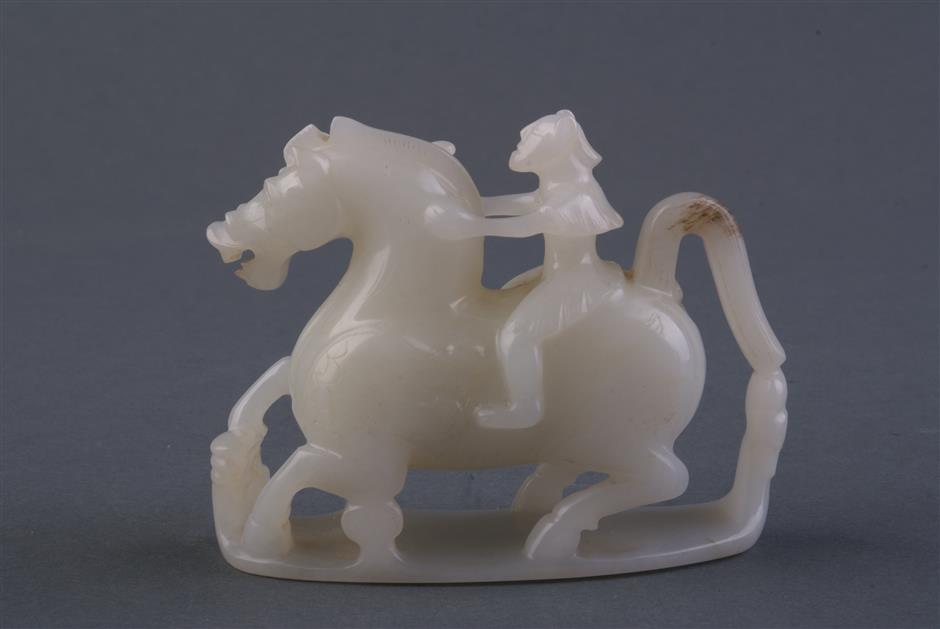
The white jade immortal astride a galloping steed appears to soar through drifting clouds, revealing the vitality and refinement of Han Dynasty (206 BC-AD220) jade carving.
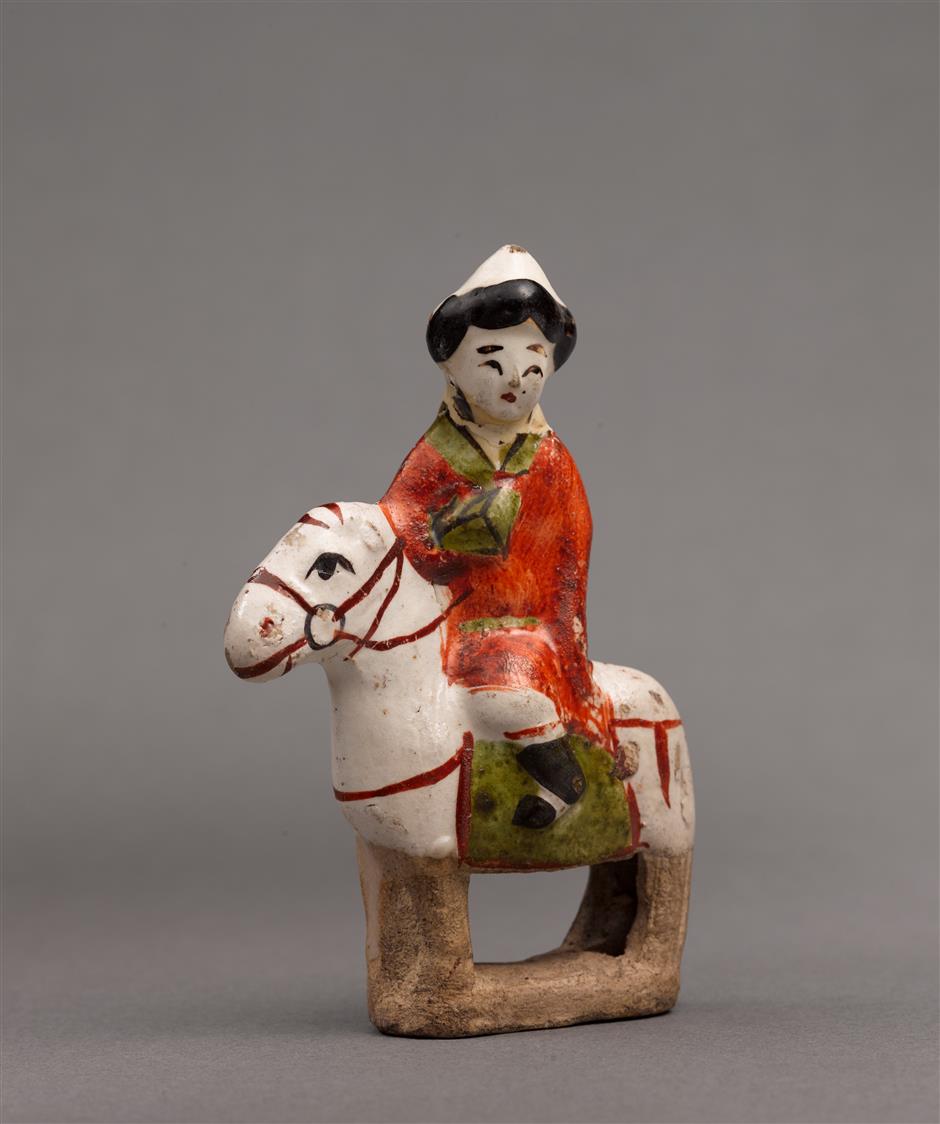
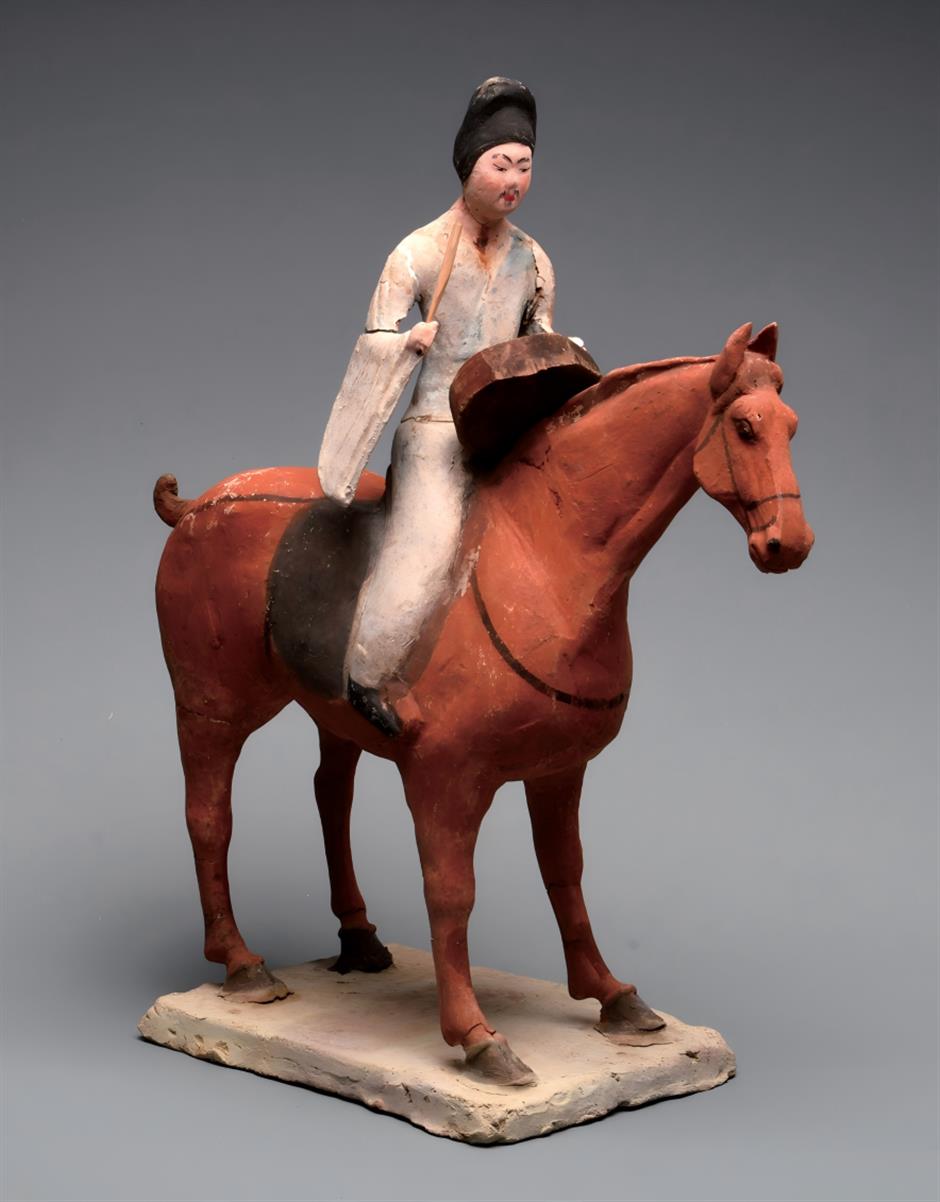
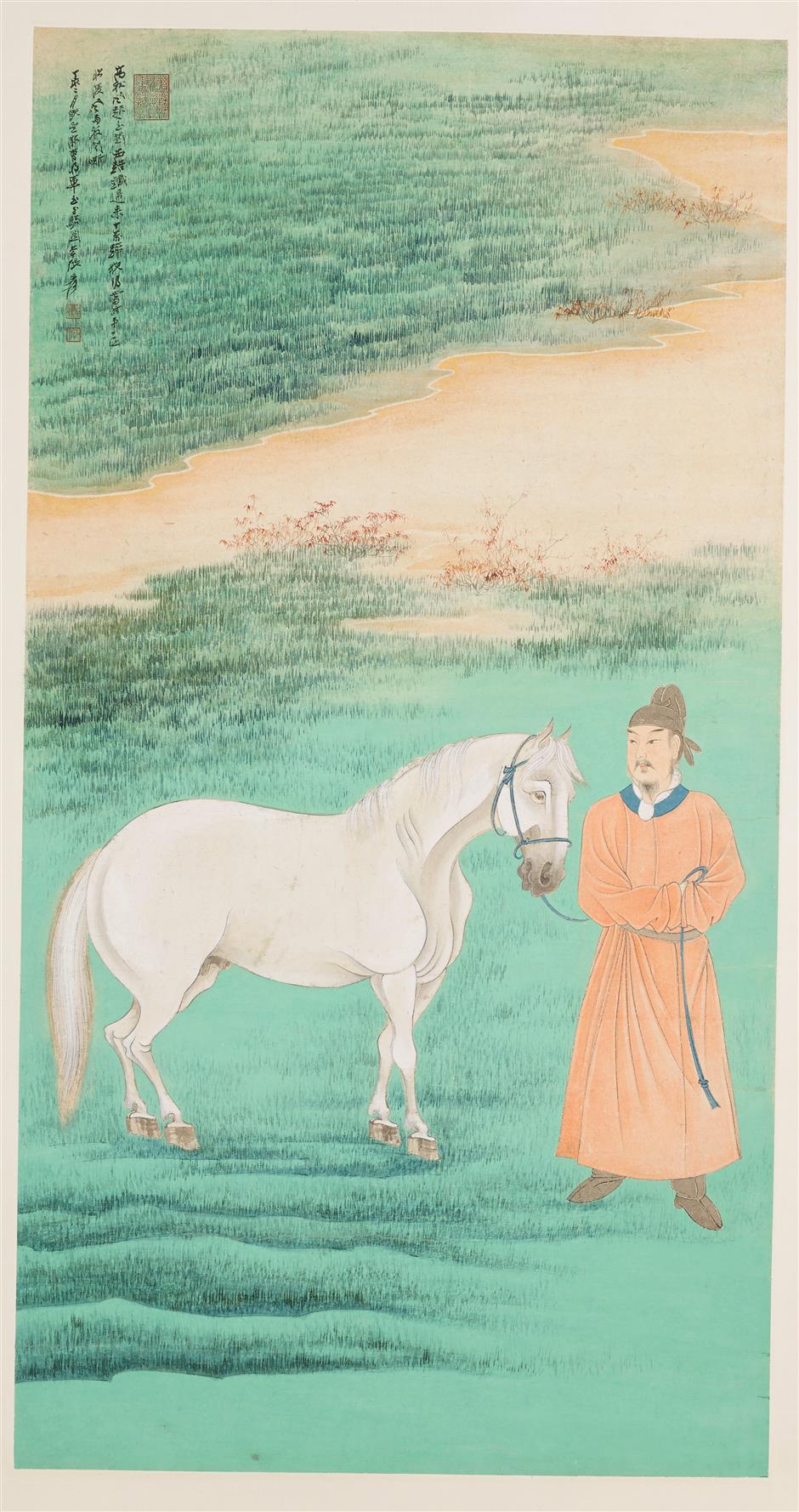
A Tang Dynasty figurine of a horseman playing a drum from a Tuguhun tomb gives us a clear picture of what happened on the Silk Road. The flowing ink of Xu Beihong's "Drinking Horse" and Zhang Daqian's "Copy of Cao Ba's White-Haired Steed" (临曹霸玉花骢图) shows the horse's spirit and character through rhythm, movement and brushwork.
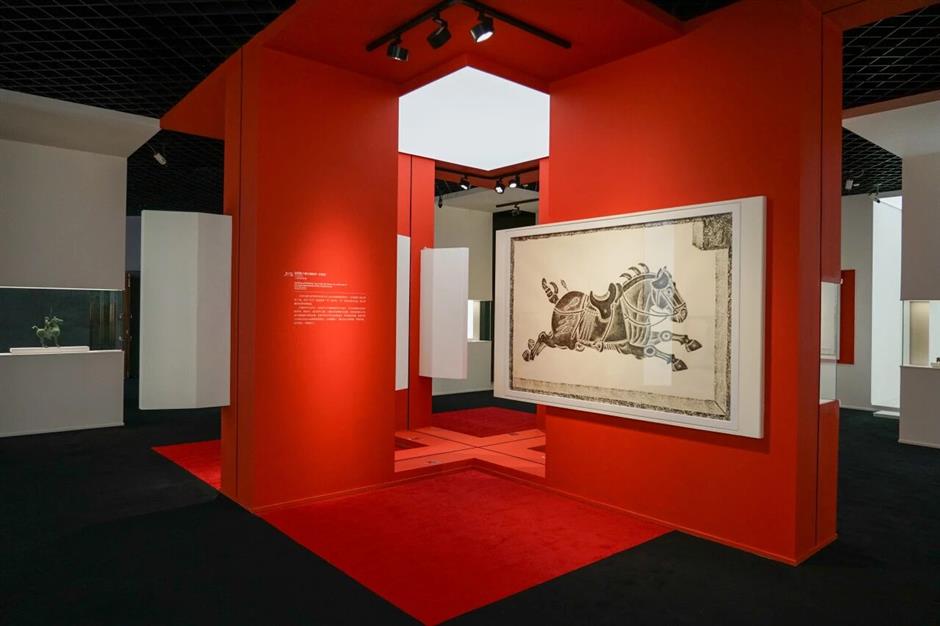
This exhibition hall design employs variations and repetition of basic formal units to create a distinctive spatial experience for visitors. At the center of the hall stands a striking red, cross-shaped windmill structure. Along the circulating visitor route, the galloping figures of the six steeds bring the silhouettes of horses from the long course of history to life.
The L-shaped exhibition walls at the four corners feature hollowed-out midsections, offering multiple viewing angles and layered sightlines.
At the far end of the main axis, two small "white boxes" are placed symmetrically on the left and right, adding an element of surprise and playfulness to the visit.
The overall palette of red, black and white evokes the festive spirit of the Chinese New Year and embodies the vitality and vigor symbolized by the dragon and the horse.
The Shanghai Museum will also present a series of Chinese New Year programs under its "Celebrating the New Year at the Museum" initiative, including "Racing into the New Year," a special event highlighting the traditional collotype reproduction technique of calligraphy and painting.
It will release a range of horse-themed cultural and creative products alongside the exhibition, providing visitors with additional opportunities to engage with tradition through contemporary design.
Date: Through March 17
Venue: Exhibition Hall No. 3, 4/F, Shanghai Museum
上海博物馆人民广场馆四楼第三展厅
Address: 201 People's Ave
人民大道201号