AITO, Xiaomi, Li Auto Drive into Headwinds While Expanding to Europe
AITO, a premium smart vehicle brand co-created by tech giant Huawei and Chinese automaker Seres, has officially set its sights on the European continent.
Showcasing its latest SUV matrix at the 2026 Paris Motor Show, the brand announced it will formally launch its models in the European market in the autumn of 2027.
This declaration further intensifies the fierce competition within the high end of Europe's auto sector.
AITO, whose name is an acronym of "adding intelligence to autos," has adopted a European strategy revolving around four core SUV models: the AITO M6, 7, 8 and 9. The brand is targeting a market traditionally dominated by Germany's Mercedes-Benz, BMW and Audi.
The flagship AITO 9, a hulk measuring 5.2 meters in length and weighing 2.5 tons, carries the company's expectations of winning over high-net-worth European families with its advanced smart cabin and driver-assisted technologies.
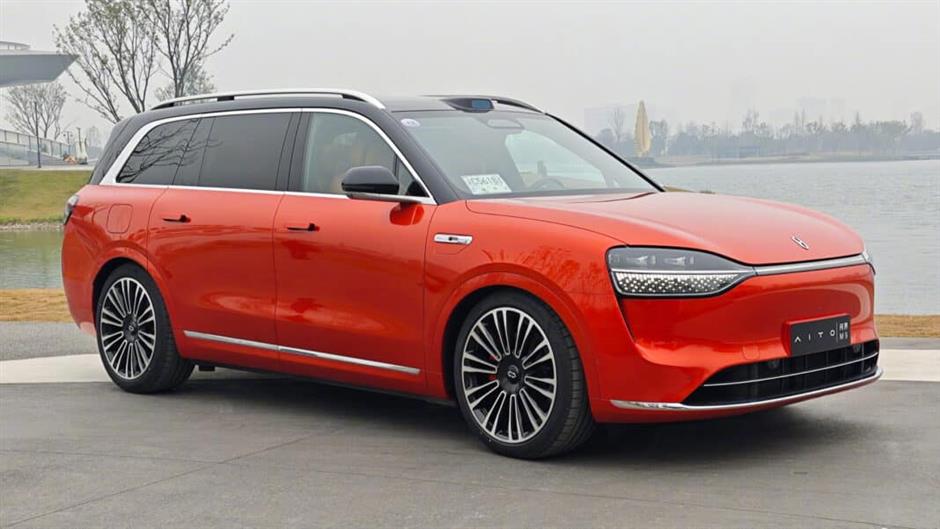
During the 2025 Munich Motor Show, staff at the AITO booth told visitors that that the AITO 9's European price would be equivalent to that of the BMW X7.
In advanced preparations, AITO allocated a three-year lead time to secure EU Whole Vehicle Type Approval, an administrative and technical certification that ensures mass-produced vehicles meet unified safety, environmental and security standards before they can be sold or registered in the EU. It is also conducting deep localized tuning of its Huawei-based smart driving system to adapt to European road conditions, traffic signs and driving habits.
"The asset-heavy construction of a localized after-sales service network is progressing simultaneously," said Kang Bo, director and vice president of Seres. "Europe is just a start as we aim for the global market."
When AITO officially begins deliveries in 2027, it won't be the only Chinese auto-tech giant fighting for a share of the European market.
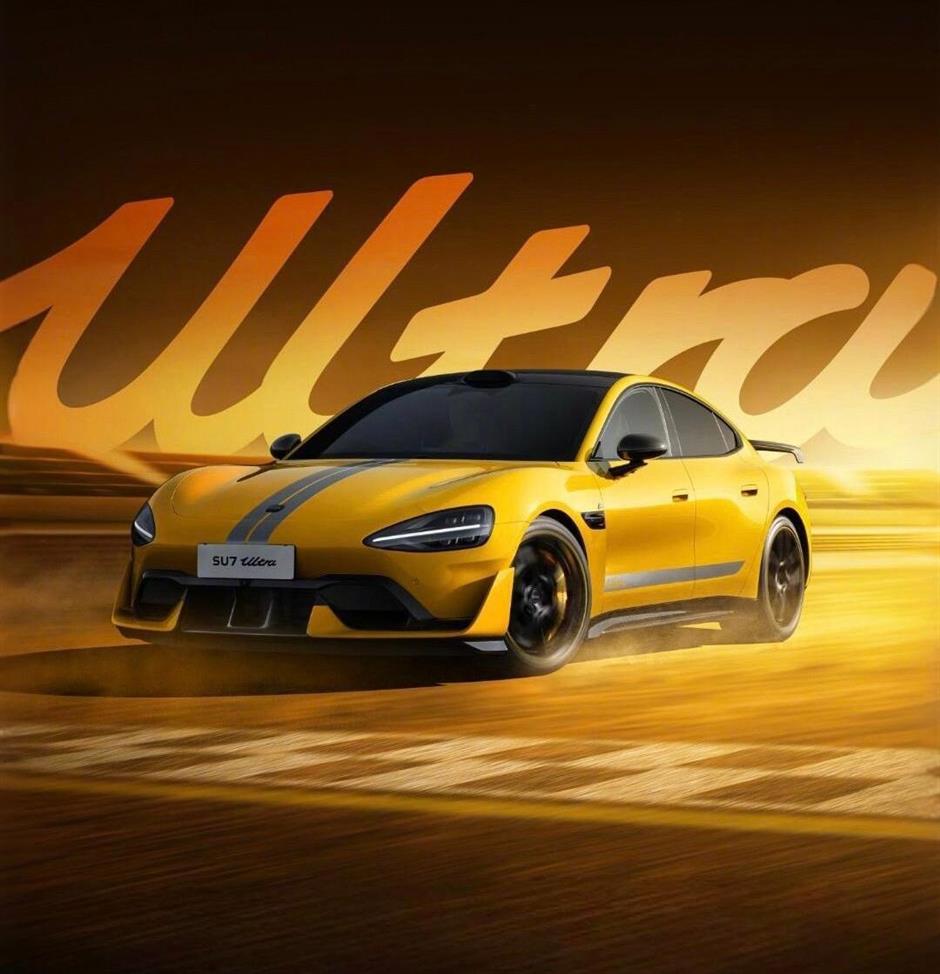
Xiaomi electric vehicles are scheduled to debut in Europe during the same period. While Xiaomi has not yet announced exactly which models will go on sale, its overseas website prominently features the Xiaomi SU7 Ultra.
Unlike AITO's strategy of benchmarking against traditional luxury cars, Xiaomi's goal is to establish its "human-car-home" ecosystem, aiming to attract European buyers who are already integrated into its network of smart home devices and consumer electronics.
In addition, China's Li Auto has also announced plans to initiate official European sales in the first quarter of 2027, starting in the Netherlands and Norway. The initial offering will be its all-electric SUV Li 6, which corresponds to the Li i6 in the domestic market. Li Auto's debut at the Paris Auto Show last week followed its first European appearance since its debut as a partner of the Solheim Cup golf tourney in the Netherlands last month.
On the road to Europe, Chinese auto companies must navigate shifting trade policies, strict local regulations and increasingly fierce competition with each other.
A recent trade agreement between China and the EU drastically slashed the volume of hybrid vehicles exported to the bloc. The industry's annual import quota is now capped at 350,000 units, with only a 6 percent growth allowance each year.
The restrictions present a specific challenge for AITO. The brand's success in its home market relies heavily on its extended-range electric vehicles. To achieve meaningful sales volumes in Europe without being constrained by the quota, the brand will likely have to shift its primary export focus to pure electric models. Yet, all-electric vehicles currently face steep anti-subsidy tariffs from the EU.
This means AITO must leverage its localized smart driving capabilities to break into the deep-rooted "old money" brand loyalty of the European luxury car market, forging a path for premium survival within a relatively hostile trade environment.
Ultimately, the EU regulatory environment squeezes Chinese automakers from both ends, making establishing local manufacturing sites in Europe an unavoidable long-term necessity. Chinese rivals BYD, Chery, Geely and Leapmotor have already established production sites in Europe or are in advanced stages of plans to do so.
Seres hasn't yet announced any plan to operate factories in Europe Xiaomi has established a research and development center in Munich dedicated to adapting its cars to European regulatory standards and user habits.
"Building factories in Europe is part of the long-term strategy for us to become one of the world's top five automakers within 15 to 20 years," said Xu Fei, vice president of Xiaomi.
While the company enjoys high brand recognition in Europe through its consumer electronics and home appliance brands, convincing European consumers that a brand known for smartphones and robot vacuum cleaners can also expertly engineer high-performance vehicles remains a hurdle.
Xiaomi started to dispel its marketing stereotype last year when its SU7 Ultra clocked a lap time of 7 minutes and 4.957 seconds at the world-famous Nürburgring motorsports complex in Germany, claiming the title of the fastest production electric vehicle to date. The company followed up that success this year when the YU7 GT SUV, equipped with a professional track package, set a new SUV lap record of 7:22.755.
But survival in the increasingly competitive European market will require more than stunning lap times. Chinese automakers looking at Europe as a profit driver as sales on the Chinese mainland slow will need to demonstrate technological superiority, financial endurance and a ruthless commitment to localized manufacturing.
Editor: Liu Qi
In Case You Missed It...

 Oct 21, 2026