Battle Lines Drawn as China Carmakers Challenge Tesla in Self-Driving
The commercialization of more advanced autonomous driving, led by China, entered its final countdown with a UN forum enacting the first global technical standards for self-driving vehicles.
The framework approved by the UN World Forum for Harmonization of Vehicle Regulations and co-developed by China, the EU, the UK, the US, Canada and Japan, provides guidelines for safety, testing and operational rules for Levels 3 and 4 autonomous vehicles across the nations.
Level 3 driving requires drivers to appropriately respond to a car's directive to intervene. The more highly automated Level 4 requires the car to stop if a driver doesn't respond to such a directive.
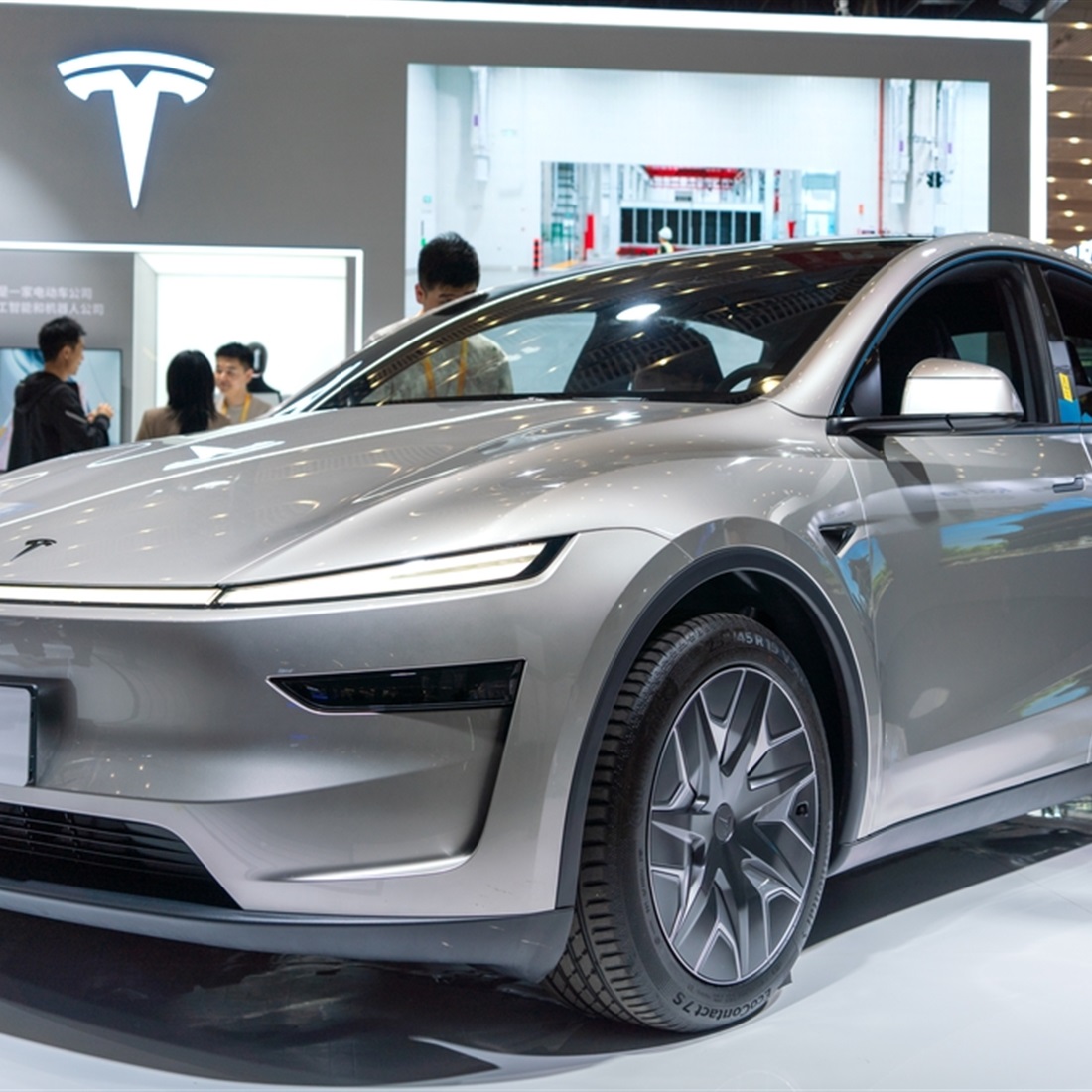
At this delicate juncture, the market is heating up, with Tesla's "full self-driving" system pushing the frontier, though its supervised version has been renamed Tesla Advanced Driver Assistance System in China. Tesla is aiming for a full rollout in the third quarter of the year.
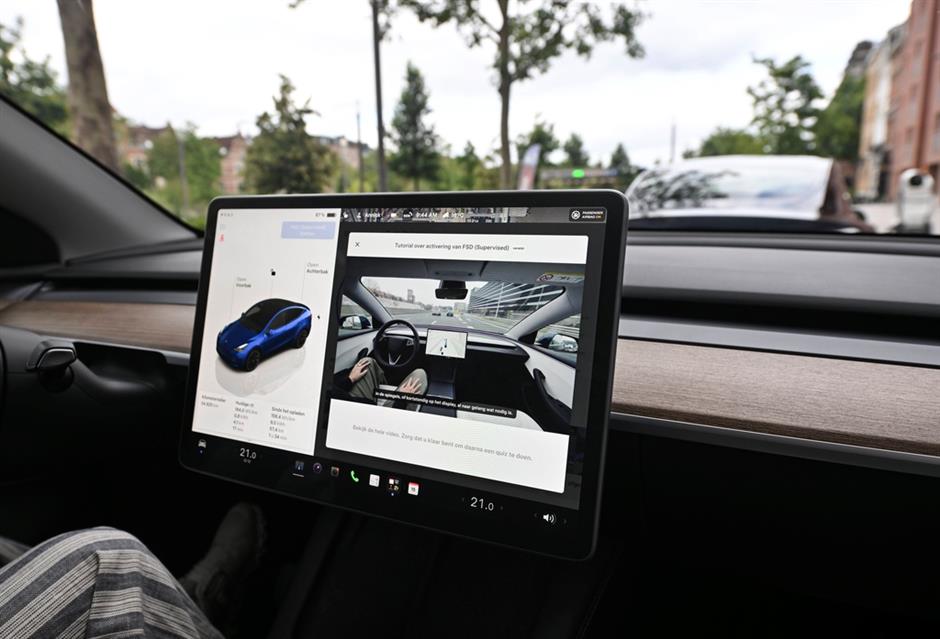
Unlike the US market, which has switched to the full-driving system monthly subscription model costing US$99 a month, Tesla China will continue its current policy of a one-time cost of 64,000 yuan (US$8,800), and the rollout is confined to a small group of about 5,000 vehicles for limited testing. The phrase "full self-driving" has been removed from the description, with its functionality limited to Level 2-plus assistance such as urban navigation on autopilot and traffic light recognition. As time goes on, more changes are expected.
Leading Chinese electric vehicle makers are set to challenge Tesla.
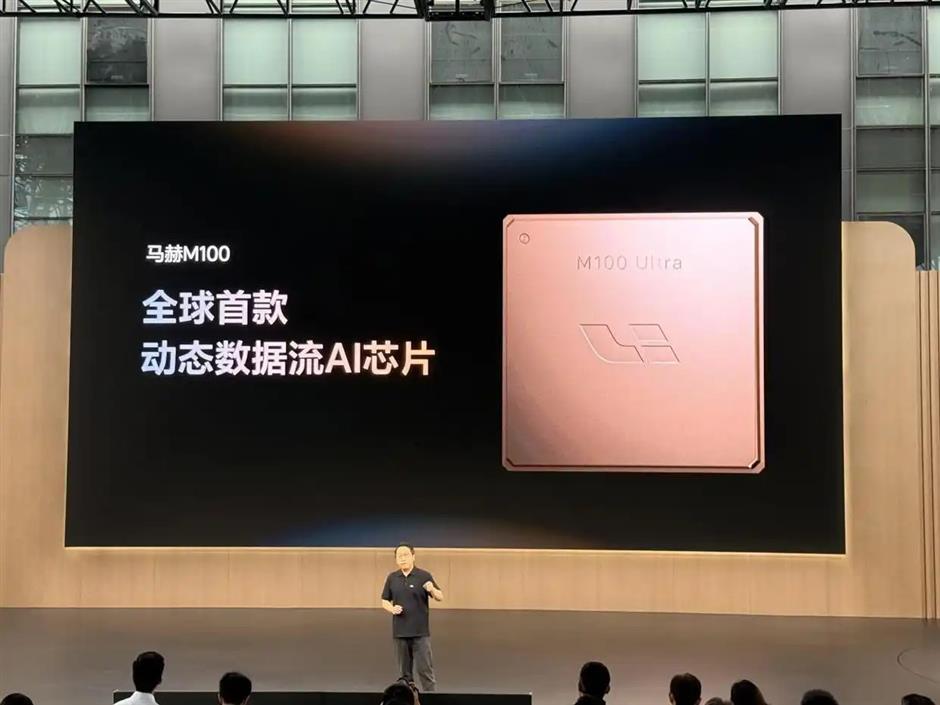
Li Auto announced that its Mach system will match the capabilities of Tesla's V4 full self-driving system in the fourth quarter, revealing that its self-developed AI chip, the Mach M100, entered mass production in May.
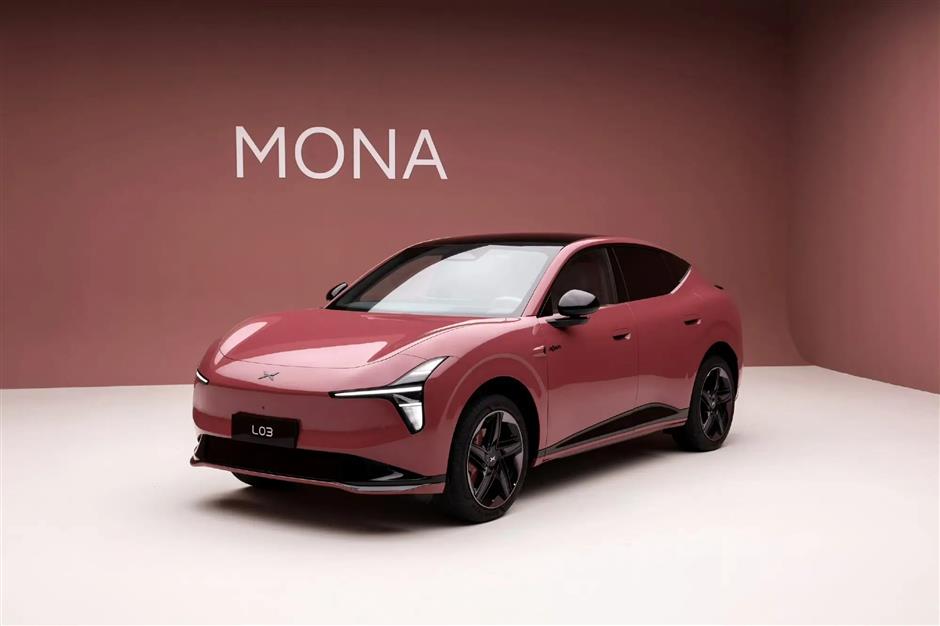
Xpeng Motors went even further, betting that its second-generation AI model will achieve the overall performance of Tesla's V14.2 by August.
An overhaul of the smart vehicle ecosystem underlies the competition.
Structurally, both Li Auto's and Xpeng's autonomous driving systems are fully transitioning to "end-to-end" physical AI large models. In traditional systems, engineers wrote specific code for different tasks, like detecting a pedestrian and then deciding to brake. The end-to-end concept signals a unified AI system whereby raw sensor data goes in and driving commands come out directly, eliminating intermediate coding steps.
Xpeng's second-generation system cuts out intermediate language translation layers, compressing the system's response time to under 80 milliseconds. Li Auto utilizes a dual-system architecture, using its M100 chip to quickly perceive the physical world and execute actions precisely. This echoes Tesla's strategy of upgrading its Transformer models designed to predict the next sequence of events based on context.
Peeling back the shell of end-to-end models, however, reveals a fundamental difference in underlying hardware philosophy between Chinese automakers and Tesla.
Tesla steadfastly adheres to the first principle of "pure vision," relying entirely on massive global video data and huge overseas computing power. The goal is to let the vehicle visually "understand" the world exactly like a human driver using only camera eyes.
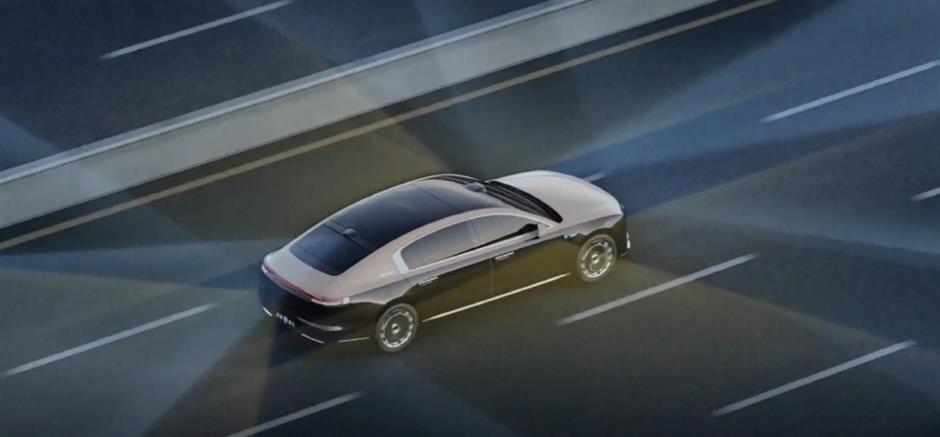
In contrast, Chinese automakers generally retain a fused perception route of vision dominance plus light detection and ranging (Lidar) technology sensors that use pulsed laser waves to actively map the surrounding environment in 3D. In rare, highly dangerous scenarios where cameras can easily be blinded, such as unlit roads at night, heavy rain, thick fog or the glaring light of a tunnel exit, the physical distance measurement of Lidar remains the safety baseline that Chinese automakers defend.
Which one is the better approach? It's hard to tell.
"Tesla's full self-driving entry into China provides an opportunity for domestic smart driving systems to prove their strengths," said Zhang Yun, global chief executive of Ries Positioning Strategy & Consulting. "The direct consequence of this clash will be the complete stripping away of the premium aura surrounding autonomous driving."
For a long time, these systems existed as high-margin optional packages for car manufacturers. But as Chinese automakers make breakthroughs in integrating their own hardware and software, costs are plummeting.
Xpeng's localized chips can now support AI models directly on vehicles, while Li Auto has aggressively cut costs by building its own chips, operating system and compilers.
In the fiercely competitive core market of cars priced between 200,000 yuan and 300,000 yuan, Chinese automakers are leveraging their supply chain advantages to offer urban navigation assistance as a free standard feature.
It's safe to say China's smart driving market is experiencing price deflation and the arrival of Tesla will not change that. Smart driving will completely lose its independent pricing power, becoming an essential but not easily monetized basic feature, much like a car's air conditioning.
As domestic standards fully align with UN regulations, exporting this technology has naturally become the main focus. However, exporting smart driving systems faces entirely different political and ecological barriers compared with traditional vehicle exports.
Even to operate in China, Tesla had to build a local AI training center to meet data compliance rules. Conversely, when Chinese automakers expand to Europe, or perhaps later to the US, strict local data privacy laws will likely prohibit the transmission of road video streams back to China. That may require building expensive local computing centers overseas to constantly train their AI with local driving footage, potentially downgrading their touted "end-to-end" technologies.
The performance of Chinese automakers at home is largely due to the support of so-called "vehicle-to-everything" technology. That allows vehicles to communicate with smart city infrastructure like traffic lights and roadside cameras, giving the car a "God's eye view" of traffic beyond what its own sensors can see.
However, overseas markets may not have the financial resources to deploy such smart roadside infrastructure in the coming years. To go global, Chinese smart driving must strip away this safety net and rely purely on the vehicle's own intelligence.
The challenges presented to Tesla by Li Auto and Xpeng signal the start a new battleground. Tesla's full self-driving technology as a market disruptor will not instantly wash away the Chinese market; instead, it will accelerate the maturation of autonomous driving regulations and consumer education.
In this battle, automakers that cannot close the massive data loop or lack full-stack research capabilities will be rapidly eliminated. For first-tier players, how they navigate the price declines in smart driving while overcoming the massive hurdles of overseas data compliance will determine who ultimately plants the flag of victory in the global transition to self-driving vehicles.
Editor: Liu Qi
In Case You Missed It...
 Jul 23, 2026