Shanghai Unveils Roadmaps to Strengthen Basic Research, AI Leadership, People-centered City Governance
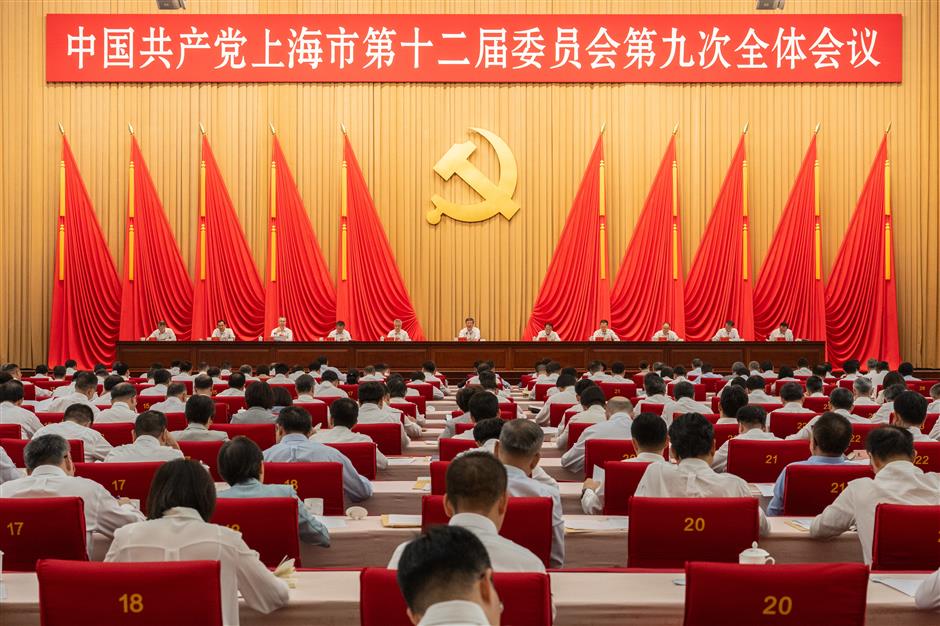
The Communist Party of China Shanghai Committee on Friday approved three major policy documents aimed at strengthening basic scientific research, accelerating the city's development as a world-leading artificial intelligence hub, and advancing people-centered governance for one of the world's largest cities.
The documents, adopted at a one-day plenary session, provide detailed roadmaps for Shanghai's three strategic priorities and translate into concrete action the guidance delivered by President Xi Jinping during his two visits to the city this year.
During those visits, Xi attended a symposium on strengthening basic research, delivered a keynote speech at the 2026 World AI Conference and High-Level Meeting on Global AI Governance, and visited a residential community in Huangpu District. His remarks highlighted the importance of achieving greater technological self-reliance, promoting ethical and responsible AI development, and improving community-level governance.
Strengthening basic research
The first policy focuses on expanding basic research to support China's ambition of becoming a global science and technology powerhouse while advancing high-level self-reliance through breakthroughs in frontier science and core technologies.
The plan lays out measures in six key areas, including strengthening long-term planning for priority disciplines, encouraging businesses to increase investment in fundamental research, promoting deeper integration of education, scientific innovation and talent development, and upgrading major research infrastructure with intelligent scientific platforms.
Shanghai will further align itself with national strategic priorities, reinforce the Shanghai–Yangtze River Delta International Science and Technology Innovation Center, and pursue more original breakthroughs to provide stronger support for the country's innovation-driven development.
Building a world-class AI hub
The second document outlines a people-centered, secure and open approach to AI development while supporting China's vision for fair and inclusive global AI governance.
To strengthen independent AI innovation, Shanghai plans to expand frontier AI research, enhance the capabilities of large foundation models, improve intelligent computing infrastructure, and build high-quality multilingual data resources. The city will also promote AI applications in scientific research, accelerate digital transformation across manufacturing industries, and foster a more complete AI industrial ecosystem.
The policy also places strong emphasis on AI safety and governance. Shanghai will improve evaluation systems, strengthen dynamic oversight of AI products and services, and actively participate in international cooperation to help shape global AI governance standards.
To support these goals, the city will expand fiscal and financial support, cultivate more high-end AI talent, improve legal and regulatory frameworks for digital intelligence, and streamline decision-making and institutional coordination.
The plenary said Shanghai aims to become a global pioneer in balancing AI innovation with effective risk management, contributing Chinese experience and solutions to the responsible development of artificial intelligence worldwide.
Advancing people-centered megacity governance
The third document sets out a framework for modernizing governance in Shanghai as a super-large city, placing residents' needs at the center of policymaking and urban management.
Under the plan, authorities will seek public input throughout the policy process – from identifying community needs to evaluating policy outcomes – to ensure governance is more responsive and effective.
The roadmap identifies seven priority areas for building a smarter, safer and more refined city. These include improving public services and urban living environments, strengthening social governance through better property management and early dispute resolution, and enhancing community cohesion.
It also calls for empowering grassroots self-governance, integrating multi-level grid management systems, reducing administrative burdens on frontline community workers, strengthening public safety and emergency response capabilities, and accelerating digital governance through unified digital infrastructure, intelligent urban management systems and citizen-focused smart public services.
The plenary emphasized that these initiatives are designed to make Shanghai more innovative, resilient and livable while ensuring that the benefits of modernization are shared by all residents.
Editor: Yang Meiping
In Case You Missed It...

 Sep 16, 2026