AI Drug Discovery Has Found Buyers. Now Comes the Hard Part
AI drug discovery has found buyers. Now comes the harder part.
Artificial intelligence has spent years promising to make drug discovery faster and cheaper. It is now beginning to prove that pharmaceutical companies are willing to pay for that promise.
What remains much less clear is whether AI can produce drugs that are more likely to work on patients.
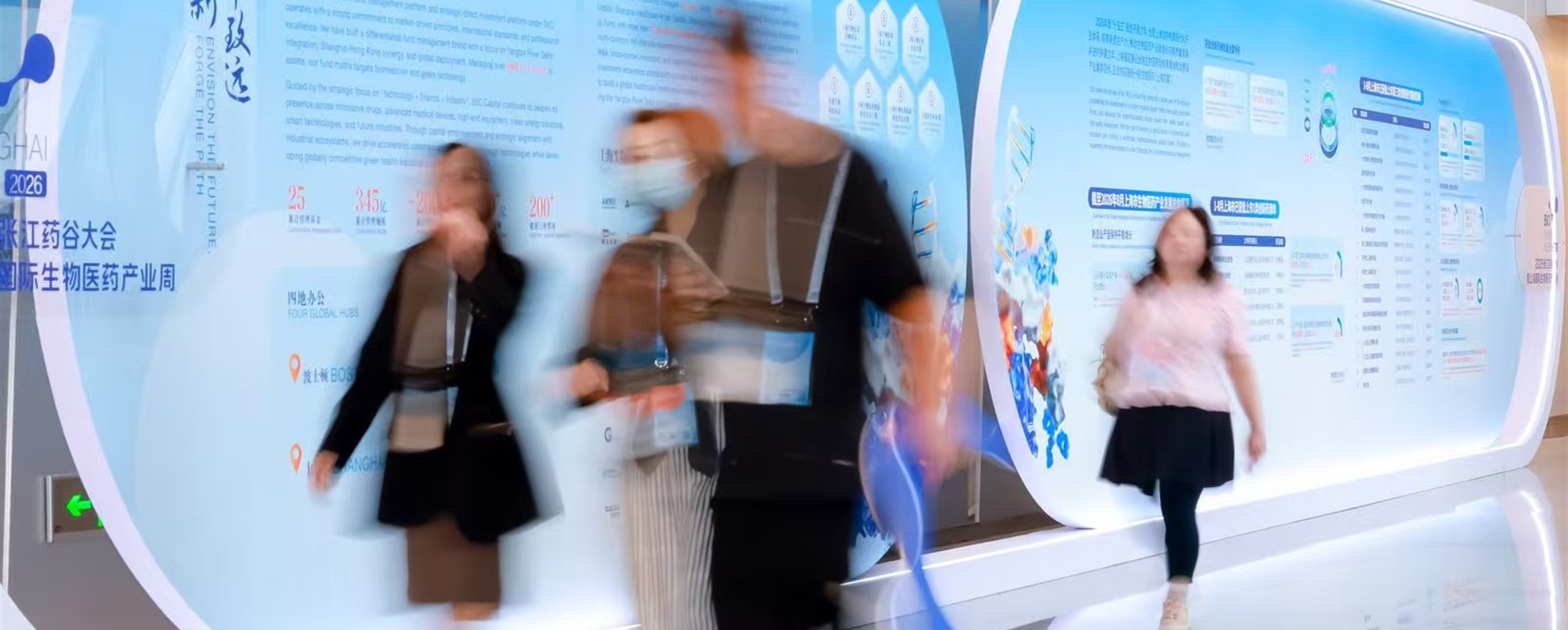
That tension was on display at 2026 BioShanghai Week, where executives and scientists discussed how far AI drug discovery has moved from computational experiments into clinical development.
Insilico Medicine, a leading AI-native biotech, earned US$106.3 million in the first half of 2026, up 287 percent from the previous year. Drug-discovery and pipeline-development activities generated US$103 million, mostly from licensing payments and collaboration milestones. The Hong Kong-listed company reported US$35.5 million net profit.
The numbers suggest that AI drug discovery has already found a commercial market, even before its biggest scientific claim has been settled.
Insilico's co-CEO and chief scientific officer, Ren Feng, told China Biz Buzz that AI-developed drugs have not yet shown a higher clinical success rate than conventional drugs.
"The main reason," he said, "is that too few AI-originated medicines have completed late-stage development."
Independent evidence remains mixed.
A 2024 peer-reviewed analysis of AI-native biotech drugs found that AI-discovered molecules had an 80 percent–90 percent Phase I success rate, well above industry averages. Phase II showed no advantage, with a success rate of 40 percent, comparable to traditional drug development, and the researchers warned that the sample was small.
In August, Nature Reviews Drug Discovery added that AI's clinically meaningful improvements are still lacking. The authors claimed that much of the field has become adept at modeling data without proving that those models improve patient-safe and effective drug decisions.
The distinction is increasingly important as AI companies sign larger deals with established drugmakers.
Insilico partnered with Eli Lilly, Servier, SK Biopharmaceuticals, and Takeda this year. Its Takeda agreement alone could pay up to US$600 million, and by September, its 2026 transactions had a potential contract value of US$7.3 billion. Headline figures include contingent milestone payments and differ from revenue.
What buyers are paying for also depends on the type of deal.
For an already discovered drug candidate, Ren said pharmaceutical companies focus principally on the asset – its efficacy, pharmacokinetics, safety and differentiation – rather than how it was discovered.
"They don't care whether it was made using AI or by people," he said.
That changes when a drugmaker hires an AI company before a project has begun. In strategic discovery partnerships, Ren added, customers are evaluating both the AI platform and the scientists using it.
Insilico's own pipeline is now moving into a stage where those claims will face a much tougher test.
This month, Rentosertib began Phase III dosing for idiopathic pulmonary fibrosis. The randomized, double-blind study will treat 320 patients from 47 Chinese sites for 52 weeks. Forced vital capacity decline in lung function is its main endpoint.
The study is expected to run until the end of 2029. Insilico states that AI discovered TNIK and designed rentosertib. Phase III doesn't mean AI made a better drug.
Michael Levitt, the 2013 Nobel laureate in chemistry, put the problem more starkly during a fireside discussion with Ren at BioShanghai Week.
"We have good computer models for atoms, good computer models for electrons, and good computer models for proteins, but we don't have good computer models for patients – for people," Levitt said.
Human biology introduces variables – genetics, disease heterogeneity, environment and treatment response – that are far harder to model than molecular structure.
Clinical trials are themselves beginning to use AI for patient matching, trial design, surrogate endpoints and data monitoring. A Nature Reviews piece on bioengineering published this month said such tools could support faster decisions during development but emphasized the need for validation, regulatory oversight and human supervision.
Levitt nonetheless expects the boundary to move. "I would not be surprised if in five years, Phase III is predictable," he said.
For now, AI drug discovery appears to have cleared one hurdle: convincing drugmakers and investors that the technology has commercial value.
Rentosertib and the growing number of AI-originated drugs entering later-stage trials will test the harder proposition of whether that value ultimately shows up in patients.
Editor: Yao Minji
In Case You Missed It...
 Sep 9, 2026