Over-the-Counter Histamines Do Roaring Trade as Spring Allergy Season Begins
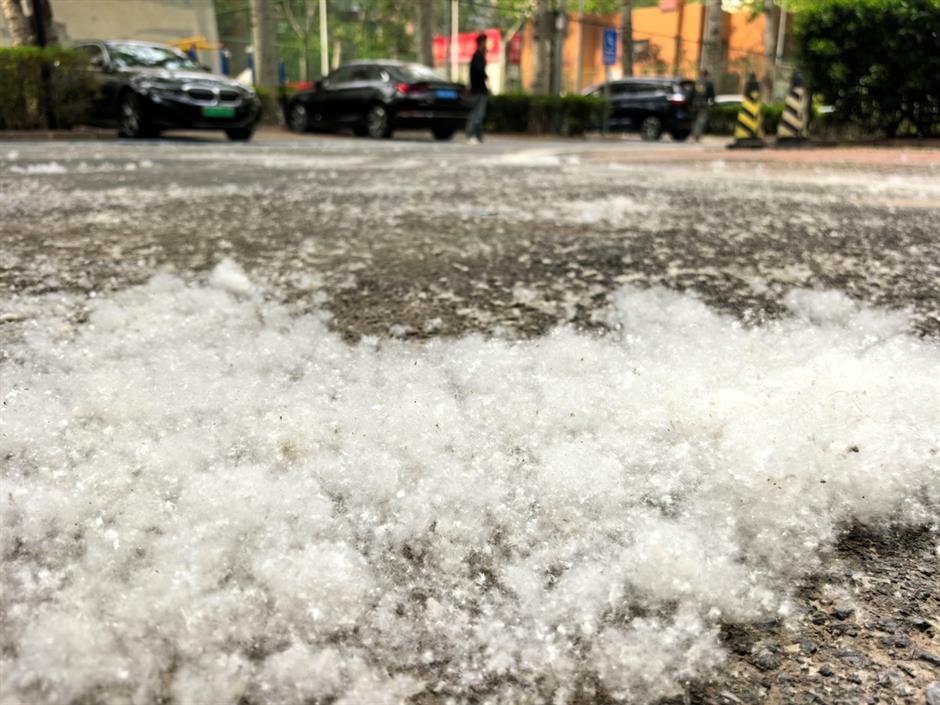
A fine layer of pale fluff has begun to drift through Shanghai's streets, clinging to sidewalks and swirling at intersections as spring settles in. For many residents, it signals not just a change in season, but also the start of weeks of sneezing, itchy eyes and constant congestion.
The annual allergy season has arrived. But this year, the spike in symptoms is feeding into a larger trend: growing reliance on over-the-counter antihistamines as Chinese consumers increasingly turn to self-medication instead of hospital visits.
The shift is reshaping the once-unremarkable medicine segment into a market that is crowded, price-driven market and dominated by generics and online distribution.
Data released by Dingdang Health late last month showed nationwide sales of anti-allergy drugs rose 60.4 percent week-on-week, with Beijing posting the sharpest increase at nearly 90 percent.
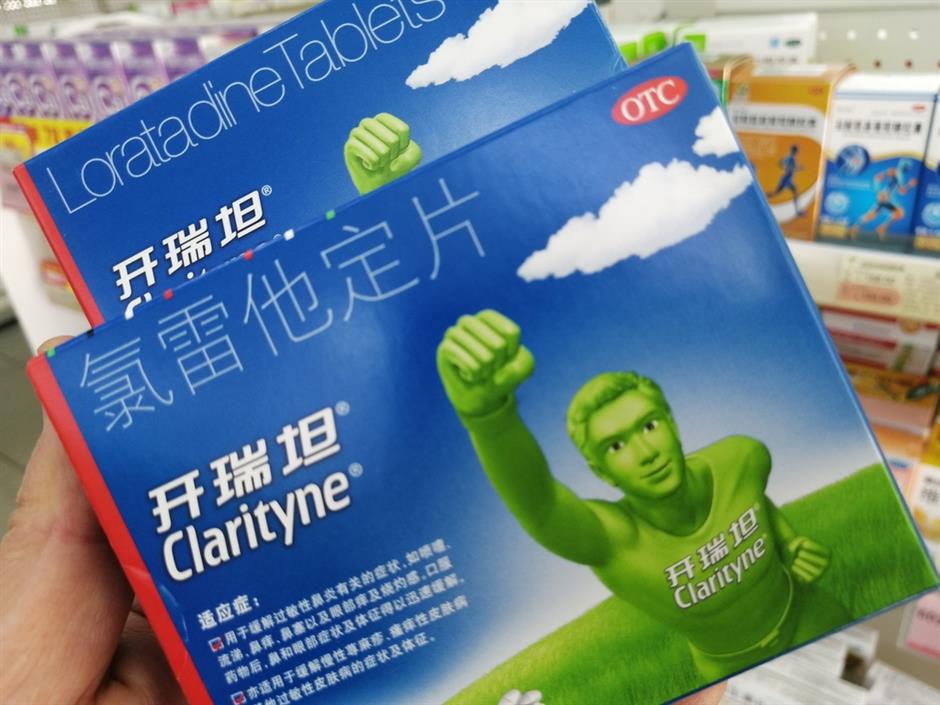
Platform data indicate that antihistamines, including loratadine and cetirizine products, dominate best-selling drug lists, reflecting their role as first-line, off-the-shelf treatments during peak allergy periods.
Brand preferences, however, reveal a more nuanced picture. Global brands like Bayer's Clarityne and Zyrtec continue to see strong demand, even as domestic brands, such as Renhe and Xisimin, gain traction among price-sensitive consumers.
"During peak allergy weeks, loratadine is one of the fastest-moving on our shelves," said pharmacist Gu Xiaoting at a chain drugstore on the downtown Nanjing Road W. "Many customers come in asking for it by name, while others are open to switching to cheaper domestic alternatives."

In China, an estimated 40 percent of the population experiences some form of allergic symptoms, with patient numbers exceeding 400 million. Factors such as air quality, lifestyle changes and increasingly diverse allergens, from pollen to dust mites, are driving sustained demand for antihistamines.
The market is expanding accordingly. China's anti-allergy drug market reached about 21.8 billion yuan (US$3 billion) in 2023, growing at a compound annual rate of 9.2 percent from 2019 to 2023, well above the global average.
Yet while demand continues to expand, pricing is moving in the opposite direction.
On March 1, China officially implemented its 11th round of national centralized drug procurement, covering 55 medicines and with an average price cut of 75 percent. Anti-allergy drugs were included, with products such as desloratadine formulations entering hospital channels at sharply reduced prices.
The result is a market increasingly split in two. In hospitals, generics are pushed to lower prices under state procurement. Outside the system, particularly on e-commerce and instant retail platforms, demand for medicines remains driven by brand recognition, convenience and perceived quality.
"Clinically, generics and originator drugs are largely equivalent," said Li Guochun, a general practitioner at a community hospital in Minhang District. "But in practice, some patients still ask for specific brands, even when lower-cost options are available."
Beyond the divergence between hospital pricing and retail demand, the impact is also being felt further up the supply chain.
Loratadine, first introduced in 1988, has long lost patent protection, with production technology widely standardized. Today, a range of manufacturers – from domestic players such as Fangyuan Pharmaceutical in Jiangsu Province and Salubris Pharmaceuticals in Guangdong Province to multinational firms including Mylan and Merck – compete in both active pharmaceutical ingredients and finished formulations.
For manufacturers, the pressure is increasingly visible.
"In centralized procurement, price cuts can be very steep," said a manager at a domestic pharmaceutical company involved in antihistamine production. "If you rely only on standard tablets, margins are very limited."
Companies with integrated capabilities, producing both active ingredients and finished drugs, are generally better positioned to manage costs and remain competitive under procurement pricing.
Some companies are shifting their focus.
In February, Henan-based Taifeng Biotech's application for a generic loratadine syrup was accepted by China's drug regulator, adding to a growing pipeline of alternative formulations. Syrups, oral suspensions and orally disintegrating tablets are increasingly targeted at children and elderly patients, where ease of use can influence purchasing decisions.
At a retail pharmacy on Baoming Road, store manager Feng Qitian said demand for liquid formulations has risen during allergy season.
"Parents often prefer syrups because they are easier for children to take," she said. "They are also less sensitive to price compared with tablets."
At the same time, distribution channels are also evolving.
Allergy symptoms often appear suddenly, leaving people caught without any remedies at hand. Dingdang Health data show that more than 30 percent of allergy-related orders are placed at night.
With delivery times shortened to under 30 minutes, instant retail platforms are becoming an increasingly important channel for over-the-counter drugs.
As a result, even a decades-old drug like loratadine is being reshaped by the combined forces of policy, consumer behavior and distribution.
Editor: Liu Qi
In Case You Missed It...

 Sep 24, 2026
![[Try This] Shanghai Bakery Pairs Stinky Tofu With Pork in a Mooncake](https://obj.shine.cn/files/2026/09/24/9cc9893c-9114-4b61-bbfa-e3b83a3c9f5e_0.png)