Shanghai Pushes Biotechnology Beyond the Lab
At Shanghai's Zhangjiang Pharma Valley, the challenge is no longer discovering a new drug but turning scientific breakthroughs into successful businesses.
Home to more than 4,000 biotech innovation entities and over 70 listed companies, one of China's densest life-science clusters is being tested on whether discoveries can move quickly through clinical trials, manufacturing, hospitals, reimbursement and global partnerships.
"Global firsts, China firsts and first clinical use cases are continuing to emerge here," said Liu Gang, deputy general manager of Shanghai Pudong Life Sciences Industry Development Co. "The international influence and global contribution of innovative drugs are rising quickly."
Zhangjiang has recorded 33 Class 1 innovative drug approvals and 54 innovative medical device approvals, Liu said. This year alone, 18 innovative medical devices from the area have been approved, already more than twice last year's total.
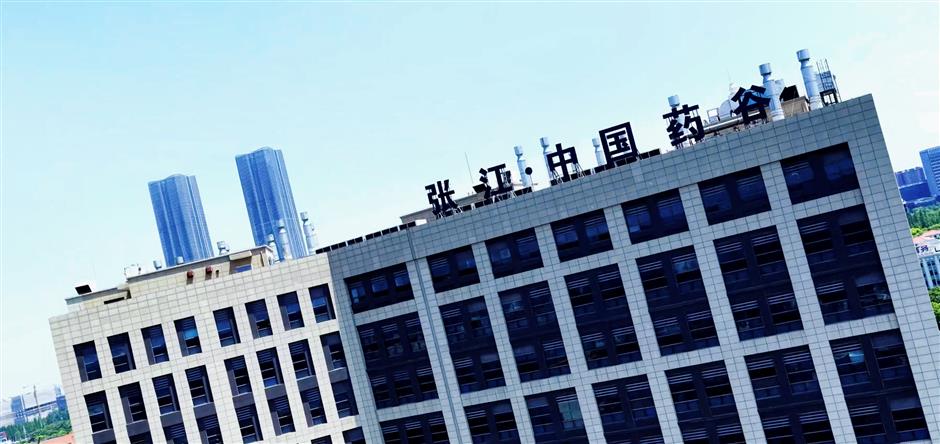
The figures reflect a broader shift in Shanghai. The city's biotech industry crossed 1 trillion yuan (US$140 billion) in scale in 2025. Its companies completed 48 overseas licensing deals that year, up 55 percent, with disclosed value reaching US$33.76 billion. The next question is more practical: Whether China can turn scientific work into products that hospitals use, patients can access, and global buyers will pay for.
The model is built on proximity.
Biotech is often described as a science race. In practice, it is also a coordination race. A company needs labs, animal testing, clinical investigators, contract manufacturers, regulatory advice, hospital access and capital – often before it has revenue.
Zhangjiang claims many of those pieces are within an industrial radius.
Hua Medicine, the Zhangjiang-based company, spent 10 years developing Dorzagliatin, a first-in-class diabetes drug sold as Huatangning. Approved in China in 2022, the drug later entered the national reimbursement list and had reached more than 500,000 patients by the end of 2025 through hospitals, community health centers, pharmacies and online channels. Sales since launch were nearly 850 million yuan.
"Many people say Hua Medicine spent 10 years making just one pill," said Zhang Yi, the company's executive director and chief medical officer. "But this pill is a global first."
Zhang said the company was trying to do more than lower blood sugar. Dorzagliatin targets glucokinase, a key glucose sensor in the body, and is designed to help restore glucose homeostasis in patients with Type 2 diabetes.
Hua Medicine did not build everything itself. In its early years, it used research, drug-screening, safety-evaluation, clinical, and professional-service resources in Zhangjiang. Later, under Shanghai's pilot system for marketing authorization holders, it worked with Desano on contract manufacturing, reducing the need to build its own production line.
The case shows what Zhangjiang wants to sell: not cheap space, but a shorter path from scientific idea to patient use.
The same test applies to medical devices.
If Hua Medicine shows how a drug can go from research to reimbursement, MicroPort MedBot challenges Chinese high-end equipment: Can approval become routine use? The company developed its laparoscopic surgical robot in 2014 and now has nine approved products, eight of them surgical robots.
Its Toumai robot had received more than 300 cumulative orders globally and installed more than 200 units by the first half of 2026.
"Before, many of our products followed foreign products," said Li Shuxiang, vice president of MicroPort MedBot. "Now we are moving from following to leading."
That shift is clearest in remote surgery. Toumai claims the world's first CE certification for remote robotic surgery, with regulatory approvals in over 50 countries and regions.
For MicroPort, the point is not only to sell robots but also to change how surgical expertise travels. In the past, top surgeons often had to fly to smaller cities to perform complex operations. Remote surgery offers a different model: The doctor stays where the expertise is, while the robot extends that expertise elsewhere.
Speed is also the promise behind AI drug discovery.
For Insilico Medicine, the value of AI is not that it replaces drug developers but that it changes where they start. Traditional computer-aided drug design often begins with a library of existing molecular structures. Generative AI, by contrast, can learn how molecules interact with a protein target and generate new structures from scratch.
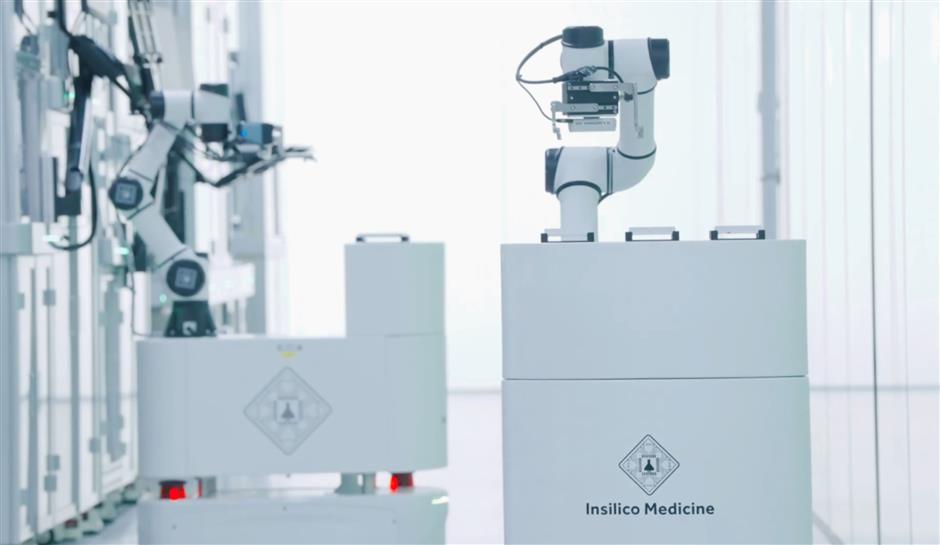
Wang Jue, global head of business development at Insilico Medicine, said: "The molecule grows out of nothing," describing a logic transformation.
"Generative AI can design a target pocket structure from molecular and protein data."
The bigger question is whether multinational drugmakers will pay.
Insilico Medicine has formed partnerships with Servier, Eli Lilly and SK Biopharmaceuticals, resulting in a deal valued at nearly US$6.5 billion.
Wang said huge pharmaceutical companies no longer question if AI can improve medication discovery. "They are asking how to embrace it systematically," she said.
But she added that AI alone is not the product. In licensing talks, buyers still judge an asset by its data, differentiation and clinical promise – not simply by whether it was designed by an algorithm.
That makes AI drug discovery a useful test for Zhangjiang's broader model. Platforms can speed up the early stage. But the market still wants proof: clinical data, regulatory progress and assets that can compete globally.
Not every part of the system looks like a new drug or a surgical robot or an AI-designed molecule. Some of it sits deeper in the supply chain.
The claims are ambitious and will need clinical validation. However, they demonstrate Chinese biotech's focus on innovative medicines and production technologies.
That includes OPM Biosciences. The Shanghai-listed company offers cell-culture media and CRDMO services. Culture-media products are used in over 350 pilot-process drug-development pipelines, and the company has supplied CDMO services for 300 biologic drug projects.
Duan Jifeng, executive director of OPM, described culture media in simple terms. "It is the food for cells," he said.
That "food" affects yield, quality and cost for biologic pharmaceuticals, vaccines, cell treatments and gene therapies. To transition from cell-culture products and CDMO to CRDMO, OPM established a 1-billion-yuan biomanufacturing fund in 2025 and restructured with preclinical CRO PharmaLegacy in 2026.
However, localizing the supply chain is not the only bet. The goal is to accelerate early research, clinical trials, hospital adoption and patient access.
"These products need a market after they are launched," said Zhu Rong, deputy director of biomedicine at Shanghai Science and Technology Commission.
"The industry cannot entertain itself. Patients should benefit."
Editor: Liu Qi
In Case You Missed It...
 Jul 26, 2026