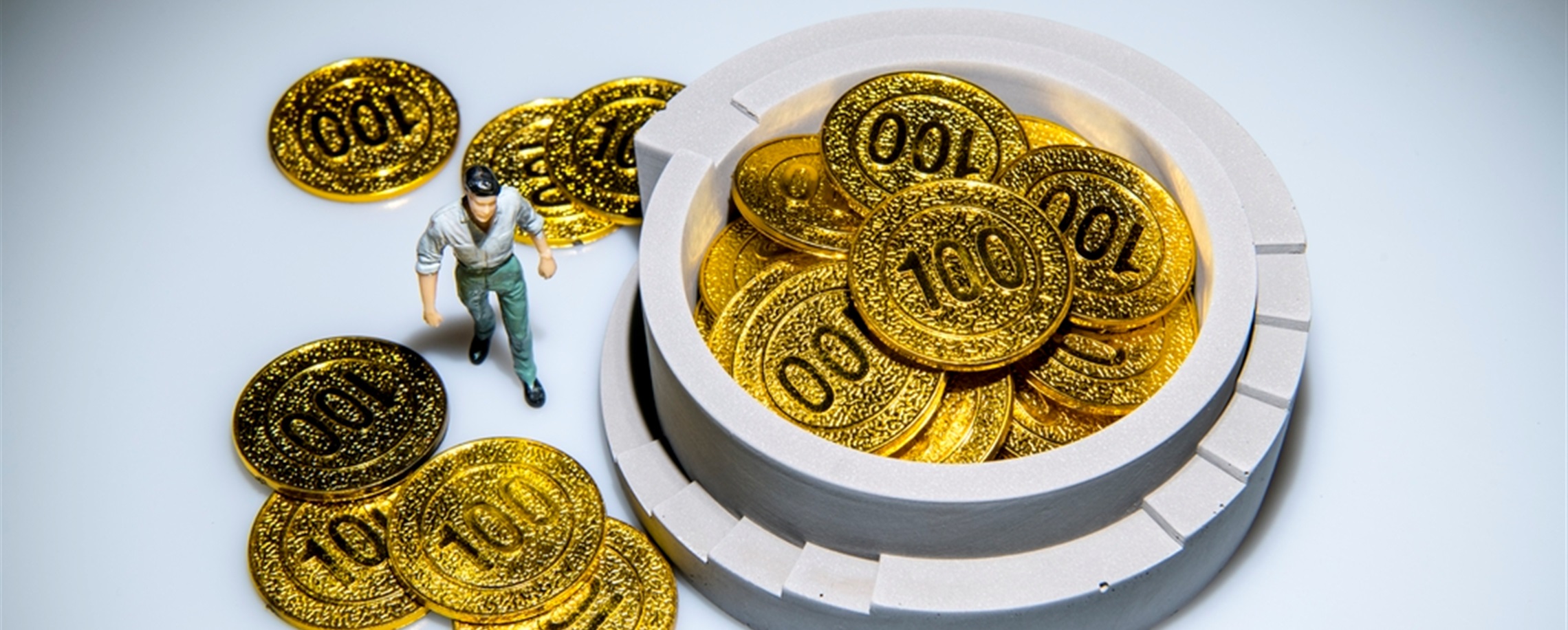
Ice Cups: Frozen Water as Hot Engine for Summer Consumption
A cup of ice used to be something Chinese consumers expected for free.
This summer, many are paying for it – gladly.
As temperatures begin to climb, convenience stores in major Chinese cities are expanding freezer space for one of the season's fastest-growing products: plastic cups filled with ice. At Lawson and 7-Eleven outlets, the cups are being sold alongside bottled tea, instant coffee and cold drinks, turning a once-free add-on into a summer staple.
"People buy them to make iced Americanos or mix fruit drinks themselves," said a cashier, surnamed Zhao, at one of the stores. "Young customers especially. Sales have been really strong these days."
The product itself looks almost absurdly simple: a plastic cup filled with ice cubes, usually selling for between 3 and 10 yuan (US$0.4-1.4). Yet what was once dismissed online as "frozen water in a cup" is now generating billions of yuan in sales.
Industry reports estimate China's ice-cup market could reach 63 billion yuan (US$9.3 billion) by this year, after recording annual growth rates above 300 percent for two straight years since 2023. A white paper on China's urban consumer behaviors in 2025 revealed that consumers in first-tier cities have consumed an average of 48 ice cups per person per year.
Instant retail platforms, convenience store chains and beverage companies are all racing to grab a share of the boom.
For many consumers, the attraction is not the ice itself, but the convenience wrapped around it.
Instead of waiting in line at a coffee shop, office workers can pour instant coffee over a cup of ice and make a quick iced Americano at their desks. Others mix the ice with juice, Yakult, sparkling water or even whiskey. On Chinese social media platforms, thousands of videos now teach viewers how to create "convenience store cocktails" or café-style drinks using ice cups costing just a few yuan.
"It used to feel unnecessary," consumer Jiang Jingxuan said, after buying two ice cups and several bottled drinks. "Now I think spending a few extra yuan to make life feel a little better is worth it."

That shift in mindset has attracted some of China's biggest beverage companies.
Nongfu Spring moved aggressively into the category after first applying for ice cup-related patents in 2023. By the following summer in 2024, its branded ice cups were appearing in Lawson and 7-Eleven stores across major Chinese cities, priced at 3.5 to 5 yuan for a 160-gram cup.
The company soon expanded beyond plain ice. In some channels, customers buying Nongfu juice or vitamin drinks could add an ice cup for just one extra yuan, a strategy that helped boost bundled sales. At Sam's Club, Nongfu's 2-kilogram bags of edible ice (22.8 yuan) sparked online debate over whether consumers were overpaying for frozen water, yet still sold briskly.
According to documents released last October by the government of Jiande City, the company's key water-source and production base in neighboring Zhejiang Province, Nongfu Spring planned to invest more than 28 million yuan to expand edible ice production capacity at one of its facilities, which can produce 7,000 tons of edible ice every year, estimated to bring annual sales of about 100 million yuan.
The business, however, is more complicated than it appears.
Commercial edible ice is not simply frozen tap water. The water must be disinfected and sterilized to ensure purity and remove odor, then frozen slowly in food-grade flowing-water systems. Producers typically keep it at minus 8 to minus 10 degrees Celsius for 48 to 72 hours, creating denser ice that melts more slowly than homemade cubes.
Packaging is the bigger cost burden. Ice cups must survive freezing, cold-chain transport and, in some cases, higher temperatures without cracking or deforming. Ordinary PET plastic is often not enough, so manufacturers use tougher materials such as PCTG and PETG, many of which rely on imported supply and are relatively expensive.
Cold-chain logistics add another major expense.
So even with booming demand, many manufacturers are barely making money.

Professional ice suppliers such as Bilita and Ice Extreme have become key behind-the-scenes players for convenience stores and supermarkets. Bilita's ice-cup shipments tripled in the first half of 2025 from a year earlier, with daily production reaching 200 tons of bulk ice.
But industry participants say profits remain razor thin after packaging, transportation and electricity costs are deducted.
A 160-gram ice cup sold in stores usually leaves the factory at about 1 yuan. The ice itself accounts for roughly 35 percent of that cost. The rest is packaging.
"The packaging cost of one ice cup is about 0.7 yuan," said Si Dajin of Jiangsu Bingmashi Food Co – about 0.4 yuan for the cup and 0.3 yuan for the sealing film and outer carton.
The sealed plastic cup, lid film and carton together cost about 0.65 yuan, or as much as 65 percent of the ex-factory price.
After ice, packaging, cold chain logistics, electricity, labor and equipment depreciation, manufacturers may be left with only 0.1 yuan in profit, or even less, on each cup.
The real winners may not be the ice manufacturers themselves, but the retailers selling them.
Convenience stores typically buy ice cups for around 1.5 yuan each and sell them for 3 to 6 yuan. More importantly, the ice often pulls additional products into consumers' baskets – juice, energy drinks, tea, alcohol and coffee.
Milk tea chain stores are increasingly using ice cups as traffic-generating tools rather than profit drivers. Mixue and Goodme both launched 1-yuan ice cups last summer. Internal data from Goodme showed roughly 35 percent of customers buying the low-cost ice cups also purchased additional products, pushing average spending above 20 yuan.
Delivery platforms are benefiting as well. Ele.me reported ice-cup orders jumped 267 percent year-over-year in June 2025, while combinations such as "ice plus alcohol" surged even faster.
It looks like frozen water has become a hot engine for summer consumption.
The next phase, however, may be less about speed than discipline. A new national standard for edible ice has taken effect since last October, replacing an older industry guideline and setting tougher requirements on raw materials, microbial limits and production controls. Pathogens will be subject to a zero-tolerance rule.
That could raise compliance costs and push weaker producers out, while favoring companies with cleaner production systems, stronger cold chains and greater scale.

Editor: Liu Qi
In Case You Missed It...

 Sep 18, 2026