Out of Sync With Fashion Trends, Guess to Shutter China Retail Operations
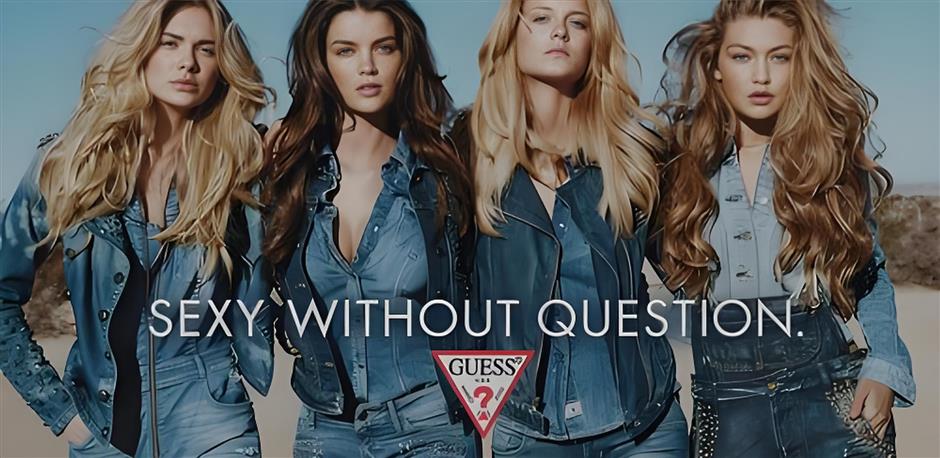
The decision by US clothing and accessories retailer Guess to exit the China market has stirred some unexpected nostalgia among Chinese consumers who still have faded denim jackets and other apparel from the company. Some lamented that "another symbol of youth has disappeared."
It's not the first time Los Angeles-based Guess has retreated from the China market, but this is the first complete departure from physical stores and online retailing, both set to close at the end of this month.
After nearly two decades in the Chinese mainland market, the once-ubiquitous American fashion label known for sensual advertising and California retro style has decided sales just don't warrant its continued presence.
But there are broader questions: Is this just the demise of one brand or a sign that American affordable luxury is losing relevance in China? Can foreign clothing brands withstand the tide of slower consumer spending amid stiff competition from domestic brands?
Guess's China story began with optimism. Its watches entered the market in 1999, followed by apparel, accessories and fragrances. In 2007, the company opened its first flagship store in Shanghai, formally positioning itself as a full lifestyle brand.
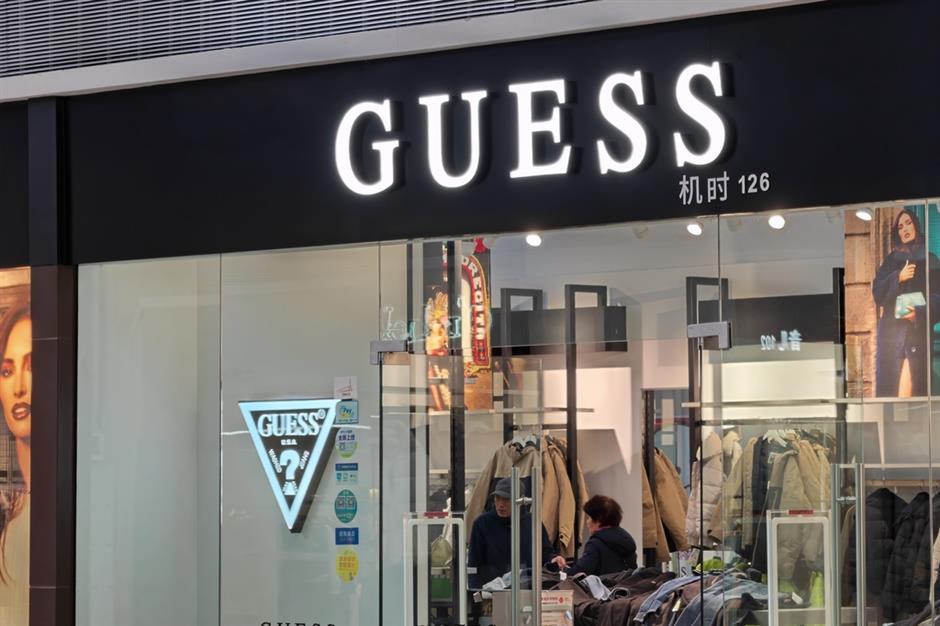
At the time, its bold imagery and distinctly American style resonated strongly with young urban consumers. Wearing Guess once carried a certain social cachet, a symbol of Western fashion aspiration for China's rising middle class.
By around 2019, the brand was operating roughly 200 stores nationwide, becoming a fashion touchstone for many consumers born in the 1970s and 80s.
Yet the turning point had already begun. In recent years, Guess gradually retreated from prime shopping districts, replacing full-price stores with outlet locations as brand influence weakened.
The decision reflects financial pressures. Company filings show Asia has weighed on performance for multiple quarters, with regional revenue between 3 percent and 20 percent across reporting periods.
Widening disconnect
Last year revealed a widening disconnect between global growth and Asian weakness. For the company's fiscal third quarter ended November 1, Guess revenue in Asia dropped 8 percent and its operating margin came in at a negative 4.5 percent, while worldwide sales gained 7 percent. The company has also noted persistent operational challenges in China in an Asian region that accounted for just 7.6 percent of global.
Guess's struggles in China cannot be traced to a single misstep. Rather, they reflect how quickly the country's fashion landscape has changed and how slow the brand was to adapt.
At the product level, Guess's signature style began to feel increasingly out of sync with changing consumer tastes, no longer embodying a vision of Western glamor.
Chinese shoppers today are moving in two divergent directions. One group is seeking premium labels such as Arc'teryx and Salomon; the other is after highly competitive value brands like Uniqlo and domestic fast-fashion players. Guess found itself caught in between, neither aspirational enough to command premium positioning nor affordable enough to compete on price.
Design language became another friction point. The body-conscious silhouettes and overtly sexy imagery that once defined the brand contrast sharply with a broader shift toward comfort, functionality and understated dressing. Denim, long a cornerstone of Guess identity, has also lost its allure among many younger consumers.
Operationally, the company's retail strategy amplified the pressure. Guess relied heavily on directly operated stores located in prime shopping districts, a model that worked during years of rapid mall expansion but became increasingly costly as foot traffic in luxury shopping centers declined.
High rents and falling store sales squeezed margins, turning physical retail from a branding asset into a financial burden. Online channels failed to compensate for the slowdown. Although the brand maintained a presence on major e-commerce platforms, it struggled to build momentum in livestream commerce and online platforms like Douyin and RedNote where fashion popularity is now built.
At the same time, the brand gradually lost cultural visibility. After nearly two decades in China, Guess never fully localized its story or marketing approach. While competitors built communities or sharply defined identities tailored to Chinese consumers, Guess continued to rely on a generalized "American lifestyle" narrative that resonated less with a generation seeking individuality and emotional connection. On social platforms that increasingly shape fashion discourse, the brand's voice grew faint.
Broader implications
Guess's difficulties are not unique. Several American affordable luxury brands have faced mounting pressure in China.
Michael Kors parent Capri Holdings reported a sharp profit decline alongside a 43 percent drop in Asian sales. Tapestry, owner of Coach and Kate Spade, also saw earnings contract amid weakening China revenue. Fast-fashion giants including Zara and H&M have optimized store networks, closing smaller locations while consolidating flagship spaces. German lingerie maker Triumph closed its Chinese mainland retailing, and luxury brands Gucci and Prada reduced their physical presence.
Meanwhile, domestic brands are gaining ground. Chinese designers and emerging labels that resonate with consumer trends, are increasingly capturing the 1,000-3,000 yuan (US$145-436) price band once dominated by foreign brands.
The psychological shift may be even more important. Younger consumers today use fashion less to signal social status and more to express personal identity and comfort. The aspirational "dress to impress" ethos embedded in American sexy branding feels out of step with a generation prioritizing self-expression, practicality and emotional resonance.
The store closures tie into a broader global restructuring.
Last August, Guess entered a privatization partnership with brand management firm Authentic Brands Group, which subsequently acquired a 51 percent stake in the brand's intellectual property. Unlike traditional apparel companies, Authentic Brands operates a capital-light model focused on brand licensing rather than direct retail operations. Its portfolio includes more than 50 brands, including Reebok, Champion, Brooks Brothers and Forever 21.
Under this model, Guess could eventually return to China through local partners rather than self-operated stores, a strategy Authentic Brands has used elsewhere after acquiring distressed brands.
The business world is full of comeback stories. But revival requires listening to the market's whispers, not merely echoing a brand's past success.
Editor: Liu Qi
In Case You Missed It...

 Aug 25, 2026



![[SH Transit] How Shanghai's 'Air Express Lines' Speed Up Domestic Connections](https://obj.shine.cn/files/2026/08/25/39f368b4-c3fe-4776-853e-4d14e19ca50a_0.jpg)