Brain-Computer Interfaces Steal the Spotlight at Tech Fair
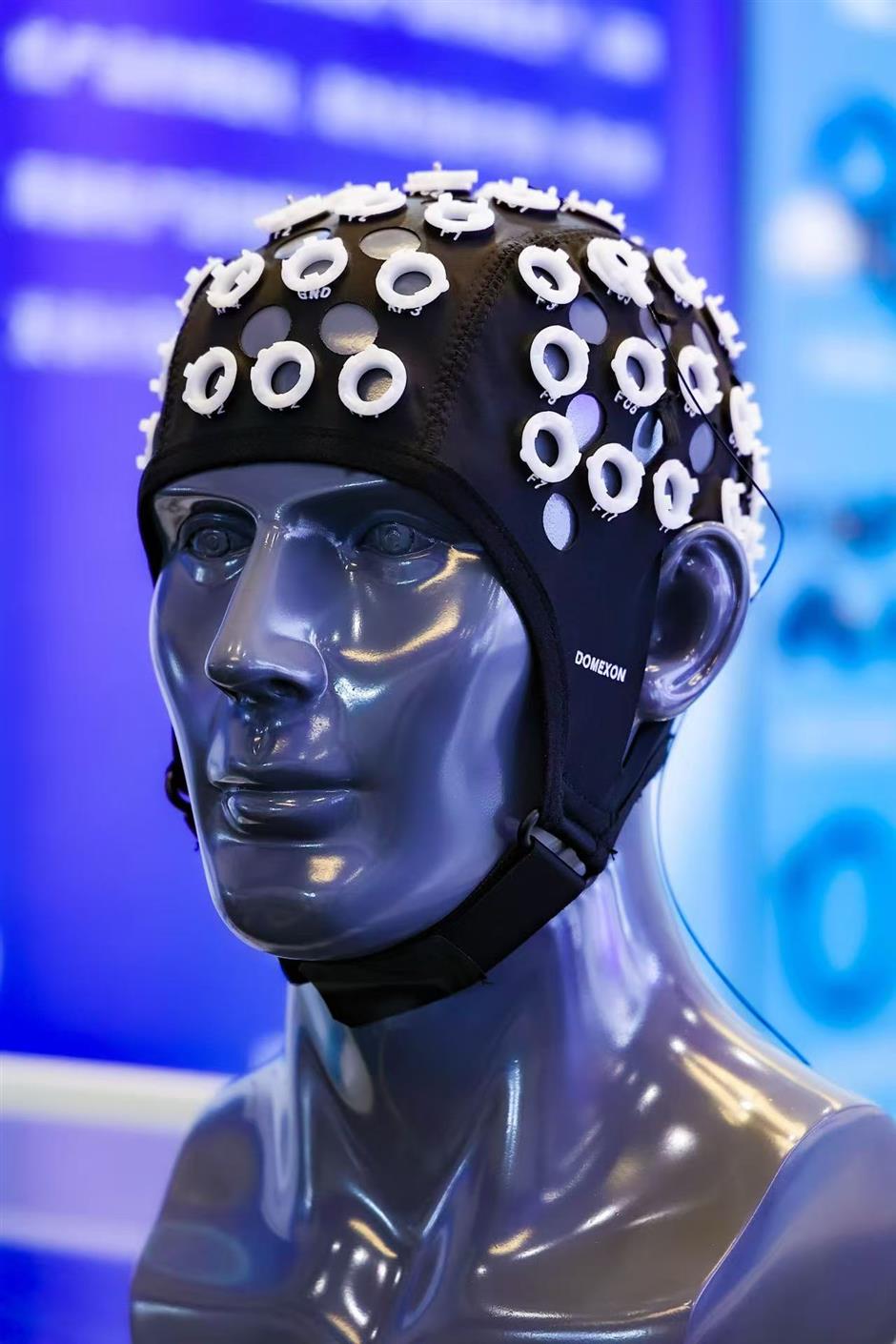
Brain-computer interface (BCI) technology has emerged as a major highlight at this year's 12th China (Shanghai) International Technology Fair.
With over 50 BCI companies invited to participate, the three-day exhibition, which opened yesterday at the Shanghai World Expo Exhibition and Convention Center, is showcasing a diverse range of cutting-edge applications, spanning from non-invasive to invasive technologies, and from medical rehabilitation to consumer entertainment.
At the Zhangjiang exhibition area, an implantable BCI hand motor function compensation system developed by Neuracle Technology Shanghai offers a beacon of hope for paralyzed patients.
"This product is designed for patients aged 18 to 60 who suffer from quadriplegia and are unable to grasp objects due to cervical spinal cord injuries," said Shi Huihuang, marketing manager of Neuracle.
The core innovation of the device lies in its epidural implantation technology. By suturing the electrode suite outside the dura mater, the system ensures a high signal-to-noise ratio for data collection while successfully avoiding damage to brain tissue. Furthermore, its wireless power supply and communication design allow for long-term use following a single implantation.
The device has already been used in 36 clinical surgeries across China, allowing patients to operate the system independently at home just one month after the procedure.
"Data shows that the improvement rate of patients' grasping function reached 100 percent. Some patients have even shown signs of neuroplasticity, recovering additional neurological functions," Shi pointed out.
Notably, Neuracle has recently completed its IPO tutoring and is poised to become the first BCI-related listed company.
Meanwhile, Beijing-based Neural Galaxy Science introduced a BCI product featuring a figure-eight coil stimulator. This device generates pulsed magnetic lines that precisely target brain gray matter at a depth of 2cm to 3cm.
Its treatment logic is to pinpoint the location using MRI (magnetic resonance imaging), leverage individualized brain parcellation technology to lock onto specific brain circuit targets that correspond to the illness, and finally apply targeted physical stimulation.
"Our core services cover two major demographics, the elderly and children. For the elderly, we address Parkinson's disease, Alzheimer's disease, post-stroke hemiplegic aphasia, and cognitive decline. For children, we focus on developmental delays such as autism," said Wang Qianghua, chief operating officer of the company. "Currently the effective treatment rate for Parkinson's disease is over 60 percent, and for Alzheimer's disease, it is between 60 percent and 70 percent."
The company is actively partnering with Xuanwu Hospital in Beijing to conduct large-sample clinical validations of this data.
Taking a more entertainment-focused approach, Machine Robot Tech Group from Beijing showcased an experimental product that allows users to order coffee using just their thoughts.
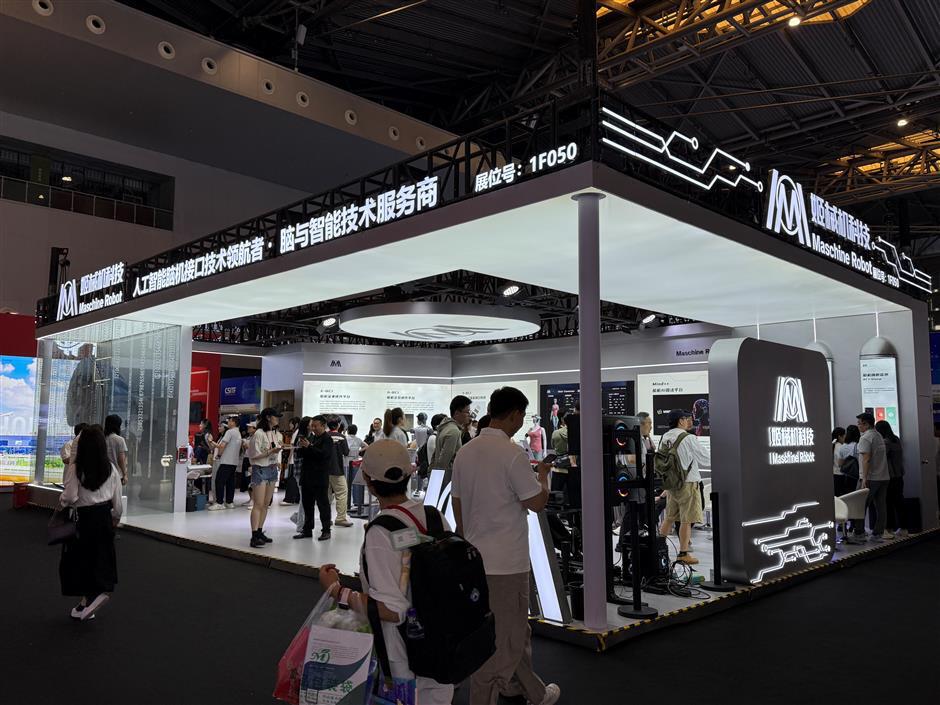
By wearing the X-BCI headset developed by the company and focusing on their beverage choice according to on-screen prompts, the system can interpret the user's intent to order an Americano or a latte, including whether they prefer a hot or cold drink.
"The X-BCI platform has already been implemented in various practical scenarios. For example, wearing the headset while driving can monitor whether the driver is experiencing fatigue," a company staff member explained. "Another application involves displaying the user's nighttime dreams as images, which can then be used to analyze their subconscious state."
BCI technology has become a national strategic emerging industry in China. In March, it was proposed in the State Council Government Work Report that "brain-computer interfaces" be listed as a key future industry for cultivation.
The government has set objectives to establish a preliminary advanced technology system by 2027, and to propel the country's comprehensive strength in the BCI sector to the forefront of the world by 2030.
Editor: Liu Qi