[ChinaMaxxing] What Is Mid-Autumn Festival?
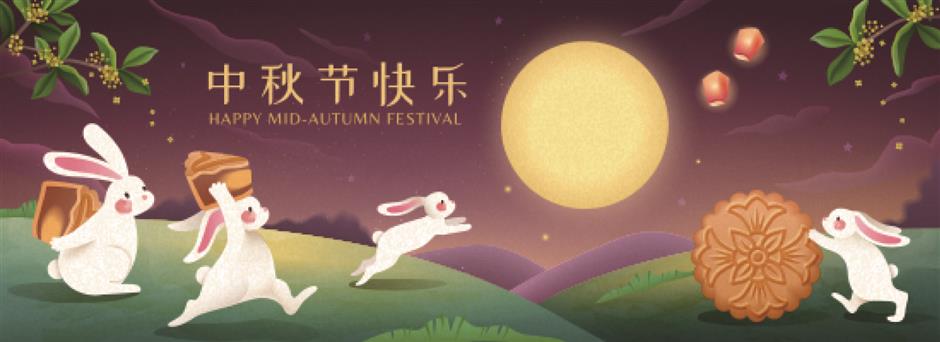
Mid-Autumn Festival (中秋节, Zhōngqiū Jié) falls on the 15th day of the eighth lunar month, when the moon is traditionally considered at its fullest and brightest. The name in English is a pretty faithful translation: zhōng (中) is middle, qiū (秋) is autumn, and jié (节) is festival.
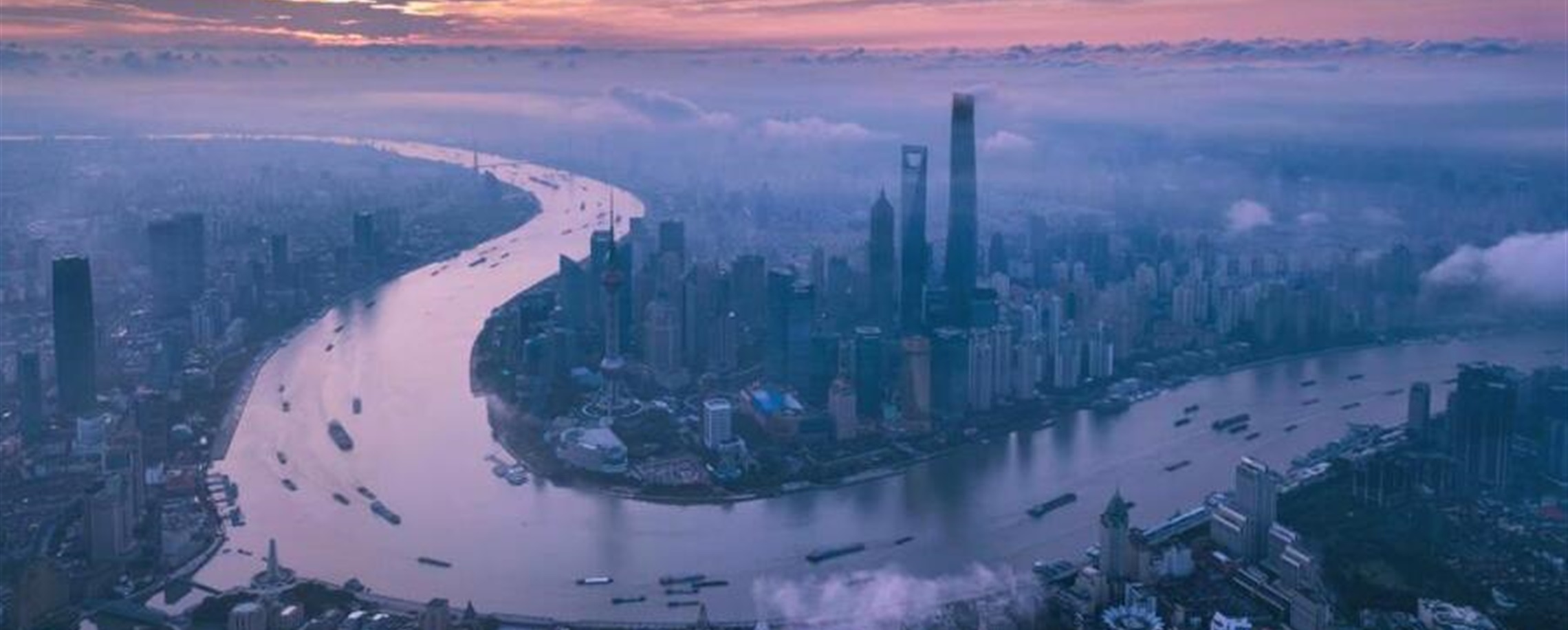
This year, it falls on Friday, September 25, just two days after the Autumn Equinox. Shanghai at this time of year starts to get autumnal: cooler evenings, the smell of osmanthus flowers in the air, mooncake boxes accumulating in offices across the city.
Things People Do to Mark the Holiday
Admiring the moon: Shǎng yuè (赏月) is usually translated as "moon viewing," though shǎng carries more of a sense of appreciating or admiring. Families traditionally gather on the evening of the festival to eat, talk, and look at the moon, a fairly natural activity in a literary tradition that has spent centuries writing about it. Li Bai alone left behind dozens of poems involving the moon.
Carrying lanterns: Lanterns are particularly associated with children and remain a familiar sight in parks and residential compounds during the festival. Traditional paper lanterns are still around, although battery-powered animals, cartoon characters, and other less classifiable glowing objects now share the job.
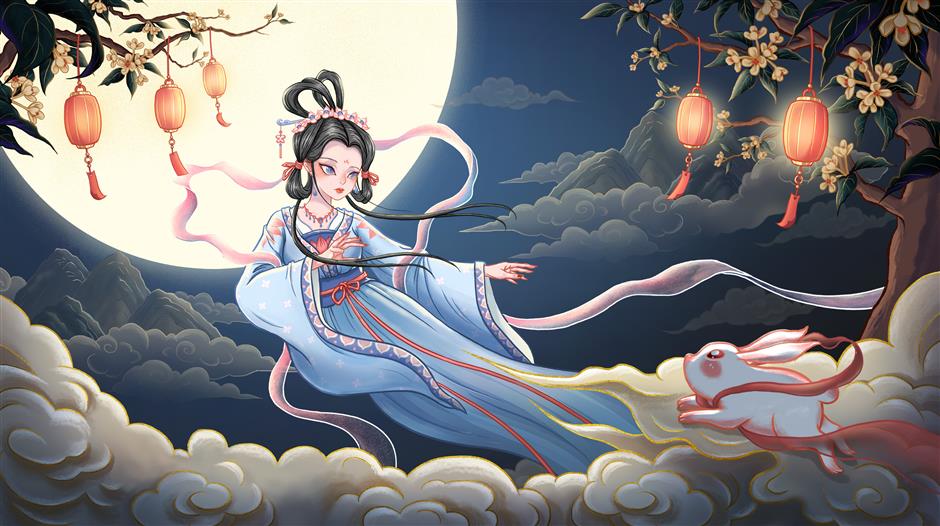
Telling the story of Chang'e: The festival's best-known legend concerns Chang'e (嫦娥), who drank an elixir of immortality and ascended to the moon. Exactly why she drank it depends on which version of the story you hear. On the moon, she is commonly joined in Chinese mythology by the Jade Rabbit, while nearby Wu Gang is condemned to endlessly chop down an osmanthus tree that continually repairs itself. Chang'e later lent her name to China's lunar exploration program.
What's On the Table
Mooncakes: The defining food of the festival is yuè bǐng (月饼), whose round shape echoes the full moon and, by extension, family reunion. What goes inside depends considerably on where you are. Cantonese mooncakes tend toward dense lotus-seed paste and salted egg yolk; Suzhou-style versions have flaky, layered pastry and can be sweet or savory.
In Shanghai, the local favorite is xiānròu yuèbǐng (鲜肉月饼), filled with minced pork and best eaten fresh. Snow-skin mooncakes (冰皮月饼, bīngpí yuèbǐng), meanwhile, are chilled rather than baked and have, over the years, seen increasingly experimental fillings.
Pomelo: Pomelos (柚子, yòuzi) are a classic Mid-Autumn fruit, conveniently coming into season at about the same time as the festival. Their round shape fits the festival's reunion symbolism, while the peel sometimes gets repurposed as a hat for children – a fun tradition that makes considerably more sense once there is an empty pomelo rind sitting on the table.
Taro: Taro has long been eaten at Mid-Autumn, particularly in southern China. There are various explanations for the tradition, but the practical one is straightforward: taro is harvested around this time of year. It can be steamed whole, braised with meat, or worked into sweets and pastries.
Osmanthus wine: With osmanthus flowering around Mid-Autumn, guìhuā jiǔ (桂花酒) is a traditional festival drink in parts of China. The flowers also find their way into cakes, sweet soups and guìhuā gāo (桂花糕), or osmanthus rice cakes – and, these days, approximately every other seasonal drink on a Shanghai menu.
And, in Shanghai, hairy crabs: Mid-Autumn and hairy crab season overlap enough that crabs frequently make their way onto the reunion table, although the festival falls early this year. The traditional "nine females, 10 males" rule puts female crabs at their best in the ninth lunar month and males in the tenth; September 25 is still in the eighth, so the best are yet to come.
Editor: Xu Qing
In Case You Missed It...

 Oct 22, 2026