Shanghai's Raccoon Dogs Find Urban Coexistence 'Sweet Spot'
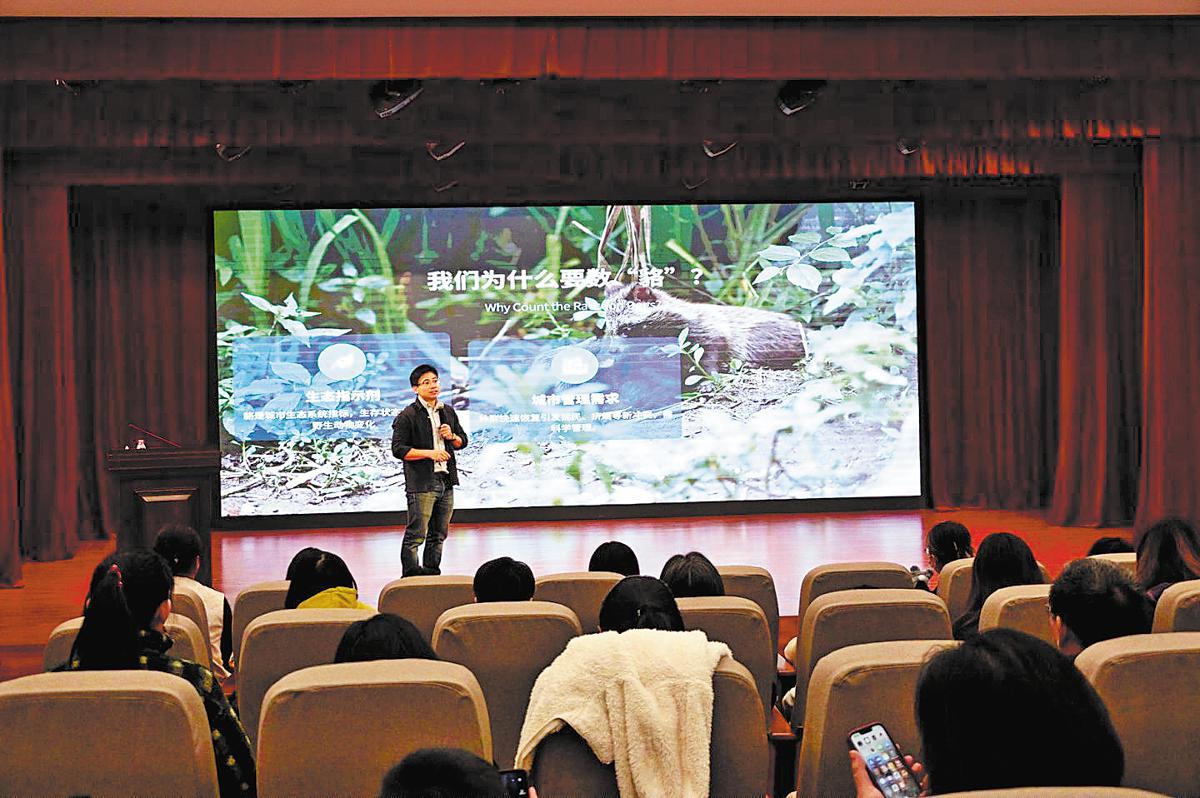
Wang Fang, director of the Institute of Biodiversity Science at Fudan University, announces the research team's findings in the latest annual census on wild raccoon dogs in Shanghai on Nov 30. CHINA DAILY
Editor's note: As protection of the planet's flora, fauna and resources becomes increasingly important, China Daily is publishing a series of stories to illustrate the country's commitment to safeguarding the natural world.
Human-wildlife conflict in Shanghai has dropped significantly as the city's raccoon dog population stabilizes between 3,000 and 5,000 individuals, according to the latest survey data.
While the protected species is expanding into new districts, localized densities in residential areas have fallen to record lows, driven by improved waste management and public education, a survey published on Nov 30 by the Shanghai Forestry Station, Fudan University, and the Shan Shui Conservation Center shows.
Despite their "bandit mask" markings, raccoon dogs are not actually raccoons. Instead, they are ancient members of the Canidae family, making them cousins to foxes and wolves. Native to East Asia, they are the only members of the dog family that hibernate during the winter.
Though their numbers have declined in Shanghai, they are still spreading and migrating in the coastal metropolis, with the city's Putuo district recording their presence for the first time last summer, and Chongming Island recording them for the first time a year ago.
"These changes can mainly be attributed to the improvement in the ecological management, including community waste disposal and stray cat feeding over the past three years, and the deepening of public education and outreach," said Wang Fang, director of the Institute of Biodiversity Science at Fudan University.
"Also, the sense of security provided by real survey data has been key in changing the perceptions and attitudes of many in the public. A rising number of residents are adopting the mindset of coexistence, as the population of the animal is under control and poses no direct threat to humans," he said.
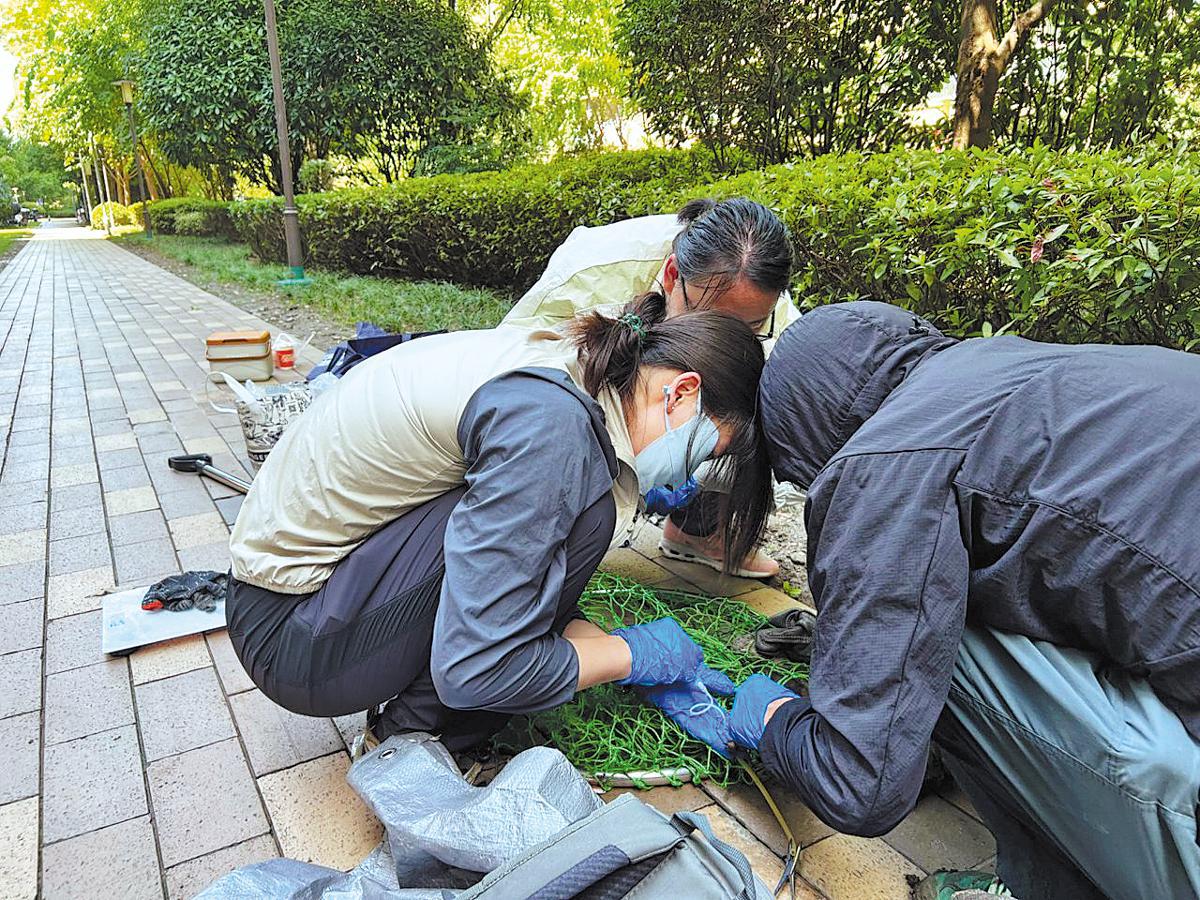
Researchers take blood samples from a raccoon dog on Aug 29, 2024. CHINA DAILY
Raccoon dogs are generally not aggressive toward humans and do not view people as prey. In an urban environment, they are shy, nocturnal and highly conflict-averse.
Since 2022, the Shanghai Forestry Station, the Fudan institute, and the Shan Shui Conservation Center, a Beijing-based non-profit environmental organization, have jointly conducted annual surveys on raccoon dogs throughout the city.
The results of the latest survey included public concerns such as whether raccoon dogs getting sick would have an impact on humans living in the same community.
Shanghai's urban environment has abundant habitats and food resources, and with less competitive pressure from other species, this attracts some wild animals into the city.
According to the results of the surveys, Shanghai's thousands of raccoon dogs are distributed in more than 300 areas across the city, primarily in residential compounds and urban green spaces.
Based on results collected from online questionnaires and citizen hotline complaints last summer, 112 residential communities across the city reported raccoon dog activity between January 2024 and April 2025.
Over 500 citizen volunteers and professionals conducted multiple comprehensive surveys in those communities spanning nine districts. They collected transect survey data covering more than 560 kilometers and gathered 440 questionnaires regarding residents' attitudes toward raccoon dogs.
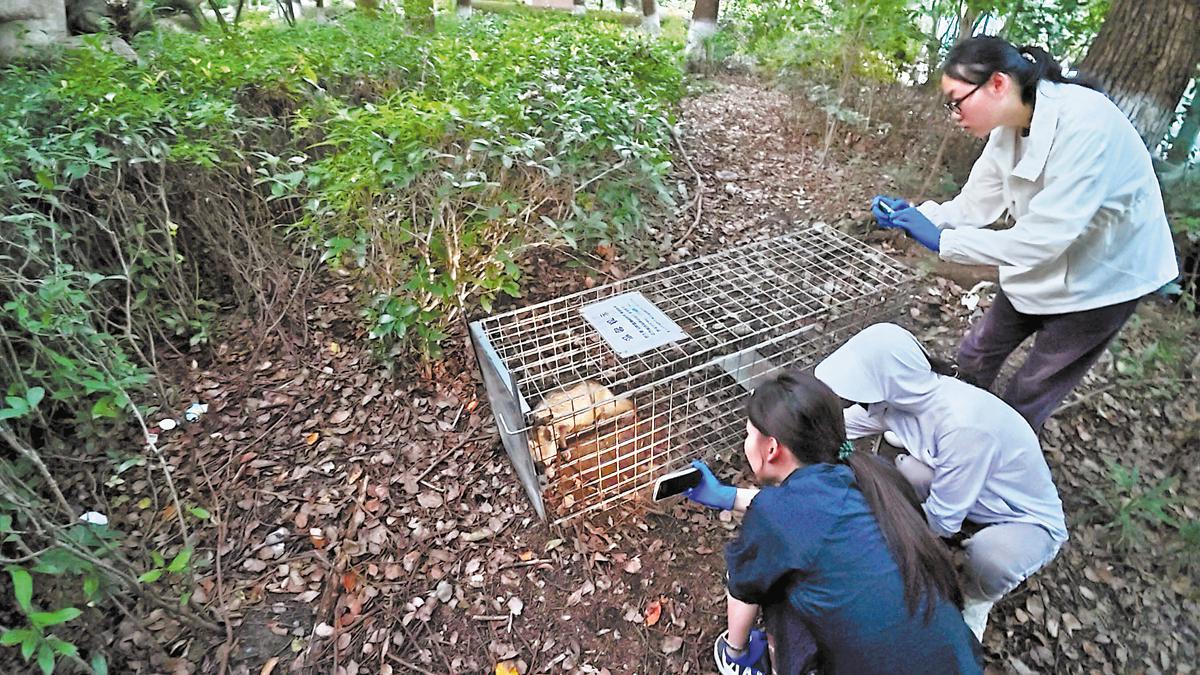
Raccoon dogs are found during the team's field investigations. CHINA DAILY
Their results showed that raccoon dogs were either sighted during field investigations or reported by residents in 102 of the communities surveyed, with the distribution density at an average of 0.41 raccoon dogs per hectare. This represented the lowest levels recorded in the past four years, indicating that the issue of high raccoon dog densities in residential community environments from four to five years ago has improved.
In comparison, the density of wild raccoon dogs in areas like the Qinling Mountains in Shaanxi province, the Taihang Mountains in northern China, and Sichuan province in Southwest China is typically below 0.1 raccoon dogs per hectare. Their density in Shanghai is comparable to that in the wild.
Zhao Xi, a leading member of the research team, said residents are beginning to understand that raccoon dogs are nocturnal and have little overlap with human activity times. "They have very low proactive aggression toward people, therefore many residents have come to accept their presence in the city," Zhao said.
The latest survey indicates a shift toward positive sentiment, with residents' emotional inclination toward raccoon dogs rising to 3.06 on a 5-point scale (where 1 is least favorable and 5 is most favorable). This represents a 25 percent increase since 2022, a trend mirrored by the fact that nearly 80 percent of residents now find the animals tolerable — up from just 50 percent three years ago.
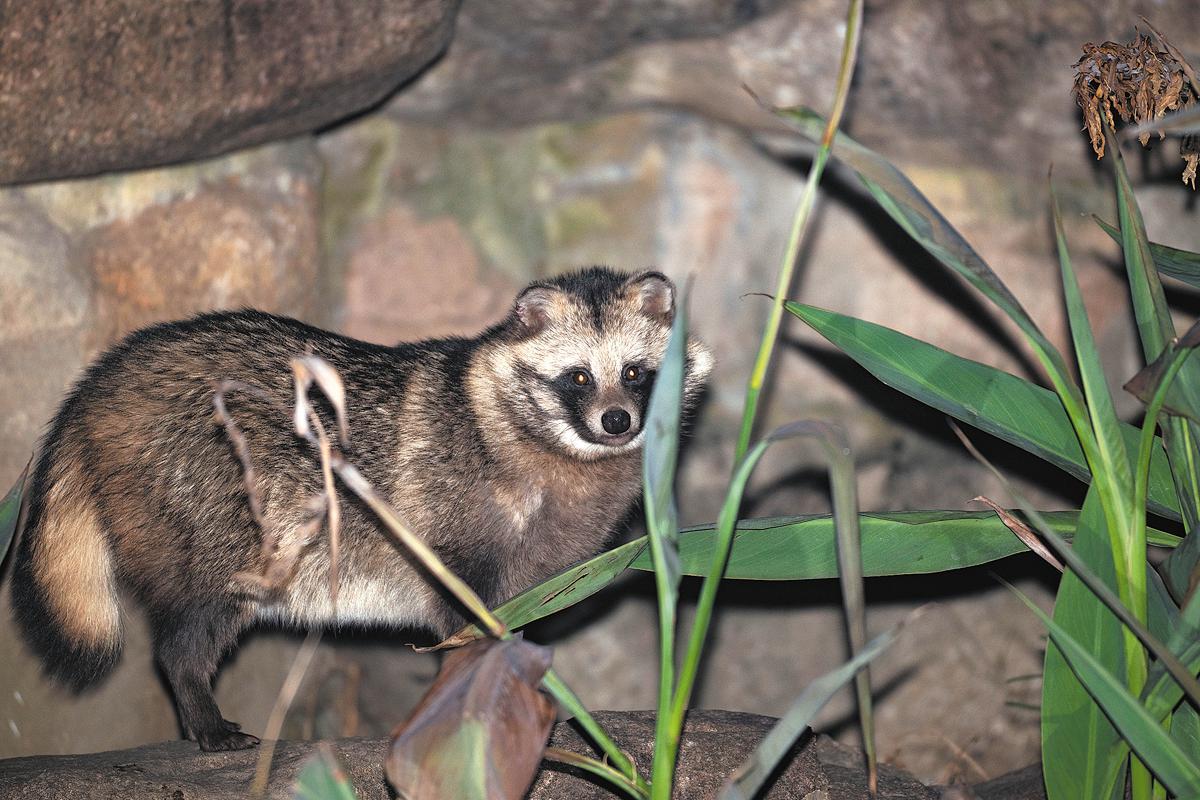
Raccoon dogs are found during the team's field investigations. CHINA DAILY
According to Li Zirong, deputy director of the Shanghai Forestry Station, such results reflected the period between 2020 and 2022, when high population densities led to increased social attention and conflict.
Experts believe that 2023 marked a turning point, with public tolerance beginning to rise due to improved ecological management and extensive public education and awareness campaigns.
Wang said that in previous years, the team had held at least 20 on-site meetings in neighborhoods with a high prevalence of raccoon dogs, involving residents and street managers. As a result, they gradually developed a feasible response plan for communities.
Efforts include distributing brochures in communities, explaining to residents which departments to contact when encountering a large number of wild animals, and what measures to take when encountering wild animals with skin diseases, said Wang.
Experts highlighted that improper kitchen waste management and cat food feeding have been identified as major factors increasing raccoon dog visibility.
The latest survey showed that in residential compounds where cat food is fed to stray cats, the number of raccoon dogs observed was 2.75 times higher than in those where stray cat feeding does not occur. In residential compounds where both issues were poorly managed, the number of raccoon dogs was 3.32 times higher than in those where both issues were well managed.
Data from all four residential compounds continuously surveyed over four years clearly reflected the importance of managing such human behaviors. In an apartment complex in Songjiang district, the raccoon dog density decreased from 5.8 raccoon dogs per hectare in 2022 to 2.22 per hectare last year.
Li Min, a resident at this apartment complex in the district's Sijing town, said she used to complain a lot about raccoon dogs rummaging through the trash around her home, but later she learned that it was because residents were feeding them cat food and were not disposing of garbage properly.
"As long as we don't feed them and keep our distance, they won't cause trouble. We can coexist peacefully," said Li.

Raccoon dogs are found during the team's field investigations. CHINA DAILY
This trend is not unique to Shanghai. Wild animals are increasingly moving into cities across China. Species such as wild boars, leopard cats, civets and otters are now frequently found in urban environments. Experts attribute this shift to the completion of major urban construction projects, which have allowed local ecosystems to recover and become more hospitable to wildlife.
As in Shanghai, there are teams in cities such as Beijing and Nanjing in Jiangsu province, among others, conducting research on the urbanization of wildlife.
"This requires both research and management, which is something that must be done for the civilized management of megacities, regardless of people's perceptions of a particular wild animal, its size, or its level of cuteness," Wang said.
Wang's team is leading a multiyear national initiative involving 10 research groups to study how wild animals like raccoon dogs, squirrels and hedgehogs adapt to city life. A critical component of the project is the development of oral vaccines to prevent the spread of animal-borne diseases. The team plans to launch a pilot program in Shanghai's Songjiang district, where they will distribute these vaccines in the environment for animals to find and consume.
"Through community co-management, government involvement and vaccine development, we aim to clarify the relationship between humans and wildlife. Shanghai's approach in this is scientific and civilized, and quite advanced on an international level," he said.
In Case You Missed It...
 Apr 16, 2026