City Issues the First Prescription of A New Drug for A Rare Joint Condition
Shanghai Sixth People's Hospital has issued the first prescription in Shanghai for an innovative rare disease medication, marking a transformative shift in the treatment approach for the condition – moving from repeated surgical interventions to standardized chronic disease management.
This week, doctors at the hospital's clinic prescribed pimicotinib, the first innovative targeted therapy approved in China for tenosynovial giant cell tumor (TGCT), which is a rare disease.
The drug was officially approved by the National Medical Products Administration in December 2025, and this first prescription in Shanghai marks its official use in treatment, bringing new hope to TGCT patients and changing how this rare condition is treated.
This breakthrough extends far beyond a standard medical intervention for the 67-year-old female patient who received the prescription. Eight years ago, she was diagnosed with a diffuse tenosynovial giant cell tumor. The tumor kept coming back even after several surgeries. The unrelenting pain and restricted joint mobility caused by the condition severely compromised her daily life and overall quality of life.
Thanks to the approval and clinical availability of pimicotinib at Shanghai Sixth People's Hospital, she has become the first patient in Shanghai to benefit from systemic targeted therapy, personally witnessing the end of the long-standing clinical dilemma of "recurrent surgeries with no definitive cure."
"While tenosynovial giant cell tumor is not life-threatening, it can severely erode patients' quality of life," stated Dr Yang Qingcheng, executive deputy director of the orthopedics department and director of the musculoskeletal oncology department at the hospital.
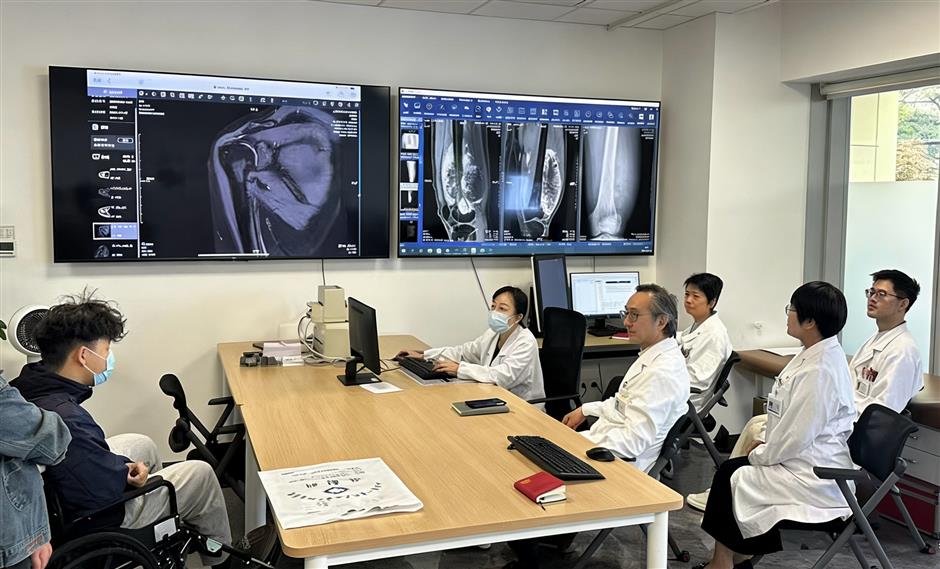
TGCT is a rare, locally aggressive soft tissue tumor that predominantly affects joints, tendon sheaths, and synovial tissues, triggering symptoms such as joint swelling, pain, stiffness, and functional impairment.
Though non-fatal, the condition drastically diminishes patients' daily functioning and quality of life. Traditionally, surgical resection has been the mainstay of treatment, leaving patients with recurrent or unresectable tumors in a desperate situation with no effective pharmacological alternatives.
"The introduction of this innovative targeted drug not only provides a novel therapeutic option for patients with this rare tumor but also completely revolutionizes the paradigm of disease management," Yang said.
In the future, TGCT is expected to change from a tough condition that needs many surgeries into a long-term illness that can be managed with a combination of oral targeted therapy and surgery. This shift will free countless patients from the agony of frequent operations and help them regain a normal daily life.
Dr Yuan Ting from the musculoskeletal oncology department added that the patient's diffuse TGCT is marked by a prolonged clinical course, complex condition, and high postoperative recurrence rate, making it a particularly challenging case in clinical practice.
As an oral targeted agent, pimicotinib acts precisely on key pathogenic targets, effectively curbing tumor progression, alleviating pain, and improving joint function – all of which will substantially elevate patients' quality of life.
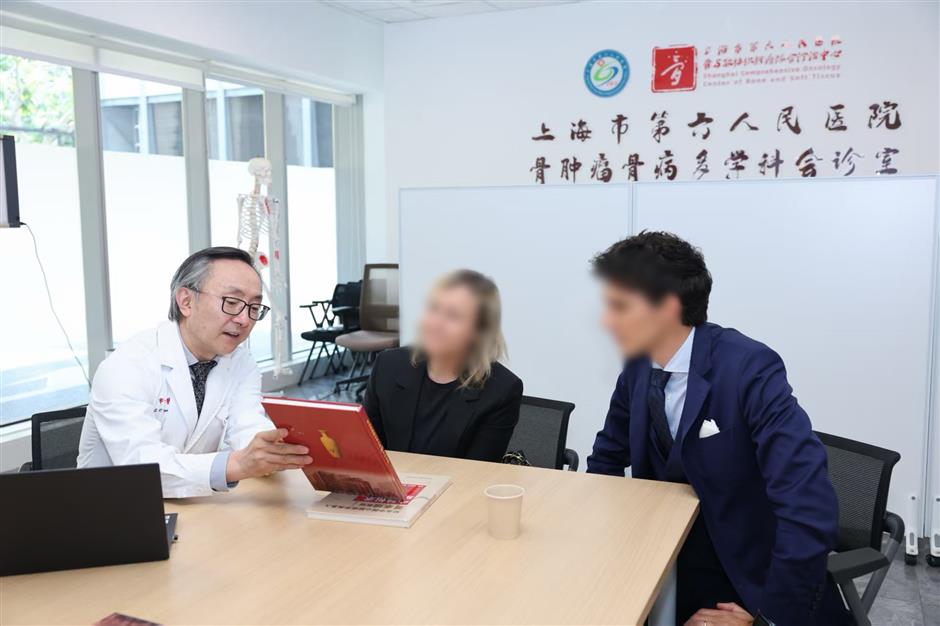
As the leading institution of the Shanghai Municipal Hospital Comprehensive Oncology Center (COC) for Bone and Soft Tissue Tumors, the musculoskeletal oncology department of Shanghai Sixth People's Hospital possesses extensive clinical experience and abundant case resources in the diagnosis, treatment, and research of rare bone and soft tissue tumors and complex orthopedic diseases.
The quick move from getting the drug approved to giving the first prescription in Shanghai shows the hospital's focus on patient care, its strong team approach to diagnosis and treatment, and its use of advanced international medical technologies, highlighting how fast China is in providing new care for rare diseases.
Medical experts noted that they will continue to leverage the strengths of the National Medical Center for Orthopedics and the COC platform, bringing more domestically developed innovative medical achievements to patients and illuminating the journey of those living with rare diseases through cutting-edge treatment strategies.
If you go
Shanghai Sixth People's Hospital
Address: 600 Yishan Rd, Xuhui District (徐汇区宜山路600号)
Tel: 021-2405-6318 (International Medical Department)
E-mail: sldymb@126.com
Address: 222 West Huanhu 3rd Ring Rd, Pudong New Area (环湖西三路222号, 浦东新区)
Tel: 021-3829-7261 (International Medical Department)
The hospital is covered by commercial medical insurance.
Editor: Fu Rong
In Case You Missed It...

 Sep 19, 2026
![[China Maxxing] The Many Faces of the Moon: Mid-Autumn Festival for the World](https://obj.shine.cn/files/2026/09/17/2386eab0-ff31-4d0a-9a35-22c755948f93_0.jpg)