[Current Trends] World AI Conference: What I Saw This Year Is Shocking
![[Current Trends] World AI Conference: What I Saw This Year Is Shocking](https://obj.shine.cn/files/2026/07/21/b99e95e5-42ac-4c43-b1e1-b3947c62055e_0.jpg)
Something major just happened in Shanghai this past weekend. When I say major, I mean something along the lines that shakes the earth. It was the World Artificial Intelligence Conference (WAIC). You've probably seen the signs all over the city, or perhaps the posters along the elevated highways.
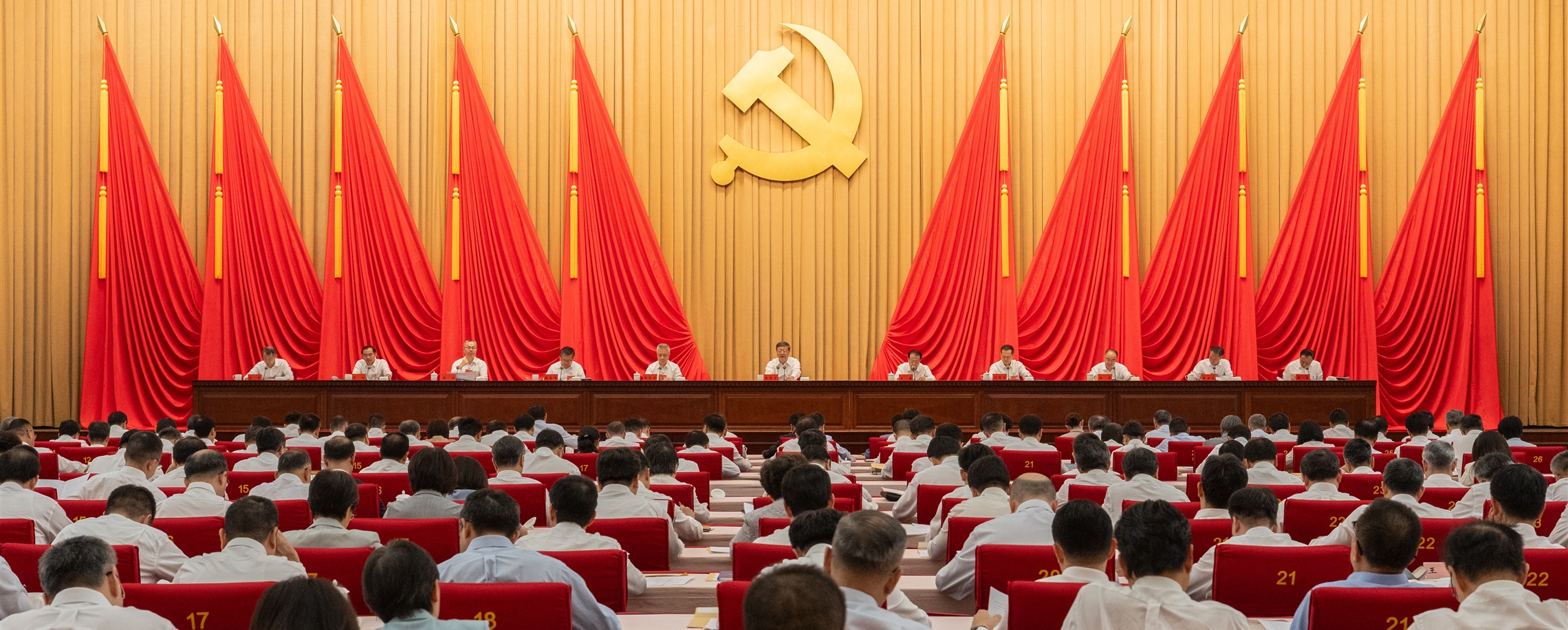
This year, WAIC has been elevated to become a statement for the world to hear. The keynote address? President Xi Jinping. When he is in town, it means something.
If you are an international resident living in China, you are living through the beginning of a new world era, which is inevitably going to be shaped by the Middle Kingdom (China). A quick primer. The WAIC conference is a conference, exhibition, and high-level AI policy forum that brings together government leaders, researchers, startups, and technology companies from around the world (but mostly companies from China, and this is important for later).
Some Context
I have been privileged to live in China for close to 20 years. When I arrived in 2007, it was a different world from what it is today. The air quality was rough, construction dust was a constant, and the streets had an unmistakable frontier energy: rules were often more flexible in practice than on paper, and getting things done sometimes took some creative persistence. Every day, cranes reshaped Shanghai's skyline a little more, and the city seemed to be perpetually mid-transformation. Doing ordinary things in China took real effort back then, especially compared to the almost ludicrous convenience of today.
As an old hand... a lot of what China is today has become normalized. I've become numb almost to the relentless forward motion of this nation. But every once in a while, China levies a shock to the system that makes me re-orient my understanding of the world's future trajectory. The WAIC conference was one such shock to the system.
First, China's Official Position
I'm not going to get into detail about Xi's speech, except to pull out some things that I noticed as a long-term expat here. The most striking thing about the speech, to me at least, is how un-triumphalist it was. Xi opens by crediting the Dartmouth Workshop, in New Hampshire, as the birthplace of AI. As you would expect with any head of state, that's a deliberate rhetorical choice. He could have opened with Chinese achievements; instead, he frames AI as a 70-year collective human project that America started. Western coverage, as far as I have seen, skips this. But it matters: it's a signal that China's official framing is not "we will win the AI race" but "the race framing itself is the problem." Whether you believe that's sincere or strategic, it's a genuinely different posture than Washington's, where AI policy is now explicitly organized around beating China. And I will stick my neck out for chopping by saying that I agree: AI should be a human civilizational project, not as a nationalist zero-sum game. This world-changing technology that has extinction-level possibilities demands that civilizational cooperation take priority over squabbling nationalist interests. Like climate change, this is both a challenge and opportunity that only world-spanning collaboration can shape into either an idyllic or dystopian future.
And the part almost nobody covers: the safety language in Xi's speech was worthy to take note of. This is something that is immensely frustrating as a citizen of the world. Researchers and builders in the AI space themselves are able to fathom some of the extreme possibilities of AI and demand that safety be of the utmost priority, yet some nations are dismantling safety guardrails rather than proactively putting them in place.
Bits and pieces from Xi's speech: "Ensure AI is always under human control." "Forestall loss of control." Monitoring and early-warning systems for risk. That's closer to how actual AI safety researchers talk than most G7 communiqués manage. China has receipts here too: the country has regulated recommendation algorithms, deepfakes, and generative AI before the West has gotten around to any of it. Imperfectly, sure. But the story where China is the reckless one and the West is the adult in the room just doesn't survive a look at the regulatory timelines.
That's not a defense brief, just context, mind you. Hold onto it, because it's the lens you'll need for what was on the exhibition floor.
The WAIC Conference Was Shocking
First of all, for any foreign national living in China, say... at least 5 years, you will have developed certain skills to read between media bylines about China, and you might notice things at these trade shows or exhibitions that shift your sense of the future. You will undoubtedly catch things in policy statements or speeches that most Western media miss (either deliberately, or... they're just missing a certain sense that those of us who live here have developed over the years).
All in one place, you saw China showcasing its latest advancements in:
- Intelligent cars
- Agentic AI
- Robotics
- Intelligent manufacturing
- Compute infrastructure
- State-owned enterprises participating in innovation
I won't get into all of those sections, and I probably missed a few, but let me give you a glimpse of what I saw in some of those categories.
First, intelligent cars. Not much needs to be said about how China has leapfrogged American companies in the automotive space. But what they are planning for their cars is even more incredible. BYD had an exhibition showcasing their future goals of integrating AI systems into their cars that are so precise in vehicle maneuvering that the company would guarantee accident insurance for things like automated parallel parking.
Agentic AI, or more specifically, the companies in China that are producing AI models similar to ChatGPT or Claude (Claude is better, fight me), were present. I somehow missed Moonshot's Kimi booth, but MiniMax was there. If you haven't used some of the Chinese Models yet, they are worth exploring. Kimi K3 and MiniMax have been using up more of my time simply because they can do things that American models don't, won't do. Here's a quick rundown:
- You can actually download them. Kimi K3 (2.8 trillion parameters, released July 2026) hands over the full model for anyone to download, tweak, and run on their own servers. Claude and ChatGPT never let you do that.
- They cost a fraction as much. MiniMax's M2 launched at roughly 8% of Claude's price, running twice as fast. Kimi K3 is priced well below its US rivals too.
- One platform, every media type. MiniMax generates video, music (full 4-minute songs), and realistic speech, all from the same company. Claude makes none of these. ChatGPT covers video and voice but not music, largely because of copyright legal risk in the US.
- They can read a lot more at once. MiniMax's context window has hit 4 million tokens, over 20 times bigger than what GPT-4o could handle. That's an entire codebase or a year of company records in a single prompt.
- Models that upgrade themselves. MiniMax's newest release is built to improve its own performance through use, without a human retraining it. MiniMax is based in Xuhui District (a Shanghai homegrown company), and I'm most excited about trying it out for coding.
![[Current Trends] World AI Conference: What I Saw This Year Is Shocking](https://obj.shine.cn/files/2026/07/20/cdd80f9a-3de8-4cde-9bf9-fc77880b848c_0.jpg)
According to Stanford's 2026 AI Index, the performance gap between the top US and Chinese models has shrunk from over 20 percentage points in 2023 to just 2.7% today, despite America outspending China on AI roughly 23 to 1, a pace of catch-up that caught much of the industry off guard. What does this mean? It was once thought that US AI companies were months ahead of Chinese counterparts, and things like chip export restrictions would hamper or slow down Chinese AI companies. But these forecasts have been shattered, and it likely won't be long before China is producing the world's top frontier models that are vastly cheaper to use.
The staff at MiniMax were a bit shy to talk to me as a foreigner. But they gave me their office address and took my WeChat... so... maaaybe we'll get to learn more of their story? (fingers crossed).
Robotics. There were robots everywhere.
Little munchkins like this running around... to assembly line machines.
![[Current Trends] World AI Conference: What I Saw This Year Is Shocking](https://obj.shine.cn/files/2026/07/20/22cfc26f-ad11-48a5-919a-7e3cfb8191da_0.jpg)
Found one robot that most closely resembled a Cylon. Better keep an eye on Elite Robots...
![[Current Trends] World AI Conference: What I Saw This Year Is Shocking](https://obj.shine.cn/files/2026/07/20/0f9864a5-5260-4082-a2eb-3a898982e8b6_0.jpg)
![[Current Trends] World AI Conference: What I Saw This Year Is Shocking](https://obj.shine.cn/files/2026/07/21/dfb0024e-b901-433b-be3f-bd48da7b7896_0.jpg)
A couple of things. The pics above don't scratch the surface. There were robots doing backflips. Robots making pizza. Robots putting bits and bobs into very precise placements. Cute robots playing soccer.
Here's the thing. I would comfortably bet that the sci-fi ideas we have imagined about robots will come out of China, not the US. Elon Musk doesn't have a prayer. There are SO MANY robotics companies that are producing models, and working on various and different challenges in robotics, that the competition in China is going to fiercely produce top players. Musk has over-promised and under-delivered for years, and China has spun up hundreds of robotics companies that are leapfrogging in tech, capability, and eventually will lead in scalability (advanced mass production manufacturing to build robots exists in China; it doesn't in the US). Do you all remember seeing the comparison videos of China's 2025 vs 2026 Chinese New Year robotics performance?
Lastly, one other thing I found fascinating was the presence of very large state-owned enterprises, showcasing some of their innovations in applying AI technology. I stopped by the State Grid (the SOE that manages China's power infrastructure). This will probably be another article that goes into depth. An enthusiastic engineer waxed poetic over a robot that was doing something important to some mock electrical converter contraptions. I couldn't understand anything, other than it was important and worth exploring more deeply. How is China's State Grid employing AI to manage the energy grid?
Overall, this was not a small trade fair. There were over 1,100 exhibitors. I went on the last day. I barely scratched the surface. To see so many companies showcasing their innovations across robotics, advanced manufacturing, smart city tech, agentic AI... I ask myself, does the US have this, at this scale? Does Europe?
All we hear about in the US is Musk's lofty ideas about his Optimus robots, and yet today, I saw an army of companies developing robots, built upon a foundation of an even larger army of engineering talent.
Had to do a double-take... this is in fact, not a robot, but a pretty convincing cosplayer,
There are certain things about China that feel inevitable. The speed at which gaps are closing. The frequency of leapfrogging. The quantity of brain capital (that is only growing larger and compounding over time).
I may be naive. But I've also seen a country transform in such a short time, and with such unrelenting commitment to progress, while simultaneously wondering what on earth is happening with my home country. China lifted roughly 800 million people out of extreme poverty between 1978 and 2019, according to the World Bank. The US, meanwhile, has seen homelessness climb 27% over the past decade, with chronic homelessness up more than 80%, according to HUD, in the world's largest economy. Different metrics, I know. But it's hard not to notice which country is still solving its hardest problems and which one seems stuck on them.
Go back to what Xi actually said in Shanghai: a people-centered approach, shared prosperity, shared security. Reasonable people can debate how sincerely that's meant. But it's worth asking which side of the Pacific is currently behaving like it believes that, and which side is tightening export controls on a rival and loosening safety rules at home in the name of "deregulation."
What has shocked me the most is that just a few years ago, you would not see an exhibition hall littered with robotics and smart city companies. Just like, within a few years, China's automotive industry surged in quality, technology, and manufacturing capacity. It seemingly happened in the blink of an eye. And what I saw today at WAIC is the very first sliver of the eye-opening on yet another blink. I am increasingly becoming more comfortable with the notion that "the West" is indeed underestimating just how fast China is closing the gap. For the expatriates living here, we'll be able to say to future generations: we were here when it all began. It started with robots delivering McDonald's to our hotel rooms, and went to robots on the metro you could talk to and ask for directions, in any language. Let's hope the world powers work together to ensure a future worthy of looking forward to, with all the exciting prospects modern technology imagines.
Editor: Fu Rong
In Case You Missed It...
 Jul 24, 2026

![[A City for All] Beyond the Rat Race: New Lives on Shanghai's Rural Edges](https://obj.shine.cn/files/2026/07/23/3ef91e39-7269-437f-9012-57d20f86a3db_0.jpg)