China's Auto Industry Shifts Gears from Quantity to Quality
Editor's note:
China recently released the blueprint for the 15th Five-Year Plan (2026-2030), outlining how the nation will move up the value chain in industry and spur innovation, become more self-reliant in technology, and improve living standards. The new plan, which comes amid a more disquieting global environment, will go to the National People's Congress in March for adoption. This series provides insights into China's vision of its path forward.
China's automakers, ready and eager to embrace the self-driving cars of the future, are poised under the nation's 15th Five-Year Plan (2026-2030) to shift their focus from production volume and speed to AI development and deeper overseas penetration.
The changes are in line with the overarching goals set for the next five years as China moves to refine the rapid economic and industrial growth of the last five years.
China is the world's largest automobile market and a global leader in development of new-energy vehicles. But progress hasn't come without problems.
As the car industry became more competitive with a flood of new players seeking a piece of the action, price wars have broken out, weakening profitability and creating some overproduction. Over 400 companies that thought they might strike it big as carmakers have folded in the past five years, including once-popular electric-car brands such as Hozon Auto's Neta and WM Motor Technology's Weltmeister.
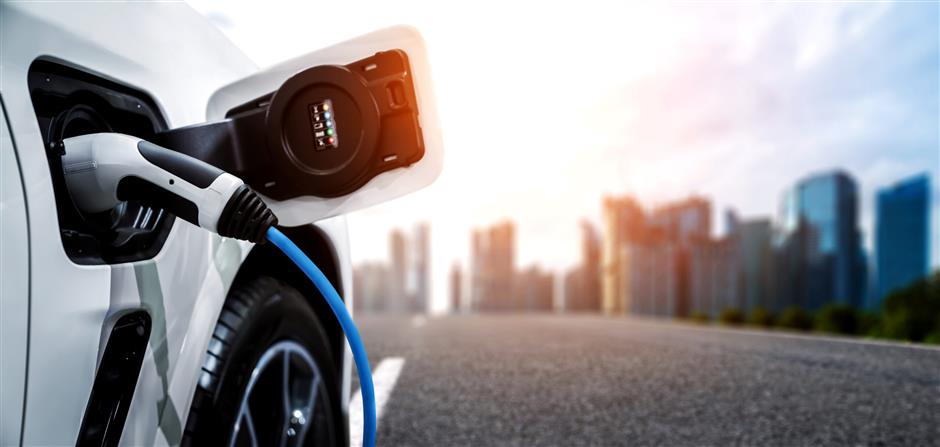
At the same time, development of support systems for electric and hybrid vehicles is lagged, particular in the availability of charging and battery-swap facilities in smaller cities and rural areas. Insufficient "vehicle-to-grid" connections also hamper the application of some smart driving features.
But problems are rapidly being addressed.
"The Five-Year Plan will further accelerate and regulate the advancement of advanced driver assistance, autonomous driving and the broader application of vehicle-road-cloud collaboration," David Xu, president of Bosch China, told China Biz Buzz.
Xu said that China's large user base and vibrant ecosystem enable new technologies to scale up quickly, offering huge opportunities for Bosch. The German-headquartered engineering and technology company has partnered with automakers Chery and BAIC on development of intelligent driving for mass production.
"Bosch is expanding its development footprint in China, including a major investment plan in Suzhou," Xu said. "Over the next five years, the company will invest around 10 billion yuan (US$1.4 billion) on intelligent driving and smart-cockpit technologies. We are also working with WeRide to bring smart-driving solutions to large-scale mass production. We established a joint research center with Tsinghua University in 2020 to advance AI technologies for industrial applications."
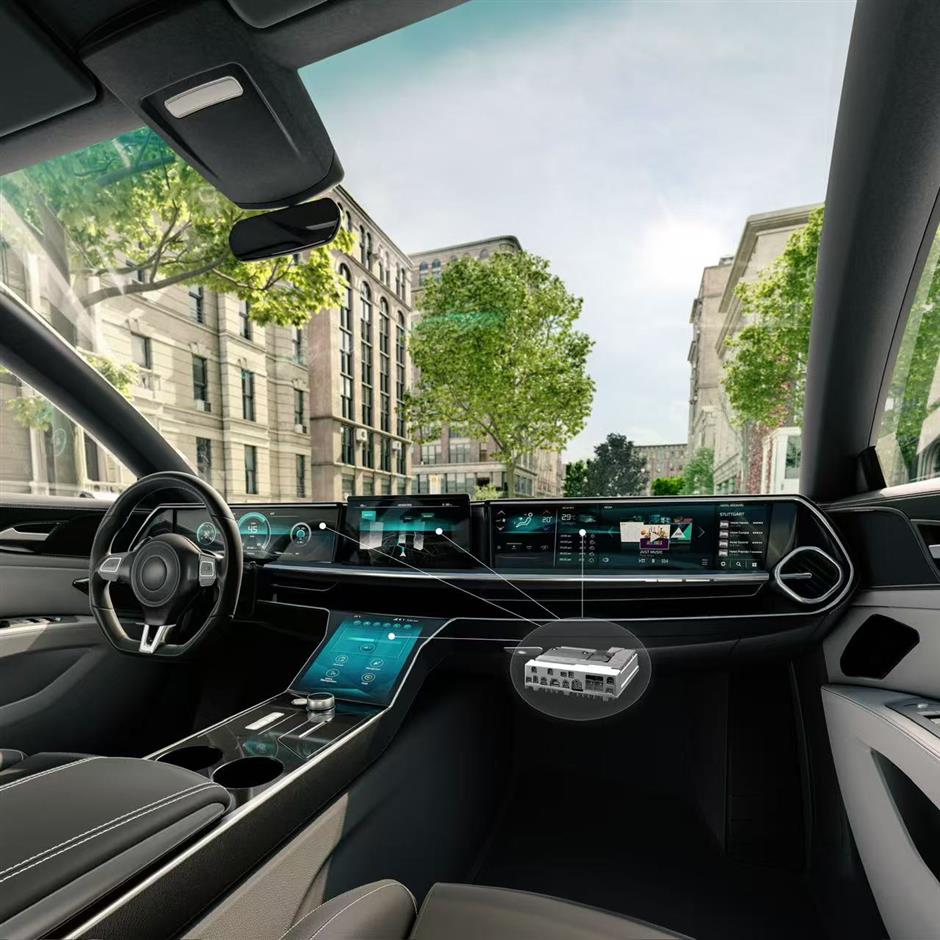
Chinese automakers have been investing large sums in new technologies that will transform driving.
He Xiaopeng, co-founder of carmaker Xpeng, said the company's second-generation vision-language-action model would be open-sourced to global commercial partners, with partner Volkswagen being the first to "get a taste" of it. The technology is central to the navigation "brain" of driverless cars.
This deal not only brings commercial endorsement from a top-tier client to Xpeng's AI technology but also pioneers a new path for the Guangzhou-based carmaker as a developer of artificial intelligence.
In an expansion of AI scope, Xpeng is also developing "flying cars" as part of its electric takeoff and landing, low-altitude aircraft project, and robots, with sales expected to exceed one million by 2030.
Meanwhile, carmaker Nio has begun licensing its self-developed intelligent driving chip, the Shenji NX9031, which utilizes a 5 nanometer, automotive-grade process and boasts computing power approximately four times that of the Nvidia's Orin-X.
The project reportedly has involved a team of 600 people, covering front and back-end design, verification and testing. Its scale already approaches that of an independent chip company, with investment exceeding that of concurrent projects by Xpeng and Li Auto.
The new-energy vehicle industry is poised to cross into large-scale application of Level 3 automated driving, heading toward Level 4. Level 3 vehicles have "environmental detection" capabilities and can make informed decisions for themselves, such as accelerating past a slow-moving vehicle. But they still require human override. Level 4 vehicles can intervene if things go wrong or there is a system failure. Cars at that level do not technically require human interaction in most circumstances, but a human driver can still manually override them.
"We have already seen Level 3 and Level 4 autonomous driving in limited application environments," Xu said. "However, large-scale commercial deployment on fully open urban roads will depend on technological maturity, regulatory readiness and overall system cost, even as pilot projects move forward in select cities such as Beijing and Shanghai."
He added, "We believe that sustained progress in policy, standards, infrastructure and public awareness under the 15th Five-Year Plan will lay a solid foundation for the development of advanced driver assistance and autonomous driving."
While carmakers go gung-ho for autonomous driving, the government has warned them not to overhype current self-driving capabilities and give motorists a false sense of security. The government wants a measure ascent up the autonomous driving ladder levels, with safety precautions proven at each stage.
Meanwhile, new energy vehicles are expected to accelerate their emerging market dominance. Technically, that means the internal combustion engine is likely to be even more replaced by hybrid powertrains in passenger vehicles, while hydrogen fuel cell technology is anticipated to reach limited commercialization in specialized sectors like heavy-duty trucks.
A report issued last month by the China Society of Automotive Engineer forecasts that the market penetration of new energy vehicles in China will reach over 80 percent by 2040 from about 50 percent today. Furthermore, safer all-solid-state batteries are expected to replace sodium and lithium ion batteries on a small scale by 2030 and attain large global scale by 2035.
Carmakers have released their market blueprint for development of smart-driving new energy vehicles. Geely said its Galaxy model will be positioned in the mainstream market, targeted at families with a price range of 100,000 (US$14,000) to 200,000 yuan. It will offer both pure electric and hybrid models. Beijing-based Foton Motor said it plans for new energy vehicles to comprise half of its production by 2030.
Their visions for the future aren't limited to the Chinese mainland. Domestic new-energy vehicle makers are taking their mainland prowess into overseas markets, with more comprehensive global operations planned.
Xpeng said it wants overseas sales to account for 50 percent of production volume within the next decade. Its strategy includes accelerating market entry into over 60 countries and deepening localized production abroad.
Nio has set an even higher target, aspiring to rank among the world's top five automotive manufacturers by 2030 through operations across more than 25 countries.
And BYD, China's largest electric car maker, is building a global manufacturing system, with plants already established in Brazil, Hungary and Thailand.
Chinese robotaxi companies like and Apollo Go and WeRide, in partnership with mainland automakers, are already making great strides in foreign markets, including the Middle East and Europe.
In Case You Missed It...

 Dec 3, 2025