Battered by heavy rainfall, Zhuozhou fights through deadly floods
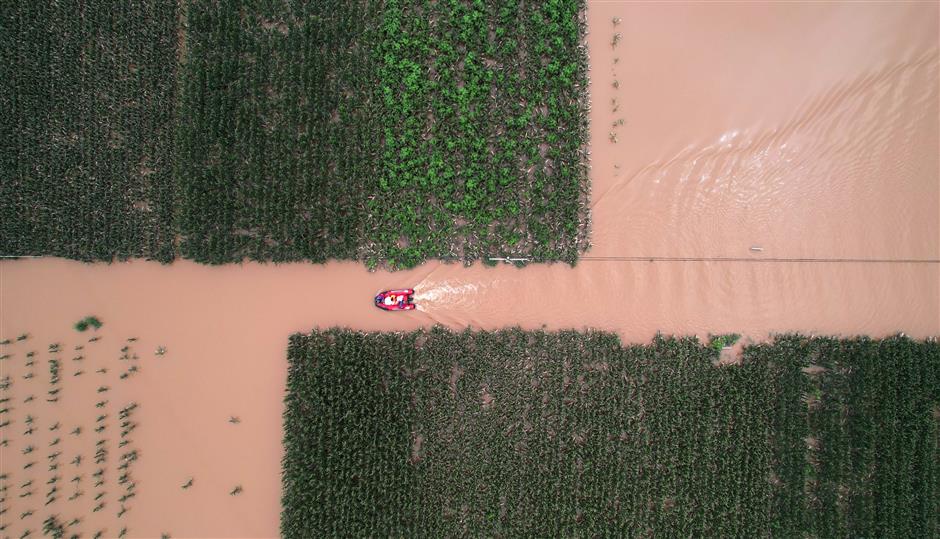
The ancient city of Zhuozhou on the plains of northern China's Hebei Province has an illustrious, largely overlooked history, but it took typhoon-triggered flooding to catapult the city of 600,000 into the public spotlight.
According to legend, Zhuozhou, located just 70 kilometers from downtown Beijing, Chinese capital, was the site of the Battle of Zhuolu 5,000 years ago, one of China's earliest large-scale wars and the precursor to the Yellow Emperor’s unification of the nation.
Zhuozhou is known as the "capital of the Yellow Emperor" and the "first city of the Chinese nation," with connections to renowned historical figures like Liu Bei (AD 161-223), founder of the Shu Kingdom (AD 221-263), and Zhao Kuangyin (AD 927-976), founding emperor of the Song Dynasty (960-1279).
Emperor Qianlong of the Qing Dynasty (1644-1911) praised Zhuozhou as the "No.1 prefecture in the world" during a visit there.
Today it has become the No. 1 poster child for the worst flooding in 140 years.
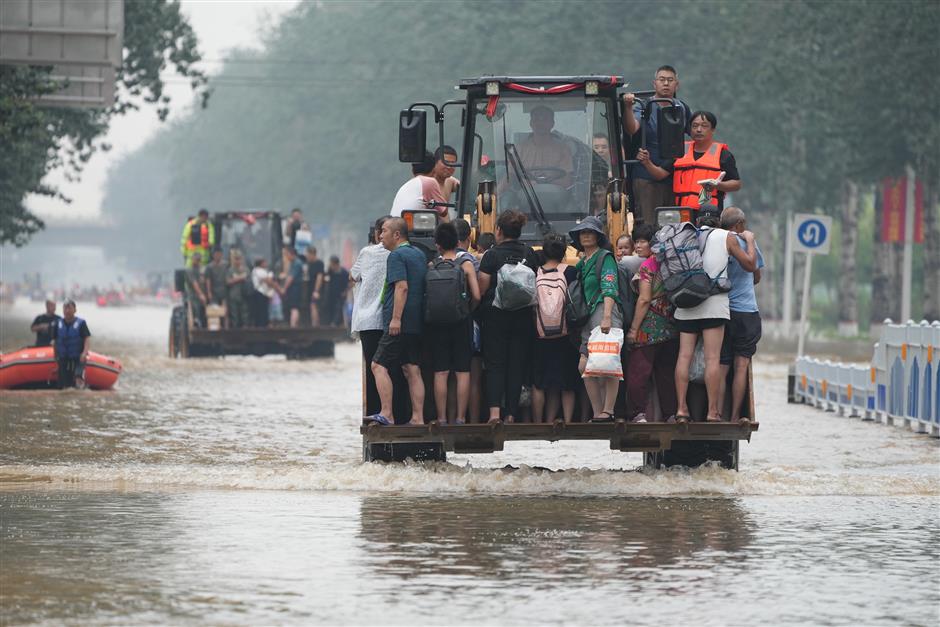
The city was inundated with rain in the aftermath of Typhoon Doksuri, with gauges recording between 355.1 millimeters and 435.7 millimeters. The volume far exceeded usual flood-control measures in the relatively dry northern region.
Furthermore, the city's flat terrain and dense river network, with six streams running through the city, turned it into a natural repository of floodwater from upstream.
Cheng Xiaotao, deputy chief engineer of the China Institute of Water Resources and Hydropower Research, said two upstream rivers carried 800 million cubic meters of water downstream to Zhuozhou, equivalent to the capacity of eight large lakes.
"When floodwater flows from mountainous areas onto the plain in Zhuozhou, the water fans out, raising the water level in the city," Cheng said.
In response to the floods, Hebei Province has activated eight "flood storage areas," evacuating more than 847,400 people. Two of the storage areas are within Zhuozhou.
Flood storage areas are designated regions where floodwaters can be temporarily diverted and held during heavy rainfall or flooding events, minimizing the impact on downstream communities.
Cheng said flood storage areas are aimed at protecting downstream cities such as Tianjin, rather than upstream Beijing.
According to China's flood control law, the government provides compensation to residents affected with when flood storage areas are triggered. The amount varies according to different categories, such as housing damage, agricultural machinery and livestock losses, and crop and forestry losses.
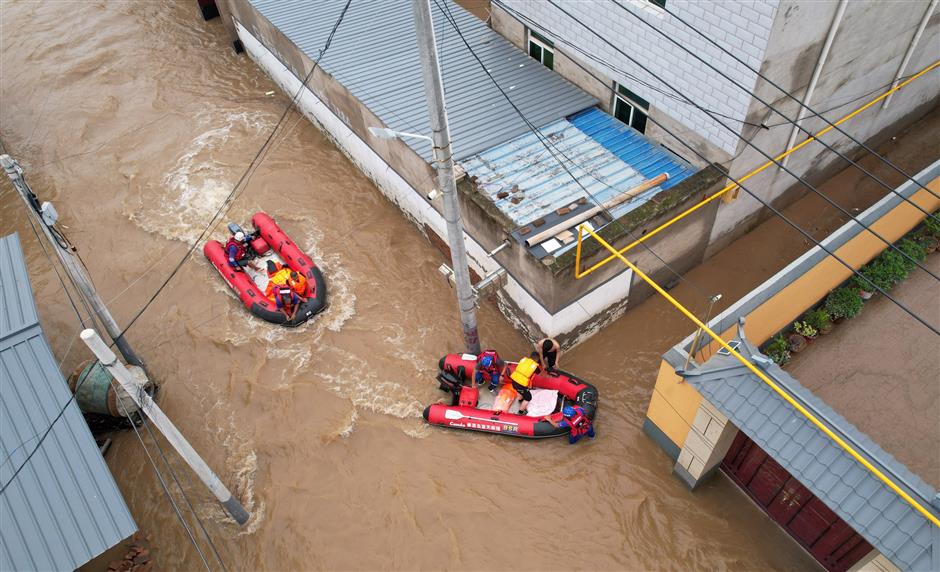
Zhuozhou resident Wang Juan, 52, recalled childhood experiences of flooding, when the waters would recede quickly. But this time, the floodwaters remained, leaving many neighborhoods submerged, she said.
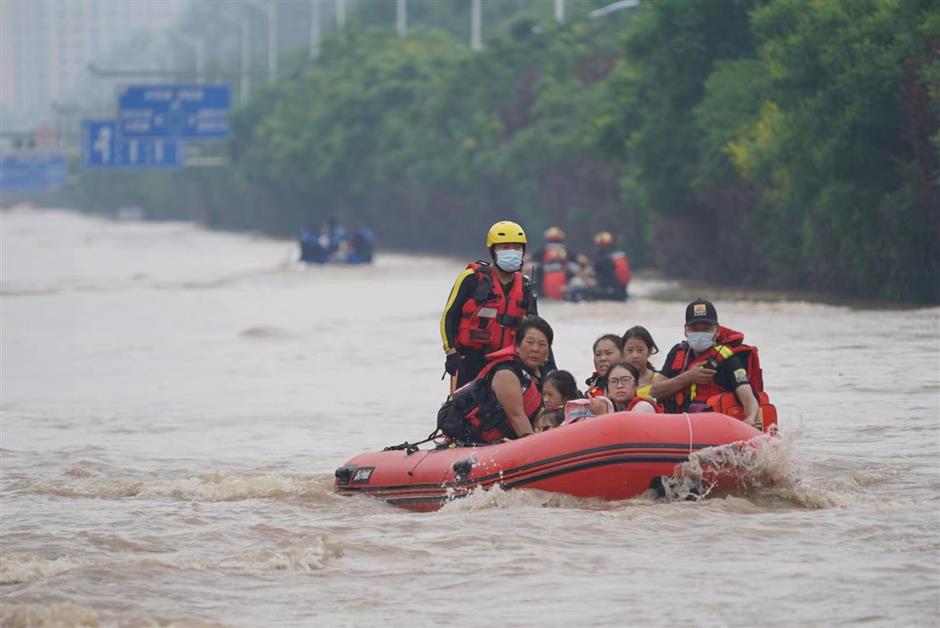
Wang and her family were forced to evacuate their home. The water was so deep that she had to take a raft to a temporary relocation center.
Many shops suffered from power outages, and some residents who rushed to book hotel rooms found them fully booked or lacking water and electricity.
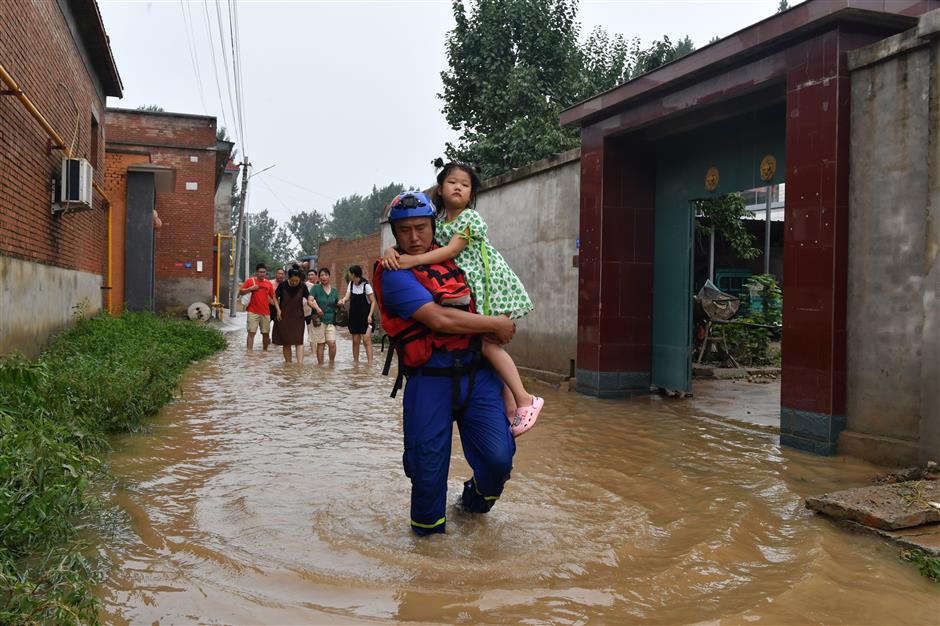
As the rain eased, electricity was gradually restored, but the water supply remained cut off. The city government dispatched water trucks to provide clean water for affected residents.
Restaurants switched to using disposable containers to avoid washing dishes. Taking a shower became a luxury in unusually hot weather.
Zhuozhou's vocational education center became the largest relocation site for flood victims because its slightly higher elevation escaped the floodwaters.
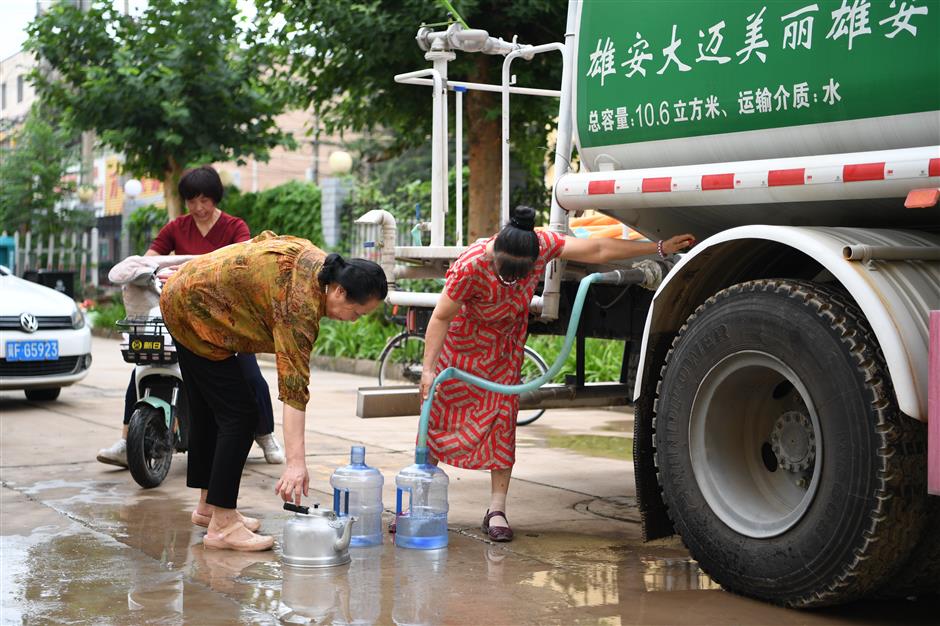
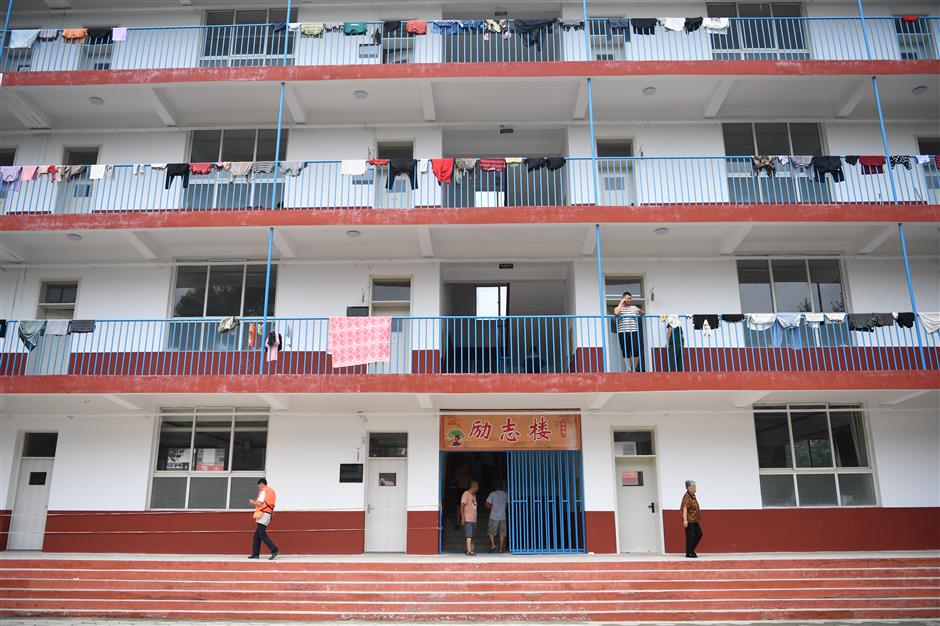
Over 2,000 residents are taking temporary refuge at the center, which provides bedding, meals, medicine and other volunteer services.
Senior citizen Wang Changke and his wife arrived at the center the day after it opened on July 31. Their village in Matou Town was submerged, with water reaching up to 3 meters.
"It is a pity that the new 6,000-yuan air-conditioner bought for us by our son had been surely been damaged," Wang said. "But at least we still have shelter and food here."
To accommodate more affected residents, schools, cafes, shopping centers and stadiums unscathed by flooding in Zhuozhou have also been converted into temporary relocation centers.
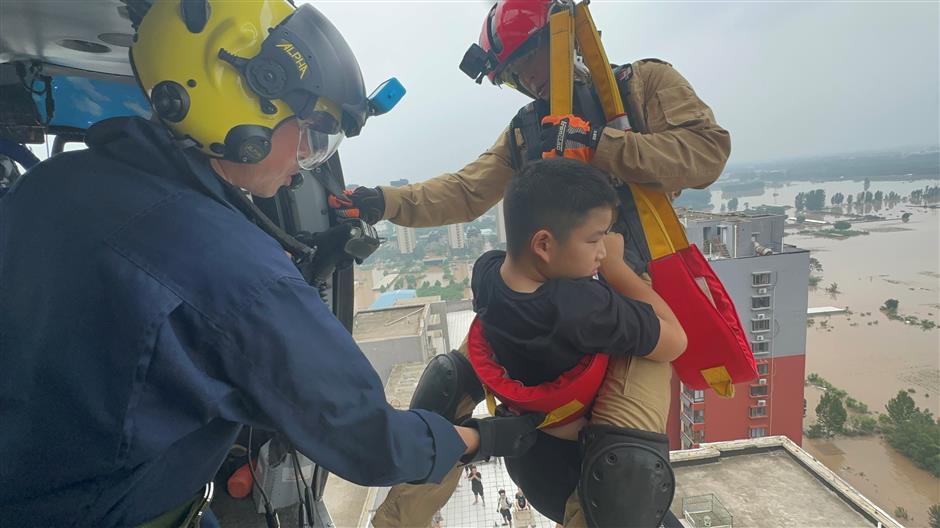
The disaster mobilized a massive relief effort. More than 4,700 teams totaling over 100,000 people have been dispatched to flood-affected areas in Hebei Province.
Xu Wenjie, leader of the Blue Sky Rescue Team from neighboring Jiangsu Province, said water levels are dropping but some areas remain 5 to 6 meters underwater.
He Jun, founder and leader of Hangzhou-based Ramunion Rescue Team, said that the flood situation in Zhuozhou has stabilized. Efforts are now concentrated on relocating residents and providing essential supplies.
Li Na, deputy director of the Department of Water Resources of Hebei Provincial, predicted that it may take about a month for water levels in Zhuozhou to fully recede.
Some 300-400 million cubic meters of water could still flow through Zhuozhou in coming days, she said.
Li said the activation of the flood storage areas has proven very effective. Without them, the Xiongan New Area and Tianjin downstream would face enormous flooding pressure.
In Case You Missed It...

 Sep 22, 2026