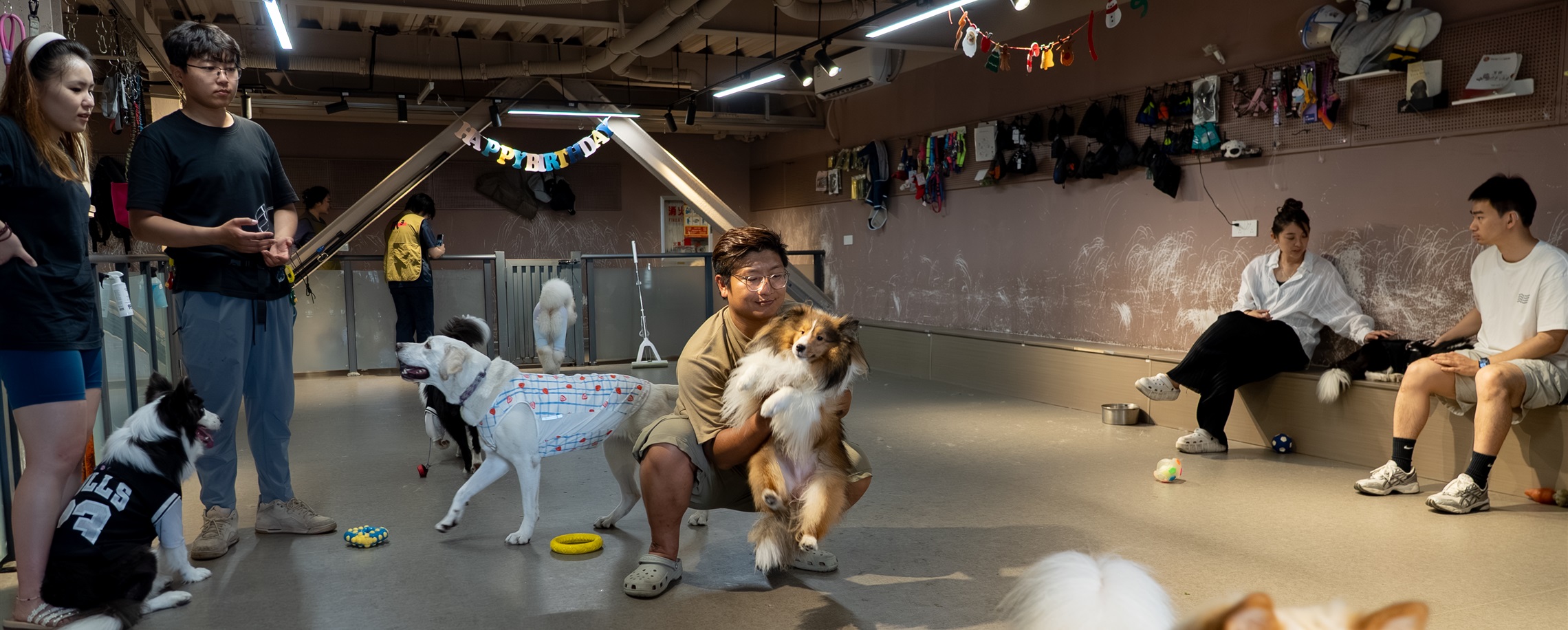
Dog Kindergarten Offers Socialization and Care In Shanghai
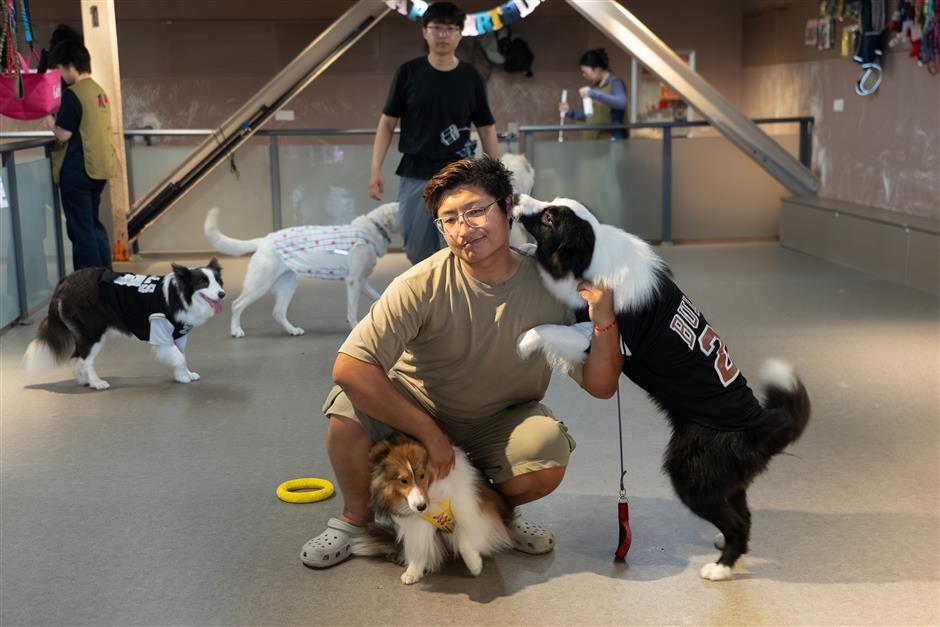
Shanghai office worker Qian drops her one-year-old Border Collie off at a facility near her office in the north Baoshan District every morning at 9am.
Staffers examine the dog's coat, teeth, and nails. They dress the animal in a small school uniform. The dog, named Harry, joins other dogs for a run in a riverside park.
He participates in obstacle courses and eats a homemade afternoon tea of baked rabbit ears before Qian takes him back after work.
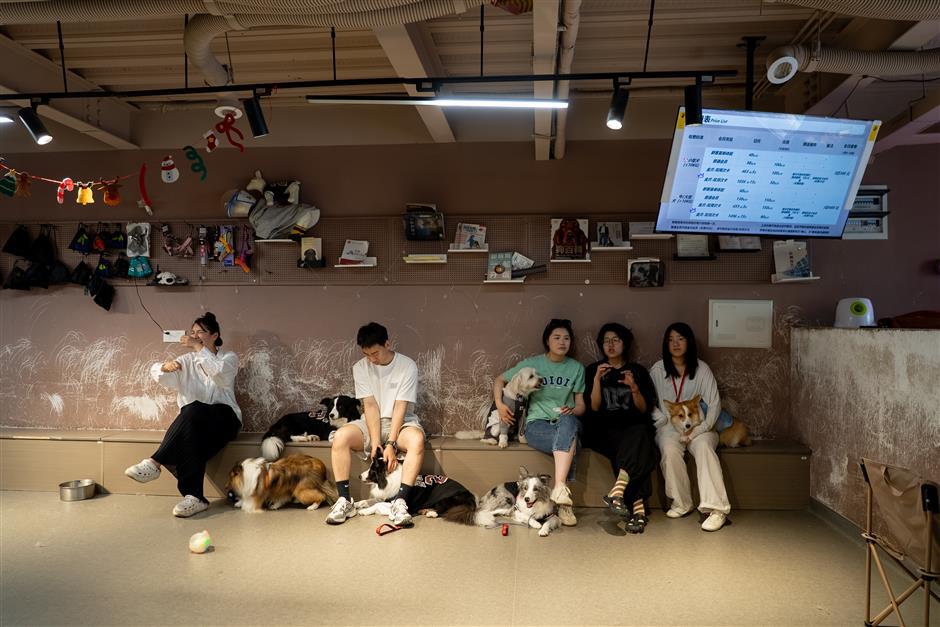
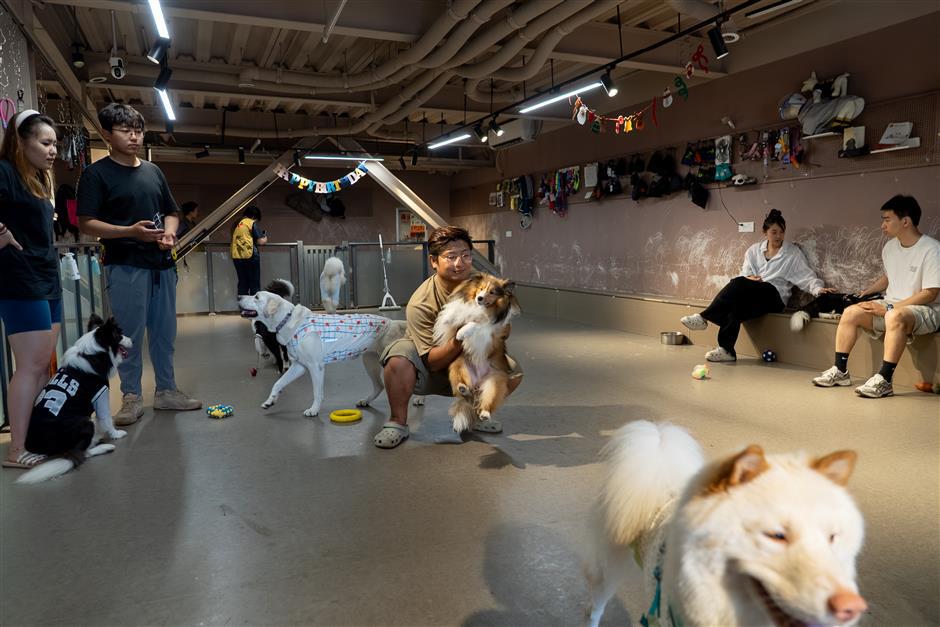
The facility, Paw³ Dog Daycare, operates as a specialized "dog kindergarten." It provides day care, behavioral training, and socialization services for urban pets while their owners work in offices.
The business reflects a massive shift in China's pet industry. The urban pet market reached 312.6 billion yuan (US$46.1 billion) last year and is expected to expand to 405 billion yuan by 2028.
The number of urban pet dogs and cats hit 126 million. In Shanghai, pet owners spend an average of 500 to 1,000 yuan per month. Services account for about 10 percent of this monthly spending.
"We want to give dogs more options for lifestyle," said Jann Zhang, founder of Paw³ Dog Daycare. "A good dog is not just one that stays quietly at home. They need a social environment to release their anxiety."
Young owners from those born in the 1990s and 2000s view pets as family members. This drives demand for services beyond basic boarding, Zhang said.
The pet kindergarten in Miaohang Town hosts about 20 to 30 dogs daily. Owners pay between 98 yuan and 138 yuan per day, and the center has received more than 200 dogs since it opened nearly a year ago. Monthly fees can reach 3,036 yuan.
The daily school schedule includes interactive games, obstacle courses, and rest periods. Staff plays videos during nap time to help the dogs relax.
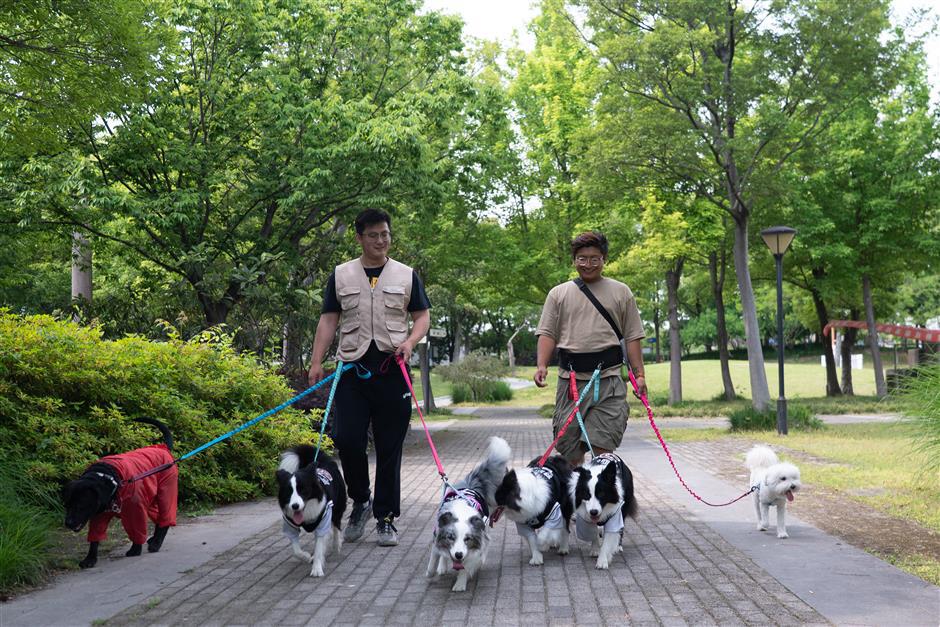
The outdoor physical education begins every afternoon. Zhang and the sports teachers tie leashes around their waists and lead groups of three dogs, including Border Collies and Poodles, to a riverside park along the Wenzaobang River.
On an abandoned football pitch, the teachers throw deflated soccer balls for the dogs to chase. The dogs wag their tails and jump excitedly.
The larger Border Collies stand on their hind legs and demand hugs from Zhang. After 15 minutes of play, they attach the leashes and walk the dogs back to the center.
The center even provides homemade afternoon tea. Staffers bake rabbit ears in a dehydrator.
They prepare handmade sausages using a mix of horse, beef, and duck meat. They add spinach, beetroot, and astragalus powders to the food. These ingredients provide color and improve the dogs' metabolism.
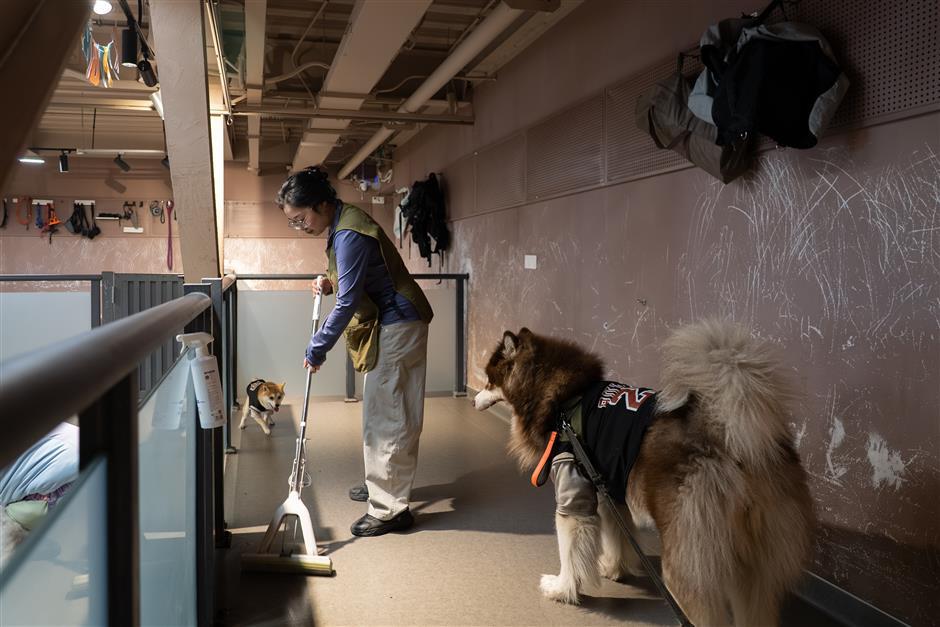
The daycare center employs 17 part-time teachers. Many hold backgrounds in early childhood education or dog training. Others work as fitness trainers. They use their athletic experience to handle the large breeds that attend the center.
Cui Er left her job at a software company in Hangzhou to work at the center. She monitors playtime and prevents conflicts.
"Dogs develop their own social dynamics here," Cui said. "Some become leaders, and others learn how to interact politely. We intervene if a male dog bothers a female dog or if play becomes too rough."
Cui said staff form strong bonds with the animals. She recalled a black Labrador that acted as a big brother to the other dogs. The staff felt heartbroken when the owner moved away and pulled the dog from the program.
The socialization helps correct behavioral issues. Some owners drive an hour each way to drop off their dogs. Others rent apartments near the center to ensure their pets can attend daily.
The owner, Qian, said her Border Collie used to fight with other dogs on the street. After six months of training at Paw³, the dog gave up the habit.
"I was afraid to walk him because I was worried he would start a fight," Qian said. "Zhang gave us advice and helped him socialize. He has made huge progress."
Another owner, Lu, sent his three-year-old Border Collie to the center to cure it of its loneliness.
"We used to watch him on the home camera, and he always looked bored," Lu said. "Now he plays with classmates, goes for walks, and eats afternoon tea. He lives a full life."
Zhang started the business after his Golden Retriever developed separation anxiety. He quit his job at a Fortune 500 company, became a certified dog trainer, and worked as an in-home trainer for a year.
He realized many daycare centers focused on impressing owners rather than meeting animal needs. Some facilities restrict water intake to prevent urination. Others use strong fragrances to mask smells.
"Dogs rely on scent to understand the world," Zhang said. "We want the dogs to express their natural behaviors here. We keep it clean, but we do not restrict their natural behaviors."
The center accepts most dogs but sets strict rules. Dogs in heat and dogs with mobility issues cannot attend. Staff evaluate aggressive dogs and require them to wear muzzles during desensitization training.
Local authorities support the business. The Miaohang Township government views the kindergarten as a tool to improve community governance. Unexercised dogs often bark and cause neighborhood disputes.
Wang Bo, deputy director of Miaohang Township, said the center helps reduce these problems.
"Professional training and day care allow pets to release their energy and learn rules," Wang said. "This solves conflicts at the source and promotes a civilized, pet-friendly community."
The township plans to build more shared spaces for pets. Officials organized a pet sports meeting and a pet market earlier this year.
Zhang plans to open a second branch nearby. He wants to create larger outdoor spaces for the dogs. He hopes to integrate pet kindergartens into more neighborhoods.
"We want to build a community facility," Zhang said. "Owners should have a low-cost, accessible place to bring their pets. It is about taking responsibility for the animals we bring into our lives."
Editor: Yang Meiping