In China's Micro-Drama Industry, Retirement Is No Longer the Final Act
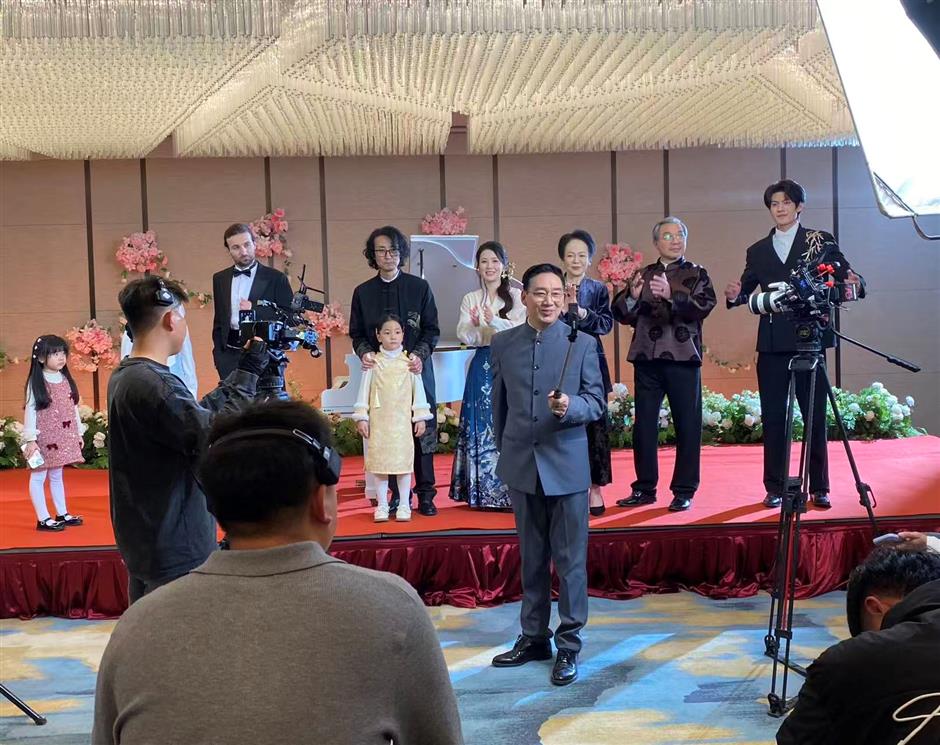
Wu Guisong, 63, was on a film set at 10pm, acting out a scene in which a German Shepherd dog attacks him. He spent the entire three-day New Year holiday on set in Shangrao, Jiangxi Province.
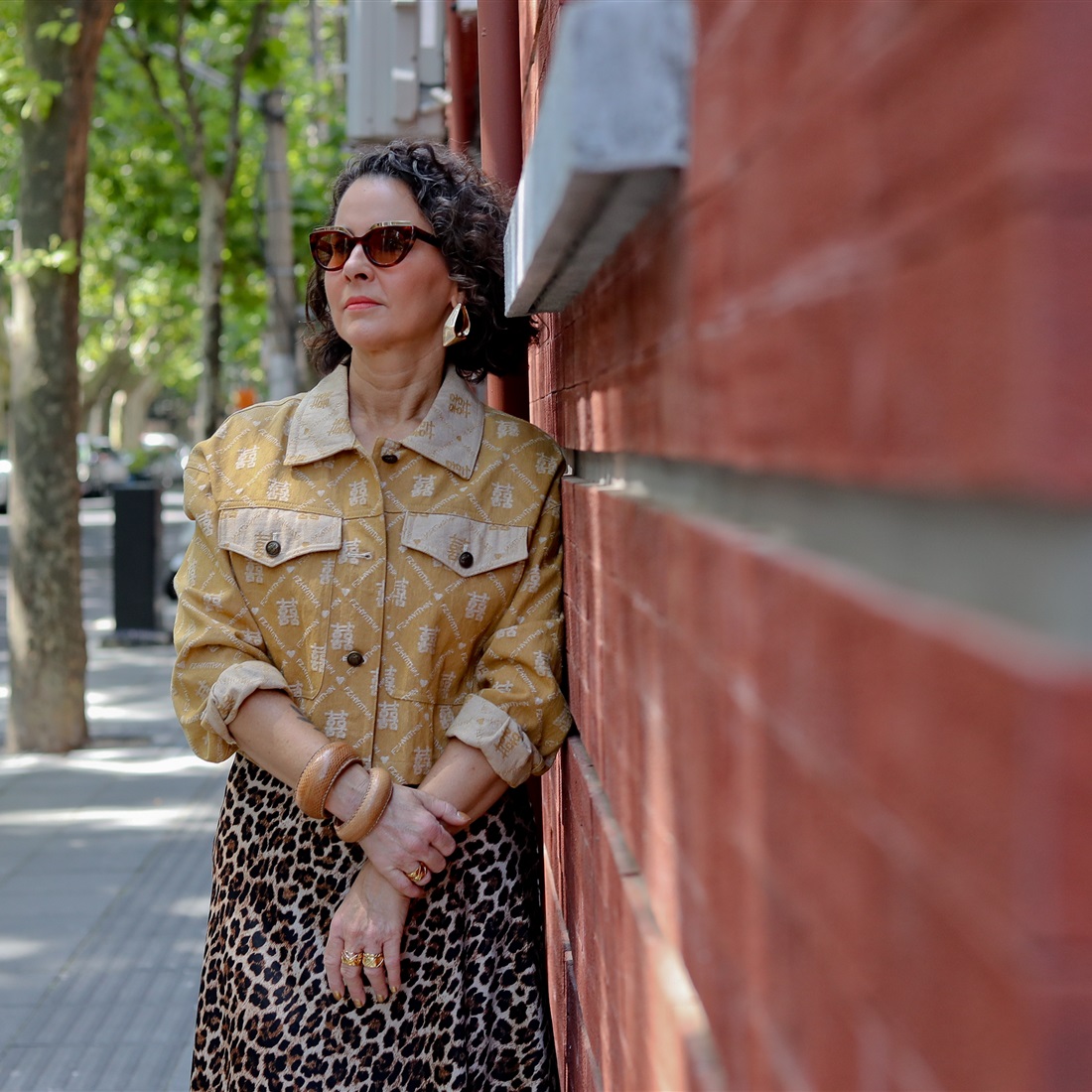
A few days earlier, Qin Yue, 59, had wrapped up her year-end shoot in the biting cold of Hengdian in Zhejiang Province and returned home to Shanghai.
Qin and Wu are among a growing number of older performers finding new opportunities in China's micro-drama industry. These ultra-short, vertically filmed series have expanded rapidly in recent years, drawing in large numbers of actors. Unlike most of their peers, however, Qin and Wu did not move into acting full-time until after retirement.
While many people their age are settling into a slower pace of life, early call times, overnight shoots, and shooting summer scenes in winter have become routine for them.
"Nothing comes easy," Qin said. "But if you truly enjoy it, you learn to push through."
A long-delayed dream
Qin's interest in acting dates back to her teenage years, when she performed with a youth drama troupe at the city level in Shanghai. At her parents' urging, she majored in English and worked in foreign trade for 33 years. After retiring in 2021, she decided to pursue acting, something she "truly enjoys."
Alongside television work, Qin has also performed in musical theater. In 2024, she began appearing in micro dramas. She has since acted in about a dozen such productions, several of which have surpassed 1 billion views. One notable example is Jin Wu Cang Jiao (literally "Hidden Pride in a Golden House"), which was released last year and surpassed 1 billion views.
For years, micro dramas were known for sensational plots and abrupt twists and were often dismissed as the lowest rung of the entertainment industry, far below films and long-form television series.
"But if something exists, it has its reasons," Qin said.
After the pandemic, opportunities in traditional film and TV began shrinking, while micro dramas, with their low budgets and fast production cycles, expanded rapidly.
By 2024, China's micro-drama market had already surpassed the country's total box office revenue, and it is projected to reach 100 billion yuan (US$14.3 billion) by 2027. Last year, around 40,000 vertical-format micro dramas were released online, an average of nearly 110 new productions every day.
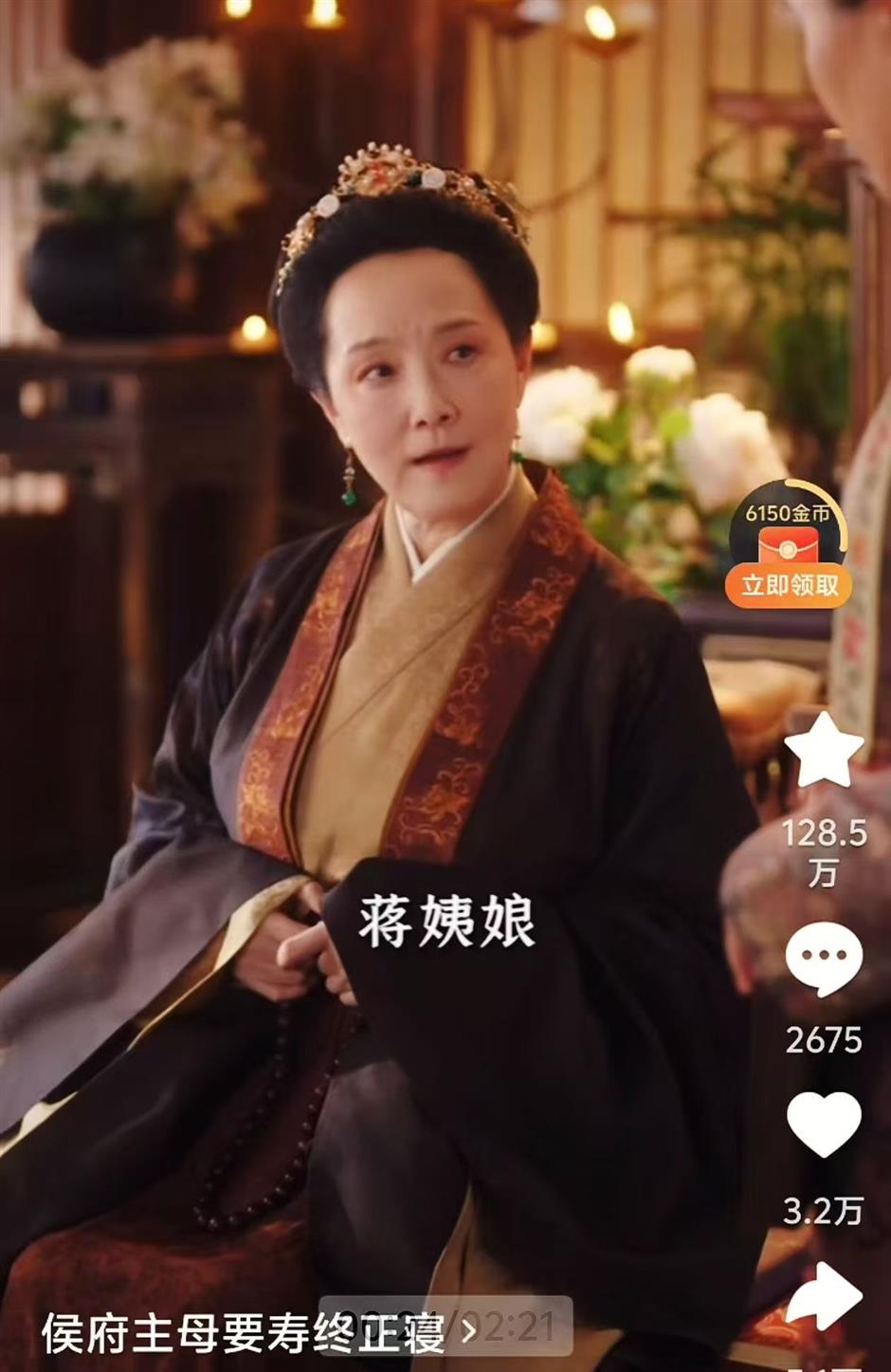
Although most micro dramas still focus on young protagonists, they require a large number of supporting roles, such as parents, relatives, and neighbors, which are often played by middle-aged and older actors.
Yang Lu, a micro-drama producer, previously told Shanghai Daily that a single filming base can face a shortage of more than 1,000 middle-aged and elderly actors.
Qin's experience in long-form productions helped pave the way for her entry into micro dramas. She has taken minor roles in television series, including popular idol dramas such as "Boss and Me" and "My Sunshine," and the film "The Eight Hundred."
In long-form television, major roles have largely remained out of reach. Micro dramas, on the other hand, provide her with more substantial roles, allowing her to "really open up and give it my all."
Life experience put to the test on set
Micro-drama sets are known for their relentless pace. Young lead actors often work 10 to 20 hours a day. Older actors usually have more concentrated scenes, and crews provide some flexibility in scheduling. Even so, late nights and long waits remain unavoidable.
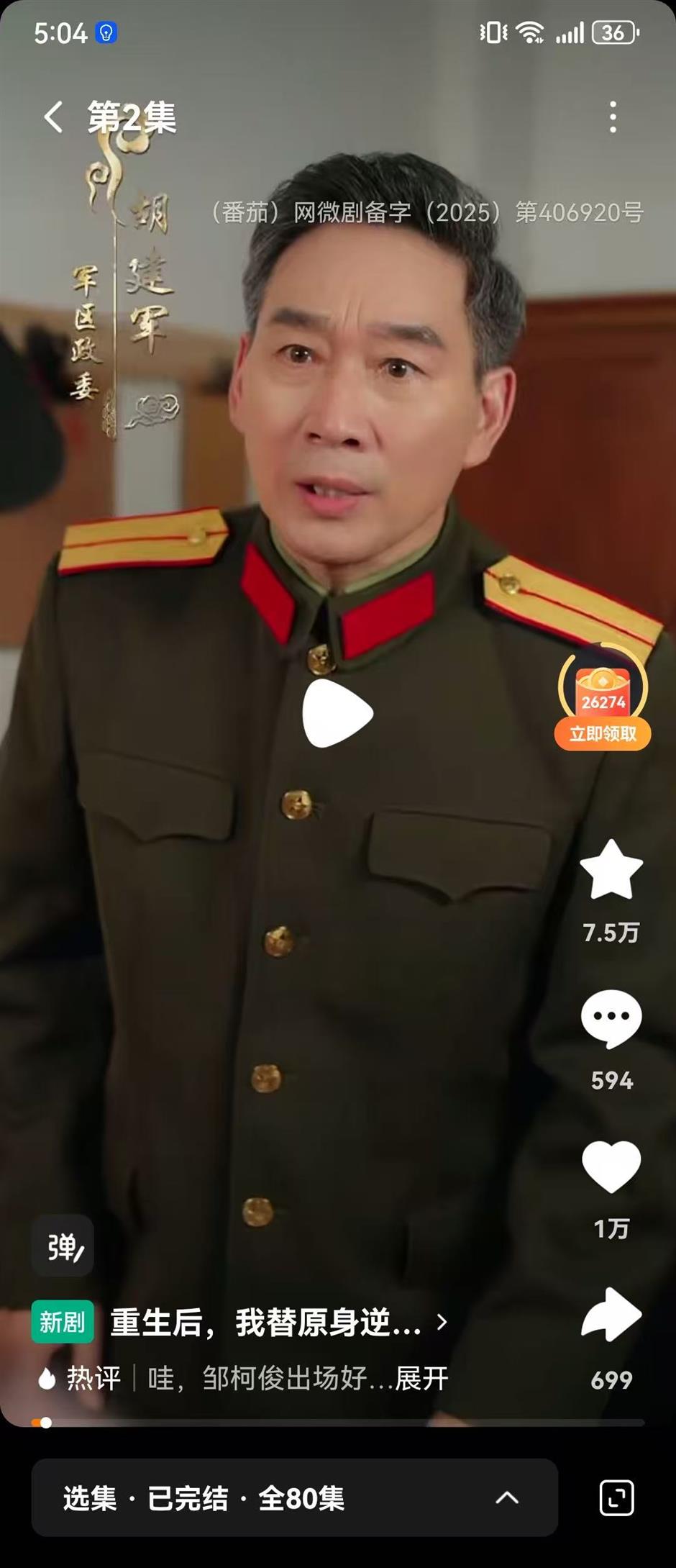
Like Qin, Wu Guisong chose to pursue acting full-time after retirement. He recalled filming a basketball-themed production where the rented court was open to the public during the day, so the crew could only shoot from 8pm to 8am.
"That's just part of being an actor," Wu said.
Wu has loved singing, dancing, and performing since childhood. Before retiring, he started taking background roles on weekends, gradually finding his way into the industry. To improve his skills, he enrolled in training courses at the Shanghai Theatre Academy. He has appeared in both popular long-form dramas and micro dramas.
Beyond his acting training, his previous career in sales and management at a crane manufacturing company has proved useful. He once played a manager in the popular television series "Ode to Joy."
"The way the character interacts with people and sits down to talk over tea is exactly what we did in real life at work," he said.
His life experience also helps on set. In a recent micro drama, his character's grandson is attacked by a German Shepherd. Hearing the boy's cries, he suggested to the director that instead of calling for his son's help first, the grandfather should immediately rush to aid his grandson.
"That's just how real life works," Wu said. "You deal with the problem that's right in front of you."
For Qin, decades in foreign trade also left their mark. Negotiating with clients was a regular part of her job. She said the experience helped her develop resilience, which she now relies on while working on set.
"Actors are actually quite passive," she said. "You're always waiting, always being chosen. After finishing a production, I'm technically unemployed again. But I don't mind. If there's a role, I'll take it. If not, I rest."
Not just a job, and not for everyone
That sense of ease also comes from a simple fact: she is not acting to make a living. Acting is Qin's way of spending her retired life. Whether it's a long drama, a micro drama, or a musical, she embraces the challenge as a response to a dream she once set aside.
"We often say that as we get older, we should live for ourselves," she said. "Doing what you truly enjoy and staying young at heart. That's a beautiful thing."
Acting has also brought her unexpected recognition. Fans leave messages on social media, and strangers sometimes stop her on the street to ask for photos.
"That kind of connection with the audience," Qin said, "is entirely different from the feeling of closing a business deal."
Wu shares a similar view. Acting, he said, allows him not only to earn income but also to travel, meet new people, and take on fresh challenges.
"It really enriches retirement," he said.
Based on their observations, some older actors on micro-drama sets are there primarily for the money, while others, like Qin and Wu, are motivated by curiosity, interest, and the joy of trying something new.
Expectations are increasing as the market grows. Qin noted that in the past, some projects were assembled one day and shot the next. Now, some productions spend a month in preparation. Budgets have risen as well, from around 100,000 yuan in the early days to several hundred thousand or even over a million yuan.
The transition to elevated production standards has elevated the expectations for performers. Wu said he has seen performers who struggle to deliver their lines without repeated prompting from directors. In his view, that barely qualifies as acting.
Zhao Yue'er, a casting director at Shanghai-based Oumei TV Studio, noted that important roles in micro dramas definitely require solid acting skills. In less prominent roles, actors need to deliver their lines clearly and convey basic emotions.
She explained that non-professional actors typically start as extras without lines and gradually gain experience before taking on speaking roles.
In Case You Missed It...
![[Chinamaxxing] Qiufen, AKA Autumn Equinox](https://xinyue-v30o.yueliu.cloud/coverImg/project/video/a63975834f8c1c4a9b608db31bd97c90-766a82b2a26925f900b40de97bbd201f/j54802db6b66111f1985e71dcdd286c0b_0.jpg)
 Sep 23, 2026