Lights, action as city's entertainment venues bounce back
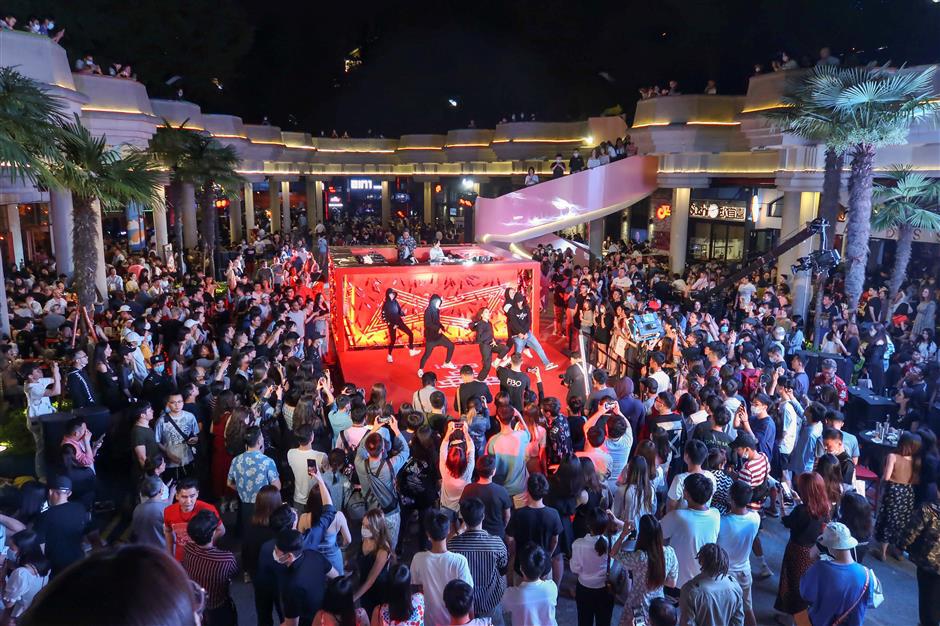
Cui Rulan, a retired accountant, waits for her friends at the entrance of the Windsor karaoke on Huaihai Road, where they meet two or three times a week.
It’s 9:55am on a working day — Thursday — but the lobby of the karaoke is already packed with people surrounding a harassed receptionist: “How much longer do we have to wait till a room is available for us?”
Shanghai was slowly returning to normal and the overeager crowd at the lobby felt like old times.
Karaoke venues, bars, night clubs and escape rooms experienced hard times in February and March. Now, both the businesses and the consumers seem to be in a rush to make up for the lost time.
During the height of the epidemic, many of the clubs and bars and even karaoke establishments sold takeout food to To make up for lost trade.
But now they have seen patrons return in hordes, with sales stronger than expected.
Ye Dingyuan, chairman of the Shanghai Bar Association, revealed that the average sales of local bars in April and May were up by about 18 percent compared with same period last year.
At Windsor, all 80-plus karaoke rooms are gone by 10:30am — back to pre-pandemic level, if not better. Evening spots are impossible without reservations at least half a day in advance.
“I was really worried about zero business for like two months since late January, but it’s been all back since early April, and late March for some places,” ticket scalper Wang told Shanghai Daily.
He makes money by scalping the most popular karaoke rooms and club seats in downtown Shanghai.
Most of his clients are over 40 years old, who prefer to call him than make online reservations.
“There were probably one or two weeks when business was gradually picking up for me, and many people who called around that time asked whether it is safe, or what measures are in place in the venues,” Wang recalled.
“Nobody really asks about that anymore (as the virus has been effectively contained). Most entertainment places have been open for three months.”
The young generation is more used to checking availability and safety measures on mobile apps.
Sixteen-year-old Maggie Xu returned from her studies in the US in late March, when classes turned online.
For two months, she followed an American time zone in Shanghai, taking online classes till dawn. When school ended in end of May, Xu, who usually enjoys exercise with family, couldn’t resist a day hanging out with classmates.

Students escape school
Her first choice was an escape room, but online reservation spots were not available for three hours, so instead they picked a karaoke venue nearby. Even with the reservation, they had to wait for half an hour in the afternoon.
“We also went to a milk tea place, where we ordered the drinks from mobile apps, and later went to dinner. All these places still have hand sanitizers,” Xu recalled.
Escape rooms have always been popular among young people, and particularly so in the past few months, when students were taking online classes at home, and wanted to hang out with friends.
“I wanted to go to an escape room in Jing’an District in February when I found out it was already open,” local sophomore Kathy Chen said. “But my parents and some friends were a bit concerned. You didn’t really see a lot of people on the street back then, and all time slots were open when I called to check.”
When Chen finally got permission from her parents in April, it was hard to get a time slot, so she ended up visiting with five friends in June.
They wore masks for the first room, but soon felt a bit short of breath as the game involves both mental and physical work-outs. All but one friend removed their masks.
“It’s less dusty than I previously visited, probably because they were doing a lot more cleaning due to the pandemic,” she said.
“Escape rooms are supposed to have only one group at each slot, but they always allow different groups into different rooms. And it was like that when I visited — I could hear the voices of people from other rooms, reflecting their good business.”
Good business also returned to nightlife in the city quite early on, according to event organizer Ted Koo.
“In February, it was DJs and bands asking me all the time when bars and clubs might be opening again,” he said. “A little over a month later, I was getting calls from venues on which DJs are in town.
“I kind of expected it, because Shanghai is known for its nightlife, and you always have the partygoers, so I was never worried about the business picking up quickly. It was just a matter of time.”
Selina Wang, a buyer’s shop owner in her early 20s, is one such partygoer.
“I go out clubbing almost every weekend, so it was quite intolerable to be home-bound for nearly two months,” she said. "I remember myself checking on the apps constantly about whether the clubs are opening and what I need to provide to enter for the entire February.
“I was so excited when friends sent me the poster of a night club reopening in March. Safety was not a big concern for us by then, Shanghai had no new local cases for a few weeks, and those who came from other heavily hit countries were required to complete a two-week quarantine.”
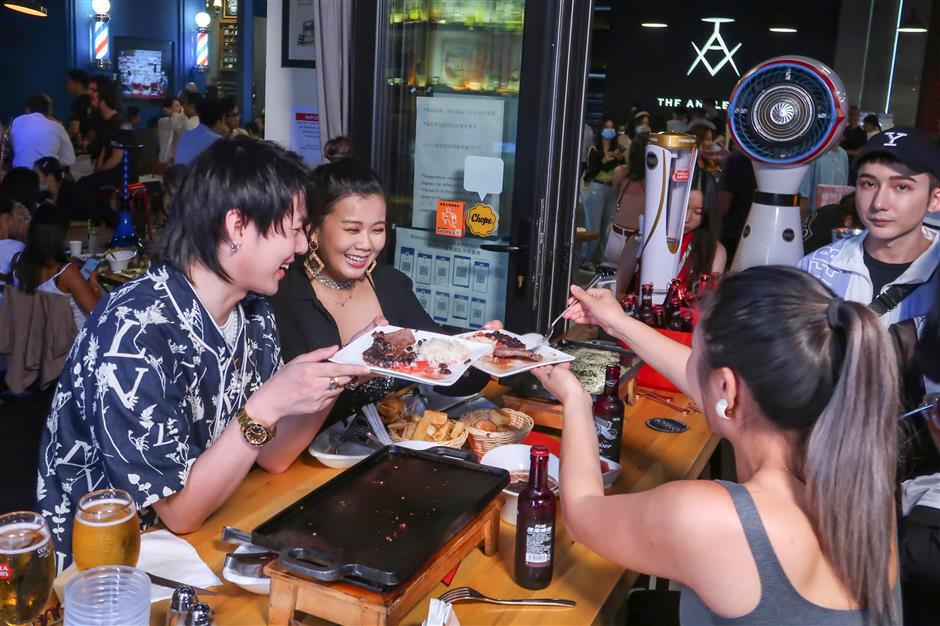
Crowds, music
Wang’s first post-pandemic clubbing experience was somewhat strange — they were required to wear masks inside, there were limited numbers, and they were sometimes sprayed with disinfection by bartenders.
“I was dancing with a mask for the first time in my life, and many people tried to keep social distancing even when dancing. But still, it was so good to be back with the lights and music,” she said. “At the time, my parents still didn’t allow me to visit other cities. Cinemas and theaters were still closed, there were almost no parties or activities approved, so there wasn’t much to do.”
Not anymore.
Wang threw a welcome party for a friend visiting from Hangzhou last week at TAXX, one of the city’s most popular clubs.
“When I reserved the seats, the staff told us they are doing a lot of disinfection to keep the place sanitized, but you don’t really notice that when you are there,” she said. “It looks exactly like before, crowds dancing, great music and a fantastic atmosphere.
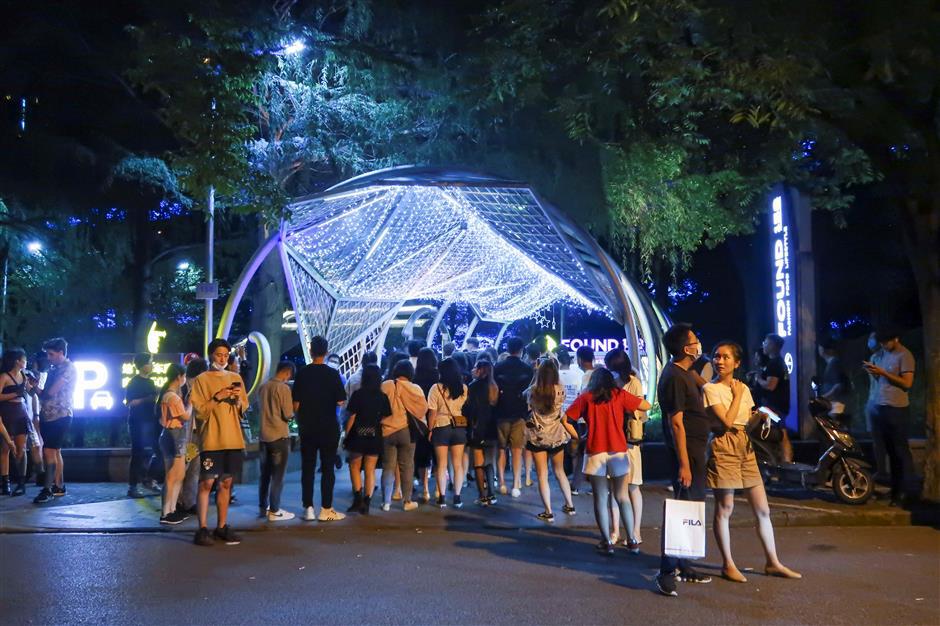
“The only difference might be some deals, and some outdoor bazaars and performances in the area due to the city’s nightlife festival.”
Municipal authorities have come out with various consumption stimulus measures since early May, and on June 6, the Shanghai Night Festival started with discounts, outdoor events and performances through to the end of month.
Cui, who usually spends her leisure time in karaoke venues during daytime, has also been attracted by the night economy stimulus.
For the last two weekends, she has visited three night bazaars with her husband, and is also trying to find out what events are out there during weekdays.
“Usually, we spend the evenings at home, but since we were home bound for so long since January, I just really want to enjoy it outside, no matter what we do,” she said.
Popular Reads

China's Automaking Juggernaut Pushes Into Europe, Shifting the Industrial Landscape

Shanghai's Smart Healthcare Practices Shared at Geneva Conference Empowered by AI
Shanghai Job Fair Merges Music And Tech To Attract Global Talent