The Teacher You've Been Waiting For: Emma Leaning on Writing for Impact
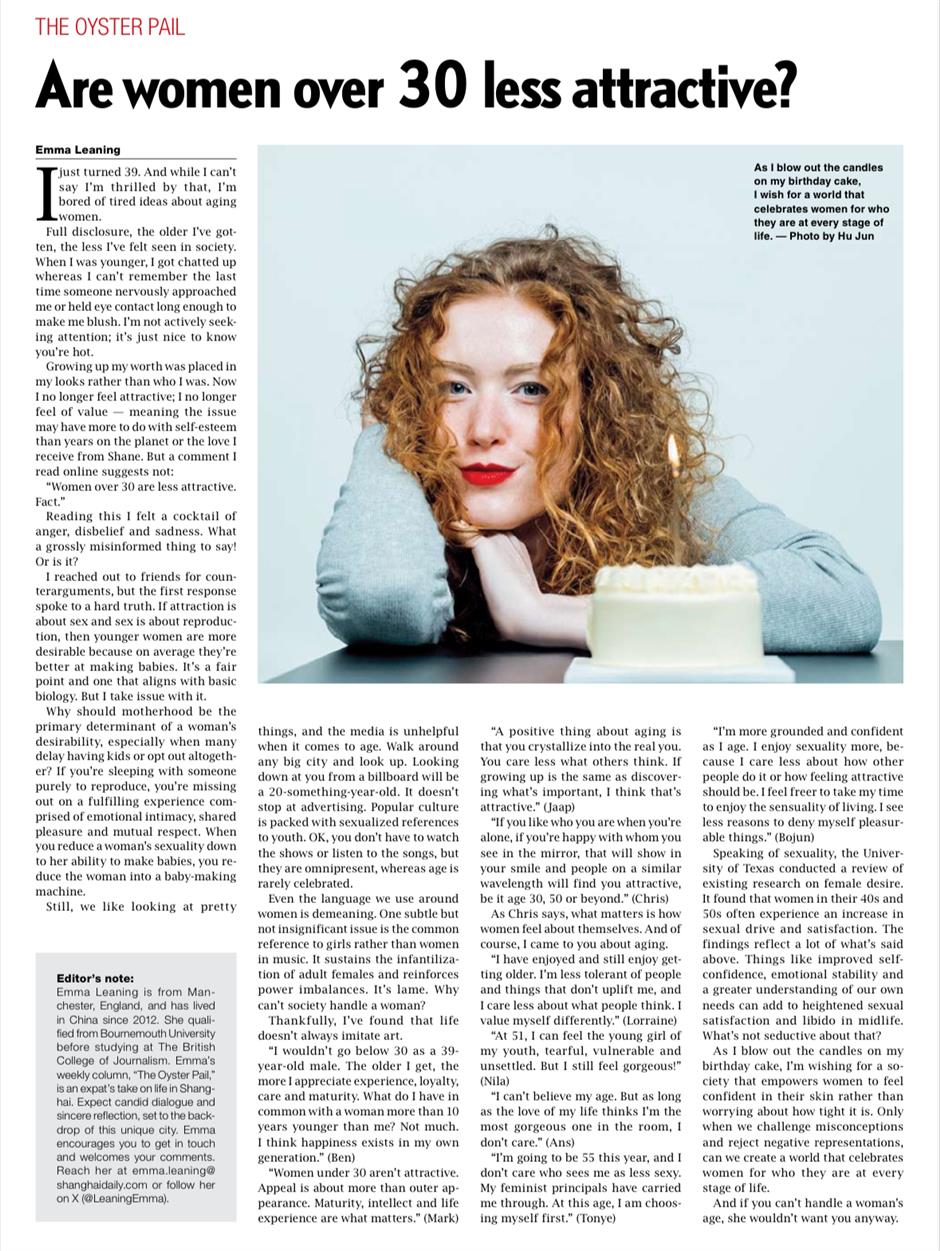
Emma Leaning has mastered what most writers spend careers chasing: authentic communication that connects with people. For half a decade, her column "The Oyster Pail" has been one of Shanghai Daily's most consistently engaging voices, building a loyal and growing following hooked on her trademark blend of vulnerability and power. From the messy realities of adult life to the bigger questions that keep us up at night, Emma writes with an honesty that transforms readers into community. That rare ability to turn personal experience into meaningful conversation is what she's now distilling into "Writing for Impact," her debut masterclass.
In a world drowning in content but starving for connection, we sat down with Emma to talk truth, confidence, and the gap between having something to say, and saying it well.
Q: You've been a successful columnist for over half a decade. What made you decide to teach other people how to write?
A: Writing is how I make sense of the world. It's the only way I can sort through what I really believe versus what I think I'm supposed to believe. Words are what make the world go round. Every great speech that's moved a nation, every song you've ever loved, and every conversation that's healed a relationship, it all comes down to words. The ability to express yourself clearly, to share your ideas, and to put words to your thoughts and feelings isn't a luxury. It's a right. But unless you learn how to do it with confidence, you're not empowered in the same way that someone who can is.
Most people don't feel what they have to say is worth saying. But in my time as a columnist, I've learned that's wrong. Everyone has something worth saying. The trick is learning how to say it so people care. After years of figuring out how, I want to give those tools to people who want to find their own voice or use it better. Because that impact shouldn't be reserved for professional writers.
Q: What does "Writing for Impact" mean? Why that phrase?
A: We all want to leave this world better than when we arrived. We want to connect with people, to be heard, and to make a difference in whatever speaks to us. And words are an essential tool for that. But without the skills to use them, you'll never say what you want to say in a way that matters. You'll write the e-mail asking for the promotion and not get it. You'll have the idea worth sharing but keep it to yourself. You'll watch conversations happen around you without the confidence to join in.
"Writing for Impact" means learning the techniques that change all that. How to narrow your ideas so you say one thing brilliantly. How to cut back complicated wording so your point is impossible to miss. How to know exactly who you're writing for. How to put rhythm into your sentences so people want to keep reading. These are learnable skills. That's what this course gives you, the tools and courage to connect in a way that you're not connecting now.
Q: Was there a specific column or moment where you cracked the code on what makes writing connect with people?
A: There wasn't one specific column where everything clicked. What I'm bringing to this course is half a decade of on-the-job learning. And I'm still learning. Every article teaches me something. I wouldn't trust an author that said otherwise.
If I compare my early work to what I write now, the difference is big. It's not that the early stuff was bad, but it didn't have impact. I was hiding behind big words and fancy metaphors because I didn't think that what I had to say was good enough. Now I don't do any of that. I say it as I see it. I've learned who my audience is and how to speak to them. I've learned how to be real in a way that serves my readers.
And it's working. When people take the time not just to read but to comment with their own truths; when they engage with the ideas even if they disagree, that's when you know your writing has impact. As I've grown in my skill set and learned to trust my own voice, those conversations happen more and more. That's what I want to give people: not just the ability to write, but the confidence to write in a way that invites that kind of connection.
Q: Who's this for? Give me the specific person, not "anyone who writes."
A: Let's start with who this isn't for. This isn't for people who want to learn grammar rules. It's for people whose words haven't impacted in the way they could. Maybe you're a student or young professional who writes perfectly correct essays or e-mails with no personality. Maybe you're preparing presentations that put people to sleep. Maybe you've got ideas worth sharing but you keep them to yourself. Maybe English is your second language and you can communicate fine, but you want to write with the same influence as native speakers.
This masterclass is for creatives, professionals, students, second-language learners and anyone who needs to communicate clearly so people care about what they're saying. You don't need writing experience. You don't need to want to be a journalist. You just need to recognize that words matter in your life, whether that's at work, online or in how you express yourself.
If you're looking for stiff language lectures, this isn't it. But if you want to find your voice and use it with skill and confidence, I can help.
Q: Your column is celebrated for being authentic and vulnerable. How does that honesty translate into what you're teaching?
A: Vulnerability is at the heart of everything I do. Real vulnerability means having the ability to be wounded, which requires courage. Only when we're willing to drop the pretense that we've got it all together, can we have real human connection. That's how I write, and that's how I show up in this course.
Creating this masterclass was itself a lesson in vulnerability. We all think what we do is just natural, and we forget we have skills worth sharing. I had to sit down and acknowledge that my years of experience had something to teach. That felt uncomfortable. But putting yourself out there always does, whether that's pitching an idea, telling someone you love them, or delivering a course.
I won't pretend I've been a successful writer forever. I still panic about deadlines. I still worry I don't have ideas. I've hidden behind big words to seem impressive, and I've had brutal feedback that made me cry. All of that is in the course, not because I enjoy oversharing, but because that's where the real learning is. Anyone who's achieved anything has had setbacks. Anything worth doing is difficult.
Students will get the messy reality of my process, my mistakes and the ways I've denied my own voice through fear, because that's how you learn to write with impact, not from someone who makes it look easy, but from someone who'll admit how hard it is and show you the tools that make it work anyway.
Q: What's the biggest thing you see people get wrong when they're trying to write something that actually matters?
A: The biggest mistake is right there in the question – they're trying to write something that matters instead of trusting that what they have to say matters enough. When you're in "trying" mode, you use big words to sound impressive. You cover absolutely everything so no one can say you missed something. You throw in all your research to prove you've done your homework. You write long, complicated sentences because surely that makes you sound like a proper writer. All of that is hiding. It's saying: "I don't trust that my actual thoughts are good enough, so I'm going to dress them up in fancy language and exhaustive detail."
The irony is that trying to sound worth reading makes you forgettable. When I write my column now, I don't "try" to write it. I trust my voice and use my skill set to say what I mean as clearly as possible. That's hard work – it takes everything I've got – but it's not the same as trying to be something I'm not.
The shift from trying to trusting is what this course teaches. Once you have the tools – how to narrow your focus, how to say complicated things simply, and how to let your authentic voice come through – you stop performing and start connecting. That's when your writing has impact.
Q: AI can write articles now. Some would say it can write better than most people. So why does anyone need to learn to write when ChatGPT can do it for them?
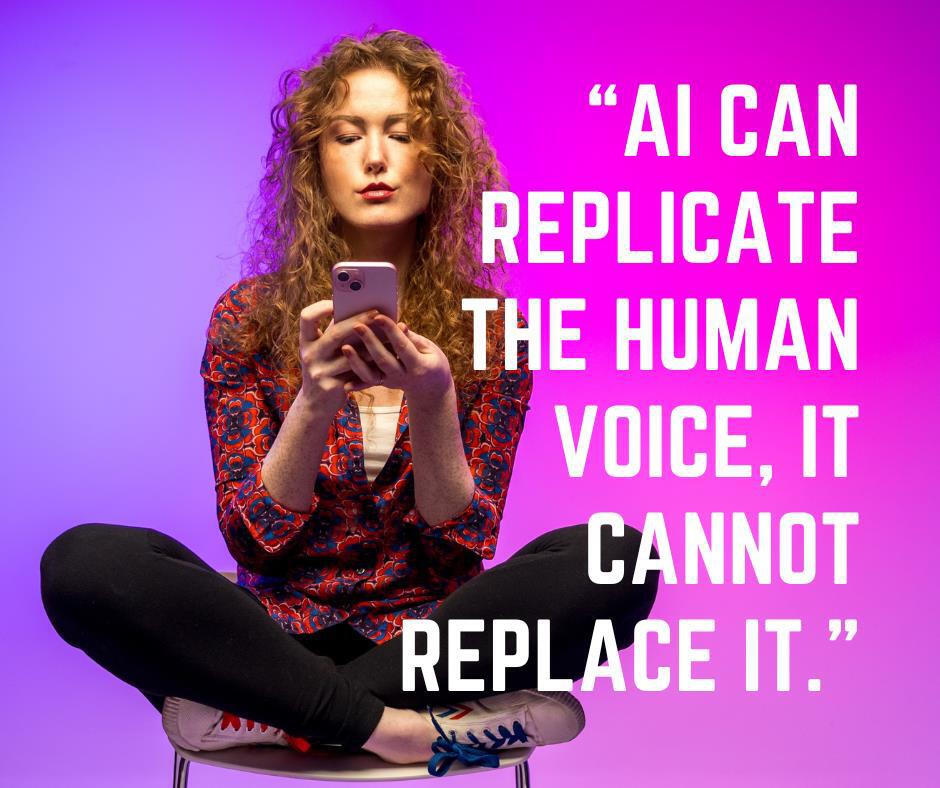
A: I'm a deep believer in human connection. It's the heart of everything I do. AI can replicate the human voice, but it cannot replace it. When you write with your truest voice for your real audience, you're taking all of your experiences, feelings and thoughts, and shaping them into authentic communication human to human. AI can't do that. It can pretend to be someone else or mimic the sum total of other people. But it's not you in any given moment. It's not shaped by what happened to you yesterday or what you're wrestling with right now. That's why a course like this is more essential than ever.
In an AI-prominent world, the capacity for humans to communicate and connect authentically isn't becoming less important. It's becoming critical. We need to skill ourselves up so we can maintain that quality and drive to communicate human to human. AI can generate content, but connection? That's still ours.
Q: Someone's reading this thinking: "Maybe I should do this." What would you say to them?
A: Do it. That hesitation you're feeling? That's the exact thing this course addresses – the gap between having something to say and trusting yourself enough to say it well. I've condensed half a decade of learning into something you can work through without the brutal trial and error I went through. This isn't going to be boring lectures or grammar rules. It's a conversation between you and me about finding your voice and using it with confidence.
Learning to write with impact has been the biggest game changer of my life. Not because I'm special, but because I stopped trying to sound like someone else and learned the tools to sound like myself. The shift from hiding behind complicated language to trusting your own voice changes everything: how you show up at work; how you advocate for yourself; how you connect with people.
I can't find your voice for you. But I can give you the tools to find it yourself and the confidence to use it. And if you're sitting there thinking "maybe I should," then you already know the answer.
Give yourself this. You won't regret it.
In Case You Missed It...
 Apr 3, 2026



![[Explainer] Your Guide to Applying for A 5-Star Card in Shanghai](https://obj.shine.cn/files/2026/03/25/abba9cd8-a391-4d52-89cc-78e198e96628_0.jpg)