China to Boost Air Travel Accessibility After Singer's Complaint
China's civil aviation regulator has moved to strengthen accessibility in air travel following wheelchair-bound Taiwan singer Cheng Chih-hua's account of a difficult boarding experience.
The Civil Aviation Administration of China (CAAC) has recently issued a draft document, calling for upgrades to facilities, adjustments to procedures, and expanded staff training to improve services for passengers with disabilities.
The move comes one month after Cheng posted on Weibo criticizing Shenzhen airport's handling of his boarding process. He said his flight was parked at a remote stand and that a 25-centimeter height difference between the lift truck platform and the aircraft doorway made it impossible for his wheelchair to roll onboard.
A central issue addressed in the draft is eliminating such "height gaps." The CAAC urges airports to add or improve boarding-assistance equipment and to ensure portable ramp boards of proper dimensions are available when using lift trucks or special boarding stairs. Airports with annual passenger traffic of more than 10 million are advised to provide electric carts for wheelchair users.
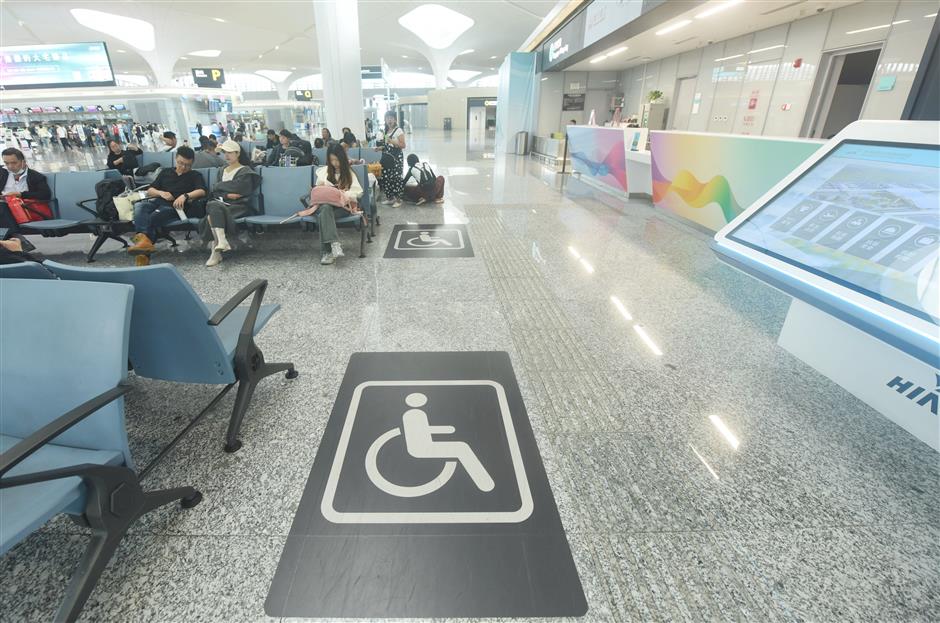
The regulator also calls for comprehensive airport upgrades to meet national accessibility standards, including improved barrier-free pathways, tactile guide lanes, low-height service counters, accessible restrooms, audio prompts, display systems, and signage across check-in areas, security checkpoints, boarding gates and arrival halls.
Inside aircraft cabins, the CAAC recommends that airlines with the capability keep narrow onboard wheelchairs available so passengers with reduced mobility can move between the cabin door, their seats and the lavatory. Airlines must provide such wheelchairs if passengers request them in advance.
Responding to Cheng's criticism of unfriendly ground services, the CAAC also proposes that airlines, airports and ground-handling companies incorporate disability-support training into mandatory courses for ground staff and cabin crew. Training topics would include relevant regulations, service etiquette, communication skills, characteristics of different disabilities, emergency response and proper use of assistive devices.
The CAAC says the draft aims to streamline service procedures and provide accessible end-to-end travel for passengers with disabilities, ultimately improving their overall experience.
Editor: Wang Qingchu
In Case You Missed It...
![[Hai Guide] A Full Spectator Guide to 2026 Rolex Shanghai Masters](https://obj.shine.cn/files/2026/09/29/03c5fbca-2b79-478a-ac69-47815adceda1_0.jpg)
 Sep 30, 2026