Doctors Debunk Claim That High-Speed Train Seats Are an HPV Hotspot
As travelers packed bullet trains for China's National Day holiday, which began on October 1, many brought their own disposable covers to drape over their seats.
The habit took a sharper turn when a chart spread online listing "high-speed train seats" as the leading source of HPV, or human papillomavirus, infection. The topic quickly climbed the trending lists on Chinese social media.
Doctors say the chart is wrong.
"The information in the chart circulating online is unreliable, and the public need not panic," Li Tongzeng, chief physician of infectious diseases at Beijing Youan Hospital, Capital Medical University, told the People's Daily Health app.
Li said seats and tray tables on public transport may indeed carry plenty of bacteria and even fungi. HPV is different. It is relatively fragile outside the body and survives only a short time on dry surfaces, so live virus is hard to find on seats or knitted fabric.
"HPV is basically transmitted through sexual contact or close skin-to-skin contact," he said. "The chance of it spreading through the environment or objects is extremely low."
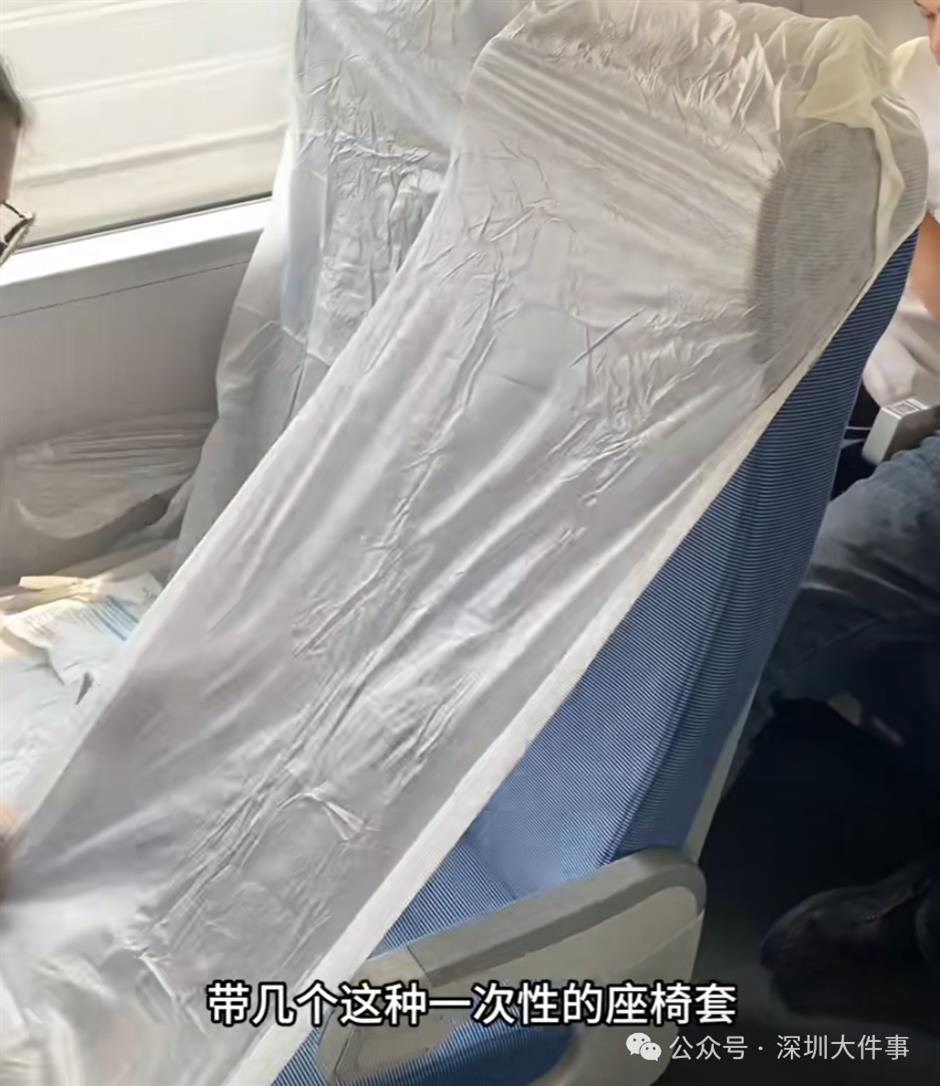
The scare has been good for business. Online, disposable seat covers sell for anywhere from just over 1 yuan to more than 10 yuan apiece, and some shops have sold more than 100,000 of them, according to Southcn.com, the news portal of Guangdong's Nanfang Media Group. Some sellers have added to the worry by claiming the seats are cleaned only once every 180 days.
China Railway's 12306 customer service line addressed the cleaning question in late September, as the seat-cover debate first heated up. It said seat cushions are normally replaced and washed every 120 to 180 days, sleeper sheets are changed for every passenger, and visible stains are cleaned in between.

Li said the covers and alcohol wipes are "more of a psychological comfort." They may offer some protection against bacteria and fungi, he said, but do very little to lower the risk of HPV.
Ma Yiming, an associate chief dermatologist at the Beijing Hospital of Traditional Chinese Medicine, made a similar point earlier, saying the covers act only as a physical barrier and have no special antibacterial or antiviral function.
HPV is the most common viral infection of the reproductive tract. Most infections are cleared by the immune system, and only a small share persist and develop into precancerous lesions or cancer. The common warts that appear on hands and feet are usually caused by low-risk types that almost never turn cancerous.
For travelers, Li's advice is simple. The most effective protection against HPV is vaccination for eligible age groups and avoiding unsafe sex.
Editor: Wang Xiang
In Case You Missed It...

 Oct 9, 2026