FIFA Officials to Visit China as World Cup Broadcasting Rights Talks Stall
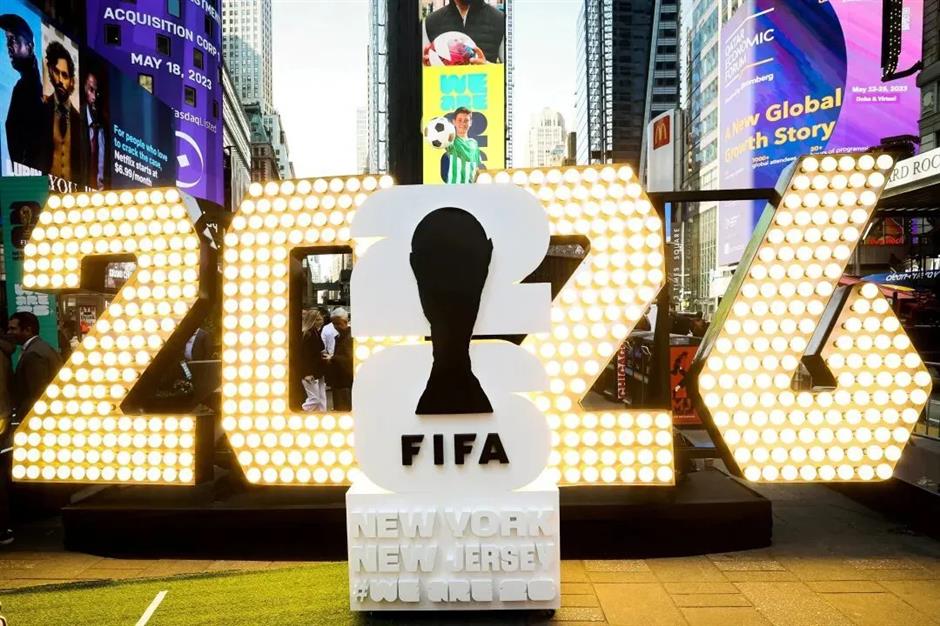
With fewer than 40 days until the 2026 FIFA World Cup kicks off across the United States, Mexico, and Canada, broadcast rights for the tournament remain unsold on China's mainland and time is running out. However, a potential breakthrough may be on the horizon, as senior FIFA officials are reportedly planning a trip to Beijing in the coming weeks.
According to Shanghai-based sports broadcaster Star Sports, a "secretary-general level executive" from FIFA is expected to visit China soon, sparking renewed hope that the long-stalled negotiations over World Cup broadcasting rights could finally move forward.
The urgency is mounting. Reuters has described FIFA as being in the midst of a full-blown "broadcast crisis." Not only China, but also India, has yet to confirm an official broadcaster for the 2026 tournament. The standoff has left football's global governing body in a far more uncomfortable position than initially anticipated.
FIFA entered negotiations with an aggressive asking price, but as the countdown to kickoff ticks toward zero, the organization is being forced to recalibrate its expectations, the Red Star News reported today.
Multiple media reports have revealed that FIFA's initial asking price for the 2026 World Cup rights in China ranged from US$250-300 million. China Central Television's budget, by contrast, is estimated to be just US$60-80 million. Even after FIFA reportedly lowered its demand to around US$120–150 million, a significant gap remains.
This is not the first time the two sides have clashed over pricing. During last year's World Cup qualifiers, CCTV opted not to purchase rights after the Asian Football Group (AFG), a marketing agency representing the Asian Football Confederation, submitted what CCTV called an unreasonably high bid. Now, that same dynamic threatens to leave Chinese screens dark for the world's biggest sporting event.
From a buyer's perspective, several factors undermine FIFA's valuation. The most glaring issue is the time difference. With matches being played in North America, roughly 70 percent of World Cup games will air in China between 2am and 10am Beijing time. Knockout matches will kick off no earlier than 1am, and quarterfinals onward will start after 3am, effectively eliminating prime-time advertising revenue.
Additionally, while the tournament has expanded to 48 teams, critics argue that more matches do not necessarily mean greater value. Teams such as Curaçao, Cape Verde, and Haiti have qualified for the first time, but the quality gap with traditional powers could produce lopsided contests. Meanwhile, Italy's continued absence from the World Cup has also dampened enthusiasm among some fans.
The broader media landscape has also shifted. With live matches airing in the early morning hours, short-form video clips and social media highlights are likely to cannibalize live viewership. If a growing number of fans consume the World Cup through highlights and trending topics, the traditional valuation model for live broadcast rights may no longer apply.
Comparisons with other markets have further fueled frustration. According to reports, FIFA offered Indian broadcasters a two‑World Cup package for just US$35 million.
At home, CCTV's refusal to meet FIFA's price has drawn widespread public support. Online sentiment has overwhelmingly backed the state broadcaster's stance, with many viewers arguing that the domestic sports rights market – from the Chinese Super League to the CBA – has been rationalizing after years of inflated deals.
Editor: Wang Qingchu
In Case You Missed It...

 Oct 7, 2026
![[ChinaMaxxing] The Weather We're Having Now Is Called Hanlu](https://obj.shine.cn/files/2026/10/06/b7375dbf-9c63-45c4-9bb8-6e7642996189_0.jpg)
Popular Reads

AI Romance Between Monkey King and Lin Daiyu Tests Limits of Remixing the Classics

China Foreign Exchange Reserves Fall in September, Gold Reserves Rise

DeepSeek Nears Massive 100 Billion Yuan Funding Round, Paving Way for Early 2027 IPO