From Donation Bins to Livestreams: The Trade in Used Clothes
When people believe their donated clothes will be worn by children in remote mountain areas, those garments may instead end up in livestreaming rooms — repackaged as cheap commodities and sold to unsuspecting consumers.
An investigation by China Central Television has found that some livestreams promoting "designer overstock," "one-off samples," or "brand tail goods" are, in fact, selling secondhand clothing of unclear origin. These items are often of poor quality, inconsistent with their descriptions, and accompanied by restrictive terms such as "assumed defective" or "no returns or exchanges." Prices are strikingly low, sometimes just a few yuan.
Several consumers told CCTV that livestreams claiming to sell "new samples" or "brand overstock" were actually moving large volumes of used clothing.
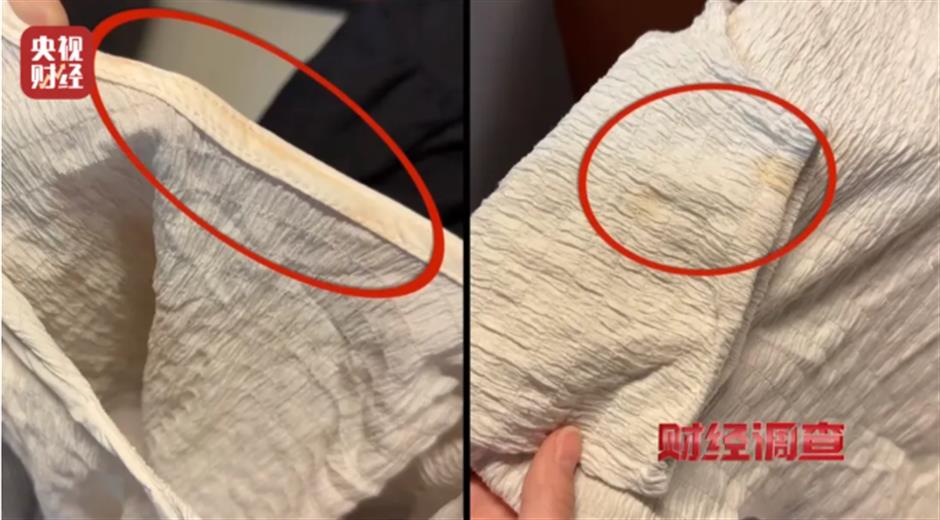
Acting on these tips, reporters spent 6 yuan (85 US cents) on three items labeled as "sample tail goods" from a livestream called Xixi Women's Wear Styling, with shipping included. At first glance, the clothes appeared passable. Closer inspection, however, revealed stains, wear marks, and other clear signs of prior use, confirming they were secondhand.
To trace where such clothing comes from, CCTV reporters placed GPS trackers inside garments and shoes and deposited them into two old-clothing donation bins in different neighborhoods of Tieling, Liaoning Province.
Several days later, the trackers showed the items had been transported more than 60 kilometers to a warehouse that outwardly resembled a corn storage facility. Inside, piles of used clothing were stacked high. The air was heavy with a musty odor, according to CCTV reporters. Many garments showed visible stains and extensive wear.
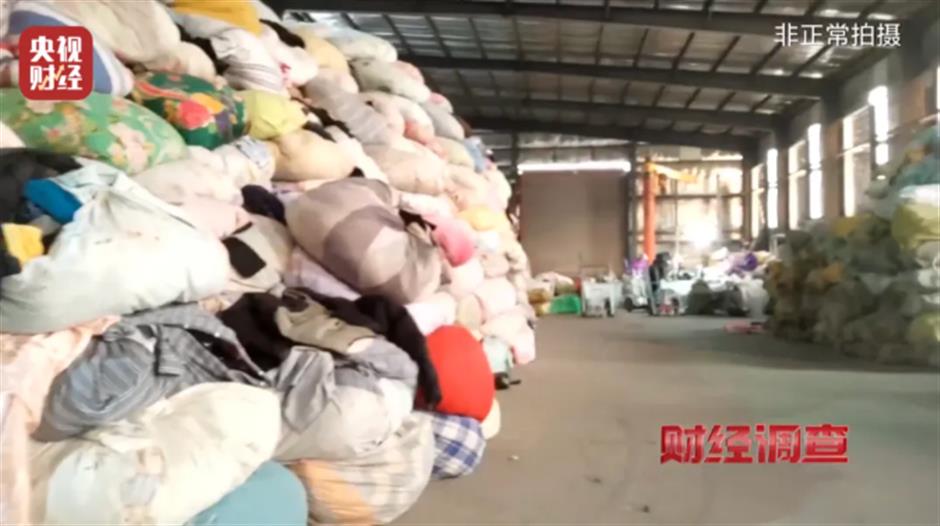
A warehouse manager acknowledged that the site was an old-clothing sorting facility, specializing in recycling secondhand garments collected from multiple regions.
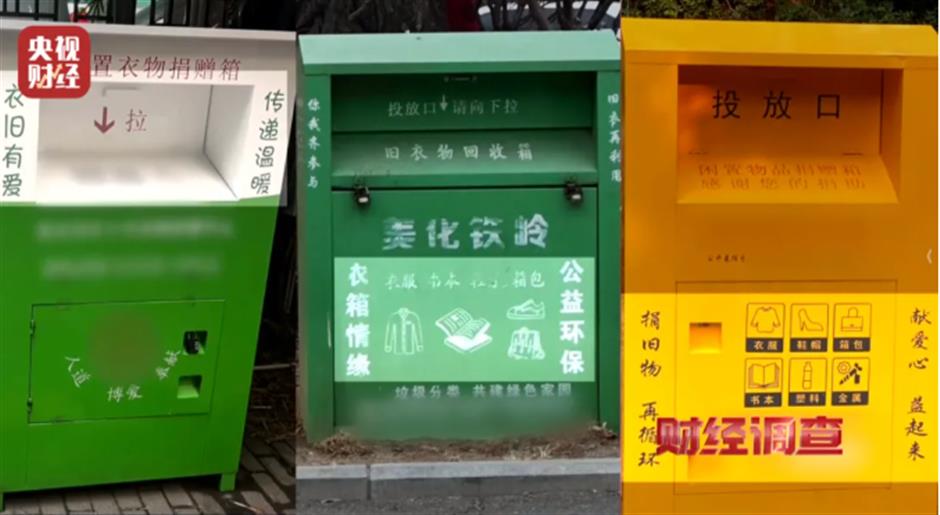
CCTV conducted similar tracking investigations at sorting warehouses in Jiamusi, Heilongjiang Province, and Jinan, Shandong Province. Operators there confirmed that donation bins placed in residential communities are a major source of supply. Some collectors deliberately label the bins with phrases such as "charitable donation" or "love donation" to encourage residents to contribute more clothing.
Industry sources said Changchun in Jilin Province has become one of the largest hubs for old-clothing sorting and recycling in northeast China. At the Daling Old Clothing Recycling Factory, an operator confirmed that most of its goods are sold directly to e-commerce livestreamers.
Through an introduction arranged by another recycling company's owner, CCTV reporters contacted a local livestream specializing in used clothing. Within just half an hour of going live, the channel sold nearly 70 items.
Staff later told CCTV that nearly half a ton of clothing had been sold in that single session, generating more than 10,000 yuan in revenue. They stressed that sellers must never disclose that the items are secondhand. According to the staff, beauty filters and studio lighting make it difficult for viewers to judge fabric condition. They also admitted that most recycled clothes are not washed or disinfected before sale, as cleaning would significantly increase costs.
Some operators acknowledged that their supply chains are complex, drawing not only from sorting factories but, in some cases, from garbage stations. Even children's clothing is sold through the same channels.
China's Charity Law requires strict management of donated goods, and the unauthorized sale of donated clothing may constitute illegal activity. Misrepresenting secondhand items as new amounts to false advertising, infringing upon consumers' rights to information and fair transactions. Selling unwashed and undisinfected garments may also pose health risks, potentially leading to civil or even criminal liability.
Editor: Wang Qingchu