Jing'an Puts Life and Health at the Heart of Its Growth Strategy
Invest Jing'an
This new column highlights Jing'an's 14th Five-Year Plan (2021–2025) achievements, including a better business environment, competitive industries and thriving emerging sectors. It also highlights the district's efforts to develop key industrial clusters and the 15th Five-Year Plan (2026–2030) to create a modern industrial system with a (3+3) + (1+3+X) framework. The "Invest Jing'an" section highlights the district's efforts in this area.
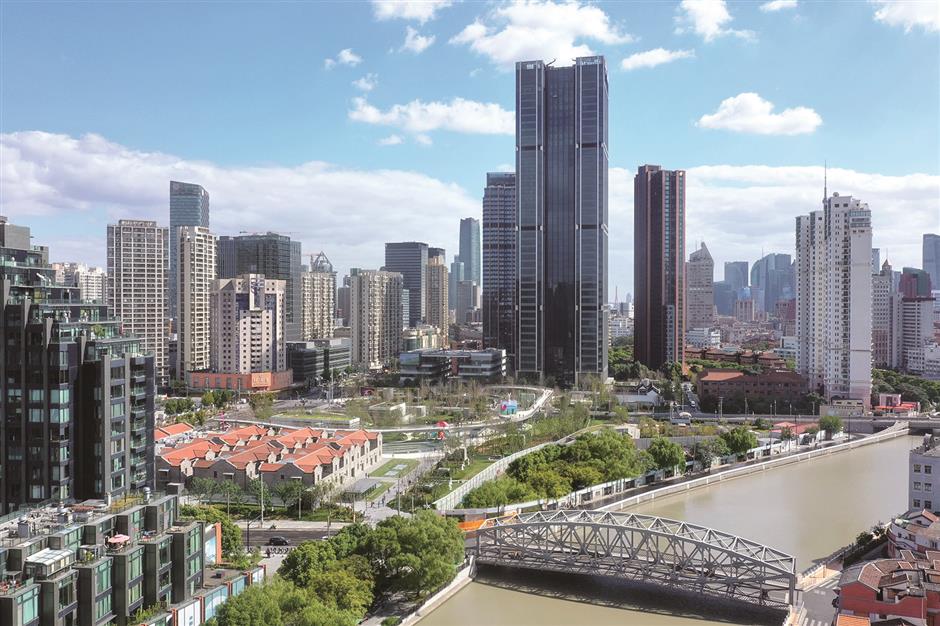
The biopharmaceutical industry based in Jing’an posted strong growth in the first half of 2026, with output rising 19.2 percent year-on-year to more than 40.77 billion yuan (US$5.7 billion).
The district has over 800 life and health companies. As China begins its 15th Five-Year Plan, Jing’an lists life and health as one of its three emerging industries.
Multinational headquarters, an innovation ecosystem, and real-world applications provide companies with corporate decision-making, clinical and technology resources, capital, and market opportunities.
Foreign-invested companies make up nearly 10 percent of district businesses but generate 48 percent of tax revenue, above the Shanghai average. Jing’an’s foreign-related economy has led Shanghai’s central districts for 10 years.
The concentration is particularly strong in life sciences. One-third of the world’s top 50 biopharmaceutical companies, including Pfizer and Bristol Myers Squibb, have regional headquarters with management functions in Jing’an.
Sanofi opened its China R&D center at Jing’an Kerry Center in the first half of 2026, while AstraZeneca’s Global R&D China Center combines research and commercial operations.
On April 20, Eisai China Investment Co moved into Suhe Center. On May 27, two Dutch life and health companies, Biotactical BV and AVIGI Therapeutics BV, established operations in the district.
They contribute more than taxes. These companies are adding corporate and R&D capabilities to Jing’an by locating decision-making, financial settlement, and innovation functions there.
Jing’an is also building an innovation ecosystem that connects clinical resources with data, computing capabilities and capital.
Huashan, Huadong, and Shanghai Tenth People’s hospitals provide clinical expertise and specialist resources from research to clinical validation to life and health companies in the district.
Shanghai’s first big-data industrial base, Shibei High-Tech Park, houses one-third of the city’s big-data companies and has a full industry chain from data collection to applications and services. Jing’an promotes AI in healthcare and uses data to innovate.

At the 2026 World Artificial Intelligence Conference in Jing’an, the Shanghai Society for Mathematical Medicine was founded, and a national “model-data synergy” initiative was launched. The district also houses the Shanghai Medical and Healthcare Data Industry Innovation Lab and Shanghai Biomedicine Trusted Service Chain. The initiatives aim to improve access to data, establish rules for its use, and facilitate data flows, addressing the gap between increasingly capable models and limited access to high-quality data.
The district has developed a multi-layered financing system involving government guidance, industry capital and market-oriented funds, providing funding from basic research through commercialization. The Sanofi-Cathay Capital Healthcare Innovation Fund, for example, brings together Sanofi’s industry resources and Jing’an’s innovation ecosystem.
The district is also expanding real-world applications, giving companies more opportunities to take products from research and development to market.
Beauty is one such area, linking clinical research, technology commercialization and product launches. Clinical resources at leading institutions, including Huashan Hospital’s dermatology department and Shanghai Dermatology Hospital provide scientific validation and technical support for areas such as efficacy-focused skincare and precision beauty.
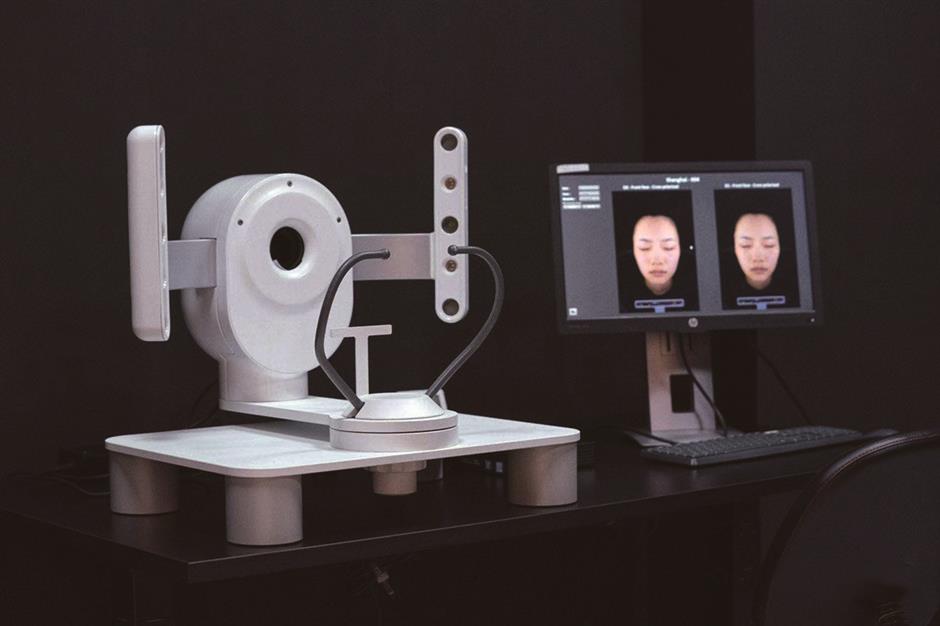
The district hosts R&D centers for L’Oréal and Clarins, supporting medical researchers and industry. Nanjing Road W. connects R&D to the consumer market with its concentration of brands and strong demand for first-to-market launches.
Smart healthcare is another focus, bringing together data, computing power, algorithms and real-world applications. Jing’an was Shanghai’s first pilot district for resident health profiling, covering residents enrolled in the district’s health management system across nearly 100 data dimensions. The initiative was also presented at the 79th World Health Assembly as an example of China’s approach to health and medical data applications.
Companies in areas such as AI drug discovery, precision nutrition and health insurance can use high-quality clinical data in compliance with relevant regulations to train models and develop products.
Editor: Shi Jingyun
In Case You Missed It...

 Sep 30, 2026