Ming Emperor's 'Face Swap' Sparks Debate Over True Look
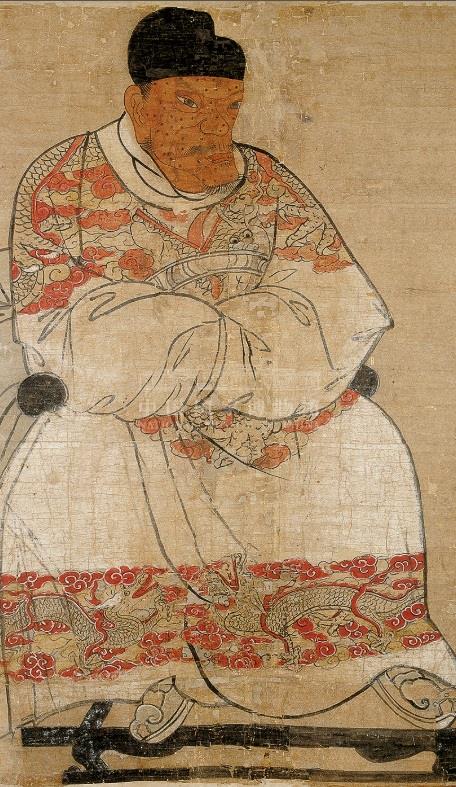
Long jaw and sharp chin, the "shoehorn face" marked with pockmarks — this is the Zhu Yuanzhang, founder of the Ming Dynasty (1368-1644), etched into popular memory. But now, new research is peeling back the legend to reveal an emperor who may have looked very different from the fearsome image handed down through centuries.
The long-used portrait of Zhu has been replaced in textbooks and museums with a more proportioned, dignified likeness — a shift that recently exploded into public debate online.
Though the current buzz is new, Zhu's "face swap" in historical materials has been underway for years. High-school textbooks adopted the updated portrait as early as 2019, with middle-school editions following in 2024. At Nanjing's Ming Xiaoling Mausoleum and its museum, the old image was removed earlier this year, and the new version has since drawn steady crowds of visitors who stop to photograph, compare, and marvel at the emperor's more refined appearance.
"Many visitors ask why the portrait was replaced," a staff member at the mausoleum told Ziniu News. "We explain that this version aligns more closely with what Zhu Yuanzhang likely looked like, and corresponds with the latest scholarly consensus reflected in current textbooks."
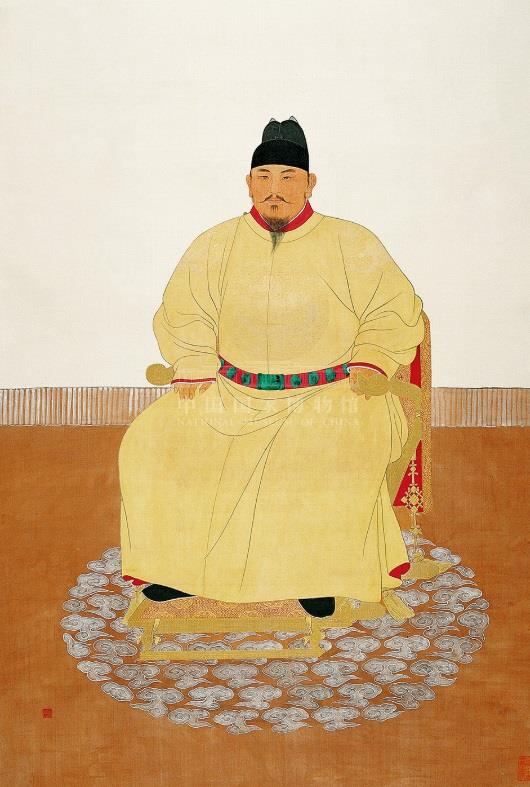
At a lecture hosted by the Palace Museum's Research Institute, scholars pointed out that historical records document at least 12 different portraits of Zhu. These images fall into two broad categories: "proper" likenesses, which show him with a broad forehead and calm, composed features; and "distorted" likenesses, marked by an elongated jaw, protruding chin, and clusters of dark moles.
Why such wildly different portrayals exist remains a matter of debate. Some scholars believe Zhu may have concealed his true appearance for security reasons. Others suggest that, as a peasant-born rebel who seized the throne, he consciously shaped a striking, even uncanny image to reinforce the authority of his new dynasty. Another theory holds that Qing-era historians later exaggerated his features for political purposes.
Editor: Wang Qingchu
In Case You Missed It...

 Oct 20, 2026
![[SH Transit] Shanghai Plans Bigger Airports, Stronger Air & Sea Links](https://obj.shine.cn/files/2026/10/20/cc332098-2356-49f9-878f-86691dd8c989_0.jpg)
![[Weather] Typhoon Champi Could Bring Heavy Rain, Strong Winds to Shanghai](https://obj.shine.cn/files/2026/10/20/8c5a5674-cd7d-4354-8963-8c83d04b0991_0.jpg)